Ontario’s Upland Birds and Where They Live
Trying to figure out where to find Ontario's diverse upland birds can feel like a real wild goose chase, especially when you're dreaming of flushing grouse or watching a timberdoodle corkscrew into the sky. It's not always as straightforward as just walking into any patch of bush; these birds have specific preferences for habitat, and knowing where they live is half the battle. This comprehensive guide aims to demystify the haunts of Ontario's upland birds, offering you the detailed insights needed to plan your next successful hunt.
Understanding Ontario's Upland Bird Diversity
Ontario is a vast province, and its landscapes support a surprising array of upland game birds. While some might think of the more common species, a closer look reveals a rich tapestry of feathered residents, each with its own unique ecology and appeal to hunters. Knowing these distinct characteristics is the first step to becoming a truly effective upland hunter in our beautiful province.
The King of the Forest: Ruffed Grouse
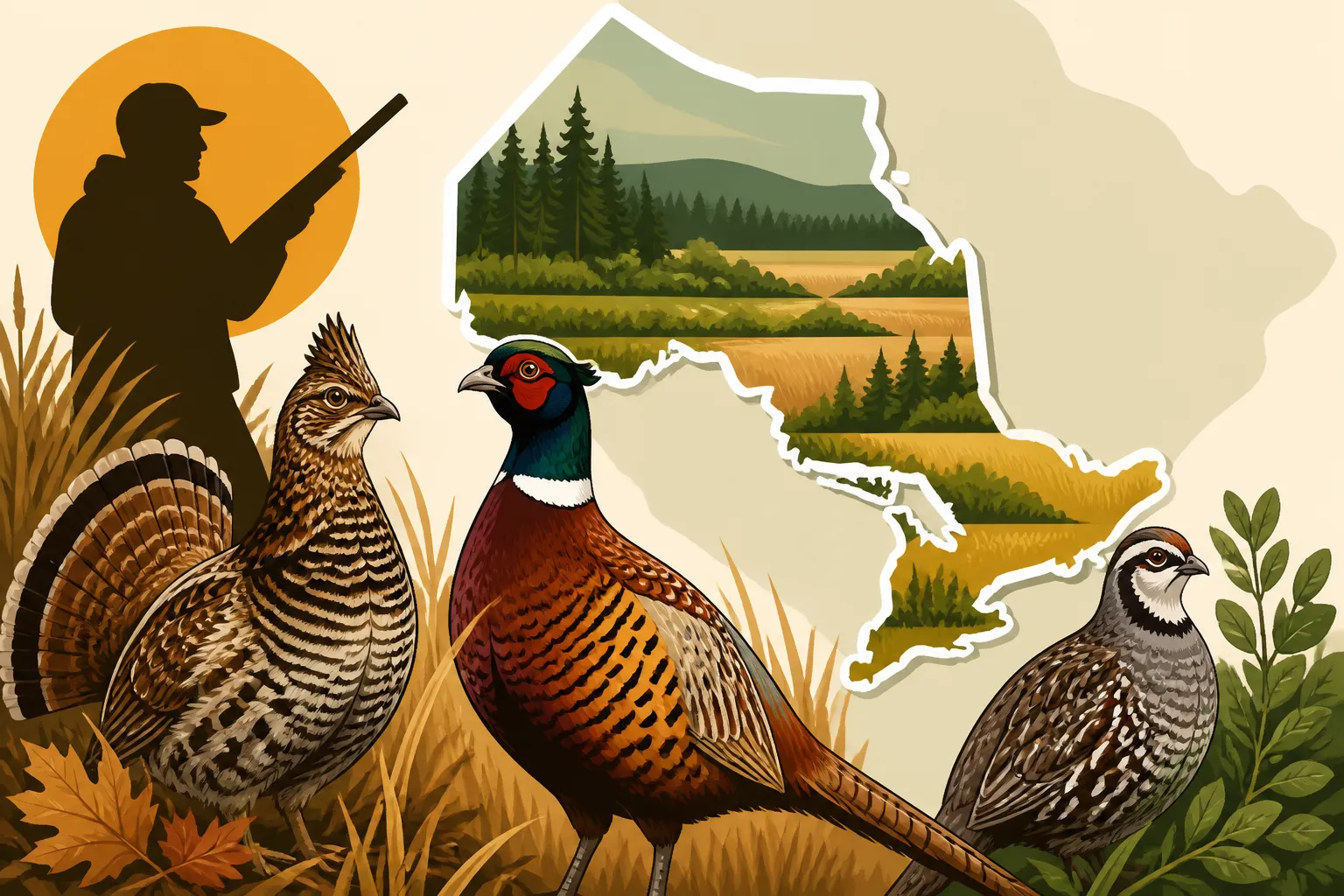
The ruffed grouse, often affectionately called "partridge" by many old-timers and northern folk, is undoubtedly the most iconic and sought-after upland bird in Ontario. These birds are master camouflagers, blending seamlessly into their forested surroundings, and are renowned for their explosive flush that can startle even the most seasoned hunter. Their distinct drumming sound, a rapid beating of wings that resonates through the woods, is a quintessential autumn sound in Ontario's vast wilderness.
Ruffed grouse thrive in specific types of forest habitats, generally preferring young, regenerating forests with a mix of deciduous and coniferous trees. Think thick stands of trembling aspen, birch, and poplars, especially those with an understory of hazel, dogwood, and other berry-producing shrubs. These dense coverts provide both food and protection from predators like hawks and coyotes. Old logging cuts, particularly those that are 5 to 20 years post-harvest, are absolute magnets for grouse, as the regenerating saplings create ideal escape cover and the abundant browse provides a year-round food source.
Hunting ruffed grouse often involves walking old logging roads, bush trails, or working through thicker sections of forest. It's a physically demanding but incredibly rewarding pursuit, testing both your patience and your shooting reflexes. Understanding their seasonal movements – how they feed on buds in winter, insects and berries in summer, and acorns or leftover grains in fall – is crucial for consistent success. If you're looking to dive deep into these areas, you'll want to read up on Ruffed Grouse Hunting Ontario's Bush Roads to get a head start.
The Ghost of the North: Spruce Grouse
Unlike their more explosive cousins, the ruffed grouse, spruce grouse have earned the nickname "fool hen" for their often unperturbed demeanor when encountered. This isn't because they're unintelligent, but rather a reflection of their habitat and evolutionary adaptations. Spruce grouse are denizens of dense coniferous forests, particularly black spruce, jack pine, and balsam fir stands, often found in the more northern and remote parts of the province. Their dark, cryptic plumage allows them to blend perfectly into the shadows of these evergreen woods, making them incredibly difficult to spot until you're practically on top of them.
Their diet consists primarily of conifer needles, especially spruce and pine, which means they don't need to venture far from their dense, protective cover. This specialization in diet and habitat leads to their characteristic "tame" behaviour; they simply don't have the same predator avoidance instincts as birds that live in more open, diverse environments. When you do flush a spruce grouse, it's often a quiet, almost hesitant flight, unlike the thunderous explosion of a ruffed grouse.
Hunting spruce grouse almost always means venturing into vast tracts of boreal forest, often far from roads and human activity. It's a hunt that demands keen observation, as they're more likely to sit tight than flush wild. If you're keen on finding these unique birds, exploring the specific strategies covered in Hunting Spruce Grouse in Black Spruce will be invaluable. The key is to slowly and meticulously work through dense spruce thickets, keeping an eye out for any slight movement or a dark shape clinging to a low branch.
The Prairie Remnant: Sharp-tailed Grouse
The sharp-tailed grouse is a fascinating outlier among Ontario's upland birds, representing a species more commonly associated with the prairies and open grasslands of Western Canada and the American Midwest. In Ontario, their populations are much more restricted, holding on in specific, often unique, habitats where suitable open country still exists. These birds are distinctive, with their pointed tail feathers (hence the name) and their elaborate lekking displays during the spring breeding season, where males gather to dance and attract mates.
Historically, sharp-tailed grouse were more widespread in areas where fire-maintained open pine barrens and natural grasslands created their preferred habitat. Today, the core of Ontario's sharp-tailed grouse populations are found in specific regions like the Rainy River District and parts of Northwestern Ontario, particularly in areas influenced by agriculture but still possessing significant tracts of native grasslands, brushlands, and aspen parkland. They rely on these open yet brushy landscapes for nesting, brooding, and feeding.
Hunting sharp-tailed grouse in Ontario is a unique experience, often requiring access to specific private lands or carefully selected Crown land areas that replicate their grassland and shrubland preferences. Success often hinges on finding these specific pockets of habitat and covering a lot of ground, often with a good pointing dog. While not as numerous as ruffed grouse, the opportunity to pursue "sharptails" in Ontario offers a taste of true prairie hunting. You can discover more about their elusive strongholds by looking into Where Sharp-Tailed Grouse Still Hold On.
Woodland Wanderers: Woodcock and Snipe
Beyond the grouse species, Ontario's diverse wetlands and moist woodlands provide critical habitat for two migratory upland birds that offer incredibly challenging and rewarding hunting experiences: the American woodcock and the Wilson's snipe. These birds are often overlooked by hunters focused solely on grouse, but they provide fast-paced action and a truly distinct flavour of upland hunting.
The Timberdoodle: American Woodcock
The American woodcock, often called the "timberdoodle," is a peculiar and endearing member of the shorebird family that has adapted to life in moist, brushy woodlands. These migratory birds spend their summers breeding across much of Ontario and then head south for the winter. Their long, prehensile bill is perfectly designed for probing soft, moist soil in search of earthworms, which make up the bulk of their diet. They're also famous for their spiralling aerial courtship display, where males sing and flutter high into the twilight sky before plummeting back to earth.
Woodcock prefer young, regenerating deciduous forests with rich, moist soil, particularly alder thickets, willow bottoms, and young aspen stands found along creeks, swamps, and beaver ponds. These areas are characterized by a dense understory that provides cover and a soft substrate for their foraging. A key indicator of woodcock presence is their "splats" – distinct white droppings – and probe holes in the soil. They are particularly concentrated during their fall migration, as birds from more northern latitudes pass through the province, pausing to feed and rest.
Hunting woodcock is a fast-action affair, often requiring quick reflexes and an open-choked shotgun. They hold tight for pointing dogs, offering thrilling flushes as they rocket up through the alders. It's often a supplementary hunt to grouse, as the habitats often overlap. If you're venturing into these damp, brushy areas, you'll benefit from insights on Hunting Woodcock in Ontario Alder Bottoms. A good pair of waterproof boots and an understanding of their migratory patterns are essential for a successful woodcock hunt.
The Sky Dancer: Wilson's Snipe
The Wilson's snipe is another migratory shorebird that provides a truly unique upland hunting challenge in Ontario. Unlike the woodcock's terrestrial habits, snipe are almost exclusively found in wet, open environments such as marshes, wet meadows, bogs, and the muddy edges of ponds and lakes. They are master camouflage artists, blending seamlessly into the sedges and grasses until flushed. When they do take flight, it's a dizzying, erratic, zig-zagging ascent, often accompanied by a distinctive "scape" call, making them one of the most challenging birds to hit.
Like woodcock, snipe primarily feed on invertebrates found in soft, muddy soils, using their long bills to probe for worms, insects, and crustaceans. Their presence is often indicated by similar probe holes to woodcock, though usually in wetter, more exposed locations. While they breed in many parts of Ontario, the best hunting opportunities often arise during the fall migration when large numbers of birds stage in suitable wetlands before continuing their journey south.
Hunting snipe requires a different approach than other upland birds. It's often done by walking slowly through wet fields or marsh edges, ready for an unexpected flush. A flushing dog can be a huge asset in these environments, as they help pinpoint the birds and retrieve fallen game from dense cover. Due to their challenging flight patterns, even experienced shooters often find snipe humbling. Their habitat often overlaps with waterfowl areas, making for an interesting combination hunt.
Ontario's Pheasant and Partridge Picture
While grouse, woodcock, and snipe represent the native or naturalized wild populations of upland birds in Ontario, the province also has a more nuanced relationship with pheasants and Gray partridge. These species are not as widespread or consistently found as the others, often requiring specific habitat types or management efforts to maintain populations.
Ring-necked Pheasants: A Fading Southern Star
The ring-necked pheasant, originally introduced from Asia, once held a more prominent place in the agricultural landscapes of Southern Ontario. With their iridescent plumage, long tails, and powerful cackle upon flushing, pheasants are truly spectacular game birds. However, their populations in Ontario have faced significant declines over the decades due to habitat loss and changing agricultural practices. They thrive in mosaic landscapes of cultivated fields, dense hedgerows, tall grassy cover, and brushy draws – precisely the types of diversified farmland that are becoming increasingly rare.
Today, truly wild, self-sustaining populations of pheasants are extremely localized in Ontario, primarily concentrated in isolated pockets of the extreme southwest and parts of the Lake Ontario plains where suitable habitat persists. For the most part, pheasant hunting opportunities in Ontario are sustained through put-and-take stocking programs by conservation organizations and private landowners, or on commercial hunting preserves. These programs provide recreational opportunities but do not represent wild, breeding populations across the broader landscape.
Hunting pheasants, whether wild or stocked, is an exciting pursuit, often requiring good hunting dogs that can work heavy cover. Walk-up hunts through corn stubble, switchgrass fields, or dense brush are common. The sound of a pheasant cackling and rocketing skyward is an unforgettable experience. While it may not be a widespread wild hunt, dedicated efforts and a focus on specific regions can still yield rewarding pheasant encounters in Ontario.
Gray Partridge: The Elusive Farmland Bird
The Gray partridge, also known as the Hungarian partridge or "Hun," is another introduced species that holds a small, often elusive, presence in Ontario's agricultural belt. These small, rotund birds are native to Eurasia and were released in North America with the hope of establishing new game bird populations. Unlike pheasants, which are more associated with dense cover, Gray partridge prefer more open, cultivated land, especially fields of grain, legumes, and hay, interspersed with low, brushy cover along fencerows and ditches.
In Ontario, Gray partridge populations are extremely localized and generally sparse. They are found predominantly in the mixed agricultural regions of Eastern and Central Ontario, particularly where large, contiguous blocks of suitable farmland habitat exist. They are known for their habit of forming coveys, or small groups, which can provide exciting flushes when encountered. However, like pheasants, habitat fragmentation, intensive agriculture, and increased predator pressure have significantly impacted their ability to establish robust, widespread populations.
Hunting Gray partridge in Ontario is considered a niche pursuit, often requiring extensive scouting and a deep understanding of their preferred habitats. Success often comes from meticulously working fencerows, field edges, and brushy strips, often with a dedicated pointing dog. The thrill of flushing a covey of Huns is a unique and rewarding experience for the dedicated upland hunter, even if the opportunities are few and far between.
Key Habitats for Upland Birds Across Ontario
Understanding the general species is one thing, but knowing the specific types of terrain and vegetation they favour is where the real knowledge comes in. Ontario's landscape is incredibly varied, from the boreal forests of the north to the agricultural heartland of the south, and each region offers distinct opportunities for upland bird hunting.
Mixed Forests and Regenerating Cuts: Grouse Sanctuaries
For ruffed grouse, and to a lesser extent spruce grouse, the key lies in understanding forest dynamics. They aren't found in mature, open timber where sunlight rarely hits the forest floor. Instead, they thrive in what ecologists call "early successional" habitats. This means areas that have been recently disturbed, often by logging, creating a burst of young, dense growth.
These regenerating cuts, especially those between 5 and 20 years old, are prime habitat. The young trees—aspens, birches, poplars—provide a thick canopy for overhead protection, while the dense understory of shrubs and saplings offers crucial escape cover from predators like goshawks and foxes. Furthermore, the diverse plant life in these younger forests produces an abundance of food sources: berries like partridgeberry, raspberries, and blueberries in the summer and fall, and the buds of aspen and birch in the colder months. When you're Hunting an Old Logging Road in the North, you're often walking right through this prime habitat.
Beyond clear-cuts, mixed forests with a mosaic of mature trees and younger pockets, especially along edges and transition zones, are also excellent. Look for areas where deciduous forests meet coniferous stands, where swamps transition into uplands, or where fields meet bush. These "edges" provide the best of both worlds: diverse food sources, heavy cover, and easy access to different strata of vegetation. Mapping tools like those offered by GoHunt can be incredibly useful for identifying these cutovers and diverse forest edges across vast Crown land holdings.
Alder Bottoms and Wet Woodlands: Woodcock Havens
When it comes to American woodcock, their world revolves around moisture and soft earth. You won't find them in dry, rocky uplands. Instead, you need to seek out low-lying, poorly drained areas with a consistent supply of soft, moist soil that allows them to probe for earthworms.
Alder thickets are perhaps the quintessential woodcock habitat. These dense, tangled stands of alder shrubs, often found along the banks of slow-moving creeks, the edges of beaver ponds, or in natural depressions in the forest, provide ideal cover and foraging grounds. The roots of alders help maintain soil moisture, and the dense network of stems provides excellent protection. Willow thickets, young aspen stands near water, and even dense dogwood bushes in moist ravines can also hold good numbers of woodcock. Remember, the softer the ground, the better the woodcock hunting. The more you learn about When Woodcock Move Through Ontario, the better your chances of hitting the peak migration.
Beaver ponds are particularly good woodcock hotspots. The fluctuating water levels create mud flats and saturate the surrounding soil, making it perfect for earthworm production. The constant regeneration of young alders and willows around the edges of these ponds creates perfect cover. Even in what appears to be a dry year, pockets of persistent moisture in these low-lying areas will still hold birds.
Agricultural Edges and Grasslands: Pheasant and Partridge Niches
The habitat for pheasants and Gray partridge stands in stark contrast to that of grouse and woodcock. These birds are creatures of the open country, thriving in landscapes dominated by agriculture, but with crucial elements of natural cover interspersed. The challenge in Ontario is that "clean farming" practices have reduced many of these vital habitat components.
For pheasants, look for areas where cornfields or soybean fields meet thick, brushy fencerows, unmanaged field edges, or dense cattail marshes. They need areas of tall, dense cover for roosting, nesting, and escape, which are often found in strips of switchgrass, dense hedgerows, or brushy creek bottoms. These transition zones, where food-rich fields meet secure cover, are where pheasants spend their lives. Southern Ontario, despite its dense human population, still holds scattered pockets of these habitats, especially on private land.
Gray partridge, on the other hand, prefer even more open agricultural land, particularly large tracts of cereal grains like wheat, barley, or oats, as well as hayfields. They rely on sparse, low cover along fencerows, roadside ditches, and field margins. Their preference for these open spaces makes them particularly susceptible to predation in areas lacking sufficient escape cover. Both pheasants and partridge benefit from conservation efforts that promote habitat restoration, such as planting pollinator strips, maintaining hedgerows, and establishing winter cover plots. Unfortunately, What Farmland Change Did to Ontario Game has had a significant impact on these species.
Navigating Ontario's Wildlife Management Units for Upland Birds
Ontario is divided into numerous Wildlife Management Units (WMUs), each with its own regulations and, crucially, distinct habitat types that influence game bird populations. Understanding the general character of these regions can significantly narrow down your search for prime upland bird country. For any serious hunter, spending time Reading an Ontario WMU Map Before You Go is absolutely paramount.
Northwestern Ontario: Grouse Galore
When most hunters think of "grouse country" in Ontario, their minds often drift to the vast, wild expanses of Northwestern Ontario. This region, encompassing WMUs roughly from Thunder Bay westward to the Manitoba border and northward, is characterized by its immense tracts of boreal forest, countless lakes, and relatively low human population density. It's truly a grouse paradise.
Here, you'll find an abundance of ideal ruffed and spruce grouse habitat. The extensive forestry operations create a continuous supply of regenerating clear-cuts, which are absolute magnets for ruffed grouse. Old logging roads, ATV trails, and bush roads crisscross the landscape, providing excellent access into these productive areas. WMUs like 13, 15A, 16A, 16C, 17, and 18B are consistently cited as top producers for ruffed grouse. The further north and west you go, especially into WMUs bordering the Boreal Shield, the higher your chances of encountering spruce grouse in their dense conifer strongholds.
The sheer volume of Crown land in Northwestern Ontario means that public access is generally excellent, though road networks can be sparse in some of the more remote sections. This is where mapping tools from services like GoHunt become invaluable, allowing you to identify public land boundaries, recent cutovers, and potential access points. While the opportunities are immense, be prepared for longer drives, potentially challenging terrain, and always inform someone of your hunting plans due to the remoteness.
Northeastern and Central Ontario: Diverse Upland Opportunities
Moving eastward, Northeastern and Central Ontario offer a slightly different, yet equally rewarding, upland bird hunting experience. This vast region, including areas around Sudbury, North Bay, Timmins, and stretching down through the Algonquin Provincial Park fringe and the Haliburton Highlands, is a mosaic of mixed forest, Canadian Shield rock, and some agricultural interfaces.
For ruffed grouse, WMUs like 29, 39, 40, and parts of 42 offer excellent opportunities. The mixed hardwood and conifer forests, interspersed with logging activity and natural disturbances like old burns, provide diverse habitats. You'll find ruffed grouse thriving in areas with aspen, birch, and poplars, particularly where there's good undergrowth. This region is also a strong producer for woodcock, especially in the numerous alder bottoms and wet areas found along the countless lakes and rivers. The more central parts, closer to Algonquin, also hold good populations.
Spruce grouse can also be found in the northern reaches of this zone, particularly in the extensive black spruce and jack pine stands of the Clay Belt and farther north. While not as consistently dense as the far northwest, the diverse landscape here means you can often find a "mixed bag" of species on a single outing. Pressure can be lower than in some easily accessible southern areas, but higher than the most remote northwestern locations.
Southern Ontario: Pockets of Opportunity
Southern Ontario, stretching from Georgian Bay down to Lake Erie and eastward to the Quebec border, presents the most challenging but often highly localized upland bird hunting. With its high population density and extensive agricultural development, public access is limited, and truly wild populations of certain species are scarce. However, for the dedicated hunter, there are still rewarding pockets to be found.
Ruffed grouse can still be hunted in many of the remaining bush lots, woodlots, and small forest tracts scattered throughout Southern Ontario. WMUs like 68, 79, and 77, particularly in areas with good cover and active forest management, can produce birds. These are often smaller, fragmented habitats, requiring careful scouting and, most often, private land permission. It's a different game than the vastness of the north, focusing on smaller, more intense hunts. Many hunters practice Hunting a Cedar Swamp Edge or Hunting a Hardwood Ridge for Whitetails and find grouse as a bonus.
Woodcock also thrive in Southern Ontario's wet woodlands, particularly in alder and willow bottoms found along river systems and in low-lying areas. With many migratory birds passing through, fall can offer good opportunities, especially in WMUs that border larger natural areas or conservation lands. As for pheasants and Gray partridge, genuine wild populations are rare, meaning most hunting occurs on managed preserves or through specific local initiatives, often on private property in WMUs like 68, 70, or 72. Understanding Ontario's Conservation Authority Lands might reveal some local spots to explore.
Essential Strategies for Upland Bird Hunters
Hunting upland birds in Ontario is a fantastic way to experience the province's diverse landscapes. Success, however, doesn't just come down to knowing where the birds might be; it's about employing effective strategies, understanding your equipment, and, often, working with a well-trained dog.
Scouting and Accessing Prime Areas
Effective scouting is the bedrock of any successful upland hunt. It starts long before you ever step foot in the bush. Using topographical maps, satellite imagery, and online mapping tools (like GoHunt's detailed land and habitat layers) can help you pinpoint promising areas. Look for those mixed forest types, regenerating clear-cuts (often visible as lighter green patches on satellite maps), alder bottoms along watercourses, and areas where different habitat types converge. Pay attention to features like old logging roads, power lines, and beaver ponds—these are often grouse and woodcock magnets.
Once you've identified potential spots, a pre-season walk-through can be incredibly insightful. Look for actual bird sign: grouse droppings, dusting bowls, nibbled buds, and of course, woodcock probe holes and splats. In Southern Ontario, where private land dominates, gaining permission is paramount. Approach landowners respectfully, well in advance of the season, and always leave gates as you found them and clean up any litter. Building good relationships with landowners can unlock access to prime, less-pressured areas. Always verify that you are on public land or have explicit permission to hunt private property. For example, if you're Hunting an Ontario Bush Lot You Just Got, a little pre-season scouting will make all the difference.
Dog Work and Its Importance
For many, upland bird hunting is synonymous with hunting with a dog. A well-trained bird dog, whether a pointer or a flusher, is an invaluable asset, drastically increasing your success rate and enjoyment. Pointers, such as English Setters, German Shorthaired Pointers, or Brittanys, excel at locating birds and holding them on point, allowing the hunter to move into position for a flush. This is especially effective for species like ruffed grouse and woodcock that tend to hold tight. Knowing Using a Pointing Dog in Ontario Cover is an art form.
Flushers, like Springer Spaniels or Labrador Retrievers, are designed to systematically work through cover, pushing birds into the air within shooting range. They are particularly effective in dense cover where birds might run or where you're covering a lot of ground in search of a covey. They also excel at retrieving downed birds from thick brush, which is crucial for ethical hunting and preventing lost game. For hunters venturing into denser areas, learning about Using a Flushing Dog in Thick Bush will pay dividends. Regardless of breed, a bird dog needs to be conditioned for the hunt, trained to respond to commands, and familiar with the terrain. Their keen sense of smell can find birds you would walk right past, and their enthusiasm is infectious.
Gear and Techniques for Success
Upland bird hunting doesn't require a mountain of specialized gear, but a few key items will greatly enhance your experience. A lightweight, fast-swinging shotgun is crucial. Many grouse and woodcock hunters prefer 12, 16, or 20 gauge shotguns with improved cylinder or modified chokes for quick, close-range shots. Ammunition typically involves smaller shot sizes, like 7.5 or 8, to maximize pattern density without excessive penetration on these smaller birds.
Comfortable, durable clothing appropriate for the weather and terrain is essential. Layers are key, as you'll be exerting yourself. Blaze orange is a mandatory safety requirement in many areas during certain seasons, and always a good idea when hunting with others. Good quality, waterproof boots are non-negotiable, especially when wading through alder bottoms for woodcock or traversing wet bush for grouse. A comfortable game vest or strap vest is perfect for carrying shells, water, and, hopefully, your harvest.
As for techniques, slow and steady wins the race. Upland birds often hold tight, so moving deliberately, pausing frequently, and letting your dog work will produce more flushes than simply crashing through the bush. When hunting grouse, focus on those thick edges, brush piles, and regenerating clear-cuts. For woodcock, seek out the wet, soft-bottomed areas. And for snipe, be ready for anything when you're walking those marshy fringes. Remember, patience, persistence, and safe gun handling are the hallmarks of a successful upland bird hunter.
Conservation and Future of Upland Birds in Ontario
While the thrill of the flush and the satisfaction of a successful hunt are undeniable, it's crucial for every upland bird hunter to understand the broader context of conservation. Our actions, both individually and collectively, play a significant role in ensuring healthy populations for future generations.
Habitat Loss and Climate Impact
The biggest challenge facing many of Ontario's upland birds, particularly species like pheasants and sharp-tailed grouse, is habitat loss. Intensive agriculture, urban sprawl, and changes in forestry practices have fragmented or eliminated crucial habitats. For instance, the conversion of diverse farmland to monocultures or the clearing of fencerows directly impacts species relying on those transitional zones for food and cover. While Why Farmland Change Did to Ontario Game has been a negative force, continuous efforts are needed to reverse this trend.
Climate change also presents a complex and evolving threat. Shifting weather patterns can impact breeding success, alter migratory routes, and influence food availability. For instance, unusually warm winters might lead to increased tick populations affecting grouse, or changes in rainfall could impact the crucial moist soil conditions favoured by woodcock. The long-term effects are still being understood, but it highlights the need for adaptive management strategies.
Even for more resilient species like ruffed grouse, changes in forest management can play a role. While logging creates vital early successional habitat, poorly planned or excessively large clear-cuts can sometimes be detrimental. Sustainable forestry practices that create a mosaic of different-aged stands are key to ensuring a continuous supply of prime grouse habitat.
Hunter's Role in Conservation
Hunters are, and always have been, the frontline conservationists. Our licence fees directly fund wildlife management and habitat restoration efforts. But our role goes beyond just buying a licence. Ethical hunting practices are paramount: respecting bag limits, ensuring clean kills, and retrieving all downed birds are fundamental responsibilities. We also have a duty to report poaching or any suspicious activity to the Ministry of Natural Resources and Forestry's enforcement line.
Supporting organizations like Ducks Unlimited Canada, the Ontario Federation of Anglers and Hunters (OFAH), and local conservation groups is another vital way to contribute. These groups often work on direct habitat enhancement projects, advocate for sound wildlife policies, and educate the public on conservation issues. Participating in volunteer clean-up days, helping with habitat planting, or simply educating non-hunters about the benefits of responsible hunting all contribute to the broader conservation effort.
Furthermore, advocating for policies that promote habitat diversity—such as incentives for landowners to maintain fencerows, planting shelterbelts, or implementing sustainable forestry—is crucial. By being informed, responsible, and engaged, upland bird hunters can help ensure that the vibrant traditions and opportunities for pursuing these magnificent birds remain a cherished part of Ontario's outdoors for generations to come.
Ontario Upland Bird Quick Reference Guide
This table provides a concise overview of Ontario's main upland bird species, their preferred habitats, and the prime regions for hunting them. This can be a useful tool for quick planning and to guide your initial scouting efforts.
| Species | Primary Habitat | Key Food Sources | Prime Regions in Ontario | Hunting Style Notes |
|---|---|---|---|---|
| Ruffed Grouse | Young, regenerating mixed forests, clear-cuts | Aspen/birch buds, berries, insects, acorns | Northwestern, Northeastern, Central Ontario | Walk old roads/trails, thick cover; dog optional/recommended |
| Spruce Grouse | Dense coniferous forests (spruce, pine, fir) | Conifer needles, berries, insects | Northern Ontario (Boreal Shield) | Slow, deliberate walk through dense evergreens; often hold tight |
| Sharp-tailed Grouse | Open grasslands, shrublands, aspen parkland, agricultural edges | Grains, seeds, berries, insects | Northwestern Ontario (Rainy River District) | Extensive walking; pointing dog highly recommended |
| American Woodcock | Moist, young deciduous woods, alder/willow bottoms | Earthworms (main), insects | All of Ontario (migratory) | Focus on wet areas; strong pointing dog highly recommended; quick, erratic flush |
| Wilson's Snipe | Wet meadows, marshes, bogs, muddy shorelines | Invertebrates (worms, insects) | All of Ontario (migratory) | Walk wet, open areas; extremely erratic flight; flushing dog useful |
| Ring-necked Pheasant | Agricultural fields, dense fencerows, tall grass, marshes | Grains, seeds, insects | Southern Ontario (localized, often stocked) | Work dense cover; strong flushing/pointing dog essential |
| Gray Partridge | Open agricultural land, grain fields, sparse fencerows | Grains, seeds, insects | Eastern/Central Ontario (localized) | Work field edges, fencerows; pointing dog recommended; covey flushes |
Disclaimer
The information provided in this guide is for general informational purposes only and is not intended as legal advice. Hunting regulations, seasons, and licensing requirements in Ontario are subject to change. Always consult the most current Ontario Hunting Regulations Summary available from the Ministry of Natural Resources and Forestry (MNRF) before planning or engaging in any hunting activities. It is your responsibility to know and follow all applicable laws and regulations.