Small Game Licence Cost and Coverage
Navigating the world of hunting licenses in Ontario can feel like deciphering a cryptic code, especially when you're just trying to figure out what you need to chase a few grouse or rabbits. It's easy to get lost in the sea of regulations, different permit types, and where to even begin with costs. This comprehensive guide will cut through the confusion, clearly outlining the small game licence cost, what species it covers, and how to get yours, ensuring you're fully prepared for your next outing in the Ontario bush.
Understanding Ontario's Small Game Licence Requirements
Before you even think about stepping into the woods with a shotgun or a .22 for some small game, you absolutely need to understand the foundational requirements. It's not just about showing up; it's about being legal, responsible, and prepared. Ontario has a system in place that ensures everyone participating knows the rules and contributes to conservation efforts.
Who Needs a Small Game Licence in Ontario?
Essentially, anyone who wants to hunt small game in Ontario, whether you're a seasoned local or a visitor from out of province or country, needs to hold the appropriate small game licence. This isn't optional; it's a mandatory part of responsible hunting here. For Ontario residents, this means having a valid Outdoors Card and then purchasing a resident small game hunting licence. If you're under 16, you might be able to hunt under an apprentice program, but you'll still be operating under specific rules and supervision. Youth hunters, too, have their own set of guidelines to follow, typically requiring them to be accompanied by a licensed adult hunter.
Non-residents face a slightly different path. They'll also need an Outdoors Card and a non-resident small game hunting licence. However, if you're a non-resident, you might also be subject to additional requirements, such as needing a hunting guide or outfitters in some cases, although this is less common for small game unless you’re combining it with a big game hunt. It's crucial for non-residents to thoroughly review the specific rules that apply to them, as they can differ significantly from resident regulations. It's always a good idea to check the official Ontario Hunting Regulations Summary before planning your trip.
What Species Are Covered by the Small Game Licence?
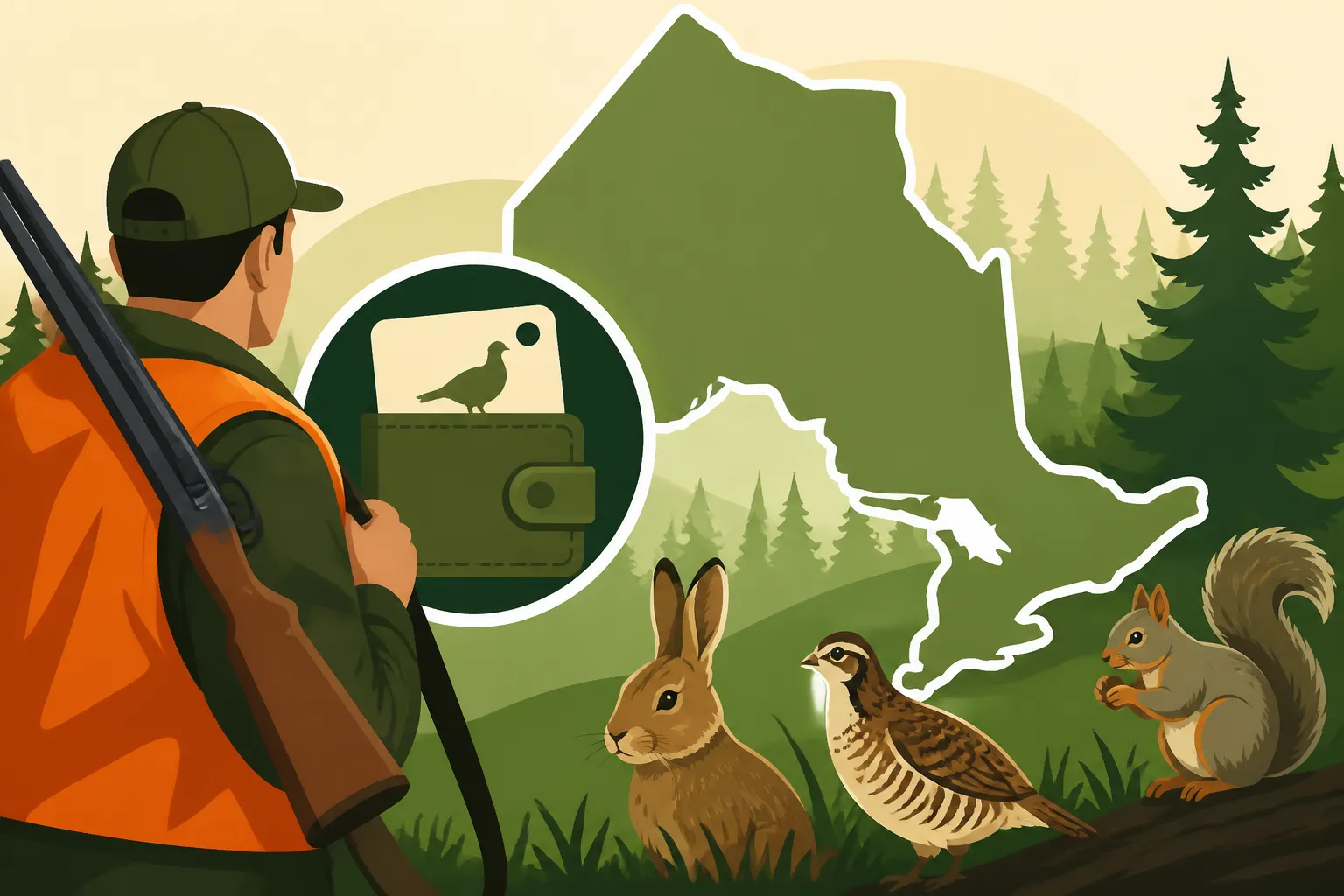
The Ontario small game licence opens up a fantastic world of hunting opportunities, allowing you to pursue a wide variety of species that are often overlooked but provide excellent sport and table fare. Generally, this licence covers upland birds like Ruffed Grouse, Spruce Grouse, and Sharp-tailed Grouse, as well as American Woodcock and Snipe. These birds offer exciting hunts in diverse habitats, from old logging roads to thick alder bottoms.
Beyond feathered game, your small game licence also permits you to hunt furbearers like cottontail rabbits, snowshoe hare, and squirrels. These are fantastic species for introducing new hunters to the sport or for seasoned hunters looking for a fast-paced outing. However, it's really important to distinguish what is and isn't covered. While you can hunt some furbearers like rabbit and squirrel with this licence, species typically hunted for their pelts by trappers, such as beaver, fox, marten, and fisher, are not included. Similarly, migratory game birds like ducks and geese require a separate federal Migratory Game Bird Permit in addition to your provincial licence. If you're interested in pursuing larger predators like coyotes or wolves, there are specific rules and potential tag requirements depending on the Wildlife Management Unit (WMU) you're hunting in. Make sure you know your target species and the specific regulations that apply.
The Outdoors Card – Your Foundation for Hunting in Ontario
Think of your Outdoors Card as your primary hunter's ID in Ontario. It's the absolute first step for anyone wanting to hunt or fish in the province, and it's something you'll need before you can even think about purchasing a small game licence. This card is valid for three calendar years and acts as your permanent identifier within Ontario's licensing system. It confirms that you've met the necessary hunter education requirements, such as completing the Ontario Hunter Education Requirements.
Without a valid Outdoors Card, you simply cannot purchase any hunting licence in Ontario, including the small game licence. It's a non-negotiable requirement. When you go to buy your annual small game licence, you'll always be asked for your Outdoors Card number. It streamlines the process and ensures that all hunters on record have met the provincial standards for safety and ethical hunting. If you're new to hunting in Ontario or your card has expired, your first step will always be to Getting an Ontario Outdoors Card before you proceed to any specific licence purchases.
Breaking Down the Costs of an Ontario Small Game Licence
Let's talk brass tacks: what's this actually going to cost you? The price of your small game licence in Ontario isn't a fixed, one-size-fits-all number. It varies depending on whether you're an Ontario resident or a non-resident, and it's always in addition to the cost of your Outdoors Card. It's important to understand these distinctions to budget properly for your hunting adventures.
Resident Small Game Licence Fees
For those of us lucky enough to call Ontario home, the cost for a resident small game hunting licence is generally quite affordable, especially when you consider the vast opportunities it unlocks. As of recent seasons, a resident annual small game hunting licence typically costs in the range of $20-$30 CAD. This fee is paid annually, on top of the initial cost of your Outdoors Card, which has its own fee (around $9 for residents, valid for three years).
This makes small game hunting a very accessible entry point for new hunters or a cost-effective way for experienced hunters to enjoy more time afield. Remember, these prices can be adjusted by the province, so it's always best to check the current rates directly on the Fish and Wildlife Licensing Service portal or through a ServiceOntario centre when you're ready to purchase. You can also find a lot of information about general licence costs by checking out our guide on Ontario Hunting Licences and What They Cost.
Non-Resident Small Game Licence Fees
If you're visiting Ontario from outside the province or Canada, the non-resident small game licence fee will be considerably higher than what residents pay. This difference is standard practice across many jurisdictions to help fund conservation efforts within the province and reflect the limited access non-residents may have compared to residents. Non-resident fees are typically in the range of $80-$100 CAD for an annual small game licence.
Again, this is in addition to the non-resident Outdoors Card fee, which is also higher than the resident card. It's essential for non-residents to factor in these costs when planning their trip. While it's a larger upfront investment, the quality of hunting opportunities for species like grouse and hare across Ontario's vast landscapes often makes it well worth it. Always verify the latest non-resident fees through the official Ontario government channels before your trip to avoid any surprises.
Additional Costs and Considerations
While the small game licence is the main expense for pursuing species like grouse and rabbits, there are a few other costs and considerations that might sneak up on you if you're not aware. Firstly, if you plan on hunting migratory game birds such as ducks or geese, you'll need to purchase a federal The Federal Migratory Game Bird Permit. This is a separate permit that costs around $17 CAD annually and is required in addition to your provincial small game licence. It's not optional for migratory bird hunting.
Secondly, for non-residents, if you manage to harvest game and wish to take it back across the border, you might need an export permit. This is generally more relevant for big game or multiple furbearers, but it's something to keep in mind, especially for species with specific regulations. Always check the rules for transporting game across international borders. Finally, while not a direct licence cost, if you use digital tools for scouting or information, platforms like GoHunt, while primarily focused on Western U.S. hunting, can offer valuable mapping and planning resources. Hunters use various apps for Scouting With Satellite Imagery in Ontario, which can come with their own subscription fees. These aren't mandatory for purchasing your licence but are common additional expenses for modern hunters.
What Your Small Game Licence Covers (and Doesn't)
Having your small game licence in hand is a great feeling, but it's just the first step. Understanding the specifics of what it actually covers, including limits and where you can hunt, is paramount to staying legal and having a successful, ethical hunt. Don't assume anything – always check the latest regulations.
Species-Specific Coverage and Bag Limits
Your small game licence broadly covers a range of species, but for each one, there are specific seasons and bag limits that you must adhere to. For example, if you're chasing Ruffed Grouse, a popular small game species, you'll find that the season generally runs from September 1st to December 15th in most WMUs, with a daily bag limit often set at five birds per day. The possession limit, which is the total number of birds you can have at home, might be double the daily limit. However, these dates and limits can vary by WMU, so if you're Hunting Ruffed Grouse on an Ontario Bush Road, always check the specific rules for your area.
For other popular small game like cottontail rabbits and snowshoe hare, the seasons typically open later in the fall and extend through winter, offering a fantastic opportunity for cold-weather hunting. Rabbit and Hare Hunting in Ontario often has generous bag limits, making for fun, high-action hunts. Squirrels, especially grey and black squirrels, also fall under the small game licence, with seasons usually aligning with other small game from fall into winter. Their limits are also generally quite generous. It cannot be stressed enough: the official Small Game Season Dates and Limits in the provincial regulations summary are your best friend.
Geographic and Seasonal Coverage
Your Ontario small game licence is generally valid across the entire province, but the specific season dates and sometimes even the bag limits can vary significantly by Wildlife Management Unit (WMU) or district. Ontario is a huge province, and what's legal in the northern boreal forest might be different from the rules in southern Ontario farmland. For instance, Spruce Grouse might have different season lengths or limits in far northern WMUs compared to Ruffed Grouse in the central part of the province.
This means you can't just pick up your licence and go anywhere at any time. You need to know which WMU you're hunting in and consult the regulations summary for that specific area. Many hunters use digital mapping tools like GoHunt to familiarize themselves with WMU boundaries and terrain features, helping them plan their hunts effectively. It's a crucial step to avoid accidental violations and to maximize your success. Understanding Reading an Ontario WMU Map Before You Go is an essential skill for any hunter in Ontario.
Exclusions: What You'll Need Separate Tags For
While the small game licence is comprehensive for its category, it's really important to understand what it doesn't cover. As mentioned, migratory game birds like ducks, geese, and woodcock require the federal Migratory Game Bird Permit in addition to your provincial licence. Without that federal permit, you cannot legally hunt these species, even if you have your small game licence.
Beyond that, the small game licence does not cover big game species such as white-tailed deer, moose, or black bear. For these, you'll need separate big game licences and, often, specific tags obtained through draws or allocations. For instance, Whitetail Hunting in Ontario requires a specific deer licence and often an antlerless tag validation for certain WMUs. Similarly, hunting furbearers that are traditionally trapped, like beaver, fox, or otter, falls under trapping regulations, not the small game licence. Even wolves and coyotes, while sometimes referred to as predators, often have their own specific regulations and may require a separate tag depending on the WMU, especially for wolves. Don't assume your small game licence gives you carte blanche for everything smaller than a deer; always check.
How to Purchase Your Ontario Small Game Licence
Now that you know what you need and what it covers, let's get down to the practical steps of actually acquiring your small game licence. Ontario has made the process quite accessible, with both online and in-person options, ensuring you can get what you need no matter where you are in the province.
Online Purchase Through the Fish and Wildlife Licensing Service
By far the most convenient way to purchase your Ontario small game licence (and any other hunting or fishing licences) is through the province's official Fish and Wildlife Licensing Service portal. This online system is available 24/7, meaning you can get your licence from the comfort of your home, any time of day or night. You'll need your Outdoors Card number to log in, or you can create an account if you're a new user or need to renew your Outdoors Card.
The process is fairly straightforward:
- Log in: Go to the official Ontario hunting and fishing licensing website.
- Select your licence: Navigate to the hunting section and choose the "Small Game Hunting Licence."
- Confirm details: Verify your personal information linked to your Outdoors Card.
- Pay: Complete the purchase using a credit card.
- Print or save: Once purchased, you'll receive a confirmation and a printable version of your licence. You can also save it to your mobile device. Many hunters appreciate the convenience of platforms like GoHunt for planning, but for the actual licence purchase, the official provincial portal is the definitive source.
It's truly a seamless experience, and having a digital copy on your phone or a printed copy with you is perfectly acceptable while afield. Remember, you can also manage your existing licences and view your hunting history through this same portal.
In-Person Options
While the online portal is incredibly convenient, not everyone prefers or has access to online services. For those who prefer a face-to-face transaction or need assistance, Ontario offers several in-person options for purchasing your small game licence.
You can visit any authorized licence issuer across the province. These are often small businesses like bait shops, tackle shops, general stores, or outdoor retailers that are designated by the Ministry of Natural Resources and Forestry (MNRF) to sell hunting and fishing licences. They usually have knowledgeable staff who can help you navigate the options and answer basic questions. Alternatively, you can also purchase licences at select ServiceOntario centres. These government service hubs handle a wide range of provincial services, and many offer hunting and fishing licence sales. Just be aware that wait times at ServiceOntario can sometimes be longer, especially during peak seasons. Whichever method you choose, remember to bring your Outdoors Card and a valid piece of ID with you.
Managing Your Licence Information
Once you've got your small game licence, the journey isn't over. Proper management of your licence information is crucial. This includes keeping track of your Outdoors Card expiry date, knowing when your annual small game licence needs to be renewed, and ensuring you always have proof of your valid licence on you when hunting.
Your Outdoors Card is valid for three calendar years, and it's a good habit to mark its expiry date on your calendar. Your small game licence, on the other hand, is an annual purchase. The online portal makes it easy to see what you hold and when it expires. While carrying a physical printout is always a safe bet, many hunters now carry their licences on their phones, which is perfectly acceptable as long as you can present it to a Conservation Officer upon request. Also, don't forget the importance of Reporting Your Ontario Harvest. This mandatory step helps the province manage wildlife populations and ensures sustainable hunting for years to come. Hunters often use apps or the official portal to report their harvests efficiently.
Ontario Small Game Species and Key Regulations Overview
To give you a clearer picture of what your small game licence encompasses, here's a brief overview of some popular species and general regulatory points. Always consult the current Ontario Hunting Regulations Summary for precise, up-to-date information for your specific WMU.
| Species | Typical Season (General) | Daily Bag Limit (General) | Notes |
|---|---|---|---|
| Ruffed Grouse | Sept 1 – Dec 15 | 5 | Found widely across the province. |
| Spruce Grouse | Sept 1 – Dec 15 | 5 | More common in coniferous forests, especially in Northern Ontario. |
| Sharp-tailed Grouse | Sept 1 – Dec 15 (limited WMUs) | 3 | Found in specific grassland/prairie habitats in NW Ontario. |
| American Woodcock | Sept 1 – Dec 31 (varies by zone) | 8 | Requires federal migratory bird permit. Found in wet, alder thickets. |
| Snipe | Sept 1 – Dec 31 (varies by zone) | 8 | Requires federal migratory bird permit. Found in wet meadows and marshes. |
| Eastern Cottontail | Sept 1 – Feb 28 | 6 | Southern Ontario focus. Great for running beagles. |
| Snowshoe Hare | Sept 1 – March 31 | 6 | Widespread, especially in Northern/Central Ontario. Good in snow. |
| Grey & Black Squirrel | Sept 1 – Dec 15 | 5 | Found in hardwood forests, particularly in Southern Ontario. |
This table provides a snapshot, but it's really a starting point. Hunting Small Game in Ontario is incredibly diverse, and the experience changes based on the species, the season, and the specific terrain you're exploring, from Hunting Deer in Southern Ontario Farmland to Hunting Ontario's Northern Lake Country.
Disclaimer
The information provided in this guide is for general informational purposes only and does not constitute legal advice. Hunting regulations in Ontario are subject to change. It is the responsibility of every hunter to consult the most current official Ontario Hunting Regulations Summary available from the Ministry of Natural Resources and Forestry (MNRF) or ServiceOntario before engaging in any hunting activities. Always ensure you are compliant with all federal, provincial, and local laws and regulations.