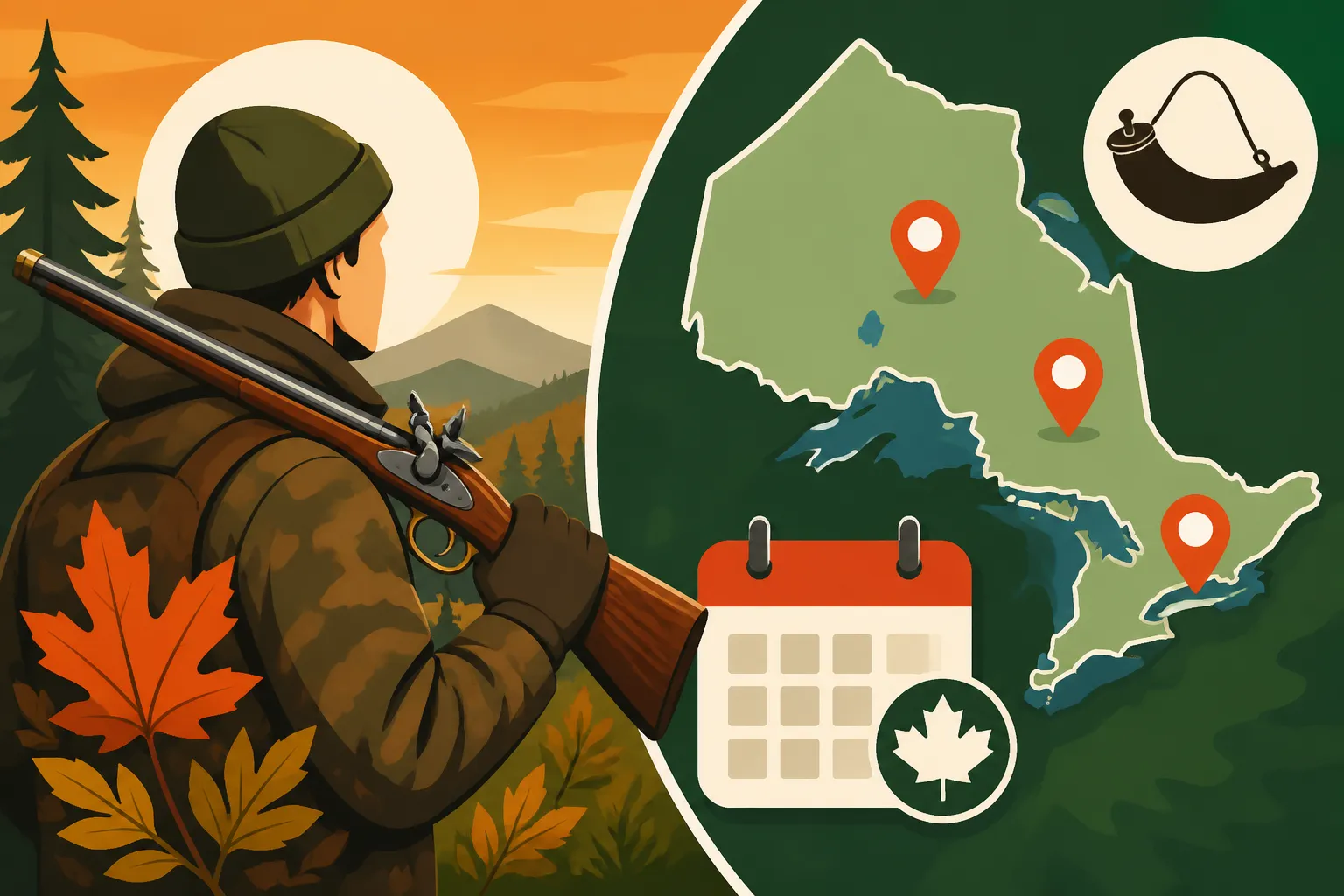
Muzzleloader Dates and Where They Apply
For many of us who live for the hunt, the end of the general firearms season can feel like a sudden, unwelcome quiet. You’ve put in the scouting, spent hours in the stand, and maybe even filled a tag or two. But then, as the leaves fall and the colder air truly settles in, you realize there might still be an opportunity calling your name: muzzleloader season. It’s a distinct window, often misunderstood, that offers a unique challenge and extends your time afield in Ontario. This guide is here to demystify muzzleloader dates and explain exactly where these special seasons apply, helping you keep your hunting passion alive a little longer.
The Unique Appeal of Muzzleloader Hunting in Ontario
Muzzleloader hunting isn't just a quirky niche; it's a profound return to the roots of hunting, offering a distinct experience that separates it from modern firearms. The act of carefully loading powder, patch, and ball, then taking a single, deliberate shot, brings an unparalleled connection to the tradition of the hunt. This isn't about rapid-fire follow-ups or long-range precision, but rather about patience, tracking, and getting truly close to your quarry.
Why Muzzleloaders Offer a Unique Challenge
There’s an undeniable romanticism that comes with hunting with a muzzleloader. You’re stepping back in time, embracing a method that demands a different skill set than today’s high-tech rifles. The single-shot nature means that every pull of the trigger carries immense weight; there’s no second chance if your shot isn't perfect. This often translates to a more methodical approach to hunting. You’re forced to hone your stalking skills, understand wind direction intimately, and ensure you’re within a reasonable, ethical range for your chosen firearm. It’s a test of woodsmanship that many find deeply rewarding, elevating the satisfaction of a successful hunt.
Beyond the single shot, the slower reload time of a muzzleloader adds another layer to the challenge. Imagine yourself on a track, heart pounding as you close the distance on a whitetail, knowing that once you pull the trigger, the animal will either be down or you'll be embarking on a slower, more deliberate reload. This pushes hunters to wait for the absolute best shot opportunity, fostering discipline and respect for the game. It’s a less forgiving method, which in turn, cultivates a higher level of hunting prowess and a deeper appreciation for the experience.
Extending Your Hunting Opportunities
One of the most practical and appealing aspects of muzzleloader season in Ontario is the opportunity it provides to extend your time in the field, often bridging the gap between the general gun season and the deeper winter months. Many hunters find that while the modern firearm seasons are incredibly popular and sometimes feel a bit crowded, the muzzleloader season can offer a quieter, more solitary experience. This is especially true for those who crave the tranquility of the late fall woods.
For those who may have missed out on a tag during the earlier seasons, or simply didn't fill their primary tag, muzzleloader season provides a crucial second chance. It’s a chance to put all that earlier scouting to good use, often in conditions that have changed significantly with the arrival of colder weather and perhaps even a dusting of snow. This extended period can be particularly productive for deer, as they are often more focused on feeding to build reserves for winter, making their movements a bit more predictable for a savvy hunter.
Equipment Considerations for Muzzleloader Season
Getting into muzzleloader hunting requires a bit more than just grabbing a rifle and a box of cartridges. The equipment is distinct and demands specific knowledge and care. First and foremost, you'll need the muzzleloader itself. These can range from traditional flintlock or percussion cap rifles to more modern inline muzzleloaders, which use a 209 shotgun primer for ignition and can often handle higher pressures and modern propellants. Your choice will depend on your personal preference for tradition versus convenience and accuracy.
Beyond the firearm, you'll need the right projectiles, propellants, and ignition sources. This includes black powder or a suitable substitute (like Pyrodex or Triple Seven), sabots or patched round balls, and either percussion caps or 209 primers, depending on your rifle. Keeping all these components dry and in good condition is critical for reliable performance in the field, especially during late-season hunts where damp conditions are common. Many hunters also carry a compact cleaning kit for quick field maintenance, as black powder residues can be corrosive if not addressed promptly. Having a well-organized Truck Kit for a Northern Ontario Hunt can make all the difference when dealing with these specific requirements in remote areas.
Understanding Ontario's Muzzleloader Season Dates
Navigating Ontario's hunting regulations can sometimes feel like deciphering an ancient scroll, especially when it comes to specific weapon seasons. Muzzleloader dates are no exception; they aren’t a uniform, province-wide blanket but rather a patchwork dictated by individual Wildlife Management Units (WMUs). This can be a source of frustration for hunters who just want a clear answer, but it's designed to manage local deer populations effectively.
General Season Framework
While there isn't a single, universal muzzleloader season across all of Ontario, there's a general framework you can expect. Muzzleloader seasons for big game, primarily white-tailed deer, typically occur after the general gun season for rifles and shotguns has concluded in a given WMU. This post-gun season timing is intentional, offering that extended opportunity we talked about. Sometimes, in specific WMUs, you might also find a muzzleloader season running concurrently with archery season, or even a short, exclusive window prior to the general gun opener.
The length and timing of these seasons can vary significantly. Some WMUs might have a short, week-long muzzleloader hunt in late November or early December, while others might offer a longer stretch. It’s not uncommon to see these seasons extend into December, providing a frosty, late-fall hunting experience. Hunters looking to specifically pursue Whitetail Hunting in Ontario often pay close attention to these dates to maximize their time in the woods. This variability underscores the importance of consulting the official regulations for your specific hunting area each year.
Regional Variations and WMU Specifics
Ontario is a vast province, stretching from the farmlands of the south to the dense boreal forests of the north. This incredible diversity in habitat, climate, and deer populations necessitates a highly localized approach to season setting. What applies in the agricultural heartland of Southwestern Ontario will likely be very different from the rules in the rugged Canadian Shield country further north. This is where the concept of Wildlife Management Units (WMUs) becomes absolutely critical.
Each WMU has its own specific set of regulations, including unique start and end dates for muzzleloader seasons. For instance, some southern WMUs might have muzzleloader seasons tied to antlerless deer tags or controlled hunts, designed to manage deer numbers in more populated areas. In contrast, northern WMUs might have more straightforward seasons, reflecting different population dynamics and hunting pressures. It's a complex system, but understanding that WMU boundaries define these rules is the first step to finding your specific season. Always be sure to check the specific regulations for the Ontario's Wildlife Management Units you plan to hunt.
Key Dates to Mark on Your Calendar
Given the WMU-specific nature, it’s impossible to list every single muzzleloader date here. However, I can give you a general idea of when to expect these seasons and, more importantly, how to find the precise dates for your area. Generally, for white-tailed deer, you’ll be looking for dates in late November and throughout December. These often follow directly on the heels of the regular rifle seasons.
For example, in some WMUs, if the rifle season ends around November 15th, you might find a muzzleloader season kicking off the following Monday and running for a week or two. In other areas, particularly in Southern Ontario, the muzzleloader season might extend almost to Christmas. This late-season window can be fantastic, as deer are often on consistent feeding patterns and cold weather can sometimes concentrate them. Always remember that these dates are subject to change year-to-year, so annual verification is non-negotiable.
How to Find Your Specific Muzzleloader Opportunities
The key to a successful and legal muzzleloader hunt in Ontario is knowing exactly when and where you can hunt. This means becoming intimately familiar with the official resources and understanding how to apply the information to your chosen hunting area. It's not always the most thrilling part of hunting, but it's absolutely essential.
Navigating the Ontario Hunting Regulations Summary
The absolute first and most important resource for any hunter in Ontario is the annual Hunting Regulations Summary. This document, published by the Ministry of Natural Resources and Forestry (MNRF), is your bible. It outlines all season dates, bag limits, licensing requirements, and weapon restrictions for every species and every WMU in the province. You can find it online on the Ontario government website or pick up a physical copy wherever hunting licenses are sold.
When you open the summary, you'll want to navigate to the section on white-tailed deer, or whichever big game species you're targeting. There, you'll find tables listing all the WMUs. Crucially, pay attention to the columns detailing the different weapon types: Archery, Muzzleloader, Shotgun, and Rifle. You'll see precise start and end dates listed for the muzzleloader season within each specific WMU. Don't skim over this! Double-check the year, ensure you're looking at the correct WMU number, and make a note of the exact dates. This is also where you'll find information on special conditions like antlerless deer validation requirements, which might impact your hunt. Understanding these rules is just as important as knowing the dates when Filling an Antlerless Tag in Ontario.
Utilizing Online Resources and Tools
In today's digital age, thankfully, we have more than just a printed booklet to rely on. The Ontario government's hunting portal is an excellent online resource that often provides searchable versions of the regulations and interactive WMU maps. These digital tools can make it much easier to pinpoint your exact hunting area and see its associated regulations. You can often filter by WMU or even by species to quickly find the information you need.
Beyond government sites, platforms like GoHunt have revolutionized how hunters access and interpret crucial information. Their sophisticated mapping tools allow you to overlay WMU boundaries with satellite imagery and landowner information, providing a visual representation of where you can hunt. Many hunters swear by GoHunt for planning their trips, as it can consolidate a lot of disparate information into one easy-to-use interface. You can literally click on a WMU on the map and often get direct links or summaries of the relevant regulations, including those tricky muzzleloader dates. This can be a huge time-saver compared to flipping through pages of a physical book, especially when you're also trying to plan where to hang a stand or scout a new area.
Important Considerations Beyond Dates
Knowing the dates is critical, but it's just one piece of the puzzle. There are several other important regulations and considerations that muzzleloader hunters must be aware of to ensure a safe and legal hunt. First, always verify the legal equipment for muzzleloader season in Ontario. This usually means specific calibre requirements, barrel length minimums, and restrictions on things like scopes (though most modern muzzleloaders are scope-friendly). Ensure your muzzleloader meets these criteria, as they can sometimes differ from general rifle season rules. You can find more detail on this in resources like Legal Firearms and Bows for Big Game.
Secondly, pay close attention to tag requirements. Even if there's an open muzzleloader season, you still need the appropriate big game tag, usually a deer tag valid for the specific WMU and animal (e.g., antlered deer, antlerless deer if you have the validation). The rules for Ontario Antlerless Deer Draws often apply to muzzleloader seasons in many areas. Also, be mindful of any blaze orange requirements, which are typically mandatory during any firearm season in Ontario. These aren't minor details; they are crucial for both legality and hunter safety. A thorough understanding of all regulations, easily verifiable through your GoHunt subscription or the official MNRF summary, is non-negotiable for a responsible hunter.
Here's a representative table showing typical muzzleloader season windows for various regions and WMUs. Please remember these are examples and exact dates will vary annually, so always consult the current Ontario Hunting Regulations Summary.
| WMU Group/Region (Example) | Muzzleloader Season Window (Typical) | Species | Common Notes |
|---|---|---|---|
| Southern Ontario Farmland | Late November – Mid December | Deer | Often follows general gun season, may require antlerless validation. |
| Central Ontario Mixed Forest | Early December | Deer | Typically a short window after rifle season concludes. |
| Eastern Ontario Farm Belt | Late November – Early December | Deer | Specific to WMU, check for controlled hunt aspects. |
| Bruce Peninsula / Manitoulin | Early December | Deer | Can be combined with other opportunities; specific WMU rules apply. |
| Northern Ontario Boreal (select) | Not common, check specific WMUs | Deer | Muzzleloader seasons are less prevalent here; rifle is dominant. |
Remember to always consult the official Ontario Hunting Regulations Summary for the most up-to-date and legally binding information for your specific WMU each year.
Disclaimer
The information provided in this guide is for general informational purposes only and is not intended as legal advice. Hunting regulations in Ontario are subject to change annually, and it is the hunter's responsibility to review and comply with the most current official Hunting Regulations Summary published by the Ontario Ministry of Natural Resources and Forestry (MNRF) before participating in any hunting activity. Always confirm season dates, tag requirements, and legal equipment for your specific Wildlife Management Unit (WMU) directly from official government sources.