Ontario Trespass and Landowner Law
It's an age-old challenge for hunters, especially those of us who spend a lot of time chasing game in Ontario: figuring out where you can legally hunt and, perhaps more importantly, where you absolutely cannot. The lines between public and private land can be incredibly blurry, and the last thing any responsible hunter wants is to accidentally trespass, causing trouble for themselves, the landowner, and the entire hunting community. This comprehensive guide is here to untangle the complexities of Ontario's trespass and landowner laws, ensuring you can enjoy your time in the bush with confidence and respect.
The Foundation of Respect: Understanding Ontario's Trespass Laws
Before you even think about stepping into the woods, whether it's for deer, moose, or small game, it’s critical to understand the legal framework that governs land access in Ontario. This isn't just about avoiding a fine; it's about upholding the integrity of hunting and showing respect for property rights, which ultimately safeguards access for all of us.
What Constitutes Trespass in Ontario?
At its core, trespass in Ontario, as defined by the Trespass to Property Act, means entering or remaining on premises where you are not permitted. This might sound straightforward, but it has a few nuances. "Premises" is a broad term, covering not just buildings, but also land, water, structures, and even a portion of a building or land.
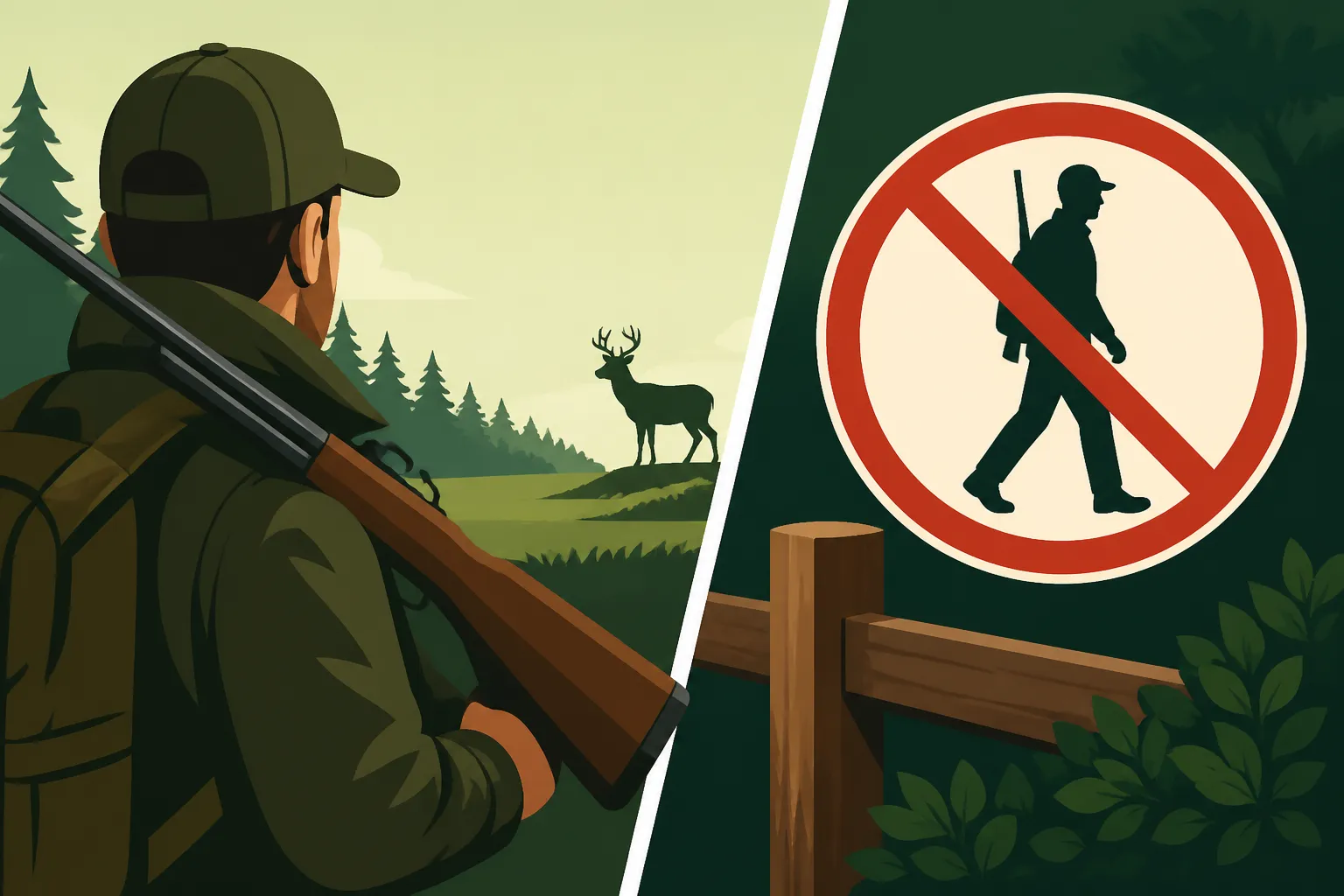
The critical distinction often lies between an "implied invitation" and "express prohibition." Generally, if a property is unfenced, unsigned, and appears undeveloped, there might be an implied invitation for recreational use, but this is a shaky assumption at best, especially when hunting is involved. For hunting, you should never rely on implied permission. On the flip side, an express prohibition is clear: "No Trespassing" signs, locked gates, fences, purple paint on trees (less common in Ontario but recognized elsewhere), or a direct verbal warning from the landowner all serve as express prohibitions. Even if a property isn't explicitly marked, if a landowner tells you to leave, you must leave immediately. Disregarding such a directive is a direct violation and can quickly escalate the situation, leading to serious legal trouble.
The Trespass to Property Act: Your Legal Compass
The Trespass to Property Act (TPA) is the primary piece of legislation governing trespass in Ontario. It provides landowners with the power to control who enters their property and outlines the penalties for those who don't comply. A landowner, or someone authorized by them, can order you off their property. If you refuse, they can call the police, and you could be charged. The TPA is designed to protect property rights and maintain peace on private land.
It’s important to understand that a TPA violation is separate from, but can often be compounded by, a violation of the Fish and Wildlife Conservation Act (FWCA). For example, if you hunt on private land without permission, you could be charged under both the TPA (for trespassing) and the FWCA (for hunting on private land without consent). The penalties under the FWCA for such offences are often more severe, including higher fines and the potential loss of your hunting licence and Outdoors Card. This dual enforcement aspect highlights why being crystal clear on property boundaries and permissions is non-negotiable for hunters.
The Golden Rule: Securing Permission for Private Land
Hunting on private land in Ontario offers some incredible opportunities, especially in the more agriculturally rich southern regions. However, this access hinges entirely on one thing: explicit permission from the landowner. There are no shortcuts here, and assuming you have permission is a gamble you simply cannot afford to take.
The Importance of Express, Written Consent
When it comes to private land, a casual verbal "yeah, sure, go ahead" just doesn't cut it. What if the landowner forgets? What if their relative objects? What if someone else sees you and reports you, and the landowner denies giving permission to avoid conflict? It happens more often than you think. This is why express, written consent is the gold standard. A simple written agreement, signed by both parties, clarifies expectations and provides irrefutable proof of your right to be there.
A good written permission agreement should be concise but comprehensive. It should include the landowner's name and contact information, your name and contact information, the specific property description (e.g., municipal address, lot/concession number), the dates or duration for which permission is granted, and the species you are permitted to hunt. It can also specify any conditions, such as areas to avoid, gate etiquette, or vehicle access. Having a template for this kind of agreement handy can save you a lot of grief. You can find simple templates online or create your own, just ensure all key details are present. Remember, this document protects both you and the landowner, so take it seriously.
Approaching Landowners: Strategies for Success
Getting permission for private land can feel daunting, but it's often simpler than you imagine if you approach it with respect and a good attitude. Cold-calling or knocking on doors can lead to great opportunities, particularly if you are interested in Hunting Deer in Southern Ontario Farmland. When you go Knocking on Doors in Southern Ontario, always be polite, dress neatly (no camo, please, it can be intimidating), and introduce yourself clearly. Explain who you are and why you're there. Don't immediately launch into asking for hunting access; instead, ask if they have any trouble with deer, coyotes, or other game that might be causing issues. This frames your request as a potential solution to their problem.
Building rapport is key. Offer to help with chores like fixing a fence, moving firewood, or anything else they might need a hand with. Show genuine interest in their farm or property. Sometimes, it takes a few conversations or even a season of helping out before hunting access is granted. Be prepared for a "no," and accept it graciously without pushing. Leaving a thank-you note, even after a rejection, can leave a lasting positive impression. A positive attitude and a willingness to offer something in return often pave the way for future opportunities.
Utilizing Modern Tools for Property Identification
In today's world, technology has made identifying property boundaries and ownership much easier, but it still requires diligence. Tools like the GoHunt app, Google Earth, and municipal property lookup services are invaluable for researching potential hunting spots. They allow you to view satellite imagery, property lines, and sometimes even landowner contact information from the comfort of your home. This way, you can narrow down properties you want to approach and ensure you're speaking to the actual owner.
However, it's crucial to understand that these tools are not infallible. Satellite imagery can be outdated, and digital property lines are approximations. They should be used as a starting point, not as definitive legal boundaries in the field. Always verify property lines on the ground with a compass and GPS, and if possible, walk the boundaries with the landowner. Never assume that what you see on an app is perfectly accurate, especially when hunting. For detailed Scouting With Satellite Imagery in Ontario, remember that while helpful for planning, it's no substitute for on-the-ground reconnaissance and clear communication with landowners.
Navigating Ontario's Vast Crown Land for Hunting
Ontario is blessed with an immense amount of Crown Land, particularly in the northern and central parts of the province. This public land is often available for hunting, offering incredible opportunities for those willing to venture into the backcountry. However, "public" doesn't mean "anything goes." There are still important rules and restrictions to adhere to.
General Access Rules for Crown Land
While much of Ontario's Crown Land is open for hunting, it's not a free-for-all. Hunters generally have a "right to roam" on Crown Land that is not otherwise designated or restricted. This means you can walk, hike, and hunt in most areas. However, there are specific restrictions to be aware of. For instance, some Crown Land may be designated as a Conservation Reserve, Provincial Park (though some do allow hunting), or other protected area where hunting may be prohibited or restricted to specific seasons and species. Always check the regulations for the specific Wildlife Management Unit (WMU) you intend to hunt.
Beyond official designations, be mindful of other users. Crown Land is shared by trappers, campers, hikers, ATV riders, and cottagers. Respecting their presence and safety is paramount. Do not set up blinds or shoot close to known campsites or trails. Common courtesy goes a long way in maintaining positive public perception of hunters and ensuring continued access for everyone. Understanding Hunting Ontario's Crown Land involves more than just knowing where the land is; it's about knowing how to use it responsibly.
Identifying and Confirming Crown Land Boundaries
Pinpointing exactly where Crown Land begins and ends, especially in vast, unmarked bush, can be a real headache. The best tool for this is the Ontario Crown Land Use Policy Atlas (CLUPA), which is available online. This interactive map allows you to zoom in and identify different land designations, including Crown Land, private property, and various protected areas. Many third-party mapping applications, including GoHunt, integrate CLUPA data or similar land status layers, making it even easier to visualize in the field.
Despite these tools, boundary lines in remote areas are rarely marked with fences or signs. It's up to you, the hunter, to know where you are at all times. Carrying a reliable GPS unit with pre-loaded maps, along with a compass and paper map, is essential. If you are unsure, err on the side of caution. Accidentally crossing onto private land, even if it's deeply in the bush and unmarked, is still trespassing and carries the same legal risks. This is especially true near agricultural areas or remote cottages where private parcels can be interspersed within larger Crown Land blocks.
Specific Rules for Crown Land Use While Hunting
Even when hunting on legally accessible Crown Land, certain activities have specific rules. For instance, if you're planning an extended hunt, understanding Camping Rules on Ontario Crown Land is vital. While generally permitted for up to 21 days in one spot, non-residents often require a permit. Similarly, Treestand Rules on Ontario Crown Land dictate that stands must be portable, cannot cause damage to trees, and must be removed at the end of the season. You cannot build permanent structures or leave stands up year-round.
Vehicle access is another common point of confusion. Vehicle Rules on Ontario Crown Land state that motorized vehicles are generally restricted to existing roads and trails. You cannot simply drive off-road wherever you please, especially in environmentally sensitive areas. Using ATVs or trucks to retrieve game from off-road areas without specific permission or designation can result in fines and environmental damage. Always check the specific regulations for your WMU and adhere to any posted signage regarding vehicle access.
Here's a quick comparison of permission requirements:
| Land Type | Permission Required? | Best Practice for Hunters | Key Considerations |
|---|---|---|---|
| Private Land | Absolutely, explicitly | Written permission agreement with landowner | Verify boundaries, include dates/species, offer help in return. Legal consequences for trespass are significant. |
| Crown Land | Generally no (for hunting) | Consult CLUPA/maps, check WMU regs for specific restrictions | Respect other users, adhere to camping/treestand/vehicle rules. Know your location relative to private parcels. |
| Conservation Reserves | Varies (often restricted) | Check specific reserve regulations | Many are no-hunting areas, some have limited seasons/species. |
| Provincial Parks | Varies (some allow hunting) | Check specific park regulations | Very few allow hunting, typically managed controlled hunts. Do NOT assume general access. |
| Municipal Lands | Varies (check local bylaws) | Contact municipal office for specific bylaws/permissions | Often have bylaws prohibiting firearms or hunting. Assume no access unless explicitly granted. |
Tricky Situations: Retrieving Game and Hunting Along Edges
Even the most prepared hunter can find themselves in a morally and legally challenging situation. Two of the most common are when a wounded animal crosses onto private land and when you're hunting right up against a property line.
Retrieving Game From Adjacent Private Property
This is perhaps one of the most agonizing scenarios for a hunter. You've made a good shot, but the animal runs, and you watch it disappear onto posted land or a neighbour's property where you don't have permission. The ethical obligation to recover game is deeply ingrained in every responsible hunter, yet the legal reality is that you cannot trespass to retrieve it. Even if you see the animal lying dead just over the fence, crossing that property line without permission is illegal.
Your first step must be to contact the landowner immediately. Explain the situation calmly and respectfully. Offer to show them exactly where the animal is and ask for permission to enter and retrieve it. If they grant permission, proceed cautiously and only do what you were permitted to do. If they deny permission, it's an incredibly tough pill to swallow, but you must respect their decision. Legally, the animal remains on their property. Some landowners might allow you to retrieve it but stipulate that they keep the meat. It's a negotiation, and your reputation as a respectful hunter hinges on how you handle it. This tough situation highlights why understanding Retrieving Game From Private Land in Ontario is so important for ethical hunters.
Hunting Adjacent to Posted Land or Property Lines
Hunting near a property line or adjacent to posted land requires extreme caution and meticulous planning. A general rule of thumb is to allow a significant buffer zone between your stand location or hunting position and any property line. While there isn't a universally mandated "safety zone" distance in Ontario for shooting across property lines (unless it's a road or dwelling), responsible practice dictates being well within your own property to ensure any shot taken and the resulting projectile stays on land you have permission to hunt.
When setting up your stand or blinds, use your mapping tools like GoHunt to precisely mark property lines. Remember that arrow or bullet trajectory can carry further than you might anticipate. Ensure your shot angle is always safe and that there's an adequate backstop on land you can legally hunt. Accidental trespass while tracking a wounded animal is still trespass. If you know you're hunting close to a line, have a plan for what you'll do if an animal crosses over. This proactive approach can prevent a stressful situation from becoming a legal nightmare.
Roads, Railways, and Hydro Lines: Understanding Rights-of-Way
These linear features often present unique access questions. Public roads are generally safe to travel on, but hunting from a vehicle on a road, or shooting across a travelled portion of a road, is strictly prohibited in Ontario. Each municipality may also have bylaws restricting firearm discharge within certain distances of roads or dwellings. Always check local bylaws, in addition to provincial regulations.
Railway rights-of-way are generally private property owned by the railway company. Hunting or even accessing them without explicit permission is trespassing and extremely dangerous. Not only can you face legal charges, but the risk of being struck by a train is very real. Avoid these areas unless you have secured permission, which is rarely granted for hunting. Similarly, hydro lines and other utility corridors often pass over private land or Crown Land. While the utility company has rights to maintain the corridor, this does not automatically grant public hunting access. Always assume these corridors are part of the underlying property and require permission if it's private. An exception might be a Hunting a Hydro Line Right-of-Way if it's clearly on Crown Land and doesn't fall under other restrictions.
The Consequences of Disregarding Landowner Law
Ignoring Ontario's trespass and landowner laws is not just a minor infraction; it carries significant legal, financial, and reputational repercussions. As responsible hunters, it's vital to understand these consequences to prevent them and to reinforce the importance of ethical conduct.
Legal Ramifications: Fines, Charges, and More
The immediate legal consequence of trespassing, especially when hunting, can be severe. Under the Trespass to Property Act, fines can be substantial, often in the hundreds of dollars, and repeated offences can lead to even higher penalties or even imprisonment in egregious cases. However, for hunters, the charges rarely stop there. If you are found hunting on private land without permission, you will likely also face charges under the Fish and Wildlife Conservation Act. Ontario Penalties for Hunting Violations under the FWCA are often much higher, potentially reaching thousands of dollars.
Beyond monetary fines, a conviction under the FWCA can lead to the suspension or revocation of your hunting licence and Outdoors Card. This means you could be prohibited from hunting in Ontario for a period, sometimes permanently. For avid hunters, losing the privilege to hunt is a devastating consequence. Furthermore, your equipment, such as firearms, bows, or ATVs used during the offence, can be seized. The legal fees associated with defending against such charges can also quickly add up, making a simple act of trespass incredibly costly.
Reputational Damage and Community Impact
While legal penalties are tangible, the damage to a hunter's reputation and the broader hunting community is often immeasurable. When a hunter trespasses, they don't just reflect poorly on themselves; they cast a shadow over all hunters. Landowners who have a negative experience with one hunter are far less likely to grant access to others, even if those others are respectful and responsible. This erosion of trust can lead to more "No Trespassing" signs, fewer hunting opportunities, and increased animosity between landowners and hunters.
This ripple effect hurts local hunters, guides, and businesses that rely on hunting tourism. It fuels negative stereotypes about hunters being disrespectful or lawless, making it harder for hunting organizations to advocate for fair regulations and continued access. Every time a hunter acts irresponsibly, it undermines the collective effort to promote hunting as a legitimate, ethical, and conservation-focused activity. We are all ambassadors for hunting, and our actions directly impact public perception.
Reporting Violations and Enforcement
If you witness a trespass or hunting violation, it's your responsibility as an ethical hunter to report it. Ignoring such behaviour only perpetuates the problem. In Ontario, you should contact the Ministry of Natural Resources and Forestry (MNRF) via their tip line, 1-877-TIPS-MNR (1-877-847-7667), or your local police service if it's a clear trespass issue or an immediate safety concern. This is how you can Report a Poacher in Ontario and help maintain ethical standards.
When reporting, provide as much detail as possible: the date, time, location (GPS coordinates are ideal), a description of the individual(s) and vehicle(s) involved (licence plates are incredibly helpful), and the nature of the violation. If it's safe to do so, take photos or videos, but never put yourself in harm's way. While the MNRF and police cannot always respond to every call immediately, your information helps them track patterns, build cases, and allocate resources effectively. By reporting, you're not just being a "tattletale"; you're actively participating in the conservation and ethical management of Ontario's wildlife and hunting resources.
Cultivating Positive Landowner Relationships for Sustainable Hunting Access
Securing hunting access on private land isn't just a transactional exchange; it's about building genuine, long-lasting relationships based on mutual respect and trust. Responsible hunters understand that these relationships are the bedrock of future hunting opportunities.
Beyond Just Asking: Being a Good Steward of the Land
The best way to show a landowner you're trustworthy and responsible is to demonstrate it through action. Don't just show up to hunt; offer to help. Farmers and rural landowners always have tasks that need doing. This could involve helping farmers with coyote control, fixing fences, clearing brush, checking on livestock, or assisting with harvest. This goes a long way in proving your commitment and value beyond just the hunting season.
When you are granted access, treat their property with the utmost care. Close gates behind you, pack out all your trash (and maybe a little extra that wasn't yours), park where requested, and avoid disturbing areas they've asked you to steer clear of. If you successfully harvest an animal, offering to share some of the meat is a time-honoured tradition that builds incredible goodwill. A thank-you card or a small gift at the end of the season can also reinforce your appreciation. These small gestures transform a casual permission into a lasting partnership.
The Role of Hunter Behaviour in Public Perception
Our actions, both individually and collectively, shape how the public views hunting. When hunters are perceived as respectful, responsible, and engaged in conservation, public support for hunting increases. Conversely, incidents of trespass, littering, or disrespectful behaviour quickly erode that support. As hunters, we are constantly under scrutiny, and it's vital that we uphold the highest ethical standards.
This extends beyond landowner interactions. It includes how we present ourselves in public, how we talk about hunting, and how we interact with non-hunters. Education plays a crucial role too. Taking the time to explain sustainable hunting practices, the conservation benefits of hunting, and the importance of game management to curious non-hunters can help demystify our sport and build bridges, rather than walls. Every hunter has a role to play in promoting a positive image of hunting in Ontario.
Long-Term Benefits of Responsible Access
Investing time and effort into building positive landowner relationships yields significant long-term benefits. First and foremost, it secures consistent hunting opportunities. Instead of scrambling for a new spot every season, you might have a reliable place to hunt for years, even decades. This familiarity with the land and the game patterns leads to more successful and enjoyable hunts.
Beyond individual benefits, strong landowner-hunter relationships contribute to the overall health and future of hunting in Ontario. It shows that hunting can coexist harmoniously with agriculture and private land ownership. It creates a legacy of ethical hunting, ensuring that future generations will also have opportunities to enjoy this rich tradition. By being responsible, respectful, and proactive, hunters can become valued partners in the rural landscape, ensuring access and goodwill for many seasons to come.
Disclaimer
The information provided in this guide is for general informational purposes only and does not constitute legal advice. Hunting regulations and trespass laws in Ontario can be complex and may change. Always consult the most current version of the Ontario Hunting Regulations Summary, the Fish and Wildlife Conservation Act, the Trespass to Property Act, and any relevant municipal bylaws or official sources before engaging in any hunting activities. It is your responsibility to know and follow all applicable laws and regulations.