Treestand Rules on Ontario Crown Land
For many Ontario hunters, the dream of setting up a treestand on vast, wild Crown Land is a powerful one. It speaks to a deep desire for solitude, self-reliance, and finding those elusive pockets where big game roams undisturbed. But the reality is, knowing the exact rules and regulations for placing treestands on public land can feel like navigating a dense cedar swamp – confusing, with many hidden pitfalls. This guide aims to clear the brush, offering a comprehensive look at what you can and can't do when it comes to treestands on Ontario Crown Land, so you can hunt legally, ethically, and safely.
The Basics of Crown Land Access and Treestands
Before you even think about hoisting a stand into a sturdy oak or pine, it's crucial to understand the fundamental principles governing Crown Land use in Ontario, especially when it comes to any structures, temporary or otherwise. Crown Land is a shared resource, accessible to all, and that means respecting both the land itself and other users.
Understanding "Temporary" Structures
The cornerstone of treestand rules on Crown Land revolves around the concept of "temporary" structures. Simply put, you are generally allowed to place a treestand for hunting purposes, but it must be truly temporary. This isn't your own private hunting lease where you can build permanent blinds, sheds, or cut down trees to your heart's content. On Crown Land, your treestand needs to be easily removable and should not cause any permanent damage to the trees or the environment.
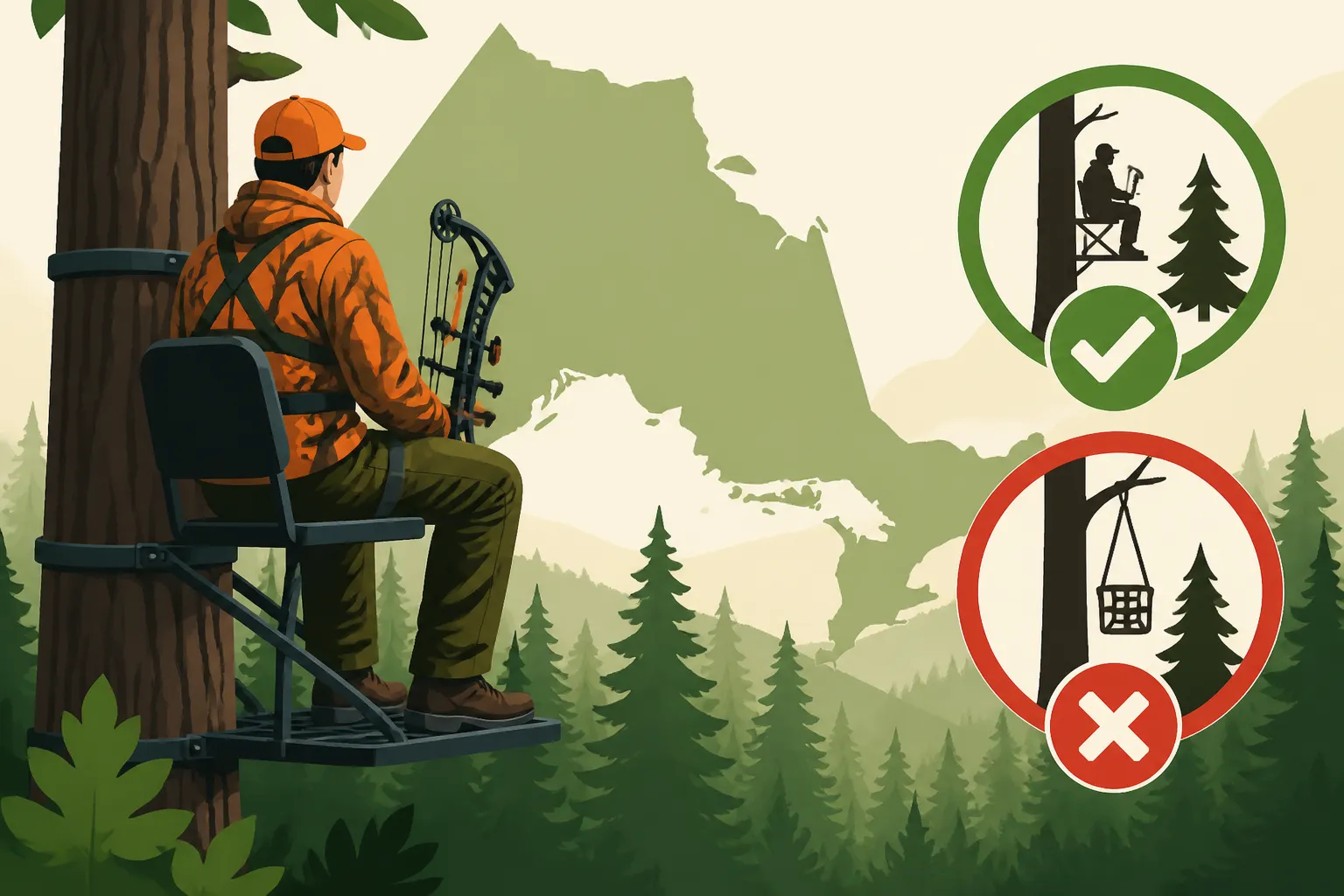
What does "temporary" really imply in practice? It means your stand should be secured using methods that don't embed themselves into the tree's living tissue. Nails, lag bolts, or any kind of screw-in steps that penetrate deep into the bark and cambium layer are generally a no-go. These inflict lasting wounds on the tree, leaving it susceptible to disease and rot long after your hunting season is over. Instead, stands that utilize straps, chains, or cabling systems are typically acceptable, as long as they don't girdle the tree or cut into it. The idea is to leave no trace, or at least, a minimal, non-permanent footprint. Imagine coming back to your stand next season: the tree should look just as healthy as when you left it.
General Rules for Hunting on Crown Land
While the focus here is treestands, it's vital to remember that all general hunting regulations apply when you're on Crown Land. You need your valid hunting license, a current Outdoors Card, and any necessary tags for the species you're pursuing. Always be aware of the specific season dates and bag limits for your Wildlife Management Unit (WMU). Ignoring these fundamental rules can lead to serious legal trouble, regardless of how perfectly you've placed your treestand.
Knowing your WMU boundaries and understanding how they relate to Crown Land is critical. Many hunters rely on GPS mapping tools like onX Hunt or GoHunt to clearly delineate these areas. These apps can be lifesavers for understanding land ownership, tracking your location, and ensuring you're not inadvertently trespassing onto private land. Before heading out, take the time to study Reading an Ontario WMU Map Before You Go and plan your route. Remember, just because an area looks wild, doesn't mean it's all Crown Land. You might find pockets of private land, municipal forests, or even conservation authority lands mixed in. Always double-check your maps and avoid assumptions.
Specific Regulations for Treestand Placement and Removal
Once you've wrapped your head around the temporary nature of treestands on Crown Land, it's time to delve into the finer points of their physical placement and what's expected of you as a responsible hunter. These rules are in place not just for environmental protection, but also to ensure fairness and safety for everyone who uses public lands.
Non-Permanent vs. Permanent Structures
To reiterate, any structure you place on Crown Land for hunting must be non-permanent. This means you can't be building a solid, fixed platform out of lumber, nor can you be sinking posts into the ground to create a long-term blind. Your treestand should be a self-contained unit that can be carried in, set up, used, and ideally, carried out at the end of your hunt, or at the very least, at the end of the season.
Consider the material and construction. A commercially manufactured hang-on stand, ladder stand, or climbing stand, designed to be portable and reusable, fits the bill perfectly. Even a well-made, temporary ground blind constructed from camouflage netting or pop-up fabric is generally fine, provided it's removed when you leave. The critical distinction is anything that requires significant alteration to the land or trees, or that is obviously intended to remain in place indefinitely, crosses the line into a prohibited permanent structure. Think of it this way: if you need tools beyond basic hand wrenches or straps to set it up or take it down, or if its removal would leave a visible, lasting impact on the natural landscape, it's likely too permanent for Crown Land. Hunting Ontario's Crown Land offers more insights into general Crown Land usage.
Identifying Your Stand
This is a specific regulation that many hunters, especially those new to Crown Land, often overlook, and it's a critical one. If you intend to leave your treestand on Crown Land for any period, even just overnight, it must be clearly marked with your name and address or your Outdoors Card number. This isn't just a suggestion; it's a requirement designed to promote accountability, deter abandonment, and allow enforcement officers to identify the owner should there be an issue.
Why is this important? Imagine an enforcement officer patrolling a remote area and discovering an unmarked stand. Without identification, there's no way to determine who owns it, whether it's abandoned, or if it poses a safety hazard. Proper identification ensures that if your stand falls into disrepair, is left beyond the season, or is placed improperly, authorities can contact you. It also prevents the "squatting" of prime hunting locations by a few individuals trying to claim a spot indefinitely. Make sure your identification tag is durable, weatherproof, and securely attached to the stand, perhaps with a laminated card or an engraved metal tag. This small step demonstrates responsible stewardship and adherence to the rules.
Practical Considerations and Best Practices
Beyond the letter of the law, there are plenty of practical considerations and best practices that can make your treestand hunting on Crown Land more successful, safer, and more respectful of the shared resource. A good hunter thinks about more than just the immediate shot; they think about the entire experience and their impact.
Scout Smart, Stand Safe
Putting up a treestand, even a temporary one, takes effort. Before you commit to a spot, make sure you've done your homework. Scouting With Satellite Imagery in Ontario can help you identify potential areas for game movement, food sources, and travel corridors, minimizing the need to set up multiple stands. Once you're on the ground, confirm the sign, consider prevailing winds, and look for that perfect "kill tree" that offers cover, a good shot angle, and solid support for your stand.
Safety is paramount. Far too many hunting accidents involve falls from treestands. Always, always use a full-body fall arrest system, not just when climbing, but from the moment your feet leave the ground until they return. Before each hunt, inspect your stand, straps, and climbing sticks for wear, weather damage, or rodent chewing. Even the best stands can degrade over time, especially when exposed to Ontario's harsh weather. If you're leaving a stand out for a season, understand that weather, sun exposure, and wildlife can take a toll. A stand left out from September through November might be exposed to rain, freezing rain, snow, and strong winds. Thieves are also a real concern on public lands, unfortunately. Consider the value of your stand against the risk of it being stolen or damaged. If you find a great spot and don't want to leave a stand, practicing Hanging a Stand on an Ontario Bush Edge for each hunt can be a solid alternative.
Respecting Other Users and the Environment
Crown Land is a diverse landscape, used by a multitude of outdoor enthusiasts. You're not just sharing it with deer and moose; you're sharing it with hikers, ATV riders, anglers, trappers, and other hunters. Being a good neighbour is crucial. Avoid setting up your stand directly on heavily used trails, near designated campsites, or within view of permanent structures (even if they appear abandoned). Mapping tools can again help you identify these areas, but a good old-fashioned walk-through is indispensable.
When it comes to the environment, the "leave no trace" principle is your guiding star. This means packing out everything you pack in – not just obvious garbage like snack wrappers, but also things like old scent wicks, spent casings, and even those little plastic tags from your gear. While minimal trimming of shooting lanes might be necessary for safety and ethical shot placement, avoid clear-cutting large areas around your stand. Excessive cutting damages the natural habitat and leaves an unsightly mess for the next person. If you're unsure about boundaries, it's always best to err on the side of caution to avoid issues related to Ontario Trespass Law for Hunters. We all have a responsibility to keep our wild spaces beautiful and productive for future generations.
Consequences of Non-Compliance
It's tempting to think that in the vastness of Ontario's Crown Land, nobody will ever notice if you bend the rules a little. But that's a dangerous assumption. Conservation Officers are out there, and they are trained to spot violations. Understanding the potential consequences of not adhering to treestand regulations is an important part of responsible hunting.
Potential Penalties
Violating Crown Land or hunting regulations can lead to a range of penalties, none of which are pleasant. If you're found to have a permanent structure on Crown Land, or an unmarked temporary stand, or if you've caused significant damage to trees, your equipment can be confiscated. This means your prized treestand, and potentially other gear, could be seized by enforcement officers. In addition to confiscation, you could face hefty fines. While specific dollar amounts can vary based on the nature and severity of the offence, these fines are designed to be a significant deterrent.
Beyond the immediate financial and equipment losses, serious violations can also lead to the suspension or revocation of your hunting privileges. Imagine losing the ability to hunt in Ontario for a period, or even permanently, all because of a treestand violation. This is a very real possibility for repeat offenders or those who commit egregious acts. These penalties are in place to protect the integrity of our shared natural resources and ensure that hunting remains a sustainable and respected activity for everyone. For a broader understanding of legal repercussions, you can look into Ontario Penalties for Hunting Violations.
Ethical Implications
Beyond the legal ramifications, there's a strong ethical component to following treestand rules on Crown Land. Every hunter is a steward of the land, and our actions reflect on the entire hunting community. Leaving abandoned stands, litter, or permanently damaging trees not only makes the area less appealing for other hunters and outdoor enthusiasts, but it also creates a negative perception of hunters in general.
When hunters disrespect Crown Land, it can lead to increased restrictions, reduced access, and a harder time for everyone. By adhering to the rules, identifying your stands, removing them when appropriate, and practicing "leave no trace" principles, you contribute to a positive image of hunting. You show respect for the wildlife, the environment, and your fellow outdoor users. This ensures that the privilege of hunting on Ontario's incredible Crown Land remains accessible and enjoyable for many years to come.
Disclaimer
This article is for general informational purposes only and does not constitute professional advice. Laws, prices and regulations vary by location and change over time. Consult a qualified professional for guidance on your specific situation.