Hunting Access Near North Bay
Many hunters planning a trip to Ontario, especially those venturing into the central part of the province, often stare at a map around North Bay and feel a mix of excitement and trepidation. The sheer expanse of green can be daunting, leaving you wondering where exactly you're allowed to hunt and how to actually get there. This guide is designed to cut through that confusion, offering practical advice and strategies for finding reliable hunting access near North Bay, whether you're chasing whitetails, moose, or bears.
Understanding the North Bay Hunting Landscape
The North Bay area serves as a fascinating transition zone, blending the rugged Canadian Shield country to the north and east with more agricultural influences as you head southwest. This unique geography means diverse habitats and, consequently, diverse hunting opportunities. However, it also means a patchwork of land ownership that can be tricky to navigate without some insider knowledge.
The Mix of Boreal Forest and Shield Country
Imagine vast tracts of mixed hardwood and conifer forests, interspersed with countless lakes, rivers, and rocky outcrops. That's the Canadian Shield for you, and it dominates much of the landscape around North Bay. Here, you'll find classic boreal forest species like moose and black bear, thriving in the dense cover and abundant water. As you move slightly south or west, the terrain softens a bit, giving way to more agricultural edges and the mixed forests that whitetail deer adore. This blend makes North Bay a true multi-species hunting destination, but it also dictates where you'll find your best access. The thick bush can be challenging to traverse, and visibility is often limited, demanding different hunting techniques than open country.
Unique Challenges of the North Bay Region
One of the biggest hurdles hunters face in this region is simply getting in. While there's a lot of public land, much of it isn't easily accessible by paved roads. You're looking at gravel, old logging roads, and sometimes nothing more than ATV trails or walking paths. The sheer scale of the land means scouting is crucial, and relying solely on main roads will often leave you looking at hundreds of acres of inaccessible wilderness. Winter weather can also dramatically change access, with many secondary roads becoming impassable or completely unmaintained. Furthermore, cellular service can be spotty to non-existent in more remote areas, adding another layer of challenge and requiring robust planning for safety and navigation.
Key Wildlife Management Units Near North Bay
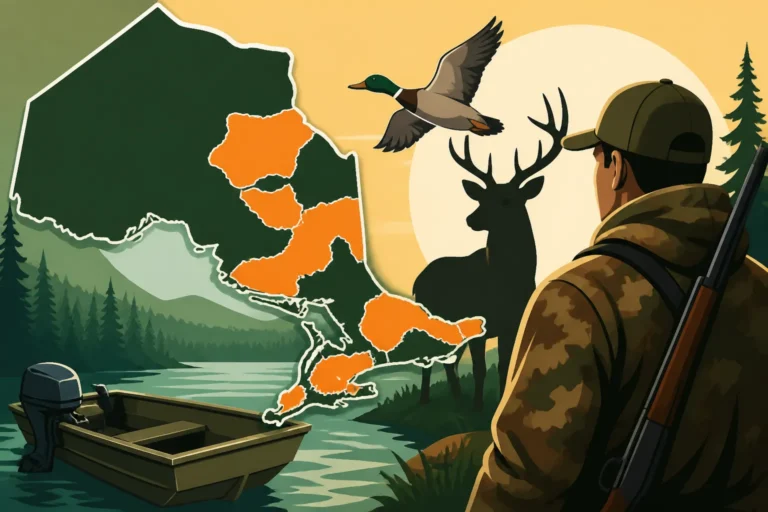
North Bay falls within several key Wildlife Management Units (WMUs), each with its own characteristics and hunting regulations. Understanding which WMU you're in is paramount for knowing season dates, bag limits, and specific rules. For instance, WMU 41, 42, and parts of 40 and 43 are common around the North Bay area. These WMUs generally offer a mix of Crown land and private property.
WMU 41, for example, stretches north and east of North Bay, deep into the Canadian Shield, renowned for moose and bear. WMU 42 is more directly around the city itself, a mosaic of private land, smaller Crown parcels, and even some agricultural sections to the south. Knowing your WMU is the first step in responsible and legal hunting. You can dive deeper into these regions by exploring Ontario's Wildlife Management Unit System and carefully reviewing the specific regulations for each area you plan to hunt.
Navigating Ontario's Crown Land Around North Bay
For many hunters, especially those without private land connections, Crown land is the holy grail. Ontario boasts an incredible amount of Crown land, and a significant portion of it is within a reasonable drive of North Bay. However, "Crown land" isn't a blanket term for "free-for-all." There are nuances to finding it and using it responsibly.
Identifying Accessible Crown Land
The first step to hunting Crown land is knowing where it is. It sounds obvious, but those green splotches on a provincial map don't tell the whole story. You need detailed maps, often with property lines clearly marked, to distinguish Crown land from private holdings, especially near settled areas or along major roads. Online mapping tools like those from onX Hunt or even Ontario's own Crown Land Use Policy Atlas (CLUPA) are invaluable. These digital resources can layer satellite imagery with property boundaries, showing you exactly where you can legally hunt. Often, the most productive Crown land isn't directly adjacent to paved roads, requiring you to utilize secondary routes, old logging trails, or even hike a fair distance to get away from other hunters.
Once you have identified potential Crown land, the next challenge is access. Look for public road allowances, old logging cuts, or utility corridors like hydro lines that might provide a footpath or ATV trail into the bush. Sometimes, gaining access to a block of Crown land means crossing a short strip of private property. In such cases, you absolutely need to obtain permission from the landowner for that access, even if your ultimate hunting ground is public. Simply driving down what looks like an old track without checking can land you in hot water if it's on private land.
Rules and Regulations for Crown Land Use
While Crown land is generally open for hunting, it's not without rules. There are restrictions on vehicle use, camping, and even the placement of stands or blinds. For instance, while you can usually drive on existing bush roads, going off-road or creating new trails might be prohibited. ATV Rules on Ontario Crown Land can be quite specific, so always check the local district regulations. You generally can't build permanent structures on Crown land, and any temporary blinds or stands need to be removed at the end of the season. Camping rules also apply, especially for non-residents who might need specific permits.
It's also important to remember that Crown land is multi-use. You'll likely encounter other users – hikers, anglers, trappers, ATV riders, or even forestry workers. Maintaining a high level of respect and safety is paramount. Always be aware of your surroundings, clearly identify your target, and know what's beyond it. The dense bush often means you need to be extra cautious with shot placement and visibility, especially during busy gun seasons.
Access Points and Bush Roads
Around North Bay, many of the best hunting spots on Crown land are accessed via a network of gravel roads and old logging trails that spiderweb off the main highways. Highway 11 and 63, for example, have numerous access points. Heading east along Highway 63 towards Temiscaming, or north on Highway 11 past North Bay, you'll find turn-offs onto unmaintained or minimally maintained roads. These roads are your gateway to deeper bush. Some are well-travelled, while others might be overgrown or impassable without a 4×4 or ATV, particularly after heavy rain or snow.
Often, these bush roads will lead to old cutovers or areas around smaller lakes and beaver ponds that are prime habitat for moose and bear. For instance, Hunting an Old Logging Road in the North can be incredibly productive, as these corridors offer easier travel for both hunters and game, and the regenerating growth provides excellent browse. Remember to park responsibly, ensuring you don't block access for others or impede forestry operations. A good practice is to make a mental note, or even better, drop a pin on your GPS, of where you parked so you can find your way back in the dark.
The Realities of Private Land Hunting Access
While Crown land offers vast opportunities, private land in the North Bay area, particularly as you move further from the rugged Shield into areas with more mixed forest and some agricultural fringe, can hold some fantastic hunting. However, gaining access to private property often requires a different approach and a good deal of persistence.
The Challenge of Securing Permission
Let's be honest: getting permission to hunt private land isn't always easy. Landowners are often wary, especially if they've had bad experiences with disrespectful hunters in the past. They might be concerned about safety, liability, or simply want to enjoy their property without interruption. Many prime parcels are already spoken for by friends, family, or established hunting groups. It can be frustrating to see ideal habitat from the road, only to realize it's all posted private property. Validating that frustration is key – it is tough, but not impossible.
The trick is to start early, ideally months before the season opens. Don't show up on opening day with your rifle and expect a warm welcome. A polite, well-prepared approach goes a long way. This includes having your hunting license and Outdoors Card ready, being clearly identifiable as a hunter, and having a plan for how you'd hunt their land.
Building Relationships with Landowners
The best way to secure private land access is through building relationships. This often means knocking on doors in person, not just making a quick phone call. Introduce yourself, explain why you're interested in hunting their property, and offer to help them out with tasks around their farm or woodlot in exchange for hunting privileges. This could be anything from splitting firewood to helping with chores. Respect their decision if they say no, and always leave your contact information in case their situation changes. For more detailed advice, check out Getting Private Land Permission in Ontario.
Sometimes, starting with small game or archery season access can pave the way for bigger game or firearm privileges later on, once a landowner trusts you. Being reliable, tidy, and respectful of their land is non-negotiable. If you're granted permission, always thank them, and consider offering them a small gift of game meat or a gift basket at the end of the season. It’s about being a good neighbour and demonstrating that you're a responsible individual who values their property.
Understanding Posted Land and Trespass Law
In Ontario, "No Trespassing" signs mean exactly that. Ontario Trespass and Landowner Law is clear: hunting on posted private land without explicit permission is illegal and can carry significant penalties. Even if land isn't explicitly posted, if it's clearly cultivated, fenced, or contains buildings, it's generally considered private, and you need permission. Don't assume. Ignorance of boundaries is not an excuse.
It's common around North Bay to see large swaths of private timber company land, often adjacent to Crown land. While some of these companies may offer limited access, most do not, or they require specific permits. Always verify ownership and permission. Using GPS apps like onX Hunt becomes incredibly important here, as they can show you property lines in real-time, helping you avoid accidental trespass and stay on the right side of the law and landowner goodwill.
Essential Tools and Strategies for Finding Hunting Ground
Modern technology and good old-fashioned scouting have revolutionized how hunters find and access prime ground. Especially in a diverse region like North Bay, having the right tools and strategies can make all the difference between a frustrating search and a successful hunt.
Digital Mapping for North Bay Hunters
Gone are the days when a paper map and compass were your only tools for navigation. While those skills are still essential for survival, digital mapping applications like onX Hunt and GoHunt have become indispensable for planning and executing hunts around North Bay. These apps allow you to:
- View Property Boundaries: This is huge for distinguishing Crown land from private property and preventing accidental trespass. You can see parcel lines, landowner names (in some cases), and even assess potential access routes.
- Layer Satellite Imagery: Overlay high-resolution satellite photos with topographical maps. This lets you identify terrain features like swamps, ridges, clear-cuts, and water bodies that game animals use, even before you set foot on the ground.
- Mark Waypoints: Drop pins for promising sign, stand locations, parking spots, or even where you last saw game. This feature is a game-changer for navigating dense bush, especially when you're What to Do If You Get Turned Around.
- Offline Maps: Crucially for northern Ontario where cell service is often non-existent, these apps allow you to download maps for offline use, ensuring you always have navigation regardless of connectivity.
Before you leave home, spend hours with these apps. Identify potential access points, trace old logging roads, and mark areas that look like good habitat. This pre-scouting will save you countless hours of unproductive walking in the bush.
Scouting Before Your Hunt
Digital tools are fantastic, but there's no substitute for boots on the ground. Pre-season scouting is vital, especially in areas with dynamic forest conditions like North Bay. A fresh clear-cut one year might be too grown in the next, or a recent beaver dam could have flooded a once-walkable area.
- Early Season Walks: Before the leaves fully come out in spring or after they drop in fall (outside of hunting season), walk the areas you've identified on your maps. Look for rubs, scrapes, tracks, bedding areas, and feeding sign. Pay attention to natural funnels, pinch points, and escape routes.
- Road Reconnaissance: Drive the bush roads and ATV trails you've marked. Check their condition, note any gates or new private land postings. Sometimes, simply driving a new road can reveal dozens of potential access points into unpressured Crown land. Hunting an Old Logging Road in the North can be surprisingly productive for both scouting and hunting.
- Post-Rain Checks: After a good rain, check for fresh tracks on muddy roads or trails. This can tell you what kind of game is using the area and how recently they were there. For more tips on reading sign, consider Reading Whitetail Sign in Ontario Hardwoods or Reading Sign After a Fresh Snow.
Remember, scouting isn't just about finding game; it's about understanding the terrain, identifying potential dangers, and figuring out the best way to move silently and efficiently through the habitat.
Utilizing Local Knowledge and Resources
While digital tools and personal scouting are powerful, never underestimate the value of local knowledge. Chatting with locals at gas stations, diners, or tackle shops can sometimes yield invaluable insights. They might point you to a lesser-known bush road, warn you about a particular piece of private land, or tell you about recent game movements. Of course, discretion is key – don't expect them to give up their honey holes, but general advice about areas or trends can be golden.
Another resource is local Ministry of Natural Resources and Forestry (MNRF) offices. While they can't recommend specific hunting spots, they can provide general information about WMUs, current regulations, and even offer insights into population trends or habitat projects in the area. Local hunt camps or outfitters, even if you're not booking a guided hunt, can also be a source of general information about the region's hunting characteristics. For example, if you're exploring Hunting Central Ontario's Mixed Forest, you might find valuable tips from people who have hunted that area for decades.
Species-Specific Hunting Access Considerations
The diverse habitat around North Bay means that different species will utilize different types of terrain, and therefore, different access strategies are needed. What works for a whitetail in a mixed forest might not be the best approach for a moose deep in the boreal.
Whitetail Deer Access in Mixed Forest
Whitetail deer in the North Bay area, especially in WMUs with a mix of forest and agricultural influence, thrive on edge habitat. This means you'll often find them along the boundaries where mature bush meets regenerating clear-cuts, old logging roads, or even small agricultural fields. For these deer, focus on accessing blocks of Crown land that border private fields or woodlots, as deer will often move between these areas. Hunting a Bush Lot Beside a Farm can be incredibly productive for whitetails, as they use these transitional zones for both bedding cover and food sources.
Access points might involve smaller bush roads, utility corridors, or walking trails. Deer are masters of using cover, so look for thick pockets of cedar, spruce, or regenerating hardwoods that offer thermal protection and security. Scouting for natural funnels and pinch points, where deer are forced to travel through a narrow corridor, is crucial. You might also find good opportunities hunting the edges of large swamps or beaver meadows where deer feel secure. Hunting a Cedar Swamp Edge is a classic tactic for catching deer moving to or from bedding areas.
Moose and Bear in Remote Bush
When it comes to moose and black bear, the deeper and more remote you go, the better your chances often are. These animals prefer the expansive, untouched wilderness of the Canadian Shield and boreal forest. This means accessing areas via more rugged bush roads, old logging cuts, or even by canoe if you're truly adventurous. WMUs further north and east of North Bay, such as 41, 40, and parts of 43, offer prime moose and bear country. Moose Hunting Ontario's Northern Bush often requires more significant travel and preparation.
For moose, look for areas with abundant browse like willow, dogwood, and young poplar, often found in regenerating clear-cuts, along beaver flowages, or beside remote lakes. Bear, being omnivores, will be found wherever food sources are abundant, from berry patches in clear-cuts to prime acorn ridges in mature hardwoods. Access for these species frequently involves hiking significant distances from your vehicle or using ATVs on designated trails. Black Bear Hunting in Ontario also often involves patience and a willingness to explore challenging terrain. Be prepared for longer hauls and the possibility of dealing with your game far from any road.
Upland Birds and Small Game Opportunities
North Bay is also a fantastic destination for upland birds like ruffed grouse and spruce grouse, as well as snowshoe hare. Access for these species is often much simpler than for big game. Ruffed grouse thrive in younger forests, especially along edges, old logging roads, and overgrown trails. You can often find excellent grouse hunting simply by walking these linear features on Crown land or in managed private forests. Hunting Ruffed Grouse on an Ontario Bush Road is a classic and productive method.
Snowshoe hare are abundant in thick coniferous cover, particularly in young spruce and cedar swamps or dense pine plantations. Accessing these areas often means walking into thickets from a bush road or exploring overgrown trails. For either species, the key is to cover ground, often with a good bird dog if you have one, or by slowly still-hunting through prime habitat. Check out Small Game Hunting in Ontario for more on these opportunities. These hunts often offer great ways to explore new areas and scout for big game sign while enjoying a more relaxed hunting experience.
Local Etiquette and Responsible Hunting
Beyond the laws and regulations, there's a certain etiquette that comes with hunting in any region, and North Bay is no exception. Being a respectful and responsible hunter not only ensures a positive experience for you but also helps maintain a good reputation for all hunters.
Respecting the Land and Other Users
Remember that the vastness of the Ontario bush around North Bay is enjoyed by many. Hikers, anglers, trappers, ATV riders, and other outdoor enthusiasts all share these spaces. Always be mindful of their presence. If you encounter another group, give them space, be polite, and avoid any actions that could be perceived as unsafe or disruptive. This includes managing your noise levels, especially when close to known trails or campsites.
Leaving no trace is paramount. Pack out everything you pack in, including spent shell casings, food wrappers, and any trash. If you use a temporary stand or blind on Crown land, ensure it's removed completely at the end of the season. Respecting private property also extends to how you leave the land; close gates, don't damage fences, and avoid driving off established trails. These small actions contribute significantly to maintaining positive relationships with landowners and the general public, ensuring future access for everyone.
Safety Considerations in Remote Areas
Hunting in the remote areas around North Bay comes with inherent risks. Cellular service is often non-existent, and help can be hours away. Always prioritize safety.
- Tell Someone Your Plan: Before you head out, leave a detailed hunting plan with a trusted person. Include where you're going, your expected return time, and who you're with.
- Carry a Satellite Communicator: Devices like a Garmin inReach or Zoleo are invaluable for emergency communication when cell service fails. They allow you to send texts and trigger an SOS if needed.
- Navigation Tools: While a GPS app is great, always carry a physical map and compass as a backup, and know how to use them. For situations like What to Do If You Get Turned Around, redundant navigation is crucial.
- First Aid and Survival Gear: A well-stocked first aid kit, fire-starting materials, extra layers of clothing, sufficient water and food, and a sharp knife are essentials for any deep bush hunt.
- Wildlife Awareness: You're in bear country. Carry bear spray, know how to use it, and be aware of your surroundings. Understand basic Wildlife Safety in Ontario Bear Country protocols.
- Blaze Orange: During gun seasons, wearing sufficient blaze orange is not just a legal requirement but a critical safety measure. Ensure you meet How Much Blaze Orange Ontario Requires standards.
Responsible hunting in North Bay means not just knowing where you can hunt, but how to hunt safely and ethically, respecting both the environment and those who share it.
Hunting Access Summary for North Bay
Navigating hunting access near North Bay is less about finding a single secret spot and more about understanding the landscape, utilizing the right tools, and engaging in respectful practices. The region offers fantastic opportunities for a variety of game, particularly if you embrace the Crown land system and learn to use modern mapping technology. Building relationships, whether with landowners for private access or with local communities for insights, will always yield the best results.
Here's a quick overview of some common WMUs around North Bay and their general characteristics for access:
| WMU | General Location Relative to North Bay | Primary Habitat Type | Key Access Challenges | Prime Species |
|---|---|---|---|---|
| 41 | North & East | Boreal Forest, Canadian Shield | Remote bush, limited roads | Moose, Bear, Grouse |
| 42 | Surrounding City | Mixed Forest, Private/Crown | Patchwork ownership, urban fringe | Whitetail, Grouse |
| 40 | Farther East | Rugged Shield, Lakes | Very remote, boat/ATV needed | Moose, Bear |
| 43A/B | Southwest | Mixed Forest, Farmland Edges | More private land, permission needed | Whitetail, Turkey |
Always verify specific regulations for your chosen WMU, as seasons and rules can vary. Happy hunting!
Disclaimer
This article is for general informational purposes only and does not constitute professional advice. Laws, prices and regulations vary by location and change over time. Consult a qualified professional for guidance on your specific situation.