Hunting a Pasture With Cattle On It
It's easy to overlook a pasture with cattle on it when you're scouting for prime hunting ground in Ontario. Many hunters assume the presence of livestock makes it off-limits, unsafe, or simply not worth the effort, but that's a mistake that can cost you opportunities, especially for deer. This comprehensive guide will peel back the layers on successfully, legally, and ethically hunting game, predominantly whitetail deer and predators, in and around active cattle pastures, ensuring you understand the unique challenges and vast potential these areas offer.
The Allure of Hunting Active Cattle Pastures
While it might seem counterintuitive, pastures, even those actively grazed by cattle, can be incredibly productive hunting spots, especially for whitetail deer and various predators like coyotes. The presence of livestock often deters other hunters, meaning less pressure for you, and the constant activity creates a unique environment that benefits certain game animals.
Why Deer and Predators Gravitate Towards Pastures
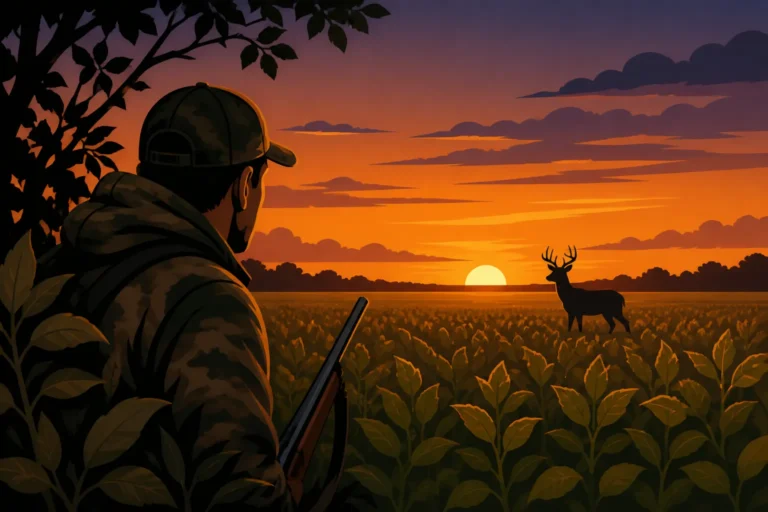
Deer, in particular, are drawn to pastures for several compelling reasons. First, pastures are often surrounded by other types of cover—woodlots, fencerows, creek bottoms—which provide security and bedding. They act as natural food plots, offering succulent grasses, clover, and forbs that grow abundantly due to constant grazing and fertilization. The edges of these pastures, where the open field meets dense cover, are classic travel corridors. Deer will often skirt these edges, entering the pasture to browse or cross, especially during low-light hours.
Predators, like coyotes, are also keenly aware of these areas. They know deer frequent them, offering a potential meal. More directly, the presence of cattle can sometimes mean calves, which, though robust, can occasionally attract opportunistic coyotes looking for an easy meal. Furthermore, mice, voles, and other small rodents thrive in pasture grasses, providing a consistent food source that draws in coyotes, foxes, and even certain birds of prey. The open nature of a pasture also makes it a great spot for predators to survey their surroundings.
Overlooked Opportunities and Reduced Pressure
The biggest advantage of hunting pastures with cattle is often the sheer lack of hunting pressure. Most hunters are conditioned to seek out deep woods or dense cover, avoiding areas with human or livestock activity. This often means that even properties nestled in prime whitetail country, if they contain active pastures, are passed over. This can be a huge boon for a hunter willing to do the legwork and build relationships with landowners. Less pressure often translates to more relaxed, less nocturnal game animals, which can increase your chances of success significantly. It also means that if you secure permission for such a property, you might have it all to yourself, which is a rare luxury in many parts of Ontario.
Navigating Legalities and Landowner Relations
Hunting any private land in Ontario requires meticulous attention to detail regarding regulations and, most importantly, impeccable landowner relations. When livestock is involved, these aspects become even more critical, demanding clear communication, respect, and a commitment to safety.
Securing Permission and Understanding the Landowner's Needs
Before you even think about setting foot on a pasture with cattle, securing explicit, written permission from the landowner is paramount. This isn't just a courtesy; it's a legal requirement in Ontario. When discussing permission, be upfront about your intentions to hunt near livestock. Many landowners will have specific concerns about their animals, fencing, and property, and addressing these directly builds trust.
Beyond general hunting permission, clarify specific rules regarding where you can hunt, when you can hunt, and what species you're targeting. Some landowners might be perfectly fine with you hunting coyotes in the pasture but might have reservations about deer hunting there due to the specific timing or type of shot required. Always ask about gates – ensure you know which ones need to be closed and how they are secured. Offer to help with chores or minor repairs, as this goes a long way in solidifying your relationship. A landowner needs to know you're responsible and respect their livelihood above all else. This kind of communication forms the bedrock of Getting Private Land Permission in Ontario.
Ensuring Safety for Livestock and Property
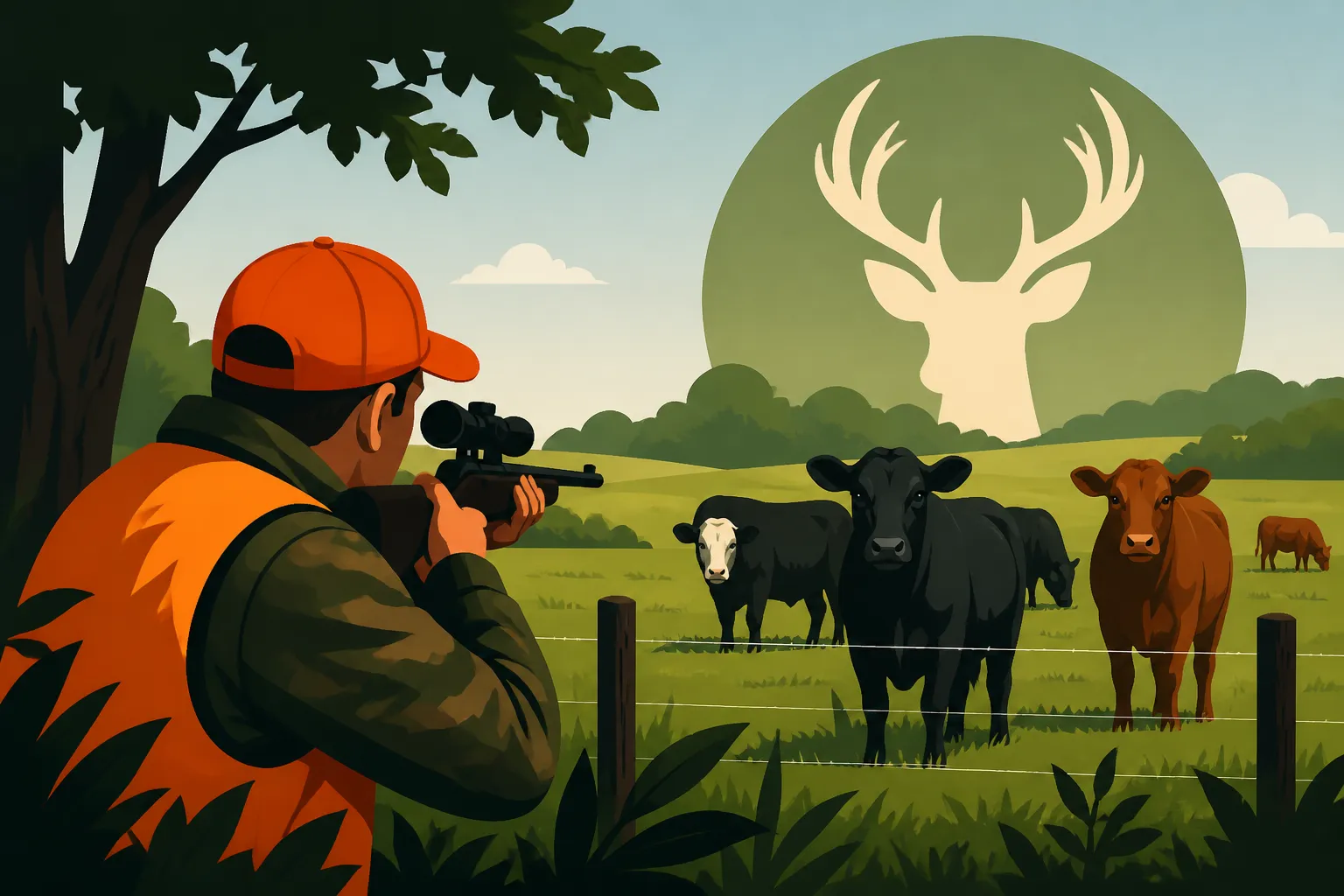
The safety of the cattle is your absolute top priority. This isn't just a moral obligation; it's a legal one. Any injury or death to livestock caused by a hunter can lead to severe penalties, including fines, loss of hunting privileges, and civil lawsuits. Never take a shot where there's any chance of a ricochet or a stray projectile hitting an animal. This means you need to be absolutely certain of your target and what's beyond it. If cattle are anywhere near your line of fire, hold your shot. It's simply not worth the risk.
Furthermore, be mindful of fencing. Do not climb over fences in a way that could damage them, and always use gates if available, closing them securely behind you. Leave no garbage behind, respect crops, and drive only on designated paths. Remember, the landowner is entrusting you with their property and their animals; act accordingly. A platform like GoHunt can be invaluable here, allowing you to clearly see property lines and identify potential shot angles relative to pastures, but ultimately, it's your eyes on the ground that make the final call for safety.
Understanding Local Regulations and Bylaws
Beyond provincial hunting regulations, some municipalities might have specific bylaws regarding discharge of firearms or hunting activities near livestock or within certain distances of occupied dwellings. It’s your responsibility to research and understand these local rules for the specific area you plan to hunt. Your local municipal office or police service can often provide this information. Some townships may have restrictions on firearm calibers or even the use of bows in specific zones. Always be aware of Ontario Trespass and Landowner Law and ensure you have all documentation, including your Outdoors Card and hunting licence, on hand.
Effective Strategies for Hunting Pasture Edges and Interiors
Once you've secured permission and understand the lay of the land, it's time to develop a hunting strategy. Hunting a pasture with cattle isn't like hunting dense bush; it requires a different approach, focusing on edges, transitions, and the subtle movements of game.
Scouting and Identifying Key Movement Patterns
Thorough scouting is the backbone of any successful hunt, and it’s especially important in pasture settings. Don't just look for game sign; look for how game interacts with the pasture and the surrounding cover.
- Entry and Exit Points: Look for trails leading into and out of the pasture from woodlots, fencerows, or thickets. Deer will often use the path of least resistance. These can be faint, so walk the perimeter slowly.
- Rub Lines and Scrapes: While rubs might be scarce right in the open pasture, look for them along the edges, especially where dense cover meets the grass. This indicates a buck's travel route during the rut.
- Bedding Areas: Deer often bed down just inside the treeline adjacent to a pasture, allowing them to step out and feed easily. Locate thickets, blowdowns, or dense cedar swamps that offer security. For example, Hunting a Cedar Swamp Edge can reveal how these thick areas provide critical cover.
- Food Sources Beyond Grass: Beyond the pasture grasses, identify any mast crops in adjacent woodlots (acorns, beechnuts), or nearby agricultural fields like corn or soybeans. Deer will use the pasture as a travel corridor between bedding and these preferred food sources. GoHunt's satellite imagery can help identify different crop types and woodlot compositions adjacent to the pasture.
- Water Sources: Even if cattle have a trough, deer will often prefer natural water sources like creeks, small ponds, or seepages within or bordering the pasture. These are prime ambush points, especially in dry periods. Consider Hunting an Ontario Farm Pond at Dusk for specific tactics.
Stand Placement and Approach Tactics
Your stand or blind placement is crucial. You want to be close enough to cover the entry/exit points and travel corridors, but far enough away to minimize disturbance to both game and cattle.
- Edge Hunting: This is often the most productive strategy. Place your stand (tree stand or ground blind) on the edge of the woods overlooking the pasture. This gives you a clear view into the open, allows you to watch deer as they emerge, and provides a backdrop for concealment. Pay close attention to wind direction; scent control is always vital, but especially when you're hunting near an area with cattle, as their scent can also carry far.
- Fencerow Ambush: Fencerows, especially those with some brush or trees, act as natural funnels. Deer often follow these lines. A well-placed ground blind or a low tree stand along a fencerow can be incredibly effective, particularly if it connects two larger blocks of cover or leads to a water source. Read more about Hunting a Fencerow Between Two Fields.
- Isolated Cover: Sometimes, a pasture might have an isolated clump of trees, a small rise, or a large rock pile in the middle. These "islands" of cover can be natural bedding or observation points for deer. If you can approach undetected and set up a ground blind, these can be dynamite spots.
- Patience and Low-Light Focus: Deer are most likely to use pastures during dawn and dusk. Plan your hunts around these times. Approach your stand or blind quietly and well before first light, and remain still and patient until well after legal shooting light. Avoid disturbing the cattle during your entry and exit; startled cattle can easily spook deer for miles.
- Coyote Calling: For predators, pastures offer excellent visibility for calling. Set up on the downwind side, concealed in the treeline, and use various coyote calls. The open nature of the pasture allows coyotes to hear and spot your setup from a distance, so good concealment is crucial.
Here's a quick comparison of potential spots within or adjacent to a cattle pasture:
| Location Type | Pros | Cons | Best For |
|---|---|---|---|
| Woodlot Edge | Excellent concealment, easy access to cover, deer travel corridors | Wind can be tricky, limited visibility into deep pasture | Deer (ambush), Coyote (calling backdrop) |
| Fencerow | Natural funnel, cover for hunter, connects different areas | Can be exposed if sparse, deer may just cross without lingering | Deer (travel), Coyote (patrol) |
| Isolated Bush/Thicket | Unexpected bedding, deer feel secure, unique ambush point | Hard to approach undetected, limited options for stand placement | Deer (bedding/browsing), Coyote (roosting) |
| Farm Pond/Water Source | Prime during dry periods, attracts deer and other wildlife | Can be exposed, cattle may frequent heavily | Deer (watering), Coyote (ambush small game) |
| Standing Crops (adj.) | Deer often use pasture to access these, rich food source | Can block sightlines, requires permission for crop fields too | Deer (feeding/travel), Coyote (rodent hunting) |
Minimizing Disturbance and Managing Your Scent
When hunting near cattle, minimizing your impact is crucial. Cattle are creatures of habit, and any sudden changes or perceived threats can stress them, potentially impacting their health or milk production for dairy farms. This stress is also easily picked up by deer.
- Quiet Entry and Exit: Always move slowly and quietly. Avoid loud noises, slamming truck doors, or excessive talking.
- Wind Direction: This cannot be stressed enough. Deer have an incredible sense of smell, and cattle have a strong, distinct scent. Always hunt with the wind in your favour, blowing your scent away from where you expect game (and cattle) to be. Use scent elimination sprays and keep your hunting clothes clean.
- Time of Day: As mentioned, dawn and dusk are prime times. During the middle of the day, deer are typically bedded, and cattle are often most active. This is a good time for a quiet exit and re-entry if needed, or for still-hunting very slowly along fringes where no cattle are present.
- Cattle Interaction: If cattle approach your stand or blind, remain still and quiet. They are curious animals, but generally harmless. Do not try to shoo them away aggressively or make sudden movements that could spook them. If they linger for too long and present a safety concern (e.g., you can’t get a clear, safe shot), you may need to reconsider that specific setup for the day.
Essential Gear and Safety Considerations
Hunting a pasture with cattle presents unique gear requirements and a heightened need for safety awareness. Preparing properly ensures both a successful and responsible hunt.
Firearm and Ammunition Choices
When hunting near livestock, your choice of firearm and ammunition is critical for both effectiveness and safety.
- Shot Placement is Key: Regardless of caliber, precise shot placement is paramount. You need to be able to make a clean, humane kill on your target without any risk to the cattle. This means practicing your shooting extensively to ensure confidence in your abilities at various ranges.
- Rifles: If hunting deer with a rifle, consider calibers that offer good bullet expansion and energy transfer without excessive over-penetration or a high risk of ricochet. Traditional deer calibers like .270, .30-06, or .308 are effective, but always use appropriate bullet construction (e.g., bonded or controlled-expansion bullets) to minimize pass-throughs and subsequent risks. Avoid highly frangible bullets that might not penetrate enough or solid copper bullets that might over-penetrate.
- Shotguns: In some areas, shotguns with slugs are mandatory for deer. Modern slug guns with rifled barrels and sabot slugs are incredibly accurate at typical deer hunting ranges and can be a very safe option in agricultural settings, as slugs generally lose energy faster than rifle bullets and are less prone to extreme ricochet.
- Archery: For bowhunters, a well-tuned setup and broadheads designed for clean pass-throughs are essential. Bowhunting in a pasture often requires getting closer to the animal, which naturally reduces risk. Bowhunting also has a significantly lower risk of projectile travel and ricochet compared to firearms, making it a very safe choice near livestock. If you're considering Bowhunting Ontario's Long Archery Season, pastures can be excellent locations due to the reduced noise and projectile risks.
- Muzzleloaders: Muzzleloaders are another option, particularly during specific muzzleloader seasons. Their lower velocity compared to modern rifles can sometimes mean less risk of over-penetration, but accuracy and bullet choice remain critical. You can explore Hunting Ontario's December Muzzleloader Days for more details on these specialized hunts.
Clothing, Footwear, and Essential Field Items
Your gear choices should reflect the often-wet, muddy, and open nature of pastures, as well as the need for stealth.
- Waterproof Footwear: Pastures are notorious for being muddy, especially after rain or around water troughs. Quality waterproof boots are a must. Muck Boots or similar rubber boots are often ideal.
- Layered Clothing: Ontario weather can be unpredictable. Dress in layers to adapt to changing conditions, as you might be exposed to the elements more in open pastureland compared to dense bush. Blaze orange requirements for gun seasons must always be followed, as outlined in Ontario Blaze Orange Requirements.
- Binoculars: Given the open nature, good binoculars are invaluable for spotting game from a distance without spooking them.
- Rangefinder: Critical for accurate shot placement, especially with bowhunting or if distances are unfamiliar.
- Navigation Tools: A GPS device or a reliable hunting app on your phone (like GoHunt, which features detailed mapping capabilities including property boundaries and topo maps) is essential for staying on permitted land and knowing your surroundings, especially if the property borders other fields or private residences.
- First-Aid Kit: Always carry a basic first-aid kit. Accidents can happen anywhere, and you might be a fair distance from help.
- Game Cart/Sled: If you down a deer in a pasture, getting it out can be easier than in dense bush, but it might still be a long drag. A game cart can save your back.
- Headlamp/Flashlight: Essential for safely navigating to and from your stand in the dark.
Post-Harvest Considerations and Respectful Practices
The hunt doesn't end when you pull the trigger or release an arrow. What you do after the shot, and how you conduct yourself in the aftermath, is just as important, especially on private land with livestock.
Ethical Retrieval and Processing
- Immediate Tracking: If you make a shot, immediately assess the situation. If the animal is down, secure it. If it runs, mark the last spot you saw it and begin tracking cautiously. The open nature of a pasture can make tracking easier initially, but if the animal enters dense cover, you’ll need to switch to traditional tracking methods. Be mindful of not tracking into areas where you don't have permission.
- Respectful Handling of Game: Once recovered, handle the animal respectfully. If field dressing is necessary on-site, do so efficiently and discreetly, away from the immediate view of the farmhouse or main roads if possible. Pack out all waste, including guts if the landowner prefers, or ensure they are disposed of in a way that won't attract unwanted scavengers or create a nuisance for the landowner or their livestock.
- Minimizing Disturbance to Cattle: When retrieving your animal, try to avoid disturbing the cattle unnecessarily. If you need to drive a vehicle into the pasture for retrieval (with explicit landowner permission!), do so slowly and carefully, giving the cattle a wide berth.
- Meat Care in Varying Temperatures: In Ontario, early archery seasons can be warm, while gun seasons can be quite cold. Be prepared for Meat Care in Ontario's Warm Early Seasons or ensure you have a plan for cooling and processing game quickly in colder temperatures.
Maintaining Landowner Trust
Long-term access to hunting land, especially valuable private land with limited pressure, hinges entirely on your relationship with the landowner.
- Report Your Success (or Failure): Whether you harvest an animal or not, always report back to the landowner. They appreciate knowing what's happening on their property. Share photos of your harvest if you're comfortable and they're interested.
- Leave No Trace: This applies beyond just garbage. Ensure gates are closed, no damage is done to fences, and no ruts are created by vehicles. Leave the property in better condition than you found it.
- Offer Continued Help: Periodically check in with the landowner outside of hunting season. Offer to help with odd jobs, fence repair, or anything they might need. A good bottle of local wine or a gift card to a local store after the season can also go a long way as a token of appreciation.
- Be a Good Steward: Remember, you're an ambassador for all hunters. Your actions reflect not only on you but on the hunting community as a whole. Maintaining a strong, respectful relationship ensures future hunting opportunities for yourself and potentially others.
Hunting a pasture with cattle in Ontario can be an incredibly rewarding experience, offering unique challenges and often, exceptional success. By prioritizing safety, respect, and smart hunting strategies, you can turn these overlooked areas into your personal hunting hotspots.
Disclaimer
The information provided in this guide is for general informational purposes only and does not constitute legal advice. Hunting regulations, landowner laws, and local bylaws are subject to change. Always consult the most current Ontario Hunting Regulations Summary, local municipal offices, and the specific landowner for the most accurate and up-to-date information before engaging in any hunting activities. Safety should always be your top priority.