Hunting Ontario’s Northern Lake Country
Hunting in Ontario's vast northern lake country can feel like stepping into an entirely different world, far removed from the familiar fields and woodlots of the south. Many hunters feel overwhelmed by the sheer scale of the landscape, the endless waterways, and the challenge of finding game in such a diverse environment. This comprehensive guide aims to demystify hunting in this unique region, providing practical strategies and insights to help you navigate its waters and woods for a successful and memorable experience.
Understanding the Unique Landscape of Northern Lake Country for Hunters
When you talk about Ontario's northern lake country, you're not just talking about a few big lakes; you're talking about a labyrinth of interconnected waterways, countless islands, dense boreal forest, and remote wilderness that stretches for hundreds of kilometers. This isn't your typical drive-up hunting experience; it demands a different mindset, different skills, and a healthy respect for the environment.
The Domination of Water Features
The most defining characteristic of this region is, of course, the water. Lakes like Lake of the Woods, Rainy Lake, and Lake Nipigon aren't just large bodies of water; they are ecosystems unto themselves, often dotted with thousands of islands. This creates a hunting environment where game animals behave differently, often relying on these aquatic features for food, travel, and refuge. Deer, moose, and even bears will readily swim across bays and channels, using islands as bedding areas or escape routes. Waterfowl are, naturally, abundant, making this region a paradise for bird hunters, too. Understanding how these animals interact with the water is paramount. For example, a moose might use a series of small islands and shallow bays to move undetected, or a deer might be found browsing on aquatic vegetation along a secluded shoreline. The vastness can be daunting, but it also means less human pressure in many areas, offering a true wilderness hunt.
The Boreal Forest and Its Diverse Habitats
Beyond the shimmering waters lies the dense, often rugged boreal forest. This isn't uniform; it's a mosaic of different tree species and undergrowth, shaped by everything from ancient glacier activity to modern logging practices and even wildfires. You'll find areas of towering white and red pine, mixed with spruce, fir, birch, and aspen. There are also expansive tracts of black spruce and tamarack in low-lying, boggy areas. Each of these habitats caters to different game species. For instance, moose often favor younger regenerating forests with plenty of browse, while ruffed grouse thrive in mixed stands with dense cover and aspen patches. White-tailed deer, though less common than in southern Ontario, can be found in more sheltered areas, particularly near river valleys or where agricultural fringes meet the bush, seeking out cedar swamps for winter yarding. A good understanding of these varied forest types is crucial for effective scouting and hunting. Tools like GoHunt can be invaluable for identifying these changes in terrain, helping you pinpoint potential hotspots from the comfort of your home.
WMUs and Access Challenges
The northern lake country is covered by a host of Wildlife Management Units (WMUs), many of which are truly immense in size, like WMUs 3, 4, and 5 in the far northwest. Unlike the smaller, often privately-owned parcels in Southern Ontario Farmland, most of this land is Crown land, offering unparalleled public access. However, "access" here often means by boat, canoe, or even float plane. Road systems are sparse once you leave the main highways, and many areas are accessible only via old logging roads, which can quickly become impassable with rain or disuse. This inherent challenge, while frustrating, also filters out a lot of casual hunters, leaving more undisturbed areas for those willing to put in the effort. Understanding how to interpret an Ontario WMU Map Before You Go and using reliable navigation tools is not just a suggestion, it's a necessity for safety and success.
Strategic Approaches to Hunting Game in Water-Dominated Terrain
Hunting in Ontario's northern lake country requires a shift in strategy. Forget long walks through open fields; here, your boat or canoe becomes an integral part of your hunting kit, and your understanding of aquatic environments is as important as your tracking skills.
Utilizing Watercraft for Access and Scouting
Your boat or canoe is more than just transportation; it's your mobile hunting platform, allowing you to access remote islands, peninsulas, and shorelines that are otherwise unreachable. This is especially true for Hunting Moose From a Boat or Canoe. When scouting, use your watercraft to cover vast distances, looking for fresh sign along the shorelines. Pay close attention to trails leading into the water, fresh tracks in the mud, or browse lines on vegetation overhanging the water. Many animals will feed along the shore in the early morning or late evening, or use the water as a highway to move between feeding and bedding areas.
Consider these tactical uses for your boat:
- Island Hopping: Explore numerous islands. They often serve as undisturbed bedding areas for deer and moose, especially smaller ones that offer a quick escape into the water. Bear frequently swim to islands to feast on berries or explore new territory.
- Shoreline Cruising: Slowly cruise shorelines, scanning with binoculars. Look for game feeding, fresh tracks, or rub lines on trees close to the water's edge. This can be particularly effective during the moose rut when bulls might be visible near the water.
- Beaver Dam Reconnaissance: Beaver dams create excellent pinch points and travel corridors. Hunting a Beaver Dam Crossing can be incredibly effective, as animals often use these easy crossings rather than swimming wide open water or slogging through dense, wet bush. These areas also concentrate diverse vegetation, attracting various species.
- Portage Route Exploration: Old portage routes connecting lakes and rivers are natural travel corridors. While often grown in, they still represent established pathways for game. These can be prime locations for setting up ambushes or finding fresh sign.
Adapting Hunting Methods for Lake Country Species
The species you target will influence your approach significantly. Whether you're after a majestic bull moose, a wary black bear, or fast-flying waterfowl, the lake country dictates unique tactics.
Moose Hunting in Northern Lakes
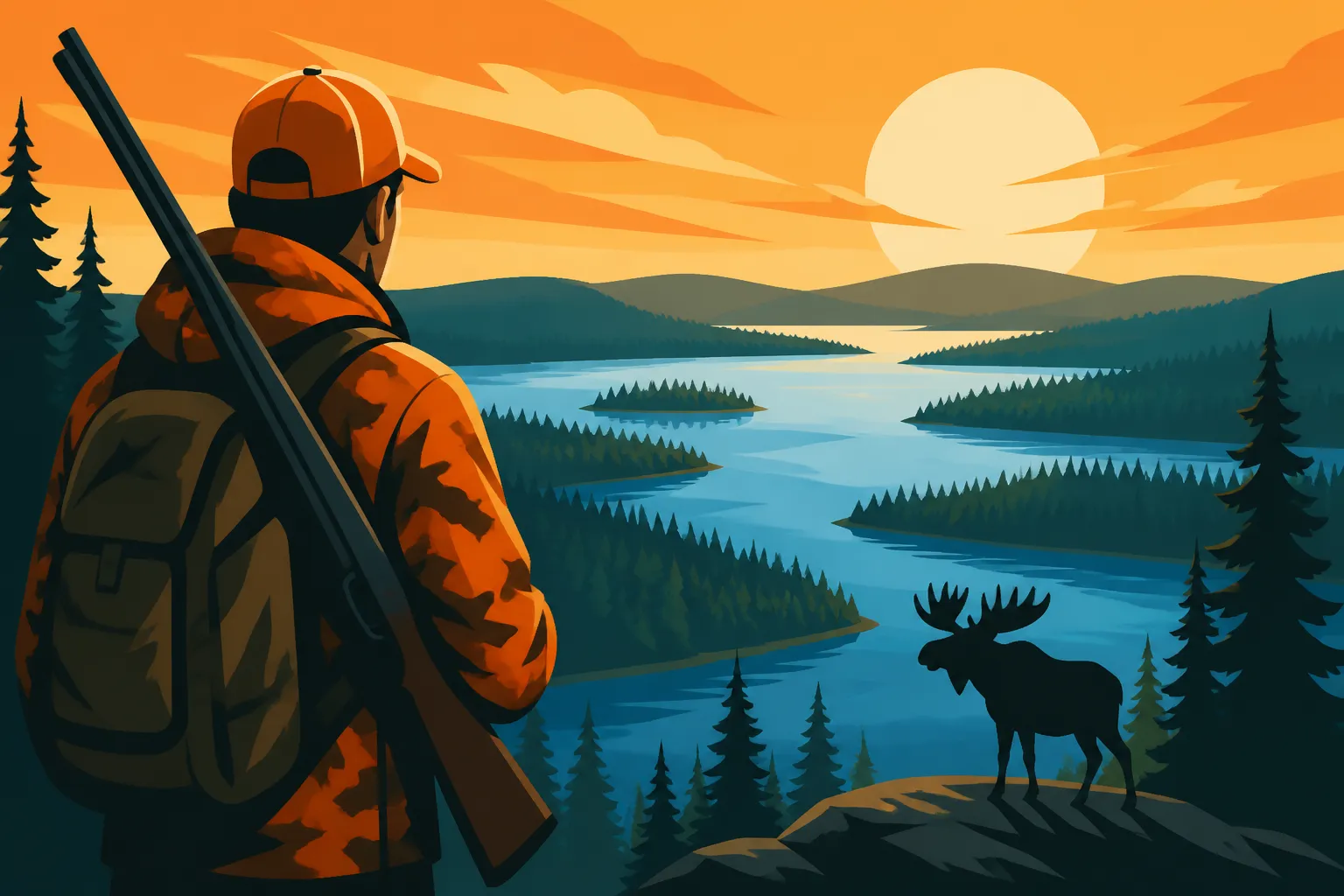
Moose thrive in this environment, with its abundant water plants and regenerating forests. Calling is a highly effective method here, especially if you can project your calls across water. The acoustics over water carry sound further, and a cow call echoing across a lake can often draw out a curious bull. Remember that moose are strong swimmers and will use the water to their advantage. Look for them feeding in shallow bays, especially during the rut, and don't be surprised to see a bull swim across a large expanse of water to investigate your calls. Setting up near a lake edge or a beaver pond where you can glass a wide area, or position yourself to cut off a swimming moose, can be a winning strategy. When you do harvest a moose, remember that Getting a Moose Out by Canoe can be a very practical and often necessary method in this country.
Bear Hunting Around Water
Black bears are also common inhabitants of Ontario's northern lake country. They are often drawn to shorelines where berry bushes grow abundantly, or where they can find fish carcasses or other food sources. If you're Baiting Black Bear in Ontario, consider placing your bait site strategically near a water source or on a remote island where it's less likely to be disturbed by other hunters or human activity, and where access is easier by boat. Bears will travel significant distances along shorelines and through the islands, making these areas productive for spotting and stalking.
Waterfowl and Upland Bird Opportunities
The sheer number of lakes, rivers, and marshes makes this region a waterfowl hunter's paradise. Marsh Hunting Ducks on the Great Lakes principles can often be applied to many of the larger inland lakes and expansive wetlands. Setting up decoys in quiet bays or along prominent points where birds funnel through is effective. Jump-shooting smaller ponds and creek systems from a canoe can also be highly productive. For upland birds like ruffed grouse, focus on the edges of logging cuts, old growth forests, and where mixed bush meets more open areas. The numerous old logging roads and ATV trails that crisscross the northern bush are fantastic for Hunting Ruffed Grouse on an Ontario Bush Road.
Scouting with a Water-Centric Mindset
Scouting is paramount here, and it needs to involve your watercraft. Instead of just walking trails, you'll be paddling or motoring quiet bays.
- Aerial Imagery: Before you even leave home, use satellite imagery available through apps like GoHunt. Zoom in on shorelines, identifying islands, bottlenecks, beaver activity, and areas where different forest types converge. Look for subtle changes in vegetation that might indicate food sources or bedding areas. This is a critical step for Scouting With Satellite Imagery in Ontario.
- Shoreline Observation: Once on the water, spend time observing. Look for well-worn game trails leading to water, fresh tracks in soft mud, scat, and browse on aquatic or semi-aquatic vegetation.
- Island Exploration: Don't neglect the islands, even tiny ones. Animals, especially deer and bear, will use them. Look for rubs, beds, and feeding signs. Hunting an Island on a Northern Lake can yield surprising results, as these isolated pockets often hold undisturbed game.
Essential Gear and Navigation for Remote Lake Hunts
Hunting in Ontario's northern lake country isn't just about bringing your rifle or bow; it's about being prepared for the wilderness itself. The wrong gear or a lapse in navigation can quickly turn an exciting hunt into a dangerous situation.
Navigation Tools and Techniques
The vast, often uniform nature of the boreal forest, combined with the endless waterways, makes getting turned around a genuine risk. Relying solely on a compass and paper map, while essential backup, isn't enough.
- GPS and Satellite Messengers: A reliable GPS unit or a smartphone with robust mapping capabilities (and downloaded offline maps) is non-negotiable. Modern apps, including those that integrate with GoHunt, provide topographical maps, satellite imagery, and even Crown land boundaries. Mark your camp, key landmarks, and any significant game sign. Furthermore, consider a satellite messenger (like a Garmin inReach or Zoleo). Cell service is virtually non-existent in much of this country, and these devices allow for emergency communication and checking in with loved ones, providing immense peace of mind.
- Map and Compass Proficiency: Even with advanced electronics, know how to use a traditional map and compass. Batteries die, devices get wet, and technology can fail. Being able to orient yourself with a paper map of your Hunting Ontario's Crown Land area is a fundamental wilderness skill.
- Natural Navigation: Learn to recognize natural landmarks. Large rock outcrops, specific tree species, the direction of water flow in a river, or distinct shoreline features can all help you maintain your bearings. When you're What to Do If You Get Turned Around, staying calm and using all available tools and knowledge is key.
Watercraft Safety and Equipment
Your boat or canoe is your lifeline in this country. Safety on the water is paramount.
- Boat Type and Maintenance: A sturdy aluminum boat with a reliable outboard motor is often the preferred choice for larger lakes. Ensure your motor is well-maintained, and always carry spare parts, tools, and extra fuel. For smaller lakes, rivers, and stealthier approaches, a canoe or a quiet electric motor can be ideal.
- Personal Flotation Devices (PFDs): Everyone in the boat must have a properly fitting PFD. Wear it. Period. The water in northern Ontario can be shockingly cold, even in early fall, and a sudden capsize is no time to be fumbling for a lifejacket.
- Emergency Kit: Your boat should carry a comprehensive emergency kit: first-aid supplies, signaling devices (whistle, flares, mirror), a bailer, rope, an extra paddle, and a waterproof bag with warm, dry clothes. Always tell someone your float plan – where you're going and when you expect to return. The weather can change rapidly on these large northern lakes, turning calm waters into dangerous whitecaps in minutes.
Clothing and Camp Comfort
The northern climate is unforgiving, and temperatures can swing dramatically. Your clothing system needs to be adaptable.
- Layering: Focus on a layered clothing system with moisture-wicking base layers, insulating mid-layers (fleece, down), and waterproof/windproof outer shells. Avoid cotton, which retains moisture and loses its insulating properties when wet.
- Footwear: Waterproof, insulated boots are essential. You'll be wading, stepping in mud, and possibly breaking through thin ice in colder conditions. Good ankle support is also critical for navigating rugged terrain.
- Camp Setup: If you're setting up a wilderness camp, prioritize durable, weather-resistant tents, warm sleeping bags rated for colder temperatures, and a reliable cooking system. Even if it's not a fly-in trip, understanding principles for a comfortable Canoe-In Hunting on Ontario Crown Land camp can save you a lot of discomfort.
Planning Your Expedition: Logistics and Regulations
Successfully hunting Ontario's northern lake country requires more than just knowing where to aim; it demands meticulous planning, from understanding local regulations to ensuring your meat gets home safely.
Understanding Northern WMU Regulations
While much of the northern landscape is Crown land, the specific regulations, season dates, and tag requirements can vary significantly between WMUs. It's crucial to consult the Ontario Hunting Regulations Summary for the specific WMU you plan to hunt. Pay close attention to:
- Season Dates: Archery, gun, and muzzleloader seasons can differ from southern units. Always double-check for your target species and WMU.
- Tag Requirements: Moose tags, in particular, are allocated through a draw system, and specific rules apply to group hunts. Black bear also require a Bear Validation Certificate. Make sure all your licences and tags are in order before heading out. For non-residents, there are specific Rules for Non-Residents Hunting Ontario that must be understood.
- Allowed Methods: Some WMUs might have restrictions on certain hunting methods or equipment. Always verify.
A quick table outlining common game species and general Northern Ontario season focus:
| Game Species | Primary Hunting Season Focus | Key Habitat in Lake Country | Typical Access Method |
|---|---|---|---|
| Moose | Early Fall (Rut) | Regenerating clear-cuts, lake edges, beaver ponds | Boat, Canoe, ATV |
| Black Bear | Spring (Baiting), Fall (Baiting/Spot & Stalk) | Berry patches, dense bush, remote islands | Boat, ATV, Foot |
| White-tailed Deer | Fall (Early Archery, Gun Rut) | Mixed forest edges, river valleys, cedar swamps | Boat, Foot, ATV |
| Ruffed Grouse | Fall | Young aspen stands, old logging roads, mixed forest | ATV, Foot |
| Waterfowl | Fall | Marshy bays, large open lakes, river deltas | Boat, Canoe |
Meat Care in Remote Environments
One of the biggest challenges of hunting big game in remote northern Ontario is proper meat care, especially if you're successful early in the season when temperatures can still be quite warm. Meat Care in Ontario's Warm Early Seasons is critical to prevent spoilage.
- Field Dressing: Efficient and thorough field dressing is your first line of defense. Get the guts out quickly to allow the carcass to cool.
- Quartering and Cooling: For moose or bear, quartering the animal is often necessary to get it out of the bush. Once quartered, it's vital to cool the meat rapidly. If daytime temperatures are warm, consider placing meat in game bags in cold water, or burying it in cool ground overnight. Hanging meat in a shaded, breezy spot, covered with game bags to protect from insects, is ideal.
- Transportation: Plan how you will transport your meat. Large coolers with ice are essential for the drive home. If you're on a multi-day trip, consider bringing block ice or dry ice to keep meat cool. For truly remote hunts, some hunters use specialized portable refrigeration units or arrange for a bush plane to fly meat out.
Respecting the Land and Its Inhabitants
Hunting in northern Ontario means becoming a temporary steward of its incredible wilderness. This comes with responsibilities.
- Leave No Trace: Pack out everything you pack in, including all garbage, spent casings, and any non-biodegradable waste. Leave your campsite cleaner than you found it.
- Wildlife Respect: Harvest animals ethically and follow all regulations. Understand that this is a wild and untamed environment, and respectful interaction with all wildlife is essential. This includes safe food storage at camp to avoid bear encounters.
- Local Communities: Many northern communities rely on hunting and tourism. Be courteous and respectful when passing through towns, purchasing supplies, or interacting with locals. They are often a wealth of information about local conditions.
The opportunity to hunt in Ontario's northern lake country is a privilege, offering an experience that connects you deeply with the raw beauty and challenge of the wilderness. With thoughtful preparation, the right strategies, and a deep respect for the land, you'll be well on your way to a rewarding adventure.
Disclaimer
Please remember that hunting regulations, season dates, and local conditions can change. Always consult the most current Ontario Hunting Regulations Summary available from the provincial government before planning and undertaking any hunting trip. Stay safe, hunt ethically, and prioritize responsible outdoor practices.