Hunting a Boreal Muskeg Edge
Hunting the vast boreal forest in Ontario can feel like trying to find a needle in a haystack, especially when you’re slogging through seemingly endless dense timber. It's easy to get frustrated and overlook certain areas, but one of the most consistently productive spots for big game and small game alike is the unassuming muskeg edge. These transitional zones are often ignored by hunters who prefer drier ground, yet they hold incredible potential if you know how to read them. This guide will help you understand the unique appeal of Ontario's boreal muskeg edges and how to hunt them successfully, making sure you don't miss out on these hidden gems.
Understanding the Boreal Muskeg Environment
The term "muskeg" probably conjures images of endless, soul-sucking swamp, and you wouldn’t be entirely wrong. It’s certainly not easy walking, but understanding what it truly is and why animals use it is the first step to turning a challenging landscape into a productive hunting ground.
What Exactly is Boreal Muskeg?
In its simplest form, muskeg is a type of bog, a wetland characterized by thick layers of peat, which is partially decayed plant matter. It's essentially a giant, waterlogged sponge, often covered with sphagnum moss, stunted black spruce, and tamarack trees. These trees are usually quite small and spindly due to the acidic, nutrient-poor soil and high water table. The ground underfoot can be incredibly unstable, making for arduous travel, and it's easy to get thoroughly soaked even on a dry day. It’s the kind of terrain that makes you question your life choices as you sink up to your knees, but don't let that deter you. Many hunters just write off these areas as impenetrable, but that’s precisely why they can be so good. Wildlife often seeks refuge where human pressure is minimal, and few hunters want to battle a kilometre of thick, wet muskeg.
Why Wildlife Favors Muskeg Edges
While the heart of a vast muskeg might be tough for anything but a moose to traverse consistently, the edges are a different story entirely. These are what we call "transition zones" or "edge habitat," where the wet, boggy muskeg gives way to slightly higher, drier ground, often characterized by more mature forests of mixed hardwoods and conifers, or even old logging cuts.
This interface creates an incredibly diverse environment that acts as a magnet for wildlife. The muskeg itself provides crucial water sources and specific types of browse that animals like moose absolutely adore. The adjacent drier ground offers better cover, denning sites, and a wider variety of forage. Think of it as a natural grocery store with a built-in escape route. The dense black spruce on the muskeg edge often provides fantastic thermal cover, protecting animals from harsh winds and heavy snow in winter, or offering a cool, buggy refuge in the heat of early fall. This combination of food, water, and security makes muskeg edges a prime location for deer, moose, bear, and various small game throughout the hunting season.
Key Species and Their Habits Around Muskeg Edges
Knowing what species you’re targeting and how they typically interact with muskeg edges will vastly improve your chances. Each animal uses these unique habitats in slightly different ways, all driven by their fundamental needs for food, cover, and safety.
Moose Magnets
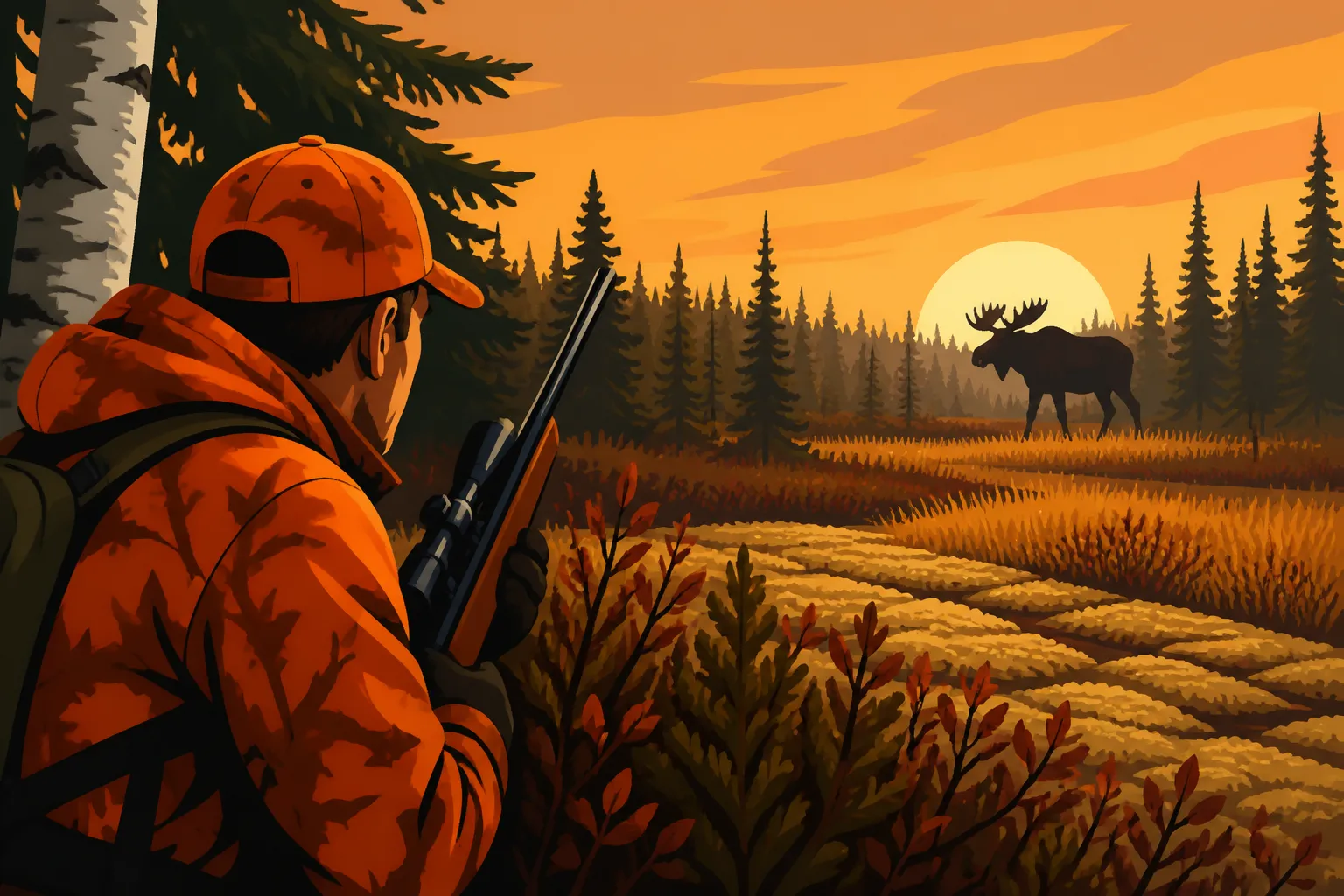
If you're hunting in true boreal country, especially up in Northwestern Ontario's Big Bush or the vast expanses around Cochrane, moose are likely high on your list, and muskeg edges are practically their living room. These massive animals are perfectly adapted to wet environments. They’ll often browse on willow and other aquatic vegetation found in the bogs themselves. During the warmer parts of the hunting season, muskeg offers excellent cooling opportunities; moose will wallow in the peat, not just to escape the heat but also to get away from the relentless black flies and mosquitoes that plague the northern bush.
Furthermore, moose often use the slightly firmer ground along the edges of muskeg as natural travel corridors. Instead of slogging through the absolute thickest, wettest parts, they’ll skirt the perimeter, moving from one feeding area to another or heading to denser cover. Keeping an eye out for fresh tracks, broken saplings from browsing, and rub lines along these edges can tell you exactly where they’re moving. Understanding What Moose Eat Through the Year can help you predict their movements even better.
Bear Dens and Foraging Grounds
Black bears are another species that can thrive around muskeg edges. These areas are often prime real estate for berry production. Blueberries, cranberries, and other low-lying bushes that love the acidic, moist soil of muskegs can create a feast for bears, especially in late summer and early fall. A mature bruin will spend hours gorging on these calorie-rich foods, preparing for hibernation.
Beyond food, the small, dry humps or islands of slightly higher ground nestled within or directly adjacent to a muskeg often make ideal denning sites. The dense, stunted conifers offer excellent concealment, and the challenging terrain keeps most people out, providing bears with a sense of security. Bears also appreciate the reduced human pressure in these areas, using the dense cover for safe travel routes between different foraging grounds or bedding areas. If you're setting up a bait site, understanding a bear's natural movements, perhaps even considering Baiting Black Bear in Ontario near one of these edges, could be highly effective.
Whitetails on the Fringe
While southern Ontario’s farmland often boasts larger, more numerous whitetails, deer in the boreal forest are a different breed. They tend to be smaller in body size and are often much harder to find, but muskeg edges still play a critical role in their survival, especially where these big bog systems give way to mixed forest or small hardwood ridges.
For northern deer, the dense conifer cover that often lines muskegs provides vital shelter from deep snow and biting winds during the brutal Ontario winters. These cedar swamps and spruce thickets become their wintering yards, offering protection and some limited browse. Although they generally prefer more diverse browse, deer will feed on conifer needles when other food sources are scarce. Tracks leading into and out of these dense edges, particularly in late fall and early winter, can indicate a wintering area. Knowing Where Ontario Whitetails Yard in Deep Snow is crucial for understanding these patterns.
Upland Birds and Small Game Havens
Don't forget the smaller critters! Muskeg edges are absolute havens for various upland birds and small game species. Ruffed grouse and spruce grouse thrive in the dense conifer cover, feeding on buds, catkins, and the abundant berries found along these edges. Spruce grouse, in particular, prefer the dense, dark spruce swamps and muskegs, blending in perfectly with their surroundings.
Snowshoe hare also love the thick, impenetrable undergrowth that characterizes many muskeg edges. The dense cover provides excellent protection from predators like lynx, coyotes, and wolves, which also frequent these areas. You'll often find their distinctive tracks and clipped browse in the brush. While you might be focused on big game, don't overlook the opportunity for a bit of small game hunting, perhaps even Hunting Ruffed Grouse on an Ontario Bush Road that borders a muskeg, for a memorable mixed bag hunt.
| Species | Primary Use of Muskeg Edge | Key Sign to Look For | Best Time to Hunt |
|---|---|---|---|
| Moose | Browsing, Wallowing, Travel Corridors, Thermal Cover | Large tracks, broken browse, rub lines, droppings | Early morning/late evening, during the rut |
| Black Bear | Foraging (berries), Denning Sites, Safe Travel | Scat (berry-filled), claw marks on trees, trampled areas | Early fall (berry season), spring near dens |
| Whitetail Deer | Winter Cover, Escape Cover, Limited Browse | Tracks, trails, beds in dense cover, rubs/scrapes (less common) | Late fall (pre-rut/rut), early winter |
| Ruffed Grouse | Cover, Foraging (buds, berries), Drumming Logs | Droppings, dusting bowls, drumming logs, flushing birds | Mid-day, walking old trails/cuts bordering muskeg |
| Snowshoe Hare | Dense Cover, Foraging (twigs, bark) | Tracks (large hind feet), clipped twigs, runways in brush | Any time (especially after fresh snow) |
Strategic Approaches to Hunting Muskeg Edges
Hunting these challenging environments requires a different mindset and specific strategies compared to hunting open hardwoods or agricultural fields. Patience, preparation, and knowing how to read the terrain are paramount.
Scouting and Planning Your Hunt
The first step to successfully hunting a boreal muskeg edge happens long before you set foot in the bush. Modern technology is your best friend here. Utilize satellite imagery from tools like GoHunt or similar mapping applications. Zoom in and identify the clear boundaries where the dark, dense muskeg gives way to lighter, drier timber. Look for subtle variations in terrain – those slightly higher "islands" or humps within the bog, or fingers of solid ground that extend into the wetland. These are often natural travel corridors or bedding areas.
Topographic maps can further complement this by showing subtle elevation changes. Even a few feet of rise can mean the difference between solid ground and knee-deep bog. If the muskeg is extensive and borders larger water bodies, don’t rule out canoe or boat-in options, which can get you to remote, unpressured sections of these edges. Always study your route on the map, noting potential entry and exit points. A good digital mapping system for Scouting With Satellite Imagery in Ontario is invaluable, helping you visualize the landscape, and for more remote access, considering Canoe-In Hunting on Ontario Crown Land can open up incredible opportunities.
Sticking to the High Ground (Relatively Speaking)
When you're actually in the field, your focus should be on the interface itself – where the wet bog meets the upland. This isn't just about easier walking; it's about intercepting animals moving along their preferred routes. Animals, much like us, will take the path of least resistance. They’ll often skirt the very edge of the bog, using the firmer ground as a natural highway.
Wind direction is absolutely crucial when hunting these edges. Scent travels incredibly well in the boreal forest, and you don't want your scent blowing across the very trail you're hoping an animal will use. Always hunt with the wind in your favour, either quartering into it or directly in your face. Pay close attention to any natural animal trails. These are often worn pathways where deer or moose have consistently travelled. Follow them cautiously, looking for fresh sign. These trails are often funnelled into pinch points by the topography or vegetation, making them excellent spots for an ambush.
Still-Hunting and Stand Placement
Given the dense cover and often soft footing, still-hunting – moving incredibly slowly and deliberately – is an excellent strategy along muskeg edges. Take a few steps, then stop and glass, listening intently. Sound carries differently in these environments; the damp ground can muffle your footsteps, but snapping a twig can sound like a gunshot. Focus on the pauses, looking for subtle movements or shapes that don't belong.
When it comes to stand placement, look for natural crossings or feeding areas. A strategically placed tree stand overlooking a narrow crossing between a muskeg and a denser bush lot, or a section of the edge where browse is particularly heavy, can be deadly. If you can't use a tree stand, ground blinds made from natural cover are very effective. Just ensure you're well hidden and have a clear shooting lane. A lot of folks spend time finding the perfect spot, and learning Hanging a Stand on an Ontario Bush Edge is a skill worth honing for these areas.
Calling Strategies for Boreal Species
Calling can be incredibly effective when hunting muskeg edges, especially for moose. The dense cover often means limited visibility, so attracting an animal to your location can be a game-changer. For moose, cow calls and bull grunts can be very potent, particularly during the rut. The sounds travel well through the thick timber and over open bog, drawing curious bulls in. Learn the nuances of Calling a Bull Moose in the Rut to maximize your chances.
While less common, distress calls can sometimes work for bears, though you must be prepared for a quick, close encounter. For predators like coyotes and wolves, calling can also be highly productive, as these animals frequently patrol muskeg edges looking for prey like hares or deer. Always be mindful of the species you're calling and adjust your tactics accordingly, remembering that you're in their element.
Essential Gear and Safety Considerations
Hunting muskeg is a commitment, and it demands the right gear and a strong emphasis on safety. The remoteness and challenging terrain mean you need to be self-sufficient and prepared for whatever nature throws at you.
Footwear and Clothing for Wet Environments
This cannot be stressed enough: good waterproof footwear is non-negotiable. Forget your light hiking boots; you’ll be soaked within minutes. Chest waders are ideal if you plan to move through the bog itself, but at a minimum, knee-high rubber boots with excellent traction are a must for sticking to the edges. Brands like Muck Boots or Lacrosse Alpha series are popular choices for a reason.
Layering is also critical. Even if it's not raining, the dampness and cold can seep into your bones quickly, especially when you're moving slowly or sitting still. Opt for moisture-wicking base layers, insulating mid-layers, and a waterproof/windproof outer shell. And always, always wear blaze orange in Ontario during relevant seasons. Your visibility to other hunters is paramount in dense cover. Make sure you understand Ontario Blaze Orange Requirements before you head out.
Navigation and Communication
Cell service in much of Ontario's boreal forest is non-existent. Relying solely on your phone for navigation is a recipe for disaster. Carry a reliable GPS unit with pre-loaded maps, along with a physical map and compass as a backup. Know how to use them without relying on batteries.
Even better, consider a satellite messenger device like a Garmin inReach or a Zoleo. These devices allow you to send and receive text messages, share your location, and, most importantly, send an SOS signal in an emergency, even when you have no cell service. They are a literal lifeline in remote country. Also, carry basic survival items: a whistle, fire starter, knife, and a small first-aid kit. Knowing What to Do If You Get Turned Around is a critical skill, but having the right tools can save your life.
Staying Safe from Wildlife and Environment
You're in the wild, so be prepared for encounters with wildlife. Bear spray is an absolute essential in Ontario's bear country, even if you’re not specifically hunting bears. Know how to use it and keep it accessible.
The bugs in the boreal can be relentless, especially during early season hunts. Black flies and mosquitoes can drive you mad and make a hunt miserable. Pack industrial-strength bug repellent (DEET is your friend) and consider a head net. Staying hydrated is also crucial; carry enough water or a reliable water filter. Finally, be acutely aware of the risks of hypothermia. Getting wet and cold, even in seemingly mild conditions, can quickly turn dangerous in the remote north. Layer appropriately and know the signs of hypothermia.
Disclaimer
Please ensure you are familiar with all current Ontario hunting regulations, seasons, and licensing requirements before heading into the field. Safety is paramount, and responsible hunting practices protect both wildlife and hunters.