ATV Rules on Ontario Crown Land
Navigating Ontario's vast Crown Land with an ATV can feel like a maze of regulations, leaving many hunters and outdoor enthusiasts scratching their heads. You’ve got the perfect spot scouted, your gear packed, and your ATV ready to tackle the terrain, but the last thing you want is to run afoul of the law or damage the very wilderness you’ve come to enjoy. This guide is here to untangle the complexities of ATV rules on Ontario Crown Land, ensuring you can explore safely, legally, and responsibly, making the most of your hunting adventures.
The Foundation: Understanding ATV Operation on Ontario Crown Land
Ontario’s Crown Land offers incredible opportunities for outdoor recreation, including hunting, but it’s not a free-for-all when it comes to ATVs. The rules are designed to protect the environment, ensure public safety, and manage access effectively. Many hunters feel a real crunch for time, trying to balance work, family, and the precious few days they get in the bush, so understanding these regulations upfront can save you a world of trouble and make your trip much smoother.
Understanding Permitted Use and Designated Trails
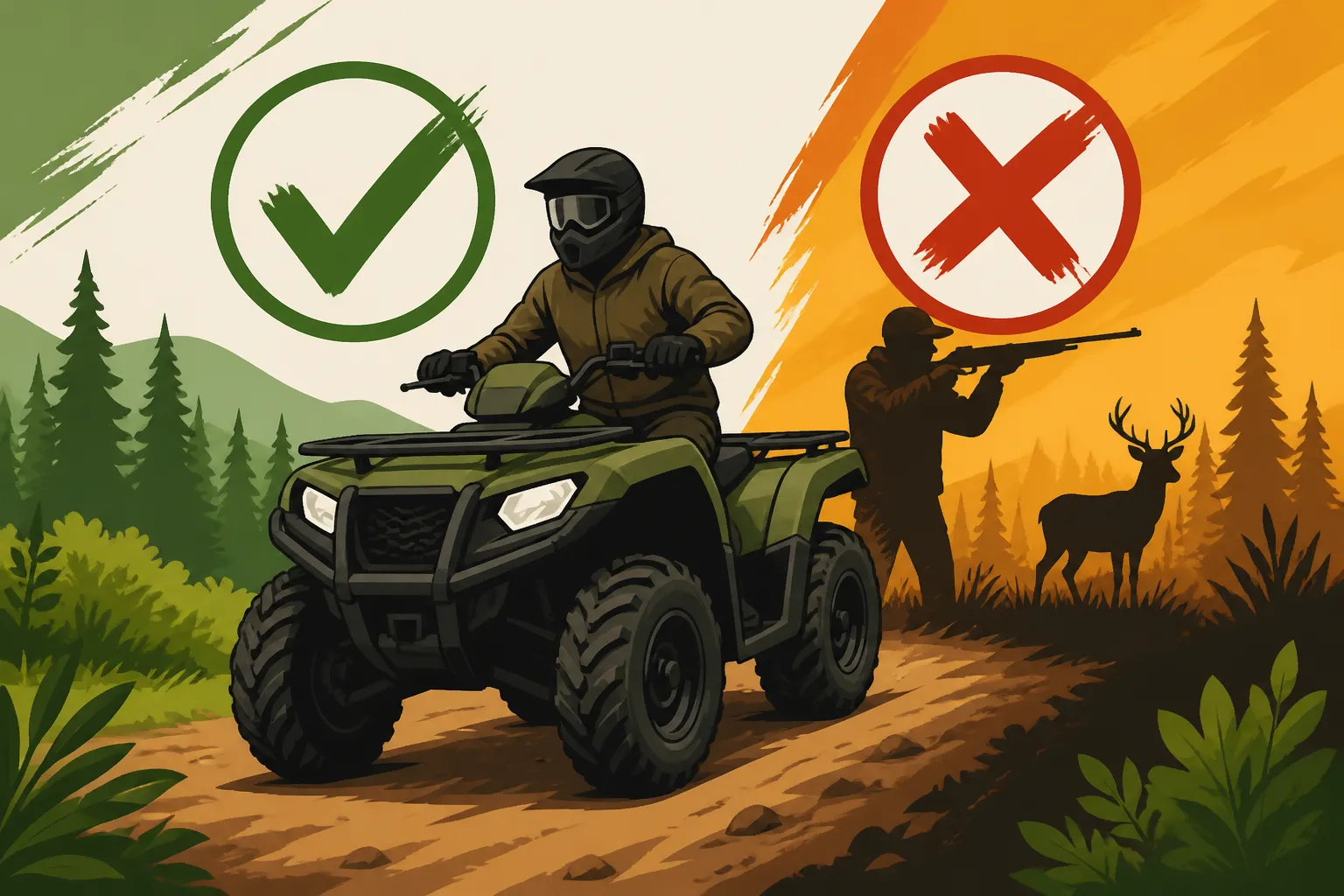
It’s a common misconception that if it's Crown Land, you can drive your ATV anywhere. This simply isn't the case. While much of Ontario's extensive Crown Land is open for responsible use, ATV access is often restricted to designated trails, old logging roads, or specific areas. You can't just blaze your own trail through sensitive wetlands or dense forests. The provincial government, through the Ministry of Natural Resources and Forestry (MNRF), manages these lands and their accessibility. They emphasize using established routes to minimize environmental impact and prevent conflicts with other users. Often, these designated trails are part of an organized trail system managed by local ATV clubs or federations, like the Ontario Federation of ATV Clubs (OFATV), who maintain them. For hunters, this means you need to do your homework before heading out. Identifying these permitted routes is crucial for staying legal and avoiding fines.
Before you even load your ATV onto the trailer, it’s imperative to consult current maps and resources. Websites like GoHunt and the provincial Crown Land Use Policy Atlas (CLUPA) are invaluable for identifying where Hunting Ontario's Crown Land is permitted and, critically, where ATV access is allowed. These digital tools often highlight designated trails, roads, and areas where motorized vehicle use is either permitted, restricted, or outright prohibited. Ignoring this step is a recipe for frustration, not to mention a potential ticket. Remember, even if a trail looks like a well-used path, it doesn't automatically mean it's a legal ATV route.
Required Documentation and Equipment for Your ATV
Just like driving your truck on a public road, operating an ATV on Crown Land comes with a set of legal requirements. You can’t just hop on and go; there’s paperwork and equipment involved. This is where many hunters, eager to get out to their favourite deer stand or moose calling spot, often overlook the details. But these details are not just bureaucratic hurdles; they are in place for your safety and the safety of others.
Firstly, your ATV needs to be registered and display a valid licence plate. It must also be insured with the appropriate coverage. These are non-negotiable legal requirements. Secondly, the ATV itself must be in good working order and meet specific equipment standards. This includes having working headlights, taillights, brake lights, a horn, and a muffler that keeps noise levels within acceptable limits. Excessive noise isn't just annoying to other outdoor enthusiasts; it can also disturb wildlife, which is counterproductive to any hunting trip. A reliable winch can be an absolute lifesaver when you're far from the truck, especially if you get stuck in soft ground or need to pull a deer out of a tricky spot, making it a highly recommended piece of equipment even if not strictly mandated. It's also a good idea to carry a first-aid kit, a repair kit for basic fixes, and a cell phone or satellite communication device, especially when Hunting Northwestern Ontario's Big Bush where cell service is often non-existent.
Essential ATV Documentation & Equipment Checklist
| Requirement | Description | Why it's Important |
|---|---|---|
| Registration | Valid, up-to-date registration with the Ministry of Transportation (MTO). | Legal operation, identification, ties owner to vehicle. |
| Licence Plate | Clearly displayed, visible plate on the rear of the ATV. | Identification by authorities, proof of registration. |
| Insurance | Minimum third-party liability insurance. | Protects you financially in case of an accident or damage to property/persons. |
| Helmet | Approved helmet (DOT, Snell, ECE) for operator and any passenger. | Critical safety gear, significantly reduces head injury risk. |
| Lights | Working headlights, taillights, and brake lights. | Visibility, especially at dawn, dusk, or in low light conditions. |
| Horn | Functional horn. | Alerting others, safety. |
| Muffler | Properly installed, quiet muffler to meet noise regulations. | Reduces disturbance to wildlife and other outdoor users, avoids noise violations. |
| Rearview Mirror | At least one rearview mirror. | Situational awareness, safety for backing up or navigating trails. |
| Spark Arrestor | Functional spark arrestor (especially important in dry conditions). | Prevents wildfires caused by engine exhaust. |
| Fire Extinguisher | Small, accessible fire extinguisher. | Quick response to engine fires or other small blazes. |
Age Restrictions and Passenger Rules
Operating an ATV isn't something just anyone can do, and there are specific rules regarding age and passengers that need to be followed meticulously. This is particularly important for families who hunt together or when bringing younger folks along for scouting or game retrieval. Safety is paramount, and these regulations are put in place to prevent accidents.
In Ontario, the minimum age to operate an ATV is generally 12 years old, but there are crucial caveats. A 12 or 13-year-old can only operate an ATV on private property or on Crown Land trails where permitted, and only if they are accompanied by an adult who holds a valid driver’s licence. On public roads or highways (where ATVs are legally permitted to cross or use the shoulder), the operator must be at least 16 years old and hold a valid G2 or M2 driver’s licence. For hunters, this means that while your child might be able to help you scout a Hunting a Hardwood Ridge for Whitetails on an ATV, they need to meet specific criteria, and an adult must always be present and supervising.
Regarding passengers, the rule is straightforward: an ATV can only carry as many passengers as it was designed for. If your ATV is a single-rider model, it's illegal and incredibly unsafe to have a passenger clinging on. Two-up ATVs (designed for a driver and one passenger) must have a designated passenger seat and footrests. Attempting to squeeze an extra person onto an ATV not designed for it dramatically increases the risk of an accident, particularly on uneven or challenging terrain, which is common on much of Public Hunting Land in Ontario. Always ensure everyone is wearing an approved helmet, regardless of age or whether they are driving or riding as a passenger. This isn't just a rule; it’s a critical safety measure that could save a life.
Navigating Restricted Areas and Environmental Considerations
Part of responsible ATV use on Crown Land involves knowing not just where you can ride, but also where you absolutely cannot. This is about protecting sensitive ecosystems, respecting other users, and ensuring that our natural resources remain healthy for future generations of hunters and outdoor enthusiasts. It’s a real challenge for many, as the lines on a map aren't always clear, and the temptation to take a shortcut can be strong.
Areas Where ATVs Are Strictly Prohibited
Even on Crown Land, there are significant areas where ATV use is strictly forbidden. These restrictions are in place for various reasons, including environmental protection, public safety, and to maintain the integrity of certain designated zones. Ignoring these prohibitions can lead to substantial fines and, more importantly, irreversible damage to the environment.
Generally, ATVs are prohibited in:
- Provincial Parks and Conservation Reserves: While some specific parks might have designated routes, the vast majority of provincial parks and conservation reserves do not permit ATV use. Always check specific park regulations before assuming access. This includes iconic areas like Algonquin Provincial Park.
- Wildlife Management Areas (WMAs) and other Protected Areas: Many WMAs, wetlands, and areas designated for specific wildlife protection purposes prohibit motorized vehicles to minimize disturbance to sensitive habitats and species. Ontario's Wildlife Management Units (WMUs) outline various regulations, but you need to delve deeper than just the WMU number to understand specific localized restrictions.
- Hydro Lines and Railway Right-of-Ways (without permission): While these corridors might seem like easy paths through the bush, they are private property owned by utility companies or railway operators. Unauthorized ATV use is trespassing and illegal.
- Across private property without permission: This one seems obvious, but it's often violated. Even if you're trying to get to Crown Land, you cannot cross private property without explicit landowner permission. Getting caught doing so could cost you the opportunity to ever Getting Private Land Permission in Ontario again.
- Environmentally Sensitive Areas: These could include specific wetlands, fragile shorelines, areas with rare species, or recently reforested sections. While not always explicitly marked with a sign, responsible riders should exercise caution and avoid areas that appear particularly vulnerable to rutting or erosion.
Always consult detailed maps, such as those available through the MNRF or GoHunt, which often delineate these restricted zones. Relying on outdated maps or local hearsay is a risk not worth taking.
Protecting Ontario's Natural Environment
The impact of ATVs on the environment is a significant concern, and responsible riders play a crucial role in minimizing it. The goal isn't just to follow the letter of the law, but to embrace the spirit of conservation that all good hunters share. We want to leave the land better than we found it.
ATVs can cause several types of environmental damage:
- Soil Erosion and Compaction: Riding off designated trails, especially on wet ground, can create deep ruts. These ruts channel water, leading to erosion and making it harder for vegetation to grow back. Soil compaction also harms root systems and reduces the land's ability to absorb water.
- Habitat Destruction: Driving through wetlands, sensitive meadows, or young forest stands can destroy vital wildlife habitat, nesting sites, and food sources. This is particularly problematic for ground-nesting birds or small mammals.
- Water Contamination: ATVs can leak oil, gas, or other fluids, which can contaminate water bodies. Driving through streams or sensitive riparian zones can also churn up sediment, harming aquatic life.
- Spread of Invasive Species: Mud and debris clinging to your ATV can carry seeds of invasive plants or spores of harmful pathogens from one area to another, disrupting local ecosystems. Always clean your ATV thoroughly before moving between different hunting areas.
To truly protect the environment, always stick to designated trails and roads. Avoid riding in extremely wet or muddy conditions if possible, as this is when the most damage occurs. If a trail is too muddy or you encounter standing water, try to go around it (if safe and legal) or turn back rather than widening the trail or creating new ruts. Pack out everything you pack in – and then some. Leave no trace of your presence, and make sure your ATV is well-maintained to prevent leaks.
Respecting Other Users and Wildlife
Crown Land is a shared resource, and many different people use it for various activities, from hiking and canoeing to fishing and trapping. As hunters, we often share the same spaces, and respectful conduct goes a long way. This includes minimizing disturbance to both people and wildlife.
- Noise and Speed: ATVs can be noisy, and excessive speed creates unnecessary dust and disturbance. Reduce your speed when encountering other users, and keep engine noise to a minimum, especially in areas where others might be enjoying the peace and quiet of nature. Loud noises can also spook game, which defeats the purpose of your hunt.
- Right-of-Way: Yield to hikers, horseback riders, and cyclists. They are often less protected and more vulnerable on shared trails. A friendly wave and a slowed pace show respect and help foster positive relations between different user groups.
- Wildlife Disturbance: While hunting involves pursuing game, we should always strive to minimize unnecessary disturbance. Avoid driving directly towards animals, especially during sensitive times like the rut or when young are present. Give wildlife ample space. Excessive ATV use in certain areas can push game out, making your hunting efforts less successful. When you're trying to call in a bull moose during Calling Moose in Ontario's Boreal Forest, the last thing you want is an ATV roaring nearby.
- Camping Etiquette: If you’re Camping on Ontario Crown Land with your ATV, ensure your camp is tidy and follow all fire regulations. Park your ATV responsibly, not blocking trails or access points for others.
By being mindful of your impact and respectful of others, you contribute to a positive perception of ATV users and hunters on Crown Land, helping to ensure continued access for everyone.
Practical Tips for Hunters Using ATVs on Crown Land
For hunters, ATVs aren't just for joyriding; they're tools to access remote areas, transport gear, and retrieve game. Maximizing their utility while adhering to regulations requires a thoughtful approach. Hunters often face unique challenges, such as getting to a remote stand before first light or hauling out a heavy animal, and an ATV can be a game-changer if used wisely.
Scouting and Game Retrieval Strategies
An ATV can be an incredibly efficient tool for scouting new areas or retrieving harvested game, but it needs to be used intelligently and legally. Many hunters dream of accessing deep bush, and a reliable ATV, like a Polaris or Can-Am, can get you there faster and with less physical strain.
When scouting, use your ATV to cover ground quickly on designated trails or old logging roads. This allows you to check multiple areas, glass distant clearings, or get to prime locations for Reading Whitetail Sign in Ontario Hardwoods far from main access points. However, remember to do the final approach to your hunting spot on foot. Idling an ATV near a prospective stand site or driving through an area you intend to hunt will leave human scent and noise, potentially spooking game. Park your ATV a reasonable distance away and walk in silently. Tools like the GoHunt app can be invaluable here, allowing you to mark potential stand sites, game trails, and ATV parking spots directly on satellite maps while Scouting With Satellite Imagery in Ontario. This helps you visualize your approach and ensure you're sticking to legal access routes.
For game retrieval, especially large animals like moose or a trophy deer from Why Southern Ontario Grows Heavy Bucks, an ATV can be a lifesaver. Dragging a heavy animal several kilometers can be incredibly exhausting, dangerous, and time-consuming. Ensure your ATV is equipped with a winch or a sturdy hitch for a sled or cart. Before you head into the bush, have a clear plan for how you will get an animal out. This plan must involve sticking to designated ATV trails and roads for transport. You cannot simply drive your ATV straight to your downed animal if it's off-trail in a restricted area. In many cases, you'll still need to field dress the animal and manually drag it to the nearest legal ATV access point. Consider bringing a game cart or sled to make the initial haul easier if the terrain is suitable. Always be mindful of the ATV's weight capacity, especially when transporting a large animal, to maintain control and safety.
Planning Your Route and Sharing Your Itinerary
Venture into Ontario's vast wilderness, especially Northern Ontario, without a solid plan, and you're inviting trouble. The convenience of an ATV can sometimes lead to a false sense of security, making hunters overconfident about how far they can go. It’s critical to plan your route carefully and communicate your intentions.
Before leaving home, meticulously plan your route using up-to-date maps, whether physical or digital (like those offered by GoHunt). Identify primary trails, secondary access points, and potential bailout routes. Mark any known obstacles, difficult terrain, or areas of restricted access. Knowing Reading an Ontario WMU Map Before You Go is essential here. Consider the weather conditions, recent rainfall, and how they might affect trail conditions. A trail that's easy to navigate in dry conditions can become a muddy, impassable bog after heavy rain.
Crucially, share your itinerary with someone reliable who isn't accompanying you. This should include:
- Your exact route, including start and end points.
- Your expected departure and return times.
- The make, model, and licence plate of your ATV.
- Contact information for your hunting partners.
- Any specific areas you plan to scout or hunt.
This simple step can be the difference between a swift rescue and a prolonged search if something goes wrong, especially when you consider that What to Do If You Get Turned Around in the vastness of the Canadian Shield. Remember, cell service is often unreliable, or non-existent, in many remote hunting areas across Ontario. Carrying a satellite messenger or a GPS device with pre-loaded maps is highly recommended as a backup.
Staying Prepared for Unexpected Situations
Even the most meticulous planning can't account for every eventuality in the wilderness. ATVs, while rugged, can break down, and trails can change. Being prepared for the unexpected is part of being a responsible hunter and ATV operator. Many hunters experience the frustration of a breakdown deep in the bush, so having the right gear can turn a potential disaster into a minor inconvenience.
Your Truck Kit for a Northern Ontario Hunt should extend to your ATV. Always carry essential tools for basic repairs: a tire repair kit, a small air compressor, extra fuel in an approved container, spare spark plugs, and a basic tool kit. A recovery strap and a small shovel are also invaluable for getting unstuck. Weather in Ontario can change rapidly, so bring extra layers of clothing, rain gear, and emergency food and water, even for a day trip. A headlamp or flashlight, a fire-starting kit, and a whistle are also critical survival items.
Beyond gear, consider your own physical and mental preparedness. Are you familiar with basic first aid? Do you know how to use a compass and map if your GPS fails? Are you physically capable of walking out if your ATV breaks down kilometers from your vehicle? Hunting often takes us to remote, challenging places, and while an ATV makes access easier, it doesn't eliminate the need for fundamental wilderness survival skills. Being self-reliant and carrying the right emergency supplies ensures that if you encounter an unexpected situation, you have the means to handle it safely until help arrives or you can self-rescue.
Legal Ramifications and Enforcement
It's easy to think "no one will see me out here," but Ontario Conservation Officers are well-versed in patrolling Crown Land, and they enforce ATV regulations seriously. Ignorance of the law is not an excuse, and violations can lead to significant consequences that can quickly sour your hunting trip and hit your wallet hard.
Penalties for Non-Compliance
The penalties for violating ATV rules on Ontario Crown Land can be substantial, ranging from hefty fines to the impoundment of your vehicle. These aren't just minor slaps on the wrist; they are designed to be a deterrent and reflect the seriousness of environmental damage and safety risks.
For instance, operating an unregistered or uninsured ATV can result in significant fines, often in the hundreds of dollars. Driving without a helmet, or allowing an underage, unqualified operator to drive, also carries serious penalties. If your ATV is causing environmental damage, such as tearing up sensitive wetlands or protected areas, you could face fines under various provincial acts, including the Public Lands Act or the Crown Forest Sustainability Act, which can be thousands of dollars. In severe cases, especially repeat offenses or actions causing significant ecological harm, your ATV could be seized, and you could face charges that lead to court appearances and even a hunting licence suspension.
Conservation Officers have the authority to stop ATV operators, request documentation (licence, registration, insurance), and inspect the vehicle for compliance. They are trained to identify illegal routes and sensitive areas. The best way to avoid these penalties is simple: know the rules, follow them, and equip yourself and your ATV properly. A small fine can quickly escalate into a massive headache and an expensive lesson learned the hard way.
Reporting Violations and Ensuring Safety
While it's important to know the rules for yourself, it's also important to play a part in responsible land stewardship by reporting violations you observe. Seeing someone tearing up a wetland or disregarding safety rules can be frustrating, especially when you know the effort responsible hunters put into preserving access and game populations.
If you witness an ATV violation, such as someone driving through a clearly prohibited area, operating unsafely, or causing significant environmental damage, you can report it to the Ministry of Natural Resources and Forestry (MNRF) TIPS line. The TIPS line is dedicated to reporting natural resource violations. When making a report, try to gather as much detail as possible:
- The date, time, and specific location of the incident.
- A description of the ATV (colour, make, any distinguishing features).
- The licence plate number, if visible.
- A description of the operator(s).
- The nature of the violation (e.g., driving off-trail, no helmet, unsafe operation).
Your report can help Conservation Officers investigate and ensure that those who disregard the rules are held accountable, which in turn helps protect our access to Hunting Ontario's Crown Land and preserve the hunting heritage for everyone. Reporting violations isn't about being a "tattletale"; it's about protecting the resources we all cherish and ensuring that irresponsible actions don't jeopardize the privileges of those who respect the land and its regulations. Safety for all users on Crown Land is a shared responsibility, and sometimes that means speaking up.
Disclaimer
The information provided in this guide is for general informational purposes only and does not constitute legal advice. While we strive to provide accurate and up-to-date information, regulations regarding ATV use on Ontario Crown Land can change. It is always the responsibility of the individual to consult the most current official sources, such as the Ontario Ministry of Natural Resources and Forestry (MNRF) website, the Ontario Off-Road Vehicles Act, and local municipal bylaws, before operating an ATV on Crown Land.