Hunting Moose Off a Bush Road
Finding good moose hunting spots in Ontario can often feel like an impossible task, especially when dealing with vast stretches of dense bush and limited access. Many hunters find themselves wondering if they should trek deep into the wilderness or if there's any hope closer to the accessible routes. This guide aims to demystify hunting moose off a bush road in Ontario, offering practical strategies and insights to increase your chances of success without always needing an arduous backcountry expedition.
Understanding Moose Behavior Near Bush Roads
It might seem counterintuitive to hunt near a road, but moose, like many other large game animals, can often be found surprisingly close to human-made corridors, especially quiet ones. Understanding why they might be there – or why they might avoid it – is key to success.
Why Moose Use and Avoid Roads
Moose are creatures of habit and opportunity, and bush roads present both. On one hand, these roads, particularly older logging roads or lesser-used service roads, can offer easy travel routes, clearings for browsing, and access to different habitat types without expending too much energy. They often dissect areas with prime browse like young poplar, willow, and balsam fir, which are critical food sources. During the rut, bulls might use roads as travel corridors while searching for cows. Cows, especially those with calves, might use the edges for easier movement or to access small, hidden openings for feeding.
However, moose are also highly sensitive to pressure. Heavily trafficked roads, or those with consistent human activity, will generally see less moose activity during daylight hours. They're smart enough to know that vehicles and human scent usually mean trouble. Still, quiet sections, remote spurs, or times of low activity (like very early morning, late evening, or during bad weather) can see moose venturing close to, or even onto, these paths. It's a delicate balance of convenience versus perceived threat that dictates their presence.
Daily Patterns and Seasonal Movements
Moose aren't going to be hanging out on the main highway at noon, but their daily and seasonal patterns are crucial to predict their movements near bush roads. Typically, moose are most active at dawn and dusk, when light is low and human activity is generally less. This is when they might cross a road, feed in an adjacent clearing, or simply move from one bedding area to another. During the day, they often retreat into thicker cover, though they might be found bedded down in a swampy area not far from the road if they feel secure.
Seasonally, their behaviour shifts. In early fall, before the deep cold sets in, moose are often found near wetlands, lakes, and rivers, staying cool and feeding on aquatic vegetation. As the rut approaches in late September and October, their focus shifts to breeding. Bulls will travel more extensively, often using easy paths like old roads, searching for cows. During this time, you might hear a bull's guttural grunts or the distinctive raking sound of antlers on brush near a road, making it a prime time for Calling Moose in Ontario's Boreal Forest. Later in the season, as snow deepens, moose might use packed roads for easier travel, and they'll concentrate on accessible browse. Understanding these shifts allows you to adjust your focus and tactics.
Scouting Strategies for Bush Roads
You can't just drive up an old logging road and expect a moose to be standing there waiting for you. Successful road hunting, or hunting off the road, starts long before the season with thorough scouting.
Utilizing Maps and Digital Tools
Before you even put boots on the ground, or tires on the gravel, a good map is your best friend. Start with detailed topographic maps and satellite imagery. Look for features that moose love: swamps, beaver ponds, clear-cuts (especially 3-10 years old with regenerating browse), dense stands of conifers for thermal cover, and natural pinch points where different habitat types meet. Mark these areas on your map.
Digital tools, like the GoHunt app or other GPS-enabled mapping platforms, are invaluable here. They allow you to overlay private and Crown Land boundaries, track your routes, mark sign, and identify remote access points. Pay special attention to areas where bush roads intersect with creeks, power lines, or dense cover – these are natural travel corridors. Identify potential logging cuts that might be several years old; these can be moose magnets. A thorough study of maps can help you target specific sections for on-the-ground investigation. You might find it helpful to learn more about Scouting With Satellite Imagery in Ontario.
Reading Sign Along Road Edges
Once you're on the ground, or even just driving slowly along a bush road, you're looking for clues. Moose sign can tell you a story about what animals are in the area, how recently they were there, and what they're doing.
Key Sign to Look For:
- Tracks: Fresh tracks in mud, dust, or snow are undeniable proof of recent activity. Pay attention to size – larger tracks indicate bigger animals, and tracks of cows with calves are often distinctive. Note their direction of travel and if they're entering or exiting the bush.
- Droppings (Scat): Moose droppings are typically pellet-shaped, but can be softer and clumped if the moose has been feeding on lush vegetation. Fresh scat means a moose has been nearby recently. Look for it along trails, in clearings, and under browse.
- Browsing: Moose are prodigious browsers. Look for clipped twigs on young trees and shrubs like willow, dogwood, poplar, and balsam fir. The height of the browse can indicate the size of the moose, and fresh, ragged breaks show recent feeding. They'll also strip bark from trees.
- Rubs and Scrapes: During the rut, bulls will rub their antlers on saplings and small trees, leaving distinct marks and often breaking branches. They also create "scrapes" or "wallows" in wet ground, often urinating in them, which acts as a scent marker. These are clear indicators of a bull's presence during the breeding season.
- Bedding Areas: Moose often bed down in dense cover, typically in an area that offers good visibility downwind. Look for flattened vegetation in thickets adjacent to roads, particularly where there's a good escape route.
A table summarizing moose sign:
| Type of Sign | What to Look For | What it Tells You |
|---|---|---|
| Tracks | Large, cloven hoofprints in mud, dust, snow. | Recent presence, direction of travel, size of animal. |
| Droppings | Pellet-shaped or clumped scat. | Recent presence, dietary habits. |
| Browsing | Clipped twigs (ragged edges), stripped bark, broken branches. | Active feeding area, preferred vegetation, recent activity. |
| Rubs | Bark rubbed off saplings (usually 1-4" diameter) by antlers. | Bull activity, especially during the rut; often near travel routes. |
| Wallows | Muddy depressions, often with strong urine smell. | Bull activity during the rut; scent marking. |
| Trails | Well-used paths leading into/out of dense cover. | Regular travel corridors. |
When scouting, don't just stick to the main road. Walk into the bush 50-100 yards, especially where you see fresh sign. You might find a well-used trail leading to a hidden clear-cut or a dense swamp. Remember, the goal isn't just to find where a moose was, but to understand where it's going to be.
Effective Hunting Techniques Off the Road
Once you've done your scouting and have a good understanding of the area, it's time to consider how to actually hunt these animals. Road hunting doesn't mean shooting from your truck; it means using the road as an access point and strategic advantage.
Still-Hunting and Stand Placement
Still-hunting is a highly effective tactic, especially in and around the dense cover that often lines Ontario's bush roads. This involves moving incredibly slowly, stopping frequently to look and listen. The key is to blend in, move quietly, and be patient. Focus on terrain features identified during your scouting – edges of clear-cuts, swamp borders, creek crossings, or dense thickets where moose might be bedded. Move into the wind, if possible, to keep your scent from drifting ahead of you.
For stand placement, think about pinch points, funnels, and major travel corridors that intersect or parallel the road. If you find a heavily used trail crossing a road, setting up a portable stand or ground blind 50-100 yards into the bush, overlooking that trail, can be highly effective. The goal is to catch moose as they move between bedding and feeding areas, or as they cross these access routes. Remember, Hanging a Stand on an Ontario Bush Edge requires careful consideration of wind, sun, and exit routes.
Calling and Decoy Strategies
The moose rut, typically from late September through October, is an incredible time to incorporate calling into your strategy. Moose are very vocal, and during the rut, both bulls and cows will respond to calls.
- Cow Calls: A long, drawn-out moan resembling a cow looking for a bull can be incredibly effective. A single cow call every 15-20 minutes, followed by long periods of silence, can often draw a curious bull.
- Bull Grunts: Shorter, deeper grunts can simulate a challenging bull. Use these sparingly, especially if you're trying to coax a dominant bull closer.
- Raking: Scraping a paddle or an antler on brush to imitate a bull raking his antlers can add realism to your calling sequence. This often works best when combined with cow calls.
When calling, position yourself with good visibility and clear shooting lanes, ideally into the wind. Moose can approach silently, so be prepared. Sometimes, a bull will circle downwind to get your scent before presenting itself.
While less common than for deer, moose decoys can sometimes be used, particularly in open clear-cuts or large natural clearings accessible from a bush road. A life-sized cow decoy can be a magnet for a bull during the rut. If using a decoy, ensure it’s visible and positioned safely, ideally where you can remain hidden. Always be mindful of other hunters, especially on public land.
Tracking and Follow-Up
Even with the best shot, a moose can run a considerable distance. If you shoot a moose near a bush road, the first priority is always a safe and ethical retrieval. Mark the spot where you shot the animal and the last place you saw it. Wait a minimum of 30 minutes to an hour, or even longer if you suspect a marginal hit, to give the animal time to lie down and expire.
Begin tracking slowly and methodically, looking for blood, broken branches, disturbed leaves, and tracks. Moose leave a substantial trail, but in dense bush, it can still be challenging. If snow is on the ground, tracking becomes much easier. The GoHunt app can be invaluable for marking your track line and avoiding getting turned around in dense cover. If the trail runs cold, expand your search in circles around the last confirmed sign. If you're Hunting Moose in Ontario's Boreal Forest, prepare for a long tracking job, as the bush can be incredibly thick. Be ready for the immense task of field dressing and quartering a moose, which can weigh over 1,000 pounds. Understanding What a Big Bull Moose Weighs will emphasize the importance of having a plan for extraction, even if you’re close to a road.
Safety and Ethics on Roadside Hunts
Hunting near roads comes with its own set of responsibilities and potential hazards. Ethical behaviour and safety are paramount, not just for your own well-being, but for the reputation of all hunters.
Hunter Visibility and Road Etiquette
When hunting anywhere, but especially near roads, make yourself highly visible. Ontario requires hunters to wear blaze orange during certain seasons for good reason. Ensure you're wearing appropriate amounts of blaze orange and consider adding it to your pack or other gear.
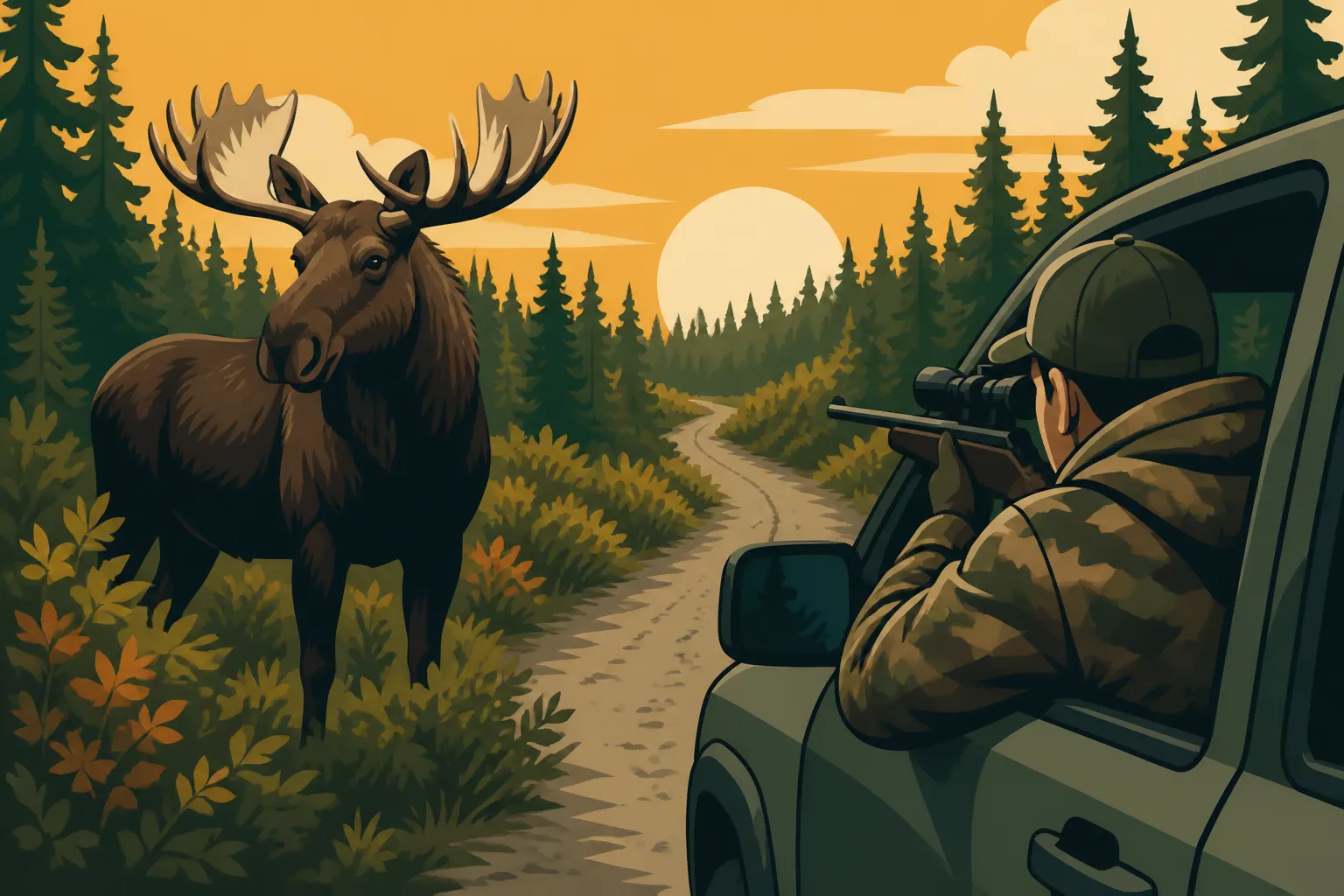
Never shoot from a vehicle or across a public road. This is illegal and extremely dangerous. Always leave your vehicle, move a safe distance into the bush, and ensure you have a clear, safe backdrop for any shot. Be mindful of sightlines down the road. If you're on a bush road that's open to traffic, remember that others might be using it – other hunters, loggers, ATVers, or campers. Always assume there are other people present, even if you haven't seen them. Respect private property signs and be aware of where hunting is permitted. A good understanding of Ontario Blaze Orange Requirements is essential.
Shot Placement and Ethical Harvest
Moose are massive, tough animals. A precise shot is crucial for a quick, ethical harvest and to minimize tracking. Aim for the vital organs – the lungs and heart. A shot behind the shoulder, slightly low, is generally the best target. Avoid "Texas heart shots" or long-range attempts if you're not absolutely confident in your ability and equipment. Using a legal and appropriately powerful calibre is critical. Consult Legal Rifle Calibres for Big Game to ensure your setup is adequate.
If you make a shot, your responsibility doesn't end until that animal is recovered and processed. Even if it's a long, arduous task, leaving a wounded animal is unacceptable. Have a plan for recovery, even if it means hiking back to your truck to get more supplies or help.
Meat Care and Retrieval Logistics
Once a moose is down, the clock starts ticking, especially in warmer early season conditions. Rapid field dressing is essential to cool the meat and prevent spoilage. If you're alone, quartering the animal in the field into manageable pieces might be necessary, even if you’re close to the road. This can significantly reduce the weight you need to drag or carry. Think about how you'll get the meat out; do you have a heavy-duty sled, a cart, or extra help? Even being 100 yards off a bush road with a full-grown moose can feel like 10 miles.
Having a robust Truck Kit for a Northern Ontario Hunt is critical. This should include sharp knives, a game bag, rope, a tarp, water, and first-aid supplies. If it's warm, consider having ice or coolers ready. Getting the meat quickly into cold storage is crucial for quality. If the weather is unseasonably warm, refer to guides on Meat Care in Ontario's Warm Early Seasons for specific advice.
Hunting moose off a bush road in Ontario demands respect for the animal, the environment, and fellow hunters. It's about smart planning, diligent scouting, ethical shooting, and efficient retrieval, all while prioritizing safety. Don't underestimate the potential of these accessible areas, but always hunt them with the same care and consideration you would a deep wilderness tract.
Disclaimer
Please remember that hunting regulations, seasons, and licensing requirements can change. Always consult the most current Ontario Hunting Regulations Summary available from the Ministry of Natural Resources and Forestry (MNRF) before heading into the field. This guide provides general information and should not be taken as legal advice or a substitute for official regulations. Ensure you understand all local rules and obtain appropriate licenses and tags.