Hunting Moose Around an Ontario Beaver Pond
The deep, untamed wilderness of Ontario offers some of the most challenging and rewarding moose hunting experiences in North America. Yet, for many hunters, finding these elusive giants feels like an impossible task, especially when you're staring at an endless sea of trees. The secret, more often than not, lies in understanding the subtle, yet vital, ecosystems moose rely on. This guide is all about one of Ontario's ultimate moose magnets: the beaver pond, and how understanding, scouting, and hunting these areas can drastically improve your chances of success.
Why Beaver Ponds are Moose Magnets
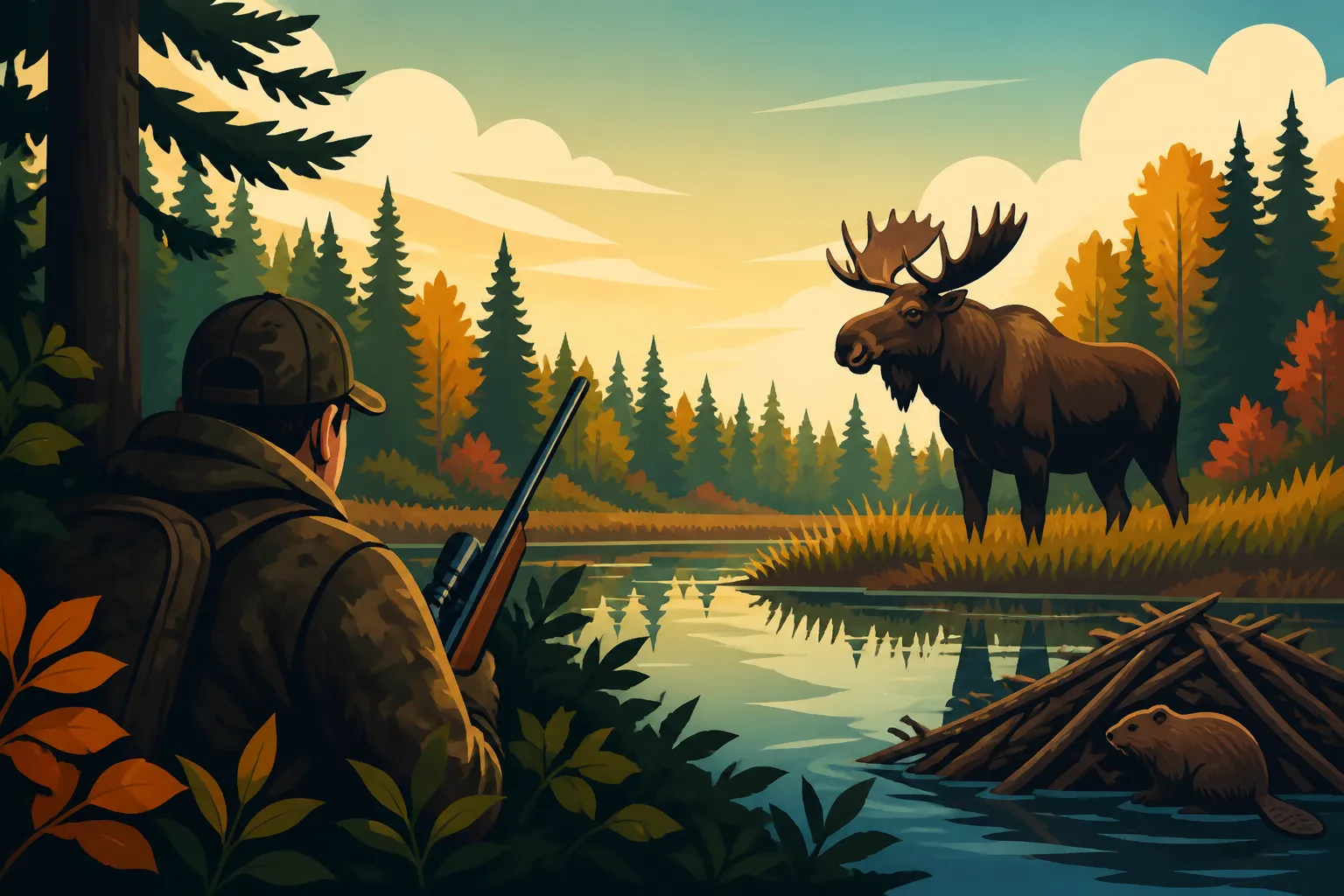
Moose are creatures of habit, driven by their immense size and specific dietary needs. They require vast amounts of forage and constant access to water, particularly during warmer months, to regulate their body temperature and escape biting insects. Beaver ponds, scattered throughout Ontario's boreal and mixed forests, are often the perfect storm of these critical elements, creating an irresistible draw for these massive animals.
Understanding Moose Habitat Needs
Moose, especially the mighty bulls we dream of, are essentially giant eating machines. Their diet is primarily made up of browse – the twigs and leaves of woody plants like willows, alders, and dogwood. But what truly sets them apart, and why beaver ponds are so crucial, is their love for aquatic vegetation. Think water lilies, pondweeds, and other submerged plants. These plants are incredibly nutritious and easily digestible, offering a high-energy boost that terrestrial browse simply can't match. A healthy moose can consume tens of pounds of forage in a single day, and the rich smorgasbord found in and around beaver ponds makes them prime feeding grounds.
Beyond food, moose need cover for security and thermoregulation. The dense stands of spruce, fir, and pine often found bordering these wetlands provide excellent bedding areas, offering sanctuary from predators and harsh weather. Water itself is vital. Moose will often stand chest-deep in a pond not just to feed, but to cool off during hot days and to find respite from the relentless swarms of black flies and mosquitoes that plague Ontario's summers and early fall. A beaver pond provides this vital refuge, acting as a natural bug repellent and a personal swimming pool rolled into one.
The Ecosystem of a Beaver Pond
The industrious beaver is a true architect of the northern landscape. By felling trees and building dams, they transform flowing streams into still, shallow ponds, forever altering the surrounding forest. This flooding creates a dynamic environment that, while initially destructive to some tree species, fosters an explosion of new, young growth around the edges – exactly what moose crave. As the water spreads, it kills off mature trees, which then fall and create snags and openings in the canopy. This allows sunlight to penetrate, encouraging the growth of those crucial willows, alders, and dogwood that form the backbone of a moose's diet.
Within the pond itself, the shallow, nutrient-rich water becomes a fertile breeding ground for a host of aquatic plants. Water lilies, with their broad pads and succulent stems, are a particular favourite. Moose will spend hours with their heads submerged, grazing on these submerged delicacies. This constant access to both terrestrial browse and highly nutritious aquatic plants makes beaver ponds an unbeatable food source. The "edge effect" created by the transition from dense forest to open water, and then to regenerating shrubbery, means that multiple layers of habitat are available in a relatively small area, concentrating moose activity. Understanding this interplay between beavers and the ecosystem is key to effectively Hunting Moose in Ontario's Boreal Forest.
Scouting Your Beaver Pond Hunting Ground
Finding the perfect beaver pond isn't always obvious from the road, or even from a casual walk through the bush. Modern technology and old-school boots-on-the-ground reconnaissance are your best tools for unlocking these hidden hotspots. A truly successful hunt starts long before you ever carry your rifle or bow into the woods.
Pre-Season Digital Scouting with Tools like GoHunt
These days, technology is a game-changer for moose hunters. Platforms like GoHunt, with their detailed satellite imagery and topographical maps, can give you a massive leg up even before you set foot in the bush. Start by poring over these digital maps, looking for distinct water bodies that aren't natural lakes – irregular shapes, areas where a stream widens significantly, or where a dam structure might be visible. These are tell-tale signs of beaver activity.
Once you’ve identified potential ponds, zoom in and scrutinize the surrounding terrain. Look for connecting trails that might lead to and from the pond. Are there narrow strips of land, often called pinch points, that moose would likely use to travel between different sections of the pond or adjacent uplands? Identify areas of dense cover where moose might bed down close to the water, as well as more open areas where they might feed. Equally important is identifying your own access routes – old logging roads, ATV trails, or even canoe routes that will allow you to approach silently and set up strategically. Always consider prevailing wind direction in relation to these approach paths. For more insights on this kind of preparation, check out our guide on Scouting a Wildlife Management Unit or dive into Reading Ontario Crown Land Layers on onX for even more detailed map analysis.
Boots-on-the-Ground Reconnaissance
As helpful as digital tools are, nothing beats getting your boots dirty. Once you've marked a few promising ponds on your GoHunt app, it's time to visit them in the off-season or well before your hunt begins. This physical reconnaissance is crucial. You're looking for fresh sign: moose tracks along the muddy edges, tell-tale piles of scat, rubbed trees where bulls have polished their antlers, and browsed vegetation indicating recent feeding. Pay close attention to the size and freshness of these signs – you want to confirm recent and consistent moose activity.
Identify the primary entry and exit points moose are using to get to and from the pond. These are often funnel points where the cover is thickest, or along old game trails. Once you've pinpointed these high-traffic areas, start thinking about potential stand locations or calling positions. You want a spot that offers good visibility into the pond or along a trail, but also provides enough cover to break up your silhouette. Don’t forget to assess the water itself. How deep is it? Is it navigable by canoe, which might be critical for silent access or, more importantly, for getting a downed animal out? This firsthand knowledge will be invaluable when the season opens and you're committed to your hunting strategy.
Hunting Strategies for Beaver Pond Moose
Hunting moose around a beaver pond demands different approaches depending on the time of year. The early season, the rut, and the late season each present unique opportunities and challenges that you'll need to adapt to. Success often hinges on understanding moose behaviour during these distinct periods and tailoring your strategy accordingly.
Early Season: Ambush and Still-Hunting
The early archery and gun seasons in Ontario, typically spanning late September and into October, often coincide with warmer weather and still-dense foliage. During this time, moose are heavily focused on feeding to build up reserves for the coming winter and the rut. Beaver ponds are irresistible food plots. Your best bet here is a patient ambush or careful still-hunting. Moose will often feed in and around these ponds during the cooler parts of the day – early morning and late evening.
Set up downwind of known moose entry points or heavily browsed areas along the pond's edge. Patience is paramount; be prepared to sit for extended periods. If still-hunting, move slowly, taking a few steps then stopping to scan and listen. The thick cover around many beaver ponds means visibility can be limited, so using your ears is just as important as your eyes. A silent approach is crucial; consider accessing the pond by canoe if practical, which allows for extremely quiet movement and can also be a huge asset for retrieval. This is why Hunting Moose From a Boat or Canoe can be incredibly effective, allowing you to slip into remote sections undisturbed. Keep your focus on funnel points where trails lead into the water or through dense shrubbery.
The Rut: Calling Them In
As October progresses, the moose rut kicks into full swing, usually peaking in early to mid-October in many parts of Ontario. This is arguably the most exciting time to hunt moose, especially around beaver ponds. Bulls are now actively seeking cows, and both sexes become more vocal and less cautious. This is when calling can be incredibly effective.
Position yourself strategically on the downwind side of a beaver pond, ideally with a good vantage point that offers a balance of visibility and cover. Begin with soft, pleading cow calls – a deep, guttural "moo-ahh" sound. Be patient. If there's no response, gradually increase the intensity and add some grunts, mimicking a bull looking for a cow. If a bull is in the vicinity, he'll often respond with his own grunt or even a visual approach. Remember, a bull coming into a call might circle downwind to scent-check, so having an escape route or a secondary shooting lane ready is important. For a deeper dive into vocalizations, read our guide on Calling a Bull Moose in the Rut. Your GoHunt app can also help you mark calling locations with optimal wind advantage and escape routes for a wary bull.
Late Season: Tracking and Patience
By late October and into November, as temperatures drop and the first snows begin to fall, moose behaviour shifts. They're still focused on feeding but will increasingly seek out thermal cover – dense conifer stands that offer protection from the cold winds and snow. Beaver ponds still hold appeal, particularly if they offer access to young, regenerating browse, but the approach often becomes more about tracking.
A fresh snowfall is a late-season hunter's best friend. It reveals exactly where moose have been travelling, feeding, and bedding. Look for fresh tracks leading to and from the beaver pond, particularly tracks that weave through dense stands of spruce or cedar adjacent to the water. These areas offer both food and crucial thermal cover. Still-hunting becomes a meticulous exercise in following tracks, carefully moving through the quiet, snow-covered bush. Moose might be less active during the day, so focusing on thick, less accessible areas around the pond, where they might bed down, is key. Patience is once again vital, as moose will often hold tight in dense cover, especially in larger animals that have weathered many hunting seasons. Our guide on Reading Sign After a Fresh Snow provides excellent insights for this late-season strategy.
Here's a quick overview of strategies by season:
| Season | Primary Strategy | Key Moose Behaviour | Pros | Cons |
|---|---|---|---|---|
| Early Season | Ambush / Still-Hunting | Heavy feeding, predictable movement | Moose focused on food, less wary of human presence | Thick foliage reduces visibility, insects are prevalent |
| Rut | Calling / Decoying | Bulls actively seeking cows, vocal | Moose can be drawn in, exciting encounters | Unpredictable approaches, bulls circling downwind |
| Late Season | Tracking / Patience | Seeking thermal cover, often in dense areas | Snow helps identify fresh sign, fewer insects | Cold weather, deeper snow, moose in thickest cover |
Essential Gear and Logistics
Hunting moose, especially around the unique terrain of a beaver pond, isn't just about strategy; it's also about having the right gear and a solid plan for handling the logistics. This is particularly true when you consider the sheer size of an Ontario moose and the often-remote locations of these ponds.
Must-Have Gear for Bush and Water
Your gear list for a beaver pond moose hunt needs to account for both the dense bush and the watery environment. First and foremost, invest in top-quality, waterproof boots that offer excellent ankle support. You'll be slogging through muddy edges, potentially wading through shallow water, and navigating uneven terrain. Layered clothing is crucial for Ontario's unpredictable fall weather, allowing you to adapt to temperature swings. Don't forget a serious bug suit or repellent, especially for early season hunts, as mosquitoes and black flies can be relentless near wetlands.
Navigation is non-negotiable. While your GoHunt app on your phone with downloaded offline maps is excellent, always carry a backup GPS device and a traditional compass with a map of your Ontario's Wildlife Management Units. Cell service can be spotty, if not non-existent, in many prime moose areas. Quality optics – binoculars (10×42 are ideal) and a rangefinder – will help you identify moose in dense cover and make ethical shots. Finally, think about retrieval from day one. A sturdy game cart, plenty of strong rope, a heavy-duty tarp, and a quality field dressing kit with sharp knives and a bone saw are non-negotiable. Consider a small, quiet canoe or kayak not only for silent access to the pond but also as a potential means of retrieving a quartered animal from a difficult spot. For a comprehensive list, consult our guide on a Truck Kit for a Northern Ontario Hunt, as many items will directly apply.
Meat Care in Remote Locations
Killing a moose is only half the battle; getting the meat out and cared for properly is the real challenge, especially around a remote beaver pond. Moose are enormous animals, often weighing well over a thousand pounds, and prompt field dressing is paramount to prevent spoilage, particularly in Ontario's warmer early seasons. You’ll be doing a lot of hard work, so be prepared.
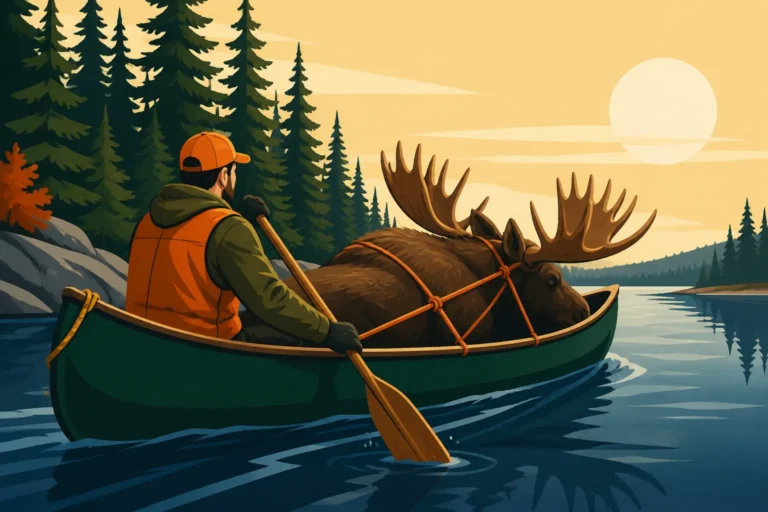
Your first priority after a successful shot is to get to the animal quickly and begin the field dressing process. This means removing the entrails and cooling the carcass as rapidly as possible. If you're alone, you'll likely need to quarter the animal in the bush. This involves separating the four quarters, backstraps, and tenderloins, which are more manageable sizes for transport. This is physically demanding work, and having a good plan, sharp tools, and a strong back is essential. For detailed instructions, refer to Quartering a Moose Alone in the Bush. Once quartered, get the meat off the ground and hung to allow air circulation. If temperatures are warm, even a few hours can make a difference. Pack the meat in game bags designed for air circulation and protection from insects and dirt. Extracting these heavy quarters from a boggy beaver pond area can be incredibly difficult, often requiring multiple trips, a robust game cart, or even a canoe if you're close enough to water. Always prioritize meat care, even if it means extra effort, because a spoiled moose is a heartbreaking waste. To minimize the risk, review our advice on Meat Care in Ontario's Warm Early Seasons. Getting a full moose out by canoe, for example, is a real feat, but it's often the most practical solution for these types of locations. Consider reading Getting a Moose Out by Canoe for some advanced strategies.
Disclaimer
Hunting is an inherently unpredictable activity. This guide provides general information and strategies, but success is never guaranteed. Always consult the most current Ontario hunting regulations, carry all necessary licences and tags, and prioritize safety above all else. Respect wildlife, the environment, and private land.