Marsh Hunting Ducks on the Great Lakes
You pushed a canoe through a cattail maze in the dark, set a dozen decoys in a pothole, and watched flight after flight of mallards and teal sail over the open bay and land a kilometre away. Great Lakes marshes are huge, and ducks have endless choices. This guide explains how to read those coastal marshes, where to set up, and how to hunt them legally and safely.
Why Great Lakes Marshes Hold So Many Ducks
The coastal wetlands along Lake Erie, Lake St. Clair, Lake Ontario and Georgian Bay are some of the most important waterfowl habitat in eastern North America. They sit where flight paths funnel birds south each fall, and they offer food, shelter and resting water all in one place. For a deeper dive on the biology, see Why the Great Lakes Concentrate Birds.
Food, Cover and Big Open Water
A typical Great Lakes marsh blends three types of habitat. There are cattail and bulrush stands that provide shelter, shallow bays and channels filled with wild celery, pondweeds and other aquatic plants, and big open water where birds raft up to rest. Puddle ducks like mallards, black ducks, wood ducks, wigeon, gadwall and teal feed in the shallows and edges. Diving ducks like canvasback, redhead, scaup and bufflehead use the deeper bays and open lake.
That mix is why the same marsh can produce a morning of teal in early season and a cold November shoot over redheads and bluebills a few weeks later.
The Famous Marshes
Some marshes are legendary. The Lake St. Clair delta, where the St. Clair River spreads into a wide fan of channels and islands, is one of the best-known waterfowl areas on the continent. Our piece on Why Lake St. Clair Draws So Many Ducks explains why. Long Point on Lake Erie is another landmark, with its huge inner bay and sheltered marshes, covered in What Long Point Means to Waterfowl. Rondeau Bay, Lake Erie’s Big Creek, the Bay of Quinte on Lake Ontario and Matchedash Bay near Georgian Bay are also well known.
Keep in mind that parts of these marshes are private hunting clubs, national wildlife areas, provincial parks or sanctuaries with their own rules. Some are closed to hunting outright. Always check the status of the water you plan to hunt.
Planning a Marsh Hunt
Licences and Permits
Duck hunters in Ontario need several documents. You need an Ontario Outdoors Card and a small game licence, plus the federal Migratory Game Bird Hunting Permit with the habitat conservation stamp. The federal permit is covered in The Federal Migratory Game Bird Permit.
Seasons and bag limits are set federally and vary by hunting district. Check Ontario Duck Season Dates by District and Duck Daily Bag Limit by Species before you go, since some species, like black duck, canvasback and pintail, may have tighter limits.
Scouting the Marsh
The best marsh hunters scout constantly. Watch where birds fly at dawn and dusk, where they land and where they rest midday. Look for small openings in the cattails, potholes and channels that birds use to feed out of the wind. Tools like GoHunt are designed to help hunters store scouting notes and map data, and some waterfowlers use apps like that to mark promising openings, though you should confirm which mapping layers GoHunt provides for Ontario marshes before relying on it.
Wind is the master variable on big water. A north wind may push birds into sheltered bays, while a south wind can scatter them. Learn how your marsh responds to different winds.
Access by Boat, Canoe or Foot
Many marshes can only be reached by boat. A small, flat-bottomed boat or a canoe lets you slip through shallow channels and hide in the reeds. Larger boats are needed for open bays and big water. Some marshes can be walked from shore, especially where dikes or trails lead into the cattails. Our guide to Hunting Ducks in an Ontario Cattail Marsh covers small-scale marsh setups.
Setting Up in the Marsh
Decoy Spreads
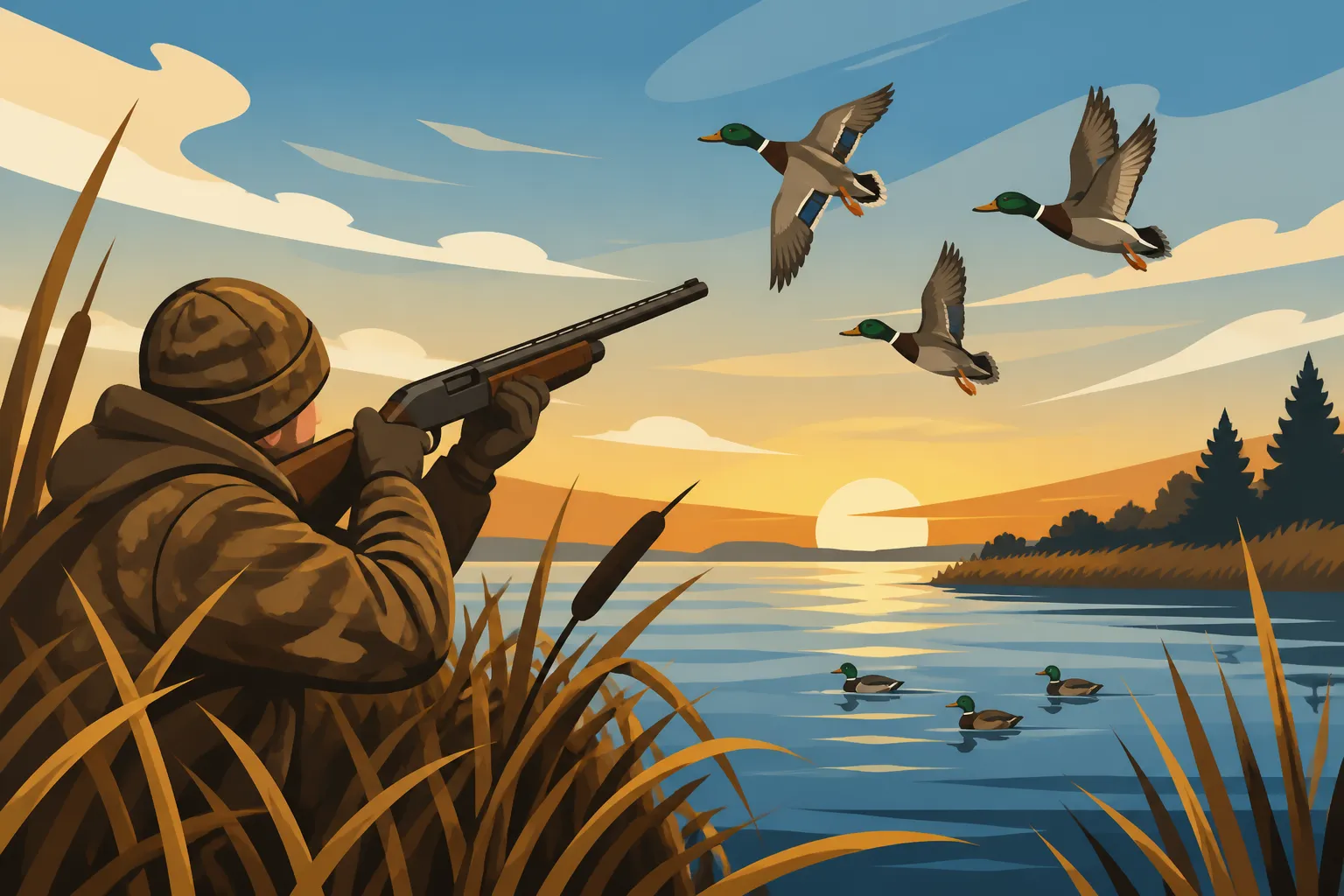
Marsh spreads are usually smaller than big-water spreads. A dozen to three dozen decoys in a pothole or channel opening is common. Leave a clear landing hole upwind of your blind, since ducks land into the wind. Mix species to match what you are seeing. Motion decoys and jerk cords can add life on calm days.
Concealment
Ducks in heavily hunted marshes become sharp-eyed quickly. Brush your boat or blind with local cattails and reeds, wear camo that matches the marsh, and keep your face covered. Sit still when birds are working. Many birds flare at the last moment because of movement or a shiny object.
Calling
Calling in the marsh should usually be modest. A few quacks and feeding chuckles from a mallard call work well. Teal and wood ducks respond to softer whistles and squeals. When birds are coming, ease off the call. Overcalling often sends wary birds elsewhere.
Safety and Ethics on Big Water
Cold Water and Weather
Great Lakes weather changes quickly. A calm morning can turn into whitecaps by mid-morning. Always wear a life jacket, carry spare clothing in a dry bag, and avoid crossing open water in high wind. Cold water is a serious danger late in the season. Our guide to Diver Hunting Ontario’s Big Water covers more on big-water safety.
Shot and Ethics
Non-toxic shot is mandatory for waterfowl. Steel, bismuth and tungsten loads are the main options. Read Non-Toxic Shot for Ontario Waterfowl for a comparison. Pick shot sizes and chokes that give clean kills at reasonable ranges, and pass on long shots. Retrieve every bird you knock down, and use a well-trained dog when possible.
Sharing the Marsh
Popular marshes can be busy. Respect other hunters’ setups, avoid crowding, and do not run boats through someone else’s decoys. Good etiquette keeps the marsh a positive place for everyone.
Comparing Great Lakes Marsh Hunting Options
How the Best-Known Marshes Stack Up
| Option | Typical Access | Main Species | Notes |
|---|---|---|---|
| Lake St. Clair delta | Boat | Divers and puddle ducks | Large area, mix of public and private water |
| Long Point area | Boat, some shore access | Puddle ducks, divers | Some areas closed or private |
| Rondeau Bay | Boat | Puddle ducks, divers | Shallow bay, wind matters |
| Bay of Quinte | Boat | Divers | Late season diver hunting |
| Matchedash Bay | Canoe or small boat | Puddle ducks | Smaller marsh, good for paddlers |
Early Season Versus Late Season
Early in the season, marsh hunting is mostly a puddle duck game. Teal, wood ducks and local mallards feed in shallow potholes and along cattail edges, mornings are mild, and a small spread with a few decoys and quiet calling is often all you need. Bugs, warm days and fast-spoiling birds are the main headaches, so bring a cooler and get your ducks on ice.
By late October and November, northern mallards, black ducks and the big diver flights arrive. Birds are warier, weather is harsher, and the open bays come alive with rafts of redheads, canvasbacks and scaup. Spreads get bigger, boats get bigger, and safety margins matter more. Many marsh hunters shift their setups from the inner potholes toward points and bay edges where divers trade back and forth.
Picking Your First Marsh
If you are new to Great Lakes marsh hunting, start smaller than your ambitions. A modest bay with public access, sheltered water and a short paddle from the launch teaches you how wind, light and bird movement work without exposing you to big-water danger. Spend a few mornings simply watching before you carry decoys. Note where birds leave at first light, where they return in the evening and which openings hold them in a north wind versus a south wind.
Once you can predict how one marsh behaves, larger and more famous areas make far more sense, and you will arrive with a habit of scouting that pays off anywhere.
Whether you hunt a famous delta or a small marsh on a local bay, the principles are the same: scout, read the wind, hide well and stay safe. GoHunt can help you keep notes, but your eyes on the marsh and your knowledge of the regulations will always matter most.
Disclaimer
This article is for general informational purposes only and does not constitute professional advice. Laws, prices and regulations vary by location and change over time. Consult a qualified professional for guidance on your specific situation.