What a Guide Does When Someone Gets Hurt
The thought of a hunting trip taking a turn for the worse is a fear that silently gnaws at many of us, even the most seasoned outdoorsmen. You're out in the vast, beautiful, but sometimes unforgiving Ontario wilderness, far from immediate help, and suddenly, an accident happens – a fall, an unexpected injury, a medical emergency. What then? When you've put your trust in an experienced guide, knowing their role in such a crisis can bring immense peace of mind, and that's precisely what we're going to explore today.
The Immediate Response: First Aid and Assessment
When an accident strikes in the remote reaches of Ontario's hunting grounds, the guide's immediate actions are absolutely critical. It’s not just about knowing where the first aid kit is; it’s about having the training, the mindset, and the leadership to take control of a chaotic situation.
Initial Scene Safety and Caller Assessment
The very first thing any competent guide will do, even before rushing to the injured party, is to assess the scene for ongoing dangers. This might seem counterintuitive when someone is hurting, but adding more casualties won't help anyone. Is there a loose rock that caused a fall and could fall again? Is a firearm still loaded or pointed in an unsafe direction? Is there an agitated animal involved? A guide's training kicks in here, prioritizing the safety of everyone present, including themselves, to prevent a second incident.
Once the immediate area is secured, the guide will quickly move to the injured person, but even then, their approach is systematic. They're not just looking at the wound; they're performing a rapid assessment, often asking a series of questions. What happened? Where does it hurt? Are you breathing okay? Are you alert and responsive? They're trained to recognize signs of shock, severe bleeding, head injuries, or fractures. This initial assessment isn't just for providing aid; it's also crucial for relaying accurate information when they eventually call for outside help. Think about it – telling emergency services "Someone fell" is far less helpful than "My hunter, John, 55, has a suspected broken leg, is conscious but in severe pain, and we are at the coordinates I'm transmitting now." This focused, calm assessment under pressure is a hallmark of a good guide.
Administering First Aid and Stabilizing the Victim
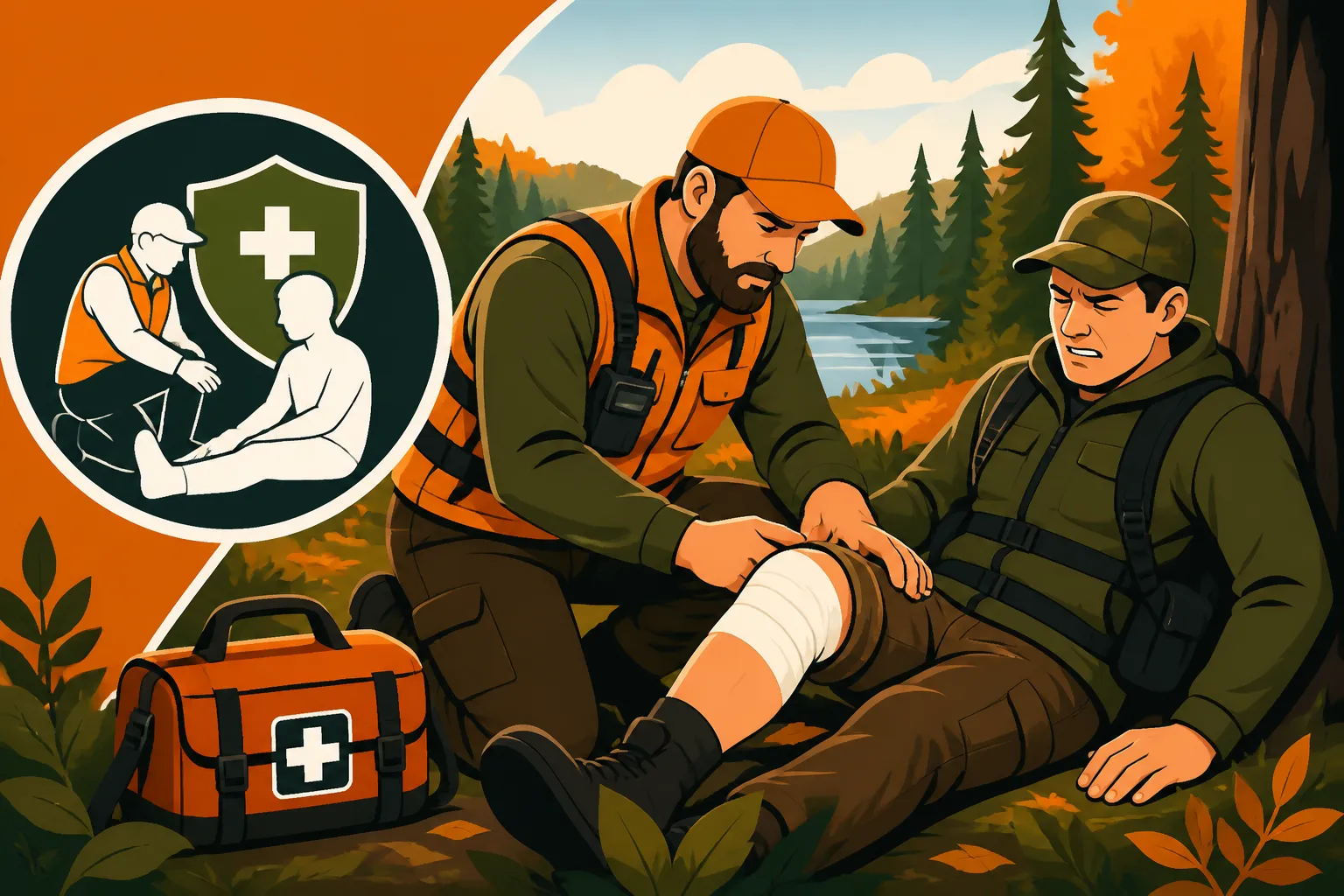
After assessing the scene and the victim, the guide will administer immediate first aid. Most reputable Ontario guides, especially those leading hunts in remote areas, possess advanced wilderness first aid certifications. This isn't your basic band-aid and antiseptic; this training prepares them for situations where professional medical help is hours, if not days, away. They carry comprehensive first aid kits, far more extensive than what most individual hunters would pack, stocked with items for controlling severe bleeding, immobilizing fractures, treating burns, managing allergic reactions, and addressing hypothermia or heatstroke.
Their goal is stabilization. This means stopping any life-threatening bleeding, ensuring an open airway, managing pain where possible, and preventing the injury from worsening. For instance, if a hunter has a suspected broken leg from a fall in rugged terrain, the guide will know how to properly splint the limb using materials at hand – perhaps branches, trekking poles, or even specialized splinting equipment from their kit. They’ll keep the individual warm to combat shock, reassure them, and continuously monitor their vital signs. This is where their experience and calm demeanor are invaluable, not just for the physical aid but for the psychological support they offer during what can be a terrifying experience for the injured party and the rest of the group. Having that level of preparedness, knowing someone has the skills to help you when you're What to Do If You Get Turned Around or facing a medical crisis, is truly what sets a guided hunt apart.
Activating the Emergency Plan: Communication and Evacuation
Once immediate first aid is rendered and the injured party is as stable as possible, the guide's next critical responsibility shifts to activating the emergency plan. This involves communicating with the outside world and coordinating a safe and timely evacuation.
Establishing Contact and Relaying Critical Information
One of the biggest challenges in Ontario's vast wilderness is often a complete lack of cell service. A good guide anticipates this and carries reliable alternative communication devices. We're talking about satellite phones, two-way satellite communicators like an inReach or Spot device, or even a robust VHF radio if within range of a base camp or repeater. These devices are non-negotiable for remote operations, and a guide will usually check them before heading out, ensuring batteries are charged and subscriptions are active. Knowing that your guide has Cell Service at an Ontario Bush Camp as a backup plan, even if it's satellite-based, is incredibly reassuring.
Once contact is established, the guide's ability to clearly and concisely relay information is paramount. They'll have a pre-determined emergency contact (often their outfitter, a designated dispatcher, or directly to emergency services if possible). The information conveyed typically includes:
- Precise Location: GPS coordinates are essential. The guide will have a handheld GPS or use the location services on their satellite device.
- Nature of Injury: A clear description of what happened and the suspected injury type (e.g., "compound fracture of the tibia," "severe allergic reaction," "chest pain").
- Victim's Condition: Vital signs, level of consciousness, pain level, and any known medical conditions or allergies.
- Number of People: How many are in the party and if anyone else is injured or requires assistance.
- Resources on Scene: What first aid has been administered, what equipment is available.
- Weather and Terrain: Critical for evacuation planning – is it raining, snowing, foggy? Is the terrain rugged, marshy, or open?
This detailed information allows emergency responders to dispatch the appropriate resources, whether it's ground ambulance, a specialized search and rescue team, or an air ambulance (helicopter or float plane, depending on the remoteness). When you're researching outfits, platforms like BookYourHunt or GoHunt often highlight the safety protocols and communication systems guides have in place, which is a big indicator of their professionalism.
Coordinating Evacuation and External Support
With emergency services activated, the guide's role shifts to coordination. They become the crucial link between the injured party in the bush and the incoming rescue personnel. This might involve:
- Guiding Responders: Providing real-time updates on conditions, advising on the best approach route, and even clearing a landing zone if a helicopter is inbound. They know the local terrain better than anyone else, which can save precious time.
- Preparing for Transport: Depending on the injury and the mode of evacuation, the guide will prepare the injured person for transport. This could mean carefully moving them onto a stretcher, ensuring they are adequately insulated for a helicopter ride, or even preparing a makeshift litter for a short ground evacuation to an accessible vehicle. The contents of a guide's Truck Kit for a Northern Ontario Hunt often include items useful for this, from extra blankets to ropes.
- Maintaining Communication: Staying in continuous contact with the rescue team, providing updates, and answering any questions they may have about the environment or the patient.
- Logistical Support: If it's a multi-day scenario, the guide will manage the camp, food, and water for everyone while waiting for rescue, ensuring the uninjured members are also safe and cared for.
Evacuation from Ontario's deep bush can take many forms. For a minor injury near a road, it might be a simple drive to the nearest medical clinic. For something more serious in a truly remote location, it could mean waiting for a float plane to land on a nearby lake or a medevac helicopter to winch the patient out. Guides are prepared for these various scenarios, understanding the intricacies of backcountry rescue and how to best facilitate it. This is all part of the Emergency Plans in Ontario's North that responsible outfitters have in place.
Beyond the Immediate Crisis: Post-Incident Actions and Support
The guide's responsibility doesn't end once the injured hunter is safely in the hands of medical professionals. There are still crucial steps to take, both administratively and in caring for the remaining hunting party.
Documentation and Incident Reporting
A professional guide will meticulously document everything that happened. This isn't just about covering their own back; it's vital for a number of reasons:
- Official Reports: Any incident involving injury in the wilderness will likely require official reports to the relevant authorities, such as the Ministry of Natural Resources and Forestry (MNRF) or local police, especially if it involves firearms or serious injury. Accurate notes make this process smoother and more reliable.
- Insurance Claims: Both the outfitter's liability insurance and the hunter's personal travel or medical insurance will need detailed information. The guide's documentation can be invaluable for these claims.
- Learning and Prevention: By thoroughly documenting the event, the outfitter can analyze what happened, identify potential risks, and refine their safety protocols to prevent similar incidents in the future. This continuous improvement is key for any reputable operation.
- Legal Considerations: In the unfortunate event of legal proceedings, detailed and factual incident reports are crucial.
The documentation will typically cover the time, date, location (GPS coordinates), specific details of the incident, injuries sustained, first aid administered, communication logs, names of witnesses, and the timeline of events. This thoroughness is a sign of a highly professional operation that values accountability and safety, factors often mentioned in reviews on platforms like BookYourHunt when hunters share their experiences. It's also worth understanding that even with a guide, understanding Ontario Guide Insurance and Liability can be beneficial for hunters.
Supporting the Rest of the Hunting Party
An accident, especially a serious one, can be deeply traumatic for everyone involved. The guide's responsibility extends to the emotional and physical well-being of the uninjured members of the hunting party. This might include:
- Ensuring Continued Safety: Making sure the remaining hunters are still safe, especially if they are in remote territory. Are they still equipped? Do they have sufficient supplies? Are their firearms secured?
- Emotional Support: Offering a listening ear and reassurance. It's not uncommon for hunters to feel shock, guilt, or anxiety after witnessing an accident. A guide might facilitate a debriefing, offering a space for the group to process what happened.
- Adjusting Plans: The hunting trip, as originally planned, is likely over. The guide will help the remaining party decide on next steps, whether that's returning to base camp, arranging early transport home, or safely continuing if the group is still comfortable and it's deemed appropriate (which is rare after a significant incident).
- Logistical Assistance: Helping with travel arrangements, communicating with family members, or retrieving personal belongings if the injured hunter had to leave quickly.
A good guide doesn't just manage the emergency; they manage the people through the emergency. They understand the entire experience and how a dramatic event can impact morale and safety. Before you even head out, checking What Ontario Outfitters Provide in Camp in terms of amenities and support can give you an idea of their overall dedication to client welfare. Furthermore, understanding basic Wildlife Safety in Ontario Bear Country and always wearing How Much Blaze Orange Ontario Requires are proactive steps every hunter can take to minimize risks and make a guide's job easier in an emergency. Preparing for a hunt, including Practicing Before a Guided Hunt, also contributes to overall safety, reducing the chances of an accident that might require a guide's emergency skills. Whether you're considering a trip for yourself or Booking an Ontario Hunt for a Group, a guide's comprehensive approach to safety, from prevention to crisis management, is what ultimately makes the experience safe and memorable.
Here's a quick look at emergency communication options, vital for any guide in the field:
| Device Type | Pros | Cons | Best Use Case |
|---|---|---|---|
| Satellite Phone | Two-way voice communication, reliable in remote areas | High cost, bulkier, battery life dependent, slower data speeds | Direct voice contact with emergency services/outfitter |
| Two-Way Satellite Messenger (e.g., inReach) | Text messaging, GPS tracking, SOS function, lightweight | Text-only (unless paired with phone), subscription required | Regular check-ins, emergency texts, location sharing |
| VHF/UHF Radio | Line-of-sight communication, no subscription (FRS/GMRS) | Limited range, requires repeaters/base station, less private | Short-range communication within a group/to base camp |
| Cell Phone | Common, multi-functional, reliable where service exists | No service in vast areas of Ontario wilderness | Communication in areas with reliable network coverage |
Remember, while a guide is there to mitigate risks and respond to emergencies, personal preparedness is always your best first line of defense. Knowing the Flying Into a Remote Ontario Camp protocols and being aware of safety measures from the get-go contribute to a smoother, safer hunting experience.
Disclaimer
This article is for general informational purposes only and does not constitute professional advice. Laws, prices and regulations vary by location and change over time. Consult a qualified professional for guidance on your specific situation.