How Far to Walk From a Bush Road
Ah, the age-old question for any hunter venturing into Ontario's vast bush: how far do you really need to walk from that well-travelled bush road to find game that isn't already educated and skittish? It's a frustrating reality that easy access often means heavily pressured animals, leaving many of us wondering if we're just wasting time in areas others have already picked over. This guide is all about helping you understand the dynamics of hunter pressure, identify areas where game feels safer, and develop strategies for pushing past the crowds to find that untouched wild experience and, hopefully, more success.
The Lure and The Problem of Bush Roads
Bush roads, whether they're well-maintained gravel or barely-there two-tracks, are a double-edged sword for hunters in Ontario. They offer convenience, a path into the wilderness, but that very convenience is precisely what makes them a problem if you're looking for unpressured game.
Why Bush Roads are Popular (and why that's an issue)
Let's be honest, bush roads are a gift when you're trying to access vast tracts of Hunting Ontario's Crown Land. They cut through dense forests, connect remote areas, and shorten travel times significantly. For many, a bush road is the starting point for their hunt, offering a place to park the truck, unload gear, and begin their day. They provide a relatively easy entry point into areas that would otherwise be impenetrable without considerable effort or specialized equipment. This ease of access is fantastic for those of us who don't have days to cut trails or paddle deep into a lake.
However, this popularity creates a significant challenge: hunter saturation. Think about a weekend during deer or moose season. Every pull-off, every widening in the road, every small trail leading off into the bush likely has a truck parked there. Each of those vehicles represents one or more hunters who, like you, are looking for game. The more hunters concentrated in an area, the more human scent, noise, and activity fills the air. Game animals, especially mature ones, are incredibly sensitive to this pressure. They learn quickly to associate the sounds and smells of vehicles and humans with danger, making them wary and often nocturnal in easily accessible zones.
The "Road Hunter" Mentality (and why it's limiting)
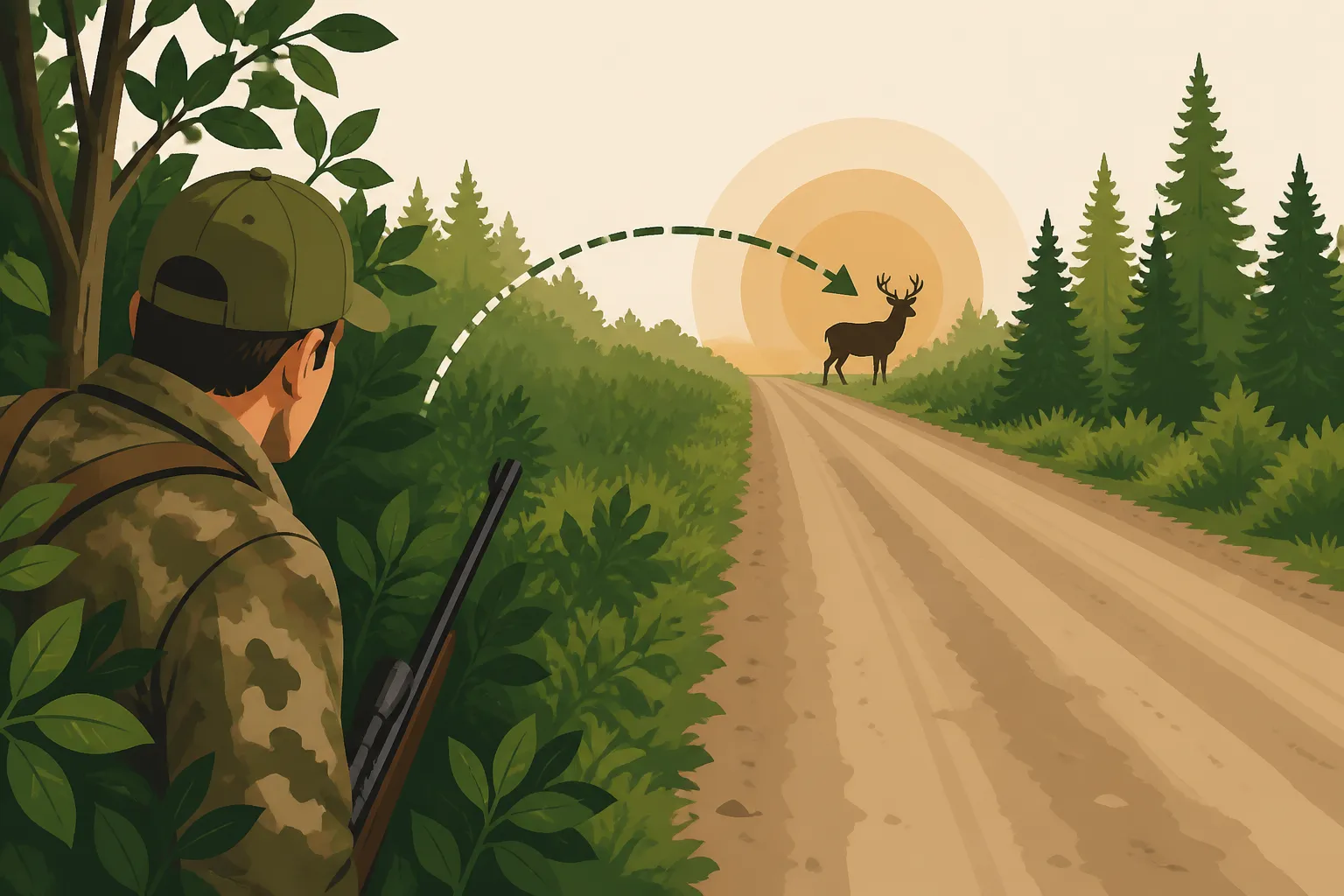
We've all seen them, or maybe we've even been them: the "road hunter." This isn't necessarily a derogatory term, but it describes a specific hunting style where the hunter sticks very close to the road, often just a stone's throw away. This approach is born of convenience, time constraints, or sometimes a simple lack of confidence in venturing deeper. While occasionally successful, particularly in low-pressure areas or during specific times like early morning or late evening when game might be crossing, it's generally a limiting strategy.
Animals that live close to roads are conditioned to human presence. They've either become incredibly adept at avoiding detection, or they're younger, less experienced animals that haven't learned the full dangers yet. For big game like whitetails, moose, or even bears, the constant disturbance near roads often pushes them into thicker, harder-to-reach cover. If your hunting strategy revolves around staying within sight or earshot of your truck, you're severely restricting your chances of encountering those older, wiser animals that make for truly memorable hunts. It's often a case of "easy come, easy go" – easy access rarely leads to easy success with pressured game.
Understanding Hunter Pressure
Hunter pressure isn't just about the number of boots on the ground; it's about the cumulative effect of that presence on wildlife behaviour. When an area experiences high hunter pressure, animals adapt. They become more nocturnal, moving primarily under the cover of darkness. They learn to bed down in the densest, nastiest cover they can find, often in places hunters are reluctant to penetrate. They also tend to move away from easy-access points, seeking out pockets of solitude where they feel safe.
Think of it like this: if you walk into a clearing and immediately spot a fresh deer track, but that clearing is right beside a major logging road, chances are that deer made that track during the night and is now tucked away deep in a cedar swamp or on a remote ridge. Understanding this concept is crucial. It means that simply seeing sign near a road isn't always an indicator of where the game is during hunting hours. Instead, it often tells you where the game was and where they aren't now because of human activity. Your goal, then, is to figure out where they went.
Factors Influencing How Far You Should Walk
There's no single magic number for how far you need to walk. It varies wildly based on a few key elements. Thinking these through before you even leave your vehicle can save you a lot of effort and help you strategize more effectively.
Species-Specific Habits and Pressure Tolerance
Different animals have different tolerances for human disturbance and varying habits that dictate how far they'll move.
- Whitetail Deer: Deer, especially mature bucks, are masters of evasion. In pressured areas, they'll often hold tight in thick cover just a few hundred yards off the road. However, for consistent success, pushing a quarter to a half-mile, or even further, into overlooked pockets is often necessary. They'll use Hunting a Cedar Swamp Edge or dense conifer stands for security. They might feed near fields at night, but they'll bed deep during the day.
- Moose: Moose are big animals, and while they can tolerate some human presence, they generally prefer solitude. In heavily hunted areas of Northern Ontario, a moose might move a mile or more from a main road to find peace. They love thick boreal forest, beaver ponds, and areas with plentiful browse. If you're Hunting Moose Off a Bush Road, remember they'll typically seek deeper cover once the season opens and pressure builds.
- Black Bear: Bears are curious and adaptable, often drawn to human activity indirectly (like old camp sites or bait stations). However, large boars, or sows with cubs, will avoid direct human encounters. In areas with significant hunting pressure, bears might move off roads for several hundred yards to a mile, especially to their preferred bedding areas or prime foraging zones. They're often found in dense cover, making tracking them tricky if you're not going deep.
- Upland Birds (Grouse, Woodcock): For species like Ruffed Grouse, a few hundred yards off a busy bush road can sometimes be enough, especially if the cover is prime. They'll gravitate towards dense alder bottoms or new growth. However, the birds right on the road shoulders are often the first ones taken. To find flushes that haven't seen a hunter that day, a half-mile or more into overlooked thickets, old logging cuts, or Hunting Woodcock in Ontario Alder Bottoms can make all the difference.
Terrain and Cover Considerations
The type of terrain and the density of cover play a massive role in how far game animals feel they need to move from a road.
- Dense, Difficult Terrain: If the bush immediately off the road is incredibly thick – think tangled blowdowns, dense regenerating clearcuts, or deep, mucky swamps – animals might not need to walk as far to feel safe. Hunters, being creatures of comfort, are often reluctant to push through truly nasty stuff. A couple of hundred yards into such an area can sometimes put you in unpressured territory simply because most other hunters will bypass it. Learning to interpret Reading Whitetail Sign in Ontario Hardwoods or identifying security cover from a map can highlight these zones.
- Open, Easy-Walking Bush: Conversely, if the forest is open and easy to walk through, like mature hardwoods with little undergrowth, animals will likely push much further from roads. They know hunters can move quickly and quietly in such areas, offering less security. In these situations, you might need to walk a mile or more to find game that feels truly secure. Consider looking for more varied terrain like Hunting a Hardwood Ridge for Whitetails that transitions into thicker areas.
- Natural Barriers: Rivers, large swamps, steep rock faces, or even dense stands of blowdowns can act as natural barriers that discourage human penetration. Game animals will often utilize these features as security, bedding just on the other side of an obstacle that most hunters won't bother crossing. Sometimes, a seemingly impenetrable swamp is only 100 yards wide, and the gold lies on the other side. Using a tool like onX Hunt to identify these features on a topographic map can be a game-changer for finding these "safe zones."
Season and Weather Impacts
The time of year and the prevailing weather conditions also influence how far game might travel from a road.
- Early Archery Season (Warm Weather): In early archery season, when temperatures can still be quite warm, deer are often more active at dawn and dusk and bed down in cool, thick cover during the day. If it's warm, they might not travel as far into the depths of the bush, but they'll be very sensitive to pressure. You'll also need to consider Field Dressing in Warm Ontario Weather and Meat Care in Ontario's Warm Early Seasons if you do connect far from the road.
- Mid-Season (Rut): During the rut, especially for deer and moose, animals are often more focused on breeding than on hunter pressure. A lovesick buck or bull might throw caution to the wind and appear closer to roads than usual. However, this is also when hunter pressure peaks. While a mature animal might be seen near a road, the majority will still hold in deeper, safer cover between their rutting circuits. Focusing on areas like Hunting the Rut in Early to Mid November well off the beaten path will often be more productive.
- Late Season (Cold and Snow): As winter sets in and snow piles up, deer especially will seek out thermal cover, often in dense conifer stands or cedar swamps. These "yarding areas" might be some distance from main roads, but once found, multiple animals could be concentrated there. Where Ontario Whitetails Yard in Deep Snow are often deep in the bush, but accessible by a long walk or snowshoes. Moose will also concentrate in areas with good browse, often in regenerating cuts or along Hunting an Old Logging Road in the North that are no longer accessible by vehicle.
- Heavy Rain/Snowfall: Bad weather often deters many hunters, which can be an advantage for those willing to brave it. Animals might move more freely when human activity is reduced. A fresh snowfall can also help you track animals that have moved into deeper cover, making that extra walk even more worthwhile.
Strategies for Getting Beyond the Pressure
Knowing why you need to walk further is one thing; figuring out how to do it effectively is another. These strategies will help you get into areas where game feels secure.
The "Half-Mile Rule" and Beyond
A good general rule of thumb, especially for whitetail deer and often bear, is to aim for at least a half-mile (about 800 metres) from any regularly travelled road or major trail. This "half-mile rule" is based on observed animal behaviour: many hunters won't venture much further than this, creating a buffer zone where animals feel relatively safe.
However, this is just a starting point. In areas with extreme pressure, or for species like moose, you might need to push a full mile, two miles, or even more. Think of it this way: for every 100 yards you walk beyond where most hunters stop, the odds of finding undisturbed game increase exponentially. It's often not about sheer distance, but about breaking through the commonly accepted "comfort zone" of other hunters. Look for features that create barriers, like steep hills, dense swamps, or thick blowdowns, which can create those sweet spots much closer than you might expect, simply because they deter others.
Using Technology to Find Remote Access
Modern technology has revolutionized how we scout and plan our hunts, making it easier than ever to identify unpressured areas. Tools like onX Hunt and GoHunt are incredibly valuable for this purpose.
- Satellite Imagery: Before you even leave home, spend time poring over satellite maps. Look for areas of dense, unbroken cover far from roads. Identify topographical features like hidden benches, secluded creek bottoms, or islands of high ground within swamps that might hold game. These are often the places animals retreat to when pressure is on. You can pinpoint potential bedding areas or travel corridors that aren't obvious from the road. This virtual scouting is key to Scouting With Satellite Imagery in Ontario.
- Topographical Maps: Combine satellite imagery with topographical maps to understand elevation changes. Animals often use ridges and saddles to travel, and hidden valleys or basins can be sanctuary areas. Finding a rock outcropping or a steep-sided hill far from the road can indicate a good, low-pressure bedding spot.
- Public Land Layers: Hunting apps like onX Hunt often have layers that show public land boundaries. This is crucial for Hunting Ontario's Crown Land as it helps you avoid trespassing and ensures you're planning your walk-in on accessible ground. You can also identify areas where public land might be bordered by private land that acts as a natural "fence," funneling animals into the public access points that are harder to reach.
- Marking Waypoints: Use your GPS or app to mark your starting point (your truck!), potential game sign, and planned travel routes. This is invaluable for navigation, especially when you're pushing deep into unfamiliar territory.
Planning Your Deep Woods Route
Don't just blindly wander into the bush. A well-thought-out plan increases your efficiency and safety.
- Identify Access Points: Instead of parking at the most obvious pull-off, look for less-used side trails or even just areas where the brush isn't too dense to start your walk. Sometimes, a subtle approach through less appealing terrain can get you into better areas faster.
- Choose a Bearing: Once you pick your entry point, choose a compass bearing that will take you into a promising, remote area identified during your map scouting. Stick to that bearing.
- Use Natural Funnels: Look for natural funnels like narrow strips of bush between two clearcuts, a saddle between two ridges, or a pinch point where a dense swamp forces animals into a smaller travel corridor. These funnels are great places to set up after a good walk. Consider Hunting a Beaver Meadow Crossing or a narrow stand of timber that connects two larger blocks of cover.
- Walk In, Hunt Out: Often, the best strategy is to walk to your chosen remote spot, then hunt your way back out slowly and carefully. This allows you to get into unpressured territory while the animals are still settling in, and you're hunting fresh ground on your return journey. This can be especially effective if you’re trying to catch an animal moving later in the morning or early afternoon.
Practical Tips for Deeper Penetration
Walking further into the bush isn't just about distance; it's about being prepared, being safe, and understanding the challenges.
Gear for Extended Bush Travel
When you plan to go deep, your gear needs to support that effort.
- Navigation Tools: A reliable GPS unit or a smartphone with a hunting app (like onX Hunt or GoHunt) is non-negotiable. Always carry a physical map of the Reading an Ontario WMU Map Before You Go and a compass as a backup. Know how to use them. Cell service is often non-existent deep in the bush.
- Comfortable Boots: Invest in high-quality, waterproof boots that are well broken-in. Blisters and sore feet will cut your hunt short. Expect wet conditions, especially if you're crossing creeks or navigating swamps.
- Appropriate Clothing: Dress in layers. Even if it's cool in the morning, you'll heat up quickly while walking with a pack. Blaze orange is a must during firearm seasons.
- Water and Snacks: Pack more water than you think you'll need. Dehydration is a real risk. High-energy snacks like trail mix, granola bars, or dried fruit will keep you fueled.
- First Aid Kit: A compact but comprehensive first aid kit is essential. Blisters, cuts, and scrapes are common in thick bush. Include pain relievers, bandages, antiseptic wipes, and any personal medications.
- Game Retrieval: If you're going deep and anticipating success, think about how you'll get your animal out. A sturdy rope, game bags, and perhaps a small saw or hatchet for quartering are vital. Quartering a Moose Alone in the Bush or a large deer is a lot of work, but it's often the only way to get meat out from a remote kill.
Safety and Navigation When Going Deeper
Getting turned around in the vastness of the Ontario bush is a serious concern. Don't underestimate it.
- Tell Someone Your Plan: Always, always, always let someone know exactly where you're going, your planned route, and when you expect to return. Give them your WMU and even a dropped pin from your app. This is critical for your safety, especially if you have to contend with What to Do If You Get Turned Around.
- Check Your GPS Regularly: Don't wait until you're lost to pull out your GPS. Check your position frequently, especially when crossing open areas, dense thickets, or changing direction. Mark key points along your route.
- Pay Attention to Your Surroundings: Look for natural landmarks – distinctive trees, rock formations, creek crossings. These visual cues can help reinforce your map and compass readings. Even though you’re focused on hunting, make sure you are also aware of where you are.
- Carry a Signalling Device: A whistle, signal mirror, or even a personal locator beacon (PLB) can be a lifesaver if you get into trouble.
- Be Bear Aware: In much of Ontario, you're in bear country. Carry bear spray and know how to use it. Make noise while walking, especially in dense cover, to avoid surprising an animal. Wildlife Safety in Ontario Bear Country is paramount.
The Reward of Solitude and Unpressured Game
Making that extra effort to walk further from the bush road comes with immense rewards beyond just a filled tag. The solitude of the deep woods is a powerful draw for many hunters. There's a profound sense of connection to nature, a quiet peace that's hard to find anywhere else. You're immersing yourself in the true wilderness experience.
And then there's the game itself. Animals in unpressured areas often exhibit more natural behaviour. They might be less wary, move more freely during daylight hours, and offer more consistent opportunities. The feeling of success when you've patterned and harvested an animal that has truly earned its wilderness stripes is incredibly satisfying. It's a testament to your effort, your planning, and your willingness to push past the easy access points that many others settle for.
Here's a quick comparison of general walking distances for different game scenarios in Ontario:
| Scenario / Species | Hunter Pressure | Terrain Type | Suggested Minimum Walk Distance from Road (approx.) | Why This Distance? |
|---|---|---|---|---|
| Whitetail Deer | High | Mixed forest/swamp | 0.5 – 1 mile (800m – 1.6km) | Bucks seek dense cover far from human scent; few hunters push this far reliably. |
| Moderate | Hardwoods/bush edge | 0.25 – 0.5 mile (400m – 800m) | Deer will tolerate some pressure but retreat to secure bedding just off main trails. | |
| Moose | High | Boreal forest | 1 – 2 miles (1.6km – 3.2km) | Large animals need vast, undisturbed areas; avoid roads after initial season pressure. |
| Low | Remote cuts/lakes | 0.5 – 1 mile (800m – 1.6km) | May be closer if truly unpressured, but still prefer secluded browse/water sources. | |
| Black Bear | High | Dense thicket | 0.5 – 1 mile (800m – 1.6km) | Large boars avoid human disturbance; sows with cubs are very shy. |
| Moderate | Berry patches | 0.25 – 0.5 mile (400m – 800m) | May venture closer to food sources but will quickly retreat if pressured. | |
| Ruffed Grouse | High | Old logging roads | 0.25 – 0.5 mile (400m – 800m) | Roadside birds shot quickly; deeper cover holds more flushes. |
| Low | Alder bottoms | 0.1 – 0.25 mile (160m – 400m) | Can find birds in thick, overlooked pockets close to roads if cover is dense. |
Ultimately, the best advice for Ontario hunting is to always push a little further than you think you need to. That extra effort, that willingness to leave the well-worn paths behind, is often the key to unlocking the true potential of Ontario's incredible wilderness and connecting with game that hasn't seen dozens of other hunters before you. Happy hunting, and stay safe out there!
Disclaimer
This article is for general informational purposes only and does not constitute professional advice. Laws, prices and regulations vary by location and change over time. Consult a qualified professional for guidance on your specific situation.