Finding Ground Other Hunters Drive Past
It’s a common frustration: you spend hours, even days, scouting and hunting what seem like prime locations, only to find them riddled with old boot tracks, empty shell casings, and deer that act like they’ve earned their PhDs in hunter evasion. Many hunters face the disheartening reality that the most accessible and visually appealing spots are often the most pressured. This guide is all about changing that narrative, helping you to find those hidden pockets of Ontario bush and farmland that other hunters simply drive right past, where game might just be a little less wary and the experience a lot more rewarding.
The Lure of the Obvious and Its Pitfalls
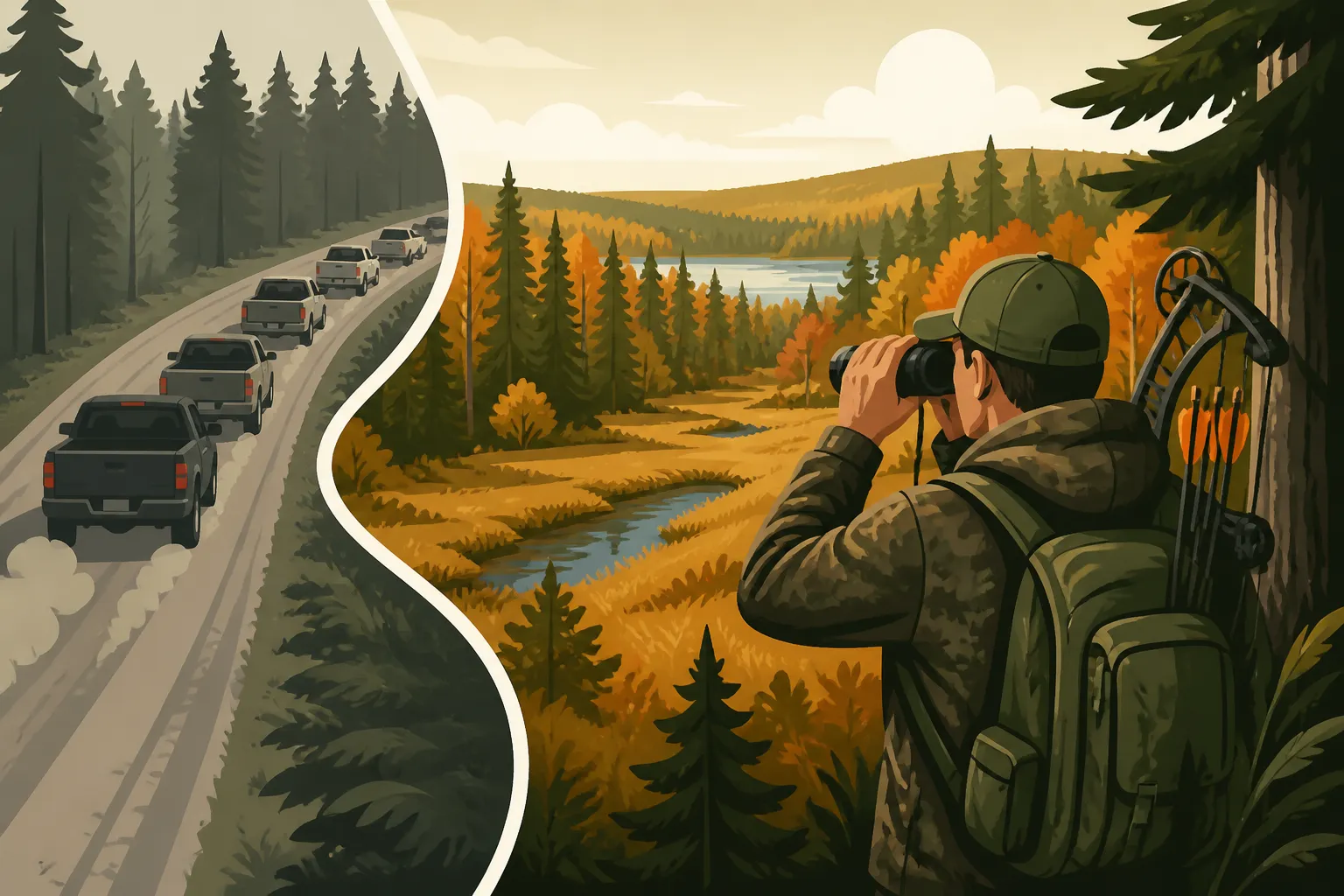
We've all been there, pulling off the main highway, seeing a clear logging road stretching into what looks like beautiful timber, or a well-worn trail leading to a promising field edge. It’s natural to gravitate towards these spots, but they often come with a hidden cost: immense hunting pressure.
Why We Flock to the Easy Access Points
Let's be honest, hunting is hard work, and anything that makes it a little easier on the body is tempting. A clear path into the woods, a well-maintained bush road, or a prominent field boundary visible from the truck all scream "easy access." It’s human nature to take the path of least resistance. These spots might even look fantastic on satellite imagery—big blocks of woods, clearings, or water features that seem like a magnet for game. For many, especially those with limited time or physical mobility, these readily available spots are the only option. They represent hope and the possibility of a quick success without too much slogging through thick cover.
However, this collective preference creates a self-fulfilling prophecy. When everyone converges on the same easy-to-reach areas, the game animals quickly learn. Deer, moose, and bear aren't foolish; they adapt to pressure faster than many of us realize. What looked like a perfect setup on Monday morning might be completely blown out by Tuesday afternoon after half a dozen other hunters have walked through it. The convenience often translates directly into higher competition and more alert, educated animals.
The Signs of Over-Hunted Areas
Identifying an over-hunted area isn't always obvious at first glance, but once you know what to look for, the signs are unmistakable. First, there's often an abundance of human sign: empty bullet casings, discarded blaze orange tape, old treestand straps, or even faint ATV tracks where they might not be permitted. You might notice well-worn foot trails that are clearly man-made, not game trails, leading into prime bedding or feeding areas.
More importantly, pay attention to the absence of fresh game sign where it should be. You might see old rubs or scrapes, but no new ones. Tracks might be few and far between, or they might show signs of animals consistently moving at a dead run through the area. Deer, for example, will become almost entirely nocturnal in heavily pressured zones, only moving under the cover of darkness. Moose might simply vacate an area entirely if human intrusion is constant. The overall feeling of the woods might be quiet, lacking the natural movements and sounds of undisturbed wildlife. If you’re consistently seeing other hunters every time you head into a spot, or if the game sign is old and sparse in what looks like ideal habitat, you’re probably in an area that gets far too much attention.
Tools and Techniques for Uncovering Hidden Gems
The secret to finding unpressured ground isn't just about walking further; it's about seeing the landscape differently. Modern technology and old-school boots-on-the-ground reconnaissance, combined with a bit of detective work, can reveal incredible opportunities.
Digital Scouting: Your Armchair Advantage
Before you even lace up your boots, your best friend is digital mapping. Tools like Google Maps, and especially dedicated hunting apps like onX Hunt and GoHunt, have revolutionized how we scout. These platforms allow you to analyze vast tracts of land from the comfort of your home, identifying potential hotspots and, crucially, difficult access points that deter others.
Start by looking for blocks of public land, such as Crown Land in Ontario, that are not directly adjacent to main roads or obvious parking areas. Zoom in on satellite imagery and look for natural barriers: dense, impenetrable swamps; steep, broken terrain; significant creeks or rivers without bridge crossings. These features often act as natural filters, discouraging hunters who aren't willing to put in the extra effort. Pay attention to changes in vegetation—patches of thick, thorny underbrush that provide excellent cover, or small, isolated stands of mature timber surrounded by younger growth. These subtle nuances might not look like much on a basic map, but they can be deer magnets. Reading Ontario Crown Land Layers on onX can provide invaluable insight here, allowing you to see property lines and land designations clearly. The key is to look for areas where game could hide and thrive, that are just a little too inconvenient for the average hunter to reach. You might also want to read up on Scouting With Satellite Imagery in Ontario for more specific techniques.
Old Maps, New Opportunities: Topographical and Historical Data
While satellite imagery is excellent for current conditions, don't underestimate the power of older maps. Topographical maps (topo maps) reveal elevation changes, contours, and water features that are less apparent on flat satellite views. Look for subtle draws, benches on hillsides, or saddles between ridges that funnel animal movement but might be hidden by tree cover from above. These can be prime travel corridors that few people notice.
Historical aerial photos, often available through municipal or provincial archives, can also be a goldmine. They show how the landscape has changed over decades. What might now be a dense, mature forest could have been a clearcut or an old farm field 30 or 40 years ago. These older features can leave faint traces that influence present-day game movement. An old logging road that has grown in completely, becoming nothing more than a faint deer trail, could be a hidden gem. Animals often follow the path of least resistance, and an old roadbed, even overgrown, is easier to travel than breaking new trail. An abandoned farmstead, now reclaimed by the bush, might have old apple trees or foundations that attract game. Consider Hunting an Old Logging Road in the North or Hunting an Abandoned Farmstead for more specific strategies on these kinds of spots.
Boots on the Ground: The Unbeatable Reconnaissance
Once you've identified a few promising spots through digital and historical scouting, there’s no substitute for getting your boots on the ground. Real-world scouting confirms your suspicions and reveals details that no map can convey. This is where you connect the dots, walking the terrain, feeling the wind currents, and identifying the actual game trails and fresh sign.
Focus your scouting efforts on those hard-to-reach areas. Is that "impenetrable swamp" actually crossable in places? Is there a hidden deer trail that parallels a steep ridge, providing a protected travel route? Look for pinch points, funnels, and natural barriers that force game movement into predictable patterns, especially those that are far from any obvious human access. Pay attention to food sources, bedding areas, and water, noting how they relate to the difficult terrain. During the off-season, you can access these areas without disturbing game during hunting season. This upfront investment of time and effort during the spring or summer can drastically increase your success rate come fall. For a broader approach to planning your scouting, check out Scouting a Wildlife Management Unit.
Identifying Overlooked Terrain Features
The land itself often holds the key to finding those hidden spots. It's about recognizing how game uses the landscape, especially when trying to avoid human contact.
Small Pockets of Cover Near Pressure
One of the biggest mistakes hunters make is thinking they need vast wilderness to find unpressured game. Often, incredible opportunities lie in small, overlooked pockets of cover, sometimes right under our noses, or at least, right next to areas that do see a lot of pressure. Think about that small, dense cedar swamp nestled between two busy farm fields in Southern Ontario, or a forgotten tangle of thick alder and dogwood that seems too small to hold anything significant. These are often prime bedding and escape cover for deer, especially mature bucks, that live their lives within spitting distance of human activity but rarely venture into the open during daylight.
These small, brushy areas, often dismissed as "just a bush lot" or "too small," provide game with security. A thick fencerow between two fields, for instance, might be a critical travel corridor, allowing deer to move between feeding areas and bedding cover without exposing themselves. Hunting a Fencerow Between Two Fields highlights just how important these linear features can be. Similarly, a tiny cedar swamp, even if it's only a few acres, offers thermal cover and a sense of security, becoming a daytime refuge. Hunting a Cedar Swamp on Crown Land can give you more insights into how to effectively hunt these types of features. The key is to realize that game will utilize even tiny patches of dense cover if it offers sanctuary from constant human disturbance.
Difficult Access Areas: The Harder the Hike, the Better the Hunt
This is where the rubber meets the road—or rather, where your boots meet the untouched earth. Areas that are difficult to access by conventional means are often the most fruitful because they naturally deter the majority of hunters. This could mean a long, grueling hike through thick brush, crossing a significant body of water that requires a canoe or boat, or navigating truly rugged, broken terrain like steep ravines or boulder-strewn hillsides.
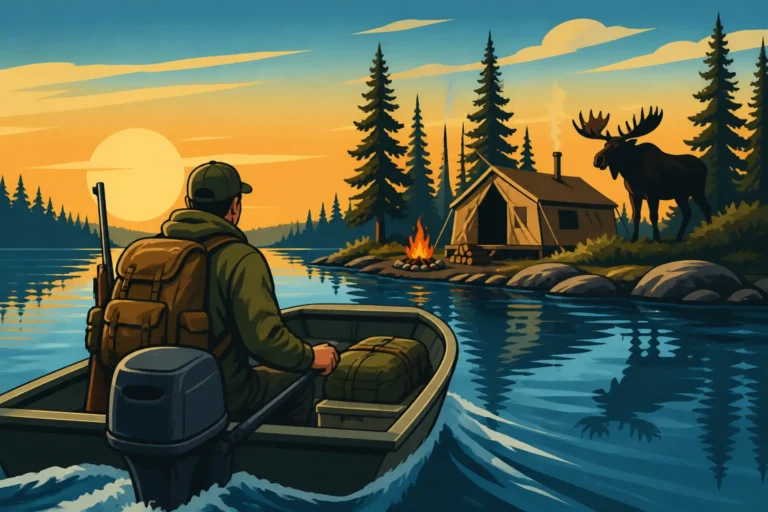
Imagine a beaver flowage deep in the bush, miles from the nearest road, surrounded by a maze of downed timber and marshy ground. Most hunters will pass this by, opting for easier ground. But for those willing to put in the effort, a spot like this could be a sanctuary for moose or a bedding haven for deer. Hunting a Beaver Flowage in the Bush requires specialized knowledge and gear, but the reward can be immense: unpressured animals that are more likely to move during daylight hours. Similarly, accessing remote Crown Land by canoe, portaging gear and crossing lakes, immediately puts you in a different class of hunter. Canoe-In Hunting on Ontario Crown Land can open up vast, untouched wilderness areas. The rule of thumb here is simple: the more effort it takes to get there, the less likely you are to encounter other hunters, and the higher the chances of encountering undisturbed game.
Unconventional Habitat Edges
While obvious habitat edges—like where a field meets the forest—are well-known, there are many less conventional edges that funnel game movement yet are often overlooked. Think about human-made linear features that cut through the landscape, creating unique transition zones. A hydro line right-of-way, for instance, might be a perpetually regrowing strip of brushy cover that offers diverse forage and travel routes for deer and small game. While some hunters might view them as too open, the edges where the cleared right-of-way meets the dense forest can be excellent travel corridors, especially where they cross natural terrain features like ridges or small creeks. Hunting a Hydro Line Right-of-Way shows how these can be productive.
Similarly, an abandoned railway right-of-way, now just a raised berm with a faint trail and thick cover, can be a fantastic travel route for wildlife. It provides an elevated path through otherwise wet or dense terrain, and the edges often grow a mix of grasses and shrubs that attract various species. Hunting a Railway Right-of-Way can be incredibly effective, particularly if these old lines traverse different habitat types, connecting feeding to bedding areas. These "unnatural" edges often go unappreciated by hunters who focus solely on traditional forest or field boundaries, but they provide perfect opportunities for intercepting game moving between more secure cover.
Mindset and Strategy for Hunting Overlooked Spots
Finding these hidden gems is only half the battle. To truly capitalize on them, you need a different mindset and a willingness to adapt your hunting strategy. This isn't about covering vast amounts of ground quickly; it's about patience, stealth, and a deep understanding of how game uses these unique environments.
Patience and Persistence Pay Off
Hunting overlooked spots often means putting in more effort for less immediate gratification. You might walk further, push through thicker brush, or spend more time digitally scouting before ever setting foot in the woods. This requires patience—the patience to not just give up after one or two unproductive sits. The deer in these areas might not be as patterned as those in heavily used zones, simply because they aren't forced into predictable nocturnal movements by constant pressure. You might need to sit longer, wait for subtle shifts in activity, or return to the same spot multiple times before you understand its rhythm.
Persistence also means returning to your digital maps after each scouting trip or hunt, refining your understanding of the area. Did that "impenetrable" swamp have a narrow, dry finger of land jutting into it that you missed? Was there an old windfall that created a perfect ambush point? The more time you dedicate to these less obvious spots, the more intimate your knowledge of them becomes, and the better your chances of encountering game that hasn't seen a hunter all season. The rewards—a truly wild encounter, a less wary animal, or simply the solitude of an unpressured woods—are often far greater than anything found on the beaten path.
Adapt Your Approach
The tactics you use in heavily hunted areas might not be the most effective in these hidden sanctuaries. Because animals here are less accustomed to human intrusion, they might tolerate a different kind of pressure, or they might react more subtly to your presence. Still-hunting, moving slowly and deliberately through dense cover, can be incredibly effective in these pockets. Instead of trying to cover miles, focus on covering hundreds of yards with extreme care, observing every rustle and shadow.
If the area is small and dense, a slow, methodical still-hunt can effectively push deer out of bedding areas without alerting them to your precise location, allowing for an ambush as they slip away. Small drives with just two or three hunters can also be highly successful in these confined, overlooked patches, forcing game out to waiting standers. For those willing to commit, sitting all day in an Ontario blind in one of these overlooked hideaways can give you an edge, letting you observe subtle patterns of movement throughout the day that others might miss. Sitting All Day in an Ontario Blind can be a game-changer when you're hunting an unpressured pocket of land where deer feel secure enough to move at any hour. The key is to always be thinking about how the game uses this specific piece of ground to avoid detection, and then adapting your method to intercept them on their terms, not yours.
Comparison of Hunting Spot Characteristics
To help visualize the difference, here's a quick comparison of commonly hunted spots versus those often overlooked:
| Characteristic | Commonly Hunted Spots | Overlooked Spots |
|---|---|---|
| Access | Easy, roadside, clear trails, well-known | Difficult, long walk, boat access, thick brush, rugged terrain |
| Human Sign | Abundant: boot tracks, trash, spent casings, old blinds | Sparse or none: pristine ground, natural animal sign dominant |
| Game Pressure | High: nocturnal animals, skittish, wary | Low: more daylight movement, less wary animals, natural behavior |
| Game Sign | Older rubs/scrapes, sporadic tracks, scattered droppings | Fresh rubs/scrapes, consistent tracks, abundant fresh droppings |
| Habitat Type | Obvious field edges, clearcuts, easily identifiable timber | Dense swamps, thickets, small isolated bush lots, rugged ravines, old growth edges |
| Scouting Required | Less intense, relies on visible trails/sign | Intensive digital + boots-on-ground, focus on subtle features |
| Hunter Encounters | Frequent, audible presence of other hunters, vehicles | Rare, solitude, chance to see truly wild game |
Finding ground other hunters drive past isn't just a strategy; it's an entire philosophy of hunting. It requires a willingness to put in extra effort, to think outside the box, and to truly understand the nuances of the landscape. But for those who embrace this challenge, the rewards are often far richer than a filled tag—they include solitude, a deeper connection to the wild, and the satisfaction of outsmarting not just the game, but the collective hunting crowd. Ontario is a vast province, and countless hidden gems are out there, waiting for the hunter who dares to look beyond the obvious.
Disclaimer
This article is for general informational purposes only and does not constitute professional advice. Laws, prices and regulations vary by location and change over time. Consult a qualified professional for guidance on your specific situation.