Non-Resident Access to Ontario Crown Land
The sheer scale of Ontario's wilderness is a huge draw for hunters, but if you're coming from outside the province, the idea of accessing vast tracts of Crown Land can feel overwhelming. Many non-residents worry about getting the rules wrong, or worse, finding themselves unknowingly trespassing. This guide aims to demystify public land access for non-resident hunters, breaking down the permits, tools, and best practices so you can confidently plan your next big adventure into Ontario's wild.
The Essentials: Understanding Crown Land Access for Non-Residents
Let's cut right to the chase because this is where a lot of confusion begins. Ontario's Crown Land is essentially public land, managed by the province, and it makes up a huge percentage of our landscape, especially in the north. It’s a magnificent resource, offering incredible hunting opportunities for everything from moose and bear to grouse and rabbits. However, access for non-residents comes with a few specific caveats that residents don't face.
The most critical piece of information for any non-resident looking to hunt on Ontario Crown Land is this: While you are generally allowed to access Crown Land for recreational purposes like hunting without a specific permit (provided you are not camping overnight), if you plan to camp on Crown Land, you absolutely must have a Non-Resident Crown Land Camping Permit (NRCLCP). This isn't just a suggestion; it's a legal requirement. Many hunters dream of setting up a remote spike camp, pitching a tent, or parking their RV on a secluded bush road, and if that's your plan, this permit is non-negotiable. It's designed to manage the impact on these lands and ensure a fair system for all users. You can find more details about what it costs and how it works by looking into What a Crown Land Camping Permit Costs and Camping Rules on Ontario Crown Land.
It’s important to understand the philosophy behind this. Ontario has a huge land base, and maintaining it, managing wildlife, and ensuring sustainable access requires resources. The NRCLCP helps fund these efforts. Without it, you could face fines, and honestly, it just puts a damper on an otherwise incredible trip. Think of it as your passport to truly immerse yourself in the Ontario backcountry experience. Beyond the camping permit, of course, you'll need all the appropriate hunting licences and tags, just like any resident hunter. We've covered a lot of that in Ontario Hunting Licences and What They Cost and Rules for Non-Residents Hunting Ontario, so make sure you're up to snuff on those as well.
Here's a quick overview of the key differences in Crown Land access between residents and non-residents, especially regarding camping:
| Feature | Ontario Resident | Non-Resident |
|---|---|---|
| Day Use Hunting | Generally permitted without special permit | Generally permitted without special permit |
| Overnight Camping | Permitted for free for up to 21 days in one spot | Requires a Non-Resident Crown Land Camping Permit |
| Permit Cost | Free | Fee applies, varies by length of stay |
| Primary Purpose | Conservation, recreation, resource extraction | Conservation, recreation, resource extraction |
| Areas Covered | Most Crown Land (with exceptions like parks) | Most Crown Land (with exceptions like parks) |
This table really highlights that one crucial distinction. Don't let a missing camping permit be the reason your adventure hits a snag!
Planning Your Hunt: Essential Tools, Maps, and Navigating Regulations
Okay, so you understand the permit situation. Now, how do you actually find this Crown Land and make sure you're hunting legally? This is where modern technology and a good understanding of Ontario's regulations really come into play. Many non-residents, used to different land designation systems, find the sheer amount of Crown Land both exhilarating and daunting.
First off, knowing where Crown Land is located is paramount. Gone are the days of guessing or relying solely on outdated paper maps. Digital mapping apps have revolutionized how we access and navigate public lands. Tools like onX Hunt are invaluable here. They provide detailed satellite imagery layered with property boundaries, clearly delineating Crown Land from private land. For a non-resident, this is a game-changer, eliminating much of the anxiety about accidentally crossing onto private property. You can literally see the boundaries on your phone or tablet, even offline. Using an app like onX Hunt to scout from home and then navigate in the field can save you a ton of stress and keep you on the right side of the law. Make sure to check out Reading Ontario Crown Land Layers on onX for a deeper dive into how to use these digital tools effectively. Another helpful resource for broader trip planning, especially for those who plan multi-species hunts or need to cross-reference regulations, could be platforms like GoHunt, which often provide a wealth of information for hunters looking to explore new areas, though its primary focus might be different regions, the principles of detailed planning still apply.
Beyond simply identifying Crown Land, you need to understand the local nuances. Ontario is divided into Wildlife Management Units (WMUs), and regulations, season dates, and even species availability can vary significantly from one WMU to another. You absolutely need to consult the official Ontario Hunting Regulations Summary for the specific WMU you intend to hunt. This document is your bible. It will detail everything from legal firearms and bows for big game to bag limits and shooting hours. Don't assume that what applies in one part of the province applies everywhere. We've touched on this extensively in Ontario's Wildlife Management Unit System.
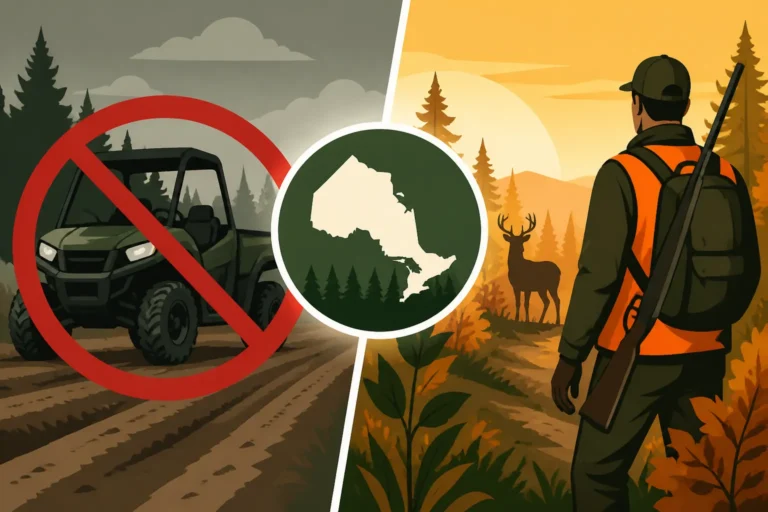
You'll also need to consider vehicle access. While many Crown Land areas have extensive networks of logging roads or old mining trails, not all of them are open to public vehicle traffic, and some might be seasonally closed. It’s important to respect signs indicating restricted access, active logging operations, or private road designations. While you might be allowed to walk in, driving might be prohibited. Understanding Vehicle Rules on Ontario Crown Land can prevent headaches. Furthermore, not all public land is created equal. Some areas, like certain Provincial Parks, may have specific hunting zones or outright prohibitions. Always double-check if your chosen area allows hunting by referencing resources like Which Ontario Parks Allow Hunting. The key here is proactive research; the less you leave to chance, the smoother your hunt will be.
Practicalities for Your Remote Ontario Crown Land Adventure
Hunting Ontario's Crown Land, especially the vast northern stretches, often means embracing a truly remote experience. This isn't your typical roadside hunting; it's about getting away from it all, and that comes with its own set of practical considerations for non-residents.
The Non-Resident Crown Land Camping Permit (NRCLCP) truly facilitates this remote experience. If you're planning to spend multiple days deep in the bush, perhaps setting up a base camp to hunt a specific area, this permit is your ticket to freedom. You purchase it for a specific duration, and it allows you to camp on most Crown Land for up to 21 days in one spot. This flexibility is what allows for those epic, multi-day adventures where you can really get to know a piece of country. Whether you're pulling a small trailer into a remote campsite, pitching tents on a beaver pond edge, or even going fully primitive with a bivy sack, this permit ensures you're doing it legally. For those dreaming of exploring by canoe, launching from a public access point and paddling into the wilderness, your NRCLCP will cover your overnight stays along the route. It’s an essential part of the experience for those who truly want to immerse themselves. Many find Canoe-In Hunting on Ontario Crown Land a great way to access untouched areas.
When you venture into remote areas, preparedness becomes paramount. Cell service is often non-existent once you leave populated areas or main highways. This means relying on traditional navigation skills, a GPS device with pre-loaded maps (like your onX Hunt app used offline), and emergency communication devices like satellite messengers or phones. Getting turned around in Ontario's vast bush is a real possibility, even for experienced hunters, and knowing What to Do If You Get Turned Around is not just good advice, it’s potentially life-saving. Your vehicle should be well-maintained, equipped for rough roads, and you should always carry extra fuel, a full-sized spare tire, and basic recovery gear.
Another critical aspect of a remote hunt is game care and transport. If you're successful far from the road, you'll need a solid plan for field dressing, quartering, and getting your animal back to camp and then home. Ontario can have warm early season weather, so rapid cooling is essential to prevent spoilage. Consider portable game bags, cool boxes, and possibly even a small generator for refrigeration at a base camp. Transporting your game across provincial or international borders also has specific rules and permits, so make sure you're aware of Transporting Game Meat in Ontario. For those who prefer a less self-reliant approach, especially on a first-time trip, booking through one of Hunting Guides and Outfitters in Ontario can often simplify many of these logistical challenges, as they handle permits, camp setup, and game recovery.
Ethical Hunting and Good Stewardship on Crown Land
Hunting on Ontario's Crown Land isn't just about bagging an animal; it's about being a respectful guest in a shared wild space. For non-residents, this means understanding not only the letter of the law but also the spirit of ethical hunting and good stewardship. The vastness of our public lands is a privilege, and we all have a responsibility to keep it pristine for future generations.
One of the most fundamental principles is "Leave No Trace." This means packing out everything you pack in, and then some. Don't leave trash, spent casings, or any indication you were there. Bury human waste properly and avoid cutting live trees for firewood unless absolutely necessary and permitted. If you're using a temporary camp, make sure it's fully dismantled and the site is cleaner than when you arrived. This not only shows respect for the land but also for other users – campers, hikers, trappers, and fellow hunters – who will follow in your footsteps. We want everyone to enjoy the wilderness, not inherit someone else's mess. Remember to be mindful of those who might be Trapping Ontario Furbearers Through Winter and respect their lines and equipment.
Interacting with local communities is also a significant part of the experience. Many small towns in Ontario rely on hunting tourism, and a positive reputation for non-resident hunters helps ensure continued welcome and support. Be friendly, buy your supplies locally, and respect local customs. If you encounter landowners bordering Crown Land, a polite conversation can go a long way, even if you're not on their property. Building good relationships fosters a positive environment for all hunters.
Finally, ethical hunting includes adhering strictly to all regulations, including proper tag notching and attachment. This is not a trivial detail; it’s a critical part of wildlife management and enforcement. Knowing Ontario Tag Notching and Attachment Rules and fulfilling your legal requirement to report your harvest, as outlined in Reporting Your Ontario Harvest, ensures that wildlife populations are accurately monitored. These actions contribute to the scientific data that helps manage seasons and limits, securing the future of hunting in Ontario for everyone, including non-residents who come to enjoy our incredible resources.
Disclaimer
This article is for general informational purposes only and does not constitute professional advice. Laws, prices and regulations vary by location and change over time. Consult a qualified professional for guidance on your specific situation.