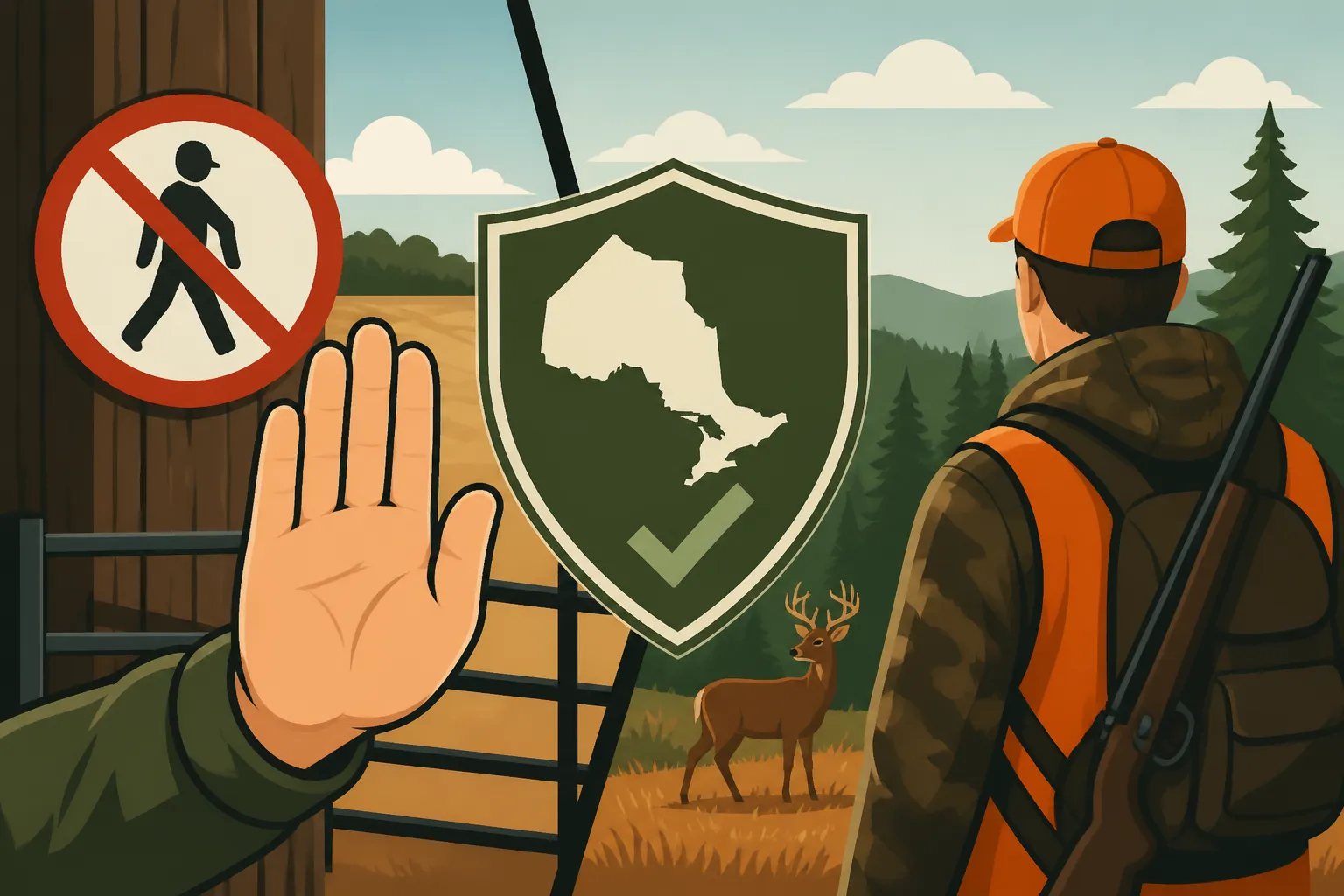
What Ontario’s Trespass Act Requires
It's a familiar scenario for many of us: you're out hunting, focused on the task at hand, and suddenly you realize the treeline ahead, or that distant field edge, might not be public land. The fear of accidentally stepping onto private property, or worse, hunting there without permission, is a real and valid concern for any ethical hunter. Navigating property lines in Ontario can feel like walking a tightrope, but understanding the province's Trespass to Property Act is crucial for a worry-free hunt. This guide is dedicated to explaining what this Act requires of you, the hunter, so you can enjoy Ontario's diverse landscapes responsibly and legally.
The Foundation: Understanding Ontario's Trespass to Property Act
The Trespass to Property Act is the bedrock of land ownership and access rights in Ontario. It's designed to protect landowners from unauthorized entry onto their property, giving them the legal means to remove and pursue charges against individuals who don't have permission to be there. For hunters, this isn't just a legal formality; it's a fundamental principle of ethical hunting and good stewardship. Ignoring it can have serious consequences, not just for your hunt but for your reputation and access to hunting lands in the future.
Defining "Property" Beyond Just Your Backyard
When we talk about "property" under this Act, it's far more expansive than just a residential lot or a farmer's cultivated fields. In the context of hunting, property can include vast tracts of forested land, marshlands, abandoned farmsteads, old logging cuts, and even unfenced bush lots. Essentially, any land in Ontario that is not designated as Crown Land (public land) or explicitly open to the public for hunting is considered private property. This also extends to structures on that land, such as cabins, barns, or even old hunting blinds.
The key takeaway here is that unless you have definitive proof that land is public (Crown Land), you should always assume it's private. This proactive approach ensures you're always on the right side of the law. Even if a property appears abandoned or unused, it still has an owner, and that owner's rights are protected. Many hunters have inadvertently found themselves in hot water assuming an overgrown woodlot was fair game, only to discover it was a private parcel belonging to a distant landowner.
The Legal Basis: What the Act Actually Says
At its core, the Trespass to Property Act states that no person shall "enter on land where entry is prohibited" or "engage in an activity on land where the activity is prohibited." This means two things for hunters: you can't be on land where you're not allowed, and even if you are allowed on the land, you can't perform an activity that's prohibited (like hunting, if the permission was only for hiking, for example).
The Act also specifies how a property owner can prohibit entry. This can be done through clear signage, fencing, or a verbal warning. It’s important to remember that these methods carry legal weight. A landowner doesn't need to put up a sign every ten feet along their property line; strategically placed signs at common access points are generally sufficient to convey prohibition. Similarly, a direct conversation with a landowner where they explicitly deny you access is just as legally binding as a physical sign. The onus is on the individual entering the land to ensure they have the right to be there.
Recognizing Boundaries: Permission and Prohibition
Understanding where property lines lie is paramount. Ontario's landscape is a patchwork of private and public lands, and these boundaries aren't always marked by fences or obvious terrain changes. Hunters often rely on a combination of visual cues, maps, and landowner communication to stay legal. The way a property owner communicates their wishes, whether it's prohibiting entry or granting permission, is legally defined and important to recognize.
The Power of the Posted Sign
"No Trespassing" signs are the most common and clear way for a landowner to prohibit entry. Under the Trespass to Property Act, signs must be visibly placed at "each ordinary access to the property" or "at intervals of not more than 60 metres along the perimeter" of the property. While the 60-meter rule is a guideline, the overarching principle is that the signs must be clear enough that an ordinary person would be aware of the prohibition. These signs don't have to be fancy; a simple hand-painted sign that clearly states "No Hunting" or "Private Property" is legally sufficient. For more details on what constitutes proper signage, you can refer to Ontario Posted Land and Signage Rules.
It's a good practice, even if you don't see signs, to be vigilant. Sometimes signs get taken down by weather, vandalism, or simply time. Never assume a lack of signs means implicit permission. Always scan for fences, changes in vegetation that might indicate a property line, or other visual cues that could suggest private ownership.
Verbal Warnings and Implied Consent: Don't Assume
A direct verbal warning from a landowner, an occupant, or someone acting on their behalf (like a farm manager) holds the same legal weight as a "No Trespassing" sign. If a property owner approaches you and tells you to leave, you are legally required to do so immediately. Remaining on the property after such a warning is a direct violation of the Act and could lead to charges.
Implied consent is a tricky area and one you should generally avoid relying on when hunting. This is the idea that because no one has explicitly told you not to hunt there, or because you've seen other people using the land, it's okay for you to do so too. This is a very dangerous assumption for hunters. Just because a field looks like prime deer habitat and you've never seen anyone else around doesn't mean you have the right to hunt there. The burden of proof for having permission is always on the person entering the property, not the landowner. If you don't have explicit, verifiable permission, you are trespassing.
Utilizing Technology to Stay on the Right Side of the Line
In today's age, technology offers powerful tools to help hunters navigate complex property boundaries. Apps like onX Hunt and GoHunt have become indispensable for many, layering property ownership data over detailed topographic maps. These tools allow you to visually identify private property lines, landowner names (often), and adjacent Crown Land, right from your smartphone. Before heading out, especially into unfamiliar territory, spending time Scouting With Satellite Imagery in Ontario and marking potential private parcels on your chosen mapping app is an absolute game-changer.
While these apps are incredibly helpful, they aren't foolproof. Data can sometimes be slightly outdated or contain minor inaccuracies. Always use them as a primary guide, but cross-reference with physical features on the ground where possible. If a fence line doesn't quite match the app, err on the side of caution. Remember, the app is a tool to aid your decision-making, but it doesn't absolve you of the responsibility to know where you are. When hunting on Crown Land, for example, knowing precisely where the Crown Land ends and private land begins is critical, and these apps can be invaluable for Finding Ontario Public Land Boundaries and Reading Ontario Crown Land Layers on onX.
Your Responsibilities as an Ethical Hunter
Being an ethical hunter goes hand-in-hand with being a legal hunter. Respect for landowners and their property is not just about avoiding fines; it's about maintaining a positive image for the hunting community and ensuring future access to valuable hunting grounds. A reputation for responsible behaviour is far more valuable than any trophy.
The Golden Rule: Always Seek Express Permission
This cannot be stressed enough: always seek express permission before hunting on private land. This means having a clear, unambiguous conversation with the landowner where they grant you permission to hunt. Ideally, this permission should be in writing, especially for longer durations or repeated access. A simple written note, an email, or even a text message can serve as proof, stating who has permission, for what activity (hunting), and for what period.
Approaching landowners respectfully, explaining your intentions, and offering to share some of your harvest can go a long way in building trust. Many landowners, especially those in rural areas, appreciate being asked directly. Showing up unannounced with a firearm in hand is a quick way to get a "no," and rightly so. Think about how you'd feel if someone was hunting on your property without your knowledge. For tips on how to effectively approach landowners, check out Knocking on Doors in Southern Ontario and Getting Private Land Permission in Ontario.
What to Do If You've Shot Game on Adjacent Land
One of the most anxiety-inducing scenarios for any hunter is when a lawfully shot animal crosses onto private land where you don't have permission. This is a common occurrence, especially with deer and bear, which can cover significant ground after being hit. Under no circumstances should you just follow the animal onto private land without permission. Doing so immediately puts you in violation of the Trespass to Property Act.
Your first step must be to contact the landowner and explain the situation. Be polite, explain exactly what happened, and ask for permission to retrieve your animal. Most landowners, even those who don't allow hunting, are generally understanding in these situations and will grant access for retrieval, especially if you approach them respectfully. If you are unable to contact the landowner, or if they refuse permission, you may need to contact local law enforcement or the Ministry of Natural Resources and Forestry (MNRF) for assistance. They can sometimes mediate the situation or provide guidance. It's an unfortunate outcome to lose an animal, but maintaining your legal standing and respecting property rights must come first. You can find more specific advice on this in Retrieving Game From Private Land in Ontario.
Fostering Positive Landowner Relationships
Building and maintaining good relationships with landowners is invaluable. This goes beyond just getting permission; it's about being a good neighbour and a responsible guest. Always adhere to any specific conditions the landowner sets, such as parking in a certain area, avoiding certain fields, or letting them know when you'll be on their property. Leave gates as you found them, pick up any trash (even if it's not yours), and avoid disturbing livestock or farm equipment.
A little appreciation goes a long way. Offering a small gesture of thanks, like helping with a chore or sharing some of your harvest, can solidify a positive relationship for years to come. Remember, landowners are granting you a privilege, not an entitlement. Your actions reflect not only on you but on the entire hunting community. Cultivating these relationships helps ensure that private lands remain accessible to hunters, countering the negative stereotypes that sometimes plague our sport. More on this topic can be found in Ontario Landowner Relations for Hunters.
Consequences: What Happens When the Lines Are Crossed
The legal ramifications of trespassing are not to be taken lightly. The Trespass to Property Act carries real teeth, and a conviction can affect more than just your wallet. It can impact your ability to hunt in the future and damage your standing within the hunting community. Knowing what's at stake helps reinforce the importance of meticulous planning and communication.
Legal Penalties: Fines and Court Appearances
A person found guilty of an offence under the Trespass to Property Act can face significant fines. The exact amount can vary depending on the specific circumstances, such as whether it was a first offense, if there was property damage, or if the individual refused to leave after being warned. These fines can range from a few hundred dollars to several thousand, and in some cases, repeat offenders or those who cause damage might face even stiffer penalties.
Beyond the monetary cost, a trespassing charge often means a court appearance, which can be time-consuming, stressful, and may require legal representation. This isn't just a slap on the wrist; it's a criminal offense that can appear on your record, impacting various aspects of your life. While you might hold an Ontario Outdoors Card, indicating your eligibility to hunt, a serious infraction like trespassing without permission can lead to a review of your hunting privileges. For a broader overview of penalties, see Ontario Penalties for Hunting Violations.
Loss of Hunting Privileges
Perhaps the most significant consequence for an avid hunter is the potential loss of hunting privileges. While a trespassing charge itself doesn't automatically revoke your hunting licence, it can certainly trigger a review by the MNRF. If a conviction is deemed serious, or if it's combined with other hunting-related offenses, the Ministry has the authority to suspend or cancel your hunting licence and any associated tags. This means you could be prohibited from purchasing hunting licences for a set period, or even permanently in extreme cases.
Imagine preparing for months, applying for specific tags like those for Whitetail Hunting in Ontario or Moose Hunting Ontario's Northern Bush, only to have your privileges revoked because of a preventable trespassing incident. It's a devastating blow that can put an end to hunting aspirations for years.
Impact on Future Hunting Opportunities
Even if your licence isn't revoked, a trespassing incident can severely impact your future hunting opportunities. Landowners, outfitters, and even other hunters in the community often communicate about individuals who have acted irresponsibly. If you've gained a reputation for disregarding property rights, it will become incredibly difficult to secure permission for private land hunting in the future. Word travels quickly, especially in smaller, rural communities where hunting is prevalent.
Furthermore, a conviction for trespassing might be considered when applying for certain jobs, especially those requiring a clean legal record. It's a stain that can linger, far beyond the initial fines and legal proceedings. Adhering to the Trespass to Property Act isn't just about following the letter of the law; it's about safeguarding your passion for hunting and upholding the integrity of the sport for everyone. Taking the Ontario Hunter Education Requirements seriously helps instill this respect from the start.
| Method of Prohibition | Legal Weight | Clarity for Hunter | Best Practice for Hunter |
|---|---|---|---|
| Posted "No Trespassing" Sign | High | Very clear, assuming signs are visible and properly placed | Always look for signs; assume prohibition if seen |
| Verbal Warning | High | Clear, direct communication from landowner/agent | Immediately comply and leave property |
| Physical Barrier (Fence, Gate) | Moderate | Often indicates private property, but not always explicit prohibition | Treat as private property; seek permission before crossing |
| No Signs or Barriers | Low (for owner) | Ambiguous, but default is still private property | Always assume private property and seek permission |
Disclaimer
This article is for general informational purposes only and does not constitute professional advice. Laws, prices and regulations vary by location and change over time. Consult a qualified professional for guidance on your specific situation.