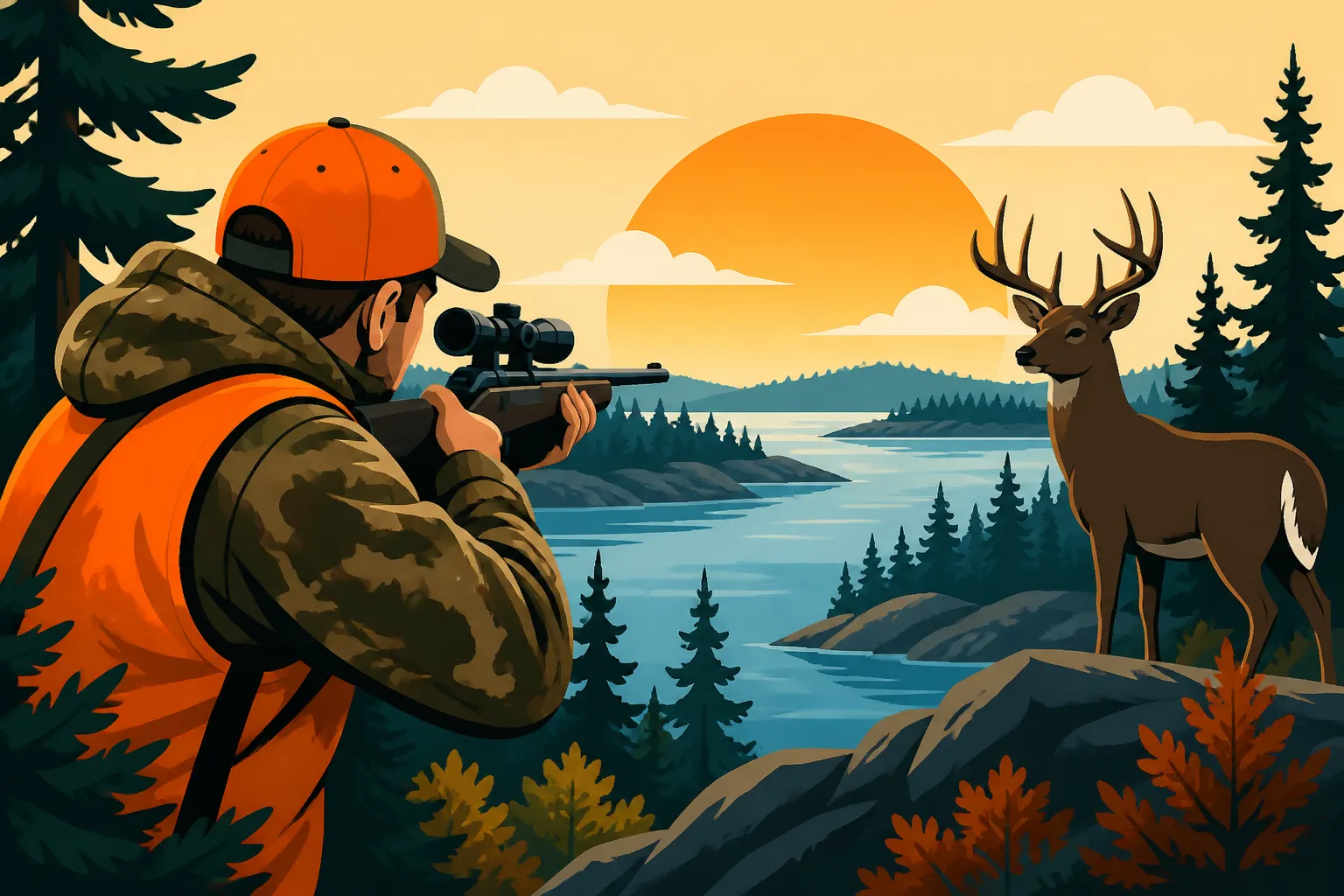
Hunting Around Parry Sound
Hunting in the Parry Sound area presents a truly unique set of challenges and rewards, often leaving hunters scratching their heads about where to even begin in its vast, rocky, and often dense landscape. It's a place where the Canadian Shield reveals its rugged beauty, but also guards its secrets closely, making traditional scouting tough and access a real puzzle. This comprehensive guide is designed to peel back the layers of hunting this stunning region, offering practical insights and strategies to help you navigate its bush, understand its game, and ultimately, find success in one of Ontario's most picturesque hunting grounds.
Understanding the Parry Sound Region for Hunting
The Parry Sound area, nestled on the shores of Georgian Bay, is more than just a cottage country retreat; it's a significant hunting landscape. However, it's a far cry from the open farmlands of southern Ontario or the vast, relatively flat expanses of the far north. Here, you're dealing with the exposed granite backbone of the Canadian Shield, which dictates everything from forest composition to animal movement. It's an unforgiving but incredibly beautiful environment that demands a specific approach from hunters.
Geographic Overview and Typical Habitat
When you look at a map of the Parry Sound district, what immediately jumps out is the sheer amount of water and rock. Thousands of lakes, rivers, and wetlands are interspersed with ancient granite outcrops, rolling hills, and a mosaic of forest types. This isn't dense, uniform bush; it's a broken landscape. You'll find pockets of mature hardwoods like maple and oak on richer soils, mixed with coniferous stands of pine, spruce, and cedar, especially in the low-lying, wetter areas or on rockier ridges. Then there are the vast tracts of regenerating forest – old clear-cuts or burned areas that, after years of growth, become incredibly thick and offer prime cover for deer and bear.
This varied terrain means that game animals don't just "live" in one type of cover; they utilize the entire mosaic. Deer might be found browsing in a younger clear-cut during the day, then heading to a mature hardwood ridge for acorns in the fall, and seeking shelter in a dense cedar swamp during a cold snap. Moose, while less prevalent than further north, will gravitate towards wetlands and younger forest for browse. Bears, of course, are masters of this varied landscape, moving between berry patches, mast crops, and dense cover throughout the season. Understanding this patchwork is the first step to figuring out where your target species will be.
The constant undulations and rock faces also create microclimates and natural travel corridors. A small ravine, a natural break in a rock face, or the edge of a beaver pond can act like a funnel for game moving between feeding and bedding areas. Over time, as you learn the area, you'll start to see these subtle features on a topographic map or with satellite imagery, and they'll become key points in your scouting strategy. This is where tools like onX Hunt can really shine, allowing you to layer topography, satellite imagery, and property lines to identify potential hotspots before you even set foot in the woods.
Common Game Species You'll Encounter
While Parry Sound might not be known for the absolute highest densities of all game, it offers a diverse hunting experience. The stars of the show here are definitely white-tailed deer and black bear. For deer, you'll find them widely distributed, though perhaps not in the same numbers as prime agricultural areas further south. These are typically tough, resilient bush deer, often smaller-bodied than their farm country cousins, but they make up for it in their ability to navigate the rugged terrain and their natural wildness. Early season archery hunts can be productive, and the later rifle season often benefits from some snow cover to help track their movements.
Black bears are plentiful in the Parry Sound district, thriving in the extensive mixed forests and access to various food sources. Whether you're interested in a spring hunt over bait or a fall hunt still-hunting through thickets or stalking berry patches, the opportunities are solid. Just remember the rules around baiting and the importance of responsible bear management. Black Bear Hunting in Ontario provides a great overview of these aspects.
Beyond the big game, Parry Sound offers excellent opportunities for upland birds, particularly ruffed grouse. These "thunder chickens" love the diverse forest edges, old logging roads, and regenerating clear-cuts that are so common here. A walk down an old two-track in the fall, especially with a good bird dog, can yield some fantastic shooting. Woodcock are also present, especially in the alder thickets and moist bottomlands. For a different challenge, keep an eye out for coyotes; they are opportunistic predators and can be found throughout the area, providing year-round hunting opportunities.
The Unique Challenges of Hunting the Shield
Hunting the Canadian Shield around Parry Sound isn't for the faint of heart or those accustomed to easy walking. The terrain itself is the primary challenge. Imagine navigating dense undergrowth interspersed with moss-covered granite outcrops, sudden drops, and ankle-twisting rock falls. It's physically demanding, and you'll quickly realize why good footwear and sturdy ankles are essential. Getting turned around is a very real possibility, even for experienced woodsmen, which makes reliable navigation tools and skills paramount.
Water is another constant factor. Beaver ponds, swamps, and small streams crisscross the landscape, often forcing detours or requiring careful crossings. These watery obstacles can be excellent funnels for game, but they also complicate travel. Furthermore, the thick cover means visibility can be very limited. Shots are often close-range, and tracking a wounded animal can quickly become an arduous task in the dense bush. This is a region where patience, stealth, and intimate knowledge of animal behaviour in such habitats truly pays off.
Finally, the patchwork of Crown and private land adds another layer of complexity. While there's a significant amount of public land, it's often fragmented by private holdings, especially around the lakes and developed areas. This means you can't just wander anywhere; you need to be acutely aware of property lines to avoid trespassing, which is critical. Familiarizing yourself with Ontario Trespass and Landowner Law is a must. These challenges, however, are also what make hunting around Parry Sound so rewarding. It's a true wilderness experience, demanding skill, perseverance, and a deep appreciation for the natural world.
Navigating Access and Regulations in the Parry Sound Area
Before you even think about loading your truck and heading north, understanding the lay of the land—both geographically and legally—is crucial. Parry Sound sits in a fascinating transition zone, and its rules and access points can sometimes feel like a maze. Knowing your Wildlife Management Unit (WMU) and respecting property boundaries are non-negotiables for a successful and ethical hunt.
Hunting on Crown Land Near Parry Sound
Good news for public land hunters: the Parry Sound area offers a substantial amount of Crown Land, particularly as you move further away from the main town centres and major highways. This public land is generally open for hunting, assuming you hold the correct licenses and follow all regulations. The challenge, however, is that much of this Crown Land is not contiguous; it's often broken up by private parcels, particularly along waterfronts and around established communities. This is where meticulous planning and good mapping tools become your best friends.
Before heading out, spend time with detailed maps, whether they are traditional paper topographical maps or modern digital versions available on apps like onX Hunt or GoHunt. These tools allow you to view Crown Land boundaries, often in different colours, making it easy to distinguish from private property. Remember, just because a road looks like a bush road doesn't mean it grants access to continuous Crown Land; it might pass through several private parcels. Identifying large, accessible blocks of Crown Land away from development will be your starting point. Look for areas adjacent to provincial parks where hunting is allowed (though parks themselves generally prohibit hunting) or further into the interior of the WMUs. Hunting Ontario's Crown Land delves deeper into the specifics of using these public lands.
Accessing these Crown Land parcels can also be an adventure in itself. Many areas are only reachable via old logging roads, ATV trails, or by foot. Some of the more remote spots might even require a canoe or boat to reach. Be prepared for potentially long walks in and out, and always inform someone of your route and expected return time. This rugged accessibility often translates to less hunting pressure, which can be a huge advantage for those willing to put in the effort.
Considerations for Private Land Access
While Crown Land offers ample opportunities, don't overlook the potential for hunting on private land around Parry Sound. Farmers, woodlot owners, and even cottage property owners might be open to granting permission, especially if they are experiencing issues with deer or bear. However, approaching landowners requires respect, courtesy, and preparation. Simply showing up on opening morning with a loaded firearm is a sure way to get a "no."
Start by doing your homework. Identify landowners through online mapping tools or local resources. A polite knock on the door well in advance of the season, a brief introduction, and a clear explanation of your intentions can go a long way. Always offer to share your contact information and be absolutely clear about the dates you'd like to hunt and the species you're pursuing. Many landowners appreciate responsible hunters who are respectful of their property and can help manage local game populations. They might also appreciate a small token of gratitude, like helping with a chore or offering some wild game if you're successful.
It's also crucial to understand that "posted" or "no trespassing" signs are to be respected absolutely. Hunting without permission on private land is not only illegal but also harms the reputation of all hunters. Always err on the side of caution. Even if a property isn't explicitly posted, if you're unsure if it's private, assume it is and seek permission. Building these relationships with landowners is invaluable and can open up fantastic hunting opportunities that are far less pressured than public lands.
Key Wildlife Management Units (WMUs) to Know
The Parry Sound region falls primarily within several key Wildlife Management Units (WMUs), each with its own specific regulations for season dates, bag limits, and tag requirements. The most common WMUs you'll encounter here include 47, 48, and 49, with parts of 42 and 45 also being in the broader vicinity. Each of these units will have different nuances for deer, bear, and other game. It's absolutely critical to consult the most current Ontario Hunting Regulations Summary, often available online through the provincial portal, for the specific WMU you plan to hunt.
For example, deer season dates and methods of take (archery, rifle, muzzleloader) can vary slightly between these units, even if they are geographically close. Ontario Deer Season Dates and Tags is an excellent resource to start with, but always double-check against the official summary. For bear, the specific spring and fall season dates, and whether a Black Bear Validation Certificate is required, will be tied to the WMU. Ontario's Wildlife Management Units provides a good overview of how this system works across the province.
Understanding your WMU also helps in researching game populations. While exact numbers aren't always public, general trends for deer or bear populations might be discussed by local conservation officers or through regional hunting reports. Some WMUs might have higher deer densities in certain areas due to habitat, while others might be more known for their bear populations. A good strategy is to pick one or two WMUs and thoroughly research them – learn their boundaries, understand their unique regulations, and study their habitat features before you commit to hunting there. This focused approach will save you a lot of guesswork and dramatically increase your chances of success.
Strategies for a Successful Hunt in the Parry Sound Bush
Hunting the Parry Sound bush requires a blend of traditional woodsman skills and modern tools. The dense cover, challenging terrain, and dispersed game mean that simply walking around hoping to stumble upon an animal is rarely an effective strategy. Instead, a thoughtful approach to scouting, specific hunting methods, and appropriate gear will dramatically improve your odds.
Scouting Techniques for Rugged Terrain
Scouting in Parry Sound is a year-round endeavour, not just something you do a week before the season opens. In the off-season, particularly in late winter or early spring after snowmelt, the lack of dense foliage can make it easier to spot old rubs, scrapes, and well-used game trails. Look for natural funnels where the terrain forces animals into predictable travel patterns, such as saddles between ridges, the narrowest point between two beaver ponds, or a well-worn path along a rock face. Reading Whitetail Sign in Ontario Hardwoods is a great article to prepare you for what to look for.
During the summer months, focus on identifying food sources. For deer, that might mean finding acorn-producing oak stands on higher ground or areas with abundant browse from regenerating cuts. For bears, pinpointing berry patches (blueberries, raspberries, saskatoons) is key, as is identifying traditional travel routes to and from these areas. Pay attention to how the prevailing winds interact with the terrain, as animals will often use topography to their advantage to detect predators. This information will inform your stand placement or still-hunting routes later in the season.
Leverage technology. Satellite imagery, available through apps like onX Hunt, is invaluable for identifying potential bedding areas (often dense conifer thickets), feeding areas, and travel corridors from afar. You can mark waypoints for interesting features like old logging road junctions, natural springs, or particularly dense cover, creating a digital map of potential hotspots. Ground-truthing these spots later is essential, but satellite imagery gives you a fantastic head start, saving you countless hours of unproductive bushwhacking. This strategic use of modern tools combined with boots-on-the-ground exploration is the most effective way to scout the complex Parry Sound landscape.
Effective Hunting Methods for the Region
Given the dense cover and broken terrain, still-hunting or methodical stand hunting are often the most productive methods in Parry Sound. Still-hunting, which involves moving slowly and deliberately through the bush, pausing frequently to observe and listen, is perfectly suited for this environment. Take a few steps, then stop for several minutes, scanning every shadow and listening for the faintest rustle. The goal is to surprise game or intercept them as they move. Focus on moving into the wind or crosswind, utilizing natural contours and thickets for concealment. Remember, quick, close-range shots are the norm here, so practice snap shooting and be ready to react quickly.
For stand hunting, whether from a tree stand or a ground blind, focus on funnel points or pinch points identified during your scouting. This could be a narrow strip of hardwoods between two swamps, a trail leading from a bedding area to a food source, or a crossing point on a small creek. Placing a stand strategically allows you to cover these high-traffic areas without making your presence known. Consider using scent control diligently, as the thick air in the bush can hold human scent for a long time. Hanging a Stand on an Ontario Bush Edge offers great advice that can be adapted to this region.
Deer drives can also be effective, especially if you have a group of hunters. In the thick Parry Sound bush, a well-organized drive can push deer out of dense cover and past strategically placed standers. Communication is key, as is a thorough understanding of the area you're driving to ensure safety and ethical shots. For bear, baiting can be very successful in spring and fall, offering a controlled shot opportunity. Setting up a comfortable, concealed ground blind near an active bait site allows you to observe the bear and make an informed decision. Remember, the key to any method in this rugged landscape is patience and persistence.
Essential Gear for Parry Sound Hunts
Hunting in Parry Sound is demanding, and your gear needs to be up to the task. First and foremost, invest in high-quality, waterproof, and supportive boots. You'll be traversing wet, uneven, and rocky terrain for hours on end, and blisters or wet feet can quickly ruin a hunt. Layered clothing is also critical, as temperatures can fluctuate wildly, especially during the fall. Blaze orange is a mandatory safety item during gun seasons; ensure you have enough to be visible from all angles. Ontario Blaze Orange Requirements explains the specifics.
Navigation is paramount. While a GPS unit or a smartphone with a reliable hunting app (like onX Hunt with downloaded maps) is essential, always carry a physical map and compass as a backup, and know how to use them. Cell service can be spotty or non-existent in many remote areas. A headlamp with extra batteries, a knife, a small first-aid kit, fire-starting materials, and enough water and snacks for a full day are also non-negotiables. For communication, a two-way radio can be incredibly useful if you're hunting with a partner or group where cell service is unreliable.
For firearms, consider the typical shot distances. In thick bush, longer shots are rare, so a fast-handling rifle or shotgun with good open sights or a low-power scope is often more practical than a long-range setup. If you're bowhunting, ensure your gear is tuned and you're comfortable with quick, close-range presentations. Lastly, don't forget game retrieval gear. A good quality game cart or heavy-duty drag rope will be a blessing if you're lucky enough to harvest an animal deep in the bush, as dragging a deer or bear out of this country is a true test of grit.
Disclaimer
This article is for general informational purposes only and does not constitute professional advice. Laws, prices and regulations vary by location and change over time. Consult a qualified professional for guidance on your specific situation.