How Close an Ontario Mentor Must Stay
The joy of introducing someone new to the world of hunting in Ontario is immense, but let's be honest, it often comes with a heap of questions and a touch of anxiety, especially when it comes to the rules. One of the most common head-scratchers for both seasoned mentors and eager apprentices revolves around just how close you actually have to stay to each other out in the field. This guide is here to untangle the specifics of mentor proximity in Ontario's apprentice hunting program, so you can focus on building those memories, not worrying about being on the wrong side of the regulations.
Understanding Ontario's Apprentice Hunting Program
The apprentice hunting program in Ontario is a fantastic initiative, designed to help new hunters gain valuable experience under the watchful eye of a seasoned pro. It's about bridging the gap between theoretical knowledge gained in a classroom and the practical realities of hunting in our diverse landscapes. But like anything governed by rules, there are layers to peel back.
The 'Why' Behind Apprentice Hunting
At its heart, the apprentice hunting program is about legacy and safety. We've all been there: eager to learn, maybe a little green, and definitely in need of someone to show us the ropes. This program recognizes that hands-on experience, guided by someone who knows what they're doing, is invaluable. It's how hunting traditions are passed down through generations, ensuring that future conservationists are raised with respect for wildlife, ethical practices, and above all, safety.
It’s more than just teaching someone to shoot; it’s about understanding animal behaviour, reading the landscape, making ethical decisions, and learning the responsibilities that come with carrying a firearm. The program provides a structured pathway for individuals, including youth and adults new to hunting, to safely participate in the field before they've completed all licensing requirements to hunt independently. This mentorship is crucial, fostering responsible hunters who understand the profound privilege and responsibility of their pursuit.
The program also plays a vital role in encouraging participation in hunting, which is directly linked to wildlife conservation efforts. Hunters are often the most dedicated conservationists, and by making the entry process more accessible and safer through mentorship, Ontario ensures a continuous stream of individuals who care deeply about our wild spaces and their inhabitants. It acknowledges that learning to hunt is not a simple, one-off event but a continuous journey best begun with experienced guidance.
Who Qualifies as an Apprentice and a Mentor
To participate in this program, both the apprentice and the mentor need to meet specific criteria, which is a key part of ensuring safety and compliance. It’s not just any two people heading into the bush together; there are clear definitions that must be adhered to. Getting these details right is the first step in a successful and legal apprentice hunt.
An apprentice hunter is typically someone who has successfully completed their Ontario Hunter Education Course but does not yet possess a valid Possession and Acquisition Licence (PAL) to legally own and transport a firearm on their own. They might also be a youth hunter participating under specific Ontario Apprentice and Youth Hunting rules. Essentially, they're in the learning phase, equipped with foundational knowledge but still under the direct supervision of an experienced hunter for practical application in the field. They must hold a valid Outdoors Card and an apprentice hunting licence validation.
The mentor, on the other hand, must be a fully licensed, experienced hunter. This means they must possess a valid Outdoors Card, a valid hunting licence for the species being hunted, and a valid PAL for the class of firearm being used (if firearms are involved). They are the linchpin of the program, responsible for the safety, ethical conduct, and legal compliance of the apprentice. It's a significant responsibility, requiring patience, knowledge, and an unwavering commitment to safety. You can find more comprehensive details on requirements through the official channels or by checking out resources on Ontario Hunter Education Requirements.
The Core Rule: Mentor Proximity and Direct Supervision
Now, let's get to the question that brings most people here: just how close does that mentor really need to be? This isn't a vague suggestion; it's a critical safety regulation. The term you’ll often hear in the regulations is "direct and continuous supervision," and in the context of hunting with an apprentice, this has a very specific and strict meaning in Ontario.
Defining "Direct and Continuous Supervision"
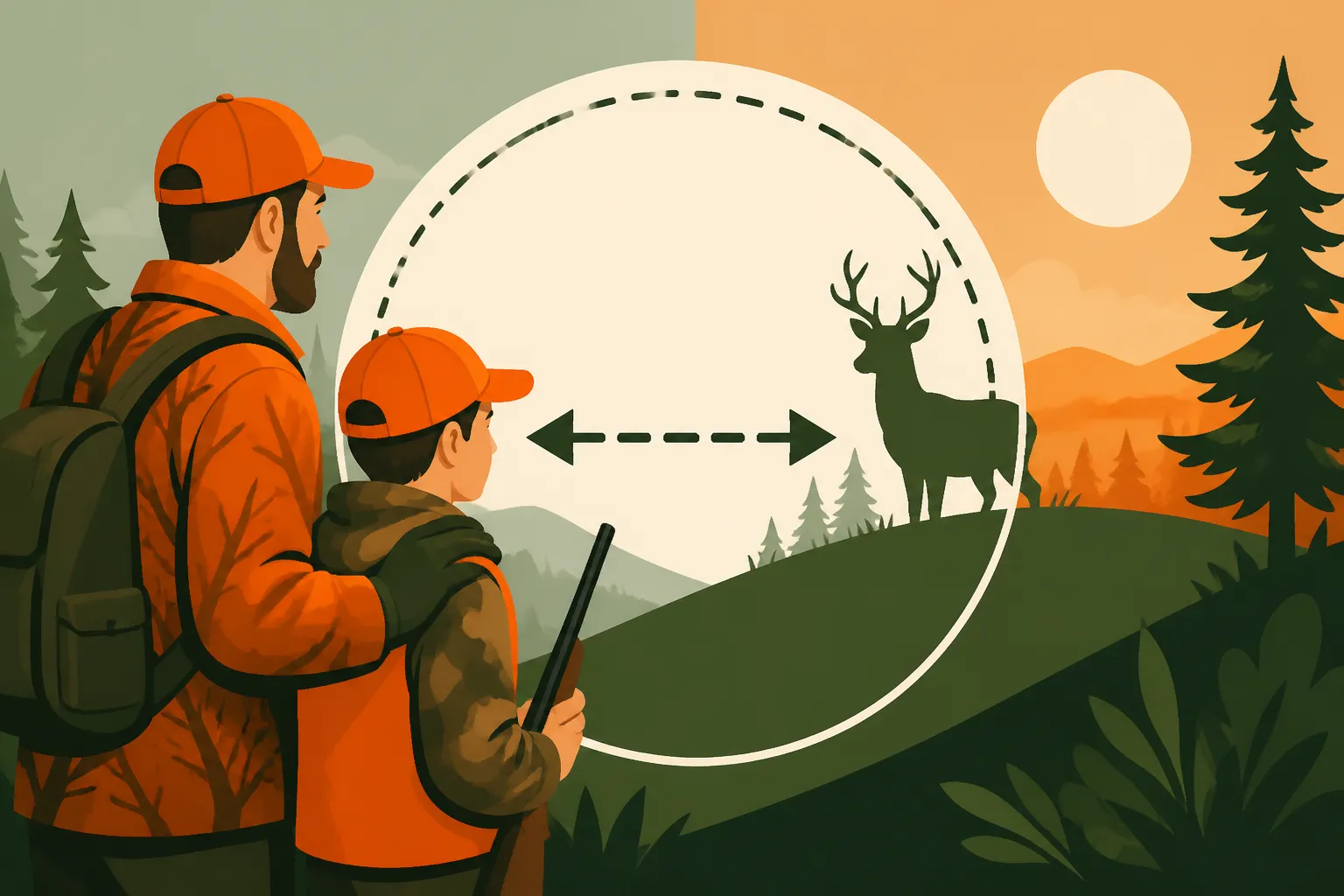
When the law talks about "direct and continuous supervision," it's not simply about being able to see your apprentice from across a field. In Ontario, for firearms hunting with an apprentice, this generally means the mentor must be close enough to the apprentice to take immediate physical control of the firearm at any given moment. This typically translates to being within arm's length, or at least within a few feet, ensuring you can intervene instantly if an unsafe situation arises or if the apprentice makes a mistake. This strict proximity is in place for one reason: safety.
Imagine a scenario where an apprentice, perhaps overwhelmed by the excitement of a sighting, points a firearm in an unsafe direction. Or maybe they misidentify an animal. As a mentor, your ability to physically correct the firearm's aim or prevent an ill-advised shot needs to be instantaneous. Being 20 yards away, even if you can see them clearly, isn't enough. By that point, a mishap could already be irreversible. This rule eliminates any grey areas and puts the onus squarely on the mentor to maintain absolute control over the situation, prioritizing the safety of the apprentice, themselves, and others.
This means that separating, even for a moment, to scout different areas or approach game from different angles, is simply not permitted. The mentor and apprentice must operate as a single unit when the apprentice is actively participating in the hunt with a firearm. While GoHunt can be an invaluable tool for planning your hunt and scouting terrain beforehand, remember that once you're in the field with an apprentice, you must remain tethered by these strict proximity rules. There's no room for interpretation here; it’s about being right there, every step of the way, ready to take over if needed.
Practical Implications in Different Hunting Scenarios
This strict "arm's length" rule drastically impacts how you plan and execute your hunts with an apprentice, particularly in different types of hunting. It means discarding any notions of splitting up to cover more ground or setting up in separate locations.
Deer Hunting with an Apprentice
If you're out Whitetail Hunting in Ontario with an apprentice, especially from a treestand, both you and the apprentice must be in the same treestand or blind. You cannot have the apprentice in one stand and the mentor in another, even if they're just a few yards apart. This is a common misconception, and it's a significant safety and legal concern. The mentor needs to be able to physically grab the firearm if necessary. If hunting from the ground, you'll be walking side-by-side or very close, like when Hunting a Cedar Swamp Edge or still-hunting through the bush.
This proximity also affects strategies like deer drives. If an apprentice is part of a drive, they must remain under direct, arm's-length supervision of their mentor at all times, making traditional "pushing" or "posting" roles difficult to integrate. It means you're essentially hunting as a pair, always within immediate reach of each other. Planning your stand placement, perhaps when Hanging a Stand on an Ontario Bush Edge, must account for accommodating two hunters in a safe and legal manner.
Upland Bird and Waterfowl Hunting
For upland birds like grouse or woodcock, the mentor and apprentice will walk side-by-side. There’s no sending the apprentice down one bush road while you take another. The same goes for waterfowl: if you're in a blind for ducks or geese, both of you must be in the same blind. If you're hunting from a boat, you're both in the same boat, with the mentor ensuring absolute control over the apprentice's actions. The excitement of birds flushing or decoying can lead to rapid movements, making that immediate physical control even more critical.
Equipment and Firearm Handling for Apprentices
Beyond just proximity, the rules also dictate how the firearm itself is handled during an apprentice hunt. The ultimate responsibility for the firearm's safe use always rests with the mentor. This isn't just a legal point; it's a moral imperative. The apprentice can certainly carry and operate the firearm, but every action, from loading to aiming to firing, must be under the mentor's direct and continuous oversight.
Practically, this means the mentor should be constantly aware of the apprentice's muzzle direction, trigger discipline, and target identification. They should be talking through every step, guiding the apprentice's movements, and ready to intervene with a physical touch if needed. For instance, when loading a shotgun for spring turkey, the mentor would supervise the apprentice placing the shells, ensuring safe handling. The intent is that the apprentice is learning how to be safe and responsible, and that learning happens best when the mentor is actively involved in every moment of firearm handling. This stringent approach ensures that even minor errors don't escalate into dangerous situations, embodying the core principle of safe Ontario Apprentice and Youth Hunting.
Nuances and Exceptions to the Proximity Rule
While the "direct and continuous supervision" rule is quite rigid, it's worth understanding if there are any subtle nuances or common situations that might lead to misinterpretation, and how the program transitions an apprentice to independent hunting. The general answer is that the core rule remains steadfast for firearms.
Age-Related Considerations
Interestingly, the rule of "direct and continuous supervision" doesn't change based on the apprentice's age. Whether you're mentoring a young teenager or an adult new to hunting, the requirement to be within arm's length for immediate physical control remains the same when a firearm is involved. The regulations are designed around the act of handling a firearm under supervision, not the perceived maturity level of the apprentice.
However, in practice, mentors often find themselves naturally even closer or more hands-on with younger apprentices. While a seasoned mentor might offer verbal cues to an older apprentice, with a younger hunter, physical guidance on sighting, stance, or safety checks might be more frequent. The intent, regardless of age, is to foster safety and sound judgment. The rule ensures that a mentor cannot delegate the responsibility for safety by simply being in the vicinity; they must be an active, immediate participant in every critical moment of the hunt, especially when a firearm is being loaded or aimed.
The Progression to Independent Hunting
The apprentice program is explicitly designed as a temporary stepping stone, not a permanent state. The goal is to transition the apprentice into a fully independent, responsible hunter. This means there's a clear pathway to eventually hunt without a mentor needing to be within arm's reach.
The key step is for the apprentice to obtain their own Possession and Acquisition Licence (PAL). Once they have completed their firearms safety courses and successfully applied for and received their PAL, they are no longer considered an "apprentice" in the same capacity. At this point, they can purchase their own firearms, ammunition, and most importantly, obtain their full suite of Ontario Hunting Licences and What They Cost independently. This transition allows them to hunt alone (within the bounds of regulations like Ontario Blaze Orange Requirements and specific season dates for game like Ontario Wild Turkey Licences and Tags) or with other licensed hunters, without the stringent proximity requirements of the apprentice program. Until that PAL is in hand, however, the mentor's close supervision is non-negotiable.
Best Practices for Mentors and Apprentices
Beyond just adhering to the legal requirements, there are best practices that can make the apprentice hunting experience truly enriching and successful for everyone involved. It’s about more than just following rules; it’s about fostering a passion and developing skills that last a lifetime.
Communication and Pre-Hunt Planning
Effective communication is the cornerstone of a successful mentor-apprentice relationship. Before you even set foot in the field, sit down and have a detailed conversation about expectations, safety protocols, and roles. Discuss the specific species you'll be hunting, what to expect in terms of terrain, weather, and animal behavior, and how you'll communicate quietly in the field. Go over the firearm safety rules rigorously. Establish clear hand signals or whispered commands for different situations.
Planning your hunt together using tools like GoHunt or other mapping applications can be incredibly beneficial. You can scout potential locations, understand terrain features, identify safe shooting lanes, and discuss scenarios before they happen. For instance, if you're Hunting Deer in Southern Ontario Farmland, you can look at field edges, woodlots, and escape routes, discussing where you'll sit or walk and why. This pre-hunt planning helps the apprentice visualize the hunt, understand the strategy, and builds confidence. It also allows you to reinforce that crucial proximity rule – showing them on a map how you'll move as a unit.
Emphasizing Safety Over Success
It's easy to get caught up in the excitement of bagging an animal, but for an apprentice hunt, safety and the learning experience must always take precedence over filling a tag. Validate the apprentice's enthusiasm, but consistently reinforce that a safe, ethical, and enjoyable hunt is the true measure of success. If a shot isn't safe, or if there's any doubt about target identification, the answer is always no.
Encourage the apprentice to ask questions, even if they seem basic. Your role as a mentor is to patiently explain and demonstrate. Take the time to practice shooting at a range before the hunt, ensuring the apprentice is comfortable and proficient with the firearm. Emphasize tracking and recovery protocols, teaching them the responsibility that comes after the shot. If you do harvest an animal, involve the apprentice in the entire process, from Field Dressing in Warm Ontario Weather to packing out the meat. These hands-on experiences are invaluable learning opportunities, even if they don't involve the direct act of shooting.
Leveraging Tools and Resources
There’s a wealth of information out there to support both mentors and apprentices. Always keep a copy of the current Ontario Hunting Regulations Summary handy, as rules can occasionally change. Many provincial and federal agencies offer online resources, safety videos, and educational materials. Joining local hunting clubs or conservation organizations can also provide a community of support and additional learning opportunities.
Consider using modern technology to enhance the learning process. Apps like GoHunt offer detailed maps, weather overlays, and landowner information, which can be fantastic for Scouting a Wildlife Management Unit and showing an apprentice how to effectively plan their hunts. These tools help develop crucial skills like navigation, land identification, and understanding game movements, which are just as important as marksmanship.
Remember, the goal is to create a well-rounded, responsible hunter. This journey extends far beyond the legal minimums of proximity. It's about instilling a lifelong respect for wildlife, a commitment to ethical conduct, and an unwavering dedication to safety.
Apprentice Hunting Program: Key Requirements
Here’s a quick overview of the essential requirements for mentors and apprentices in Ontario:
| Requirement | Apprentice Hunter | Mentor Hunter |
|---|---|---|
| Outdoors Card | Required (valid) | Required (valid) |
| Hunting Licence | Apprentice Hunting Licence Validation | Valid Hunting Licence for species being hunted |
| Hunter Education | Completed Ontario Hunter Education Course | Completed Ontario Hunter Education Course |
| Firearms Licence | Not required (under supervision) | Valid Possession and Acquisition Licence (PAL) |
| Proximity Rule | Must be under direct and continuous supervision | Must maintain direct and continuous supervision (arm's length or immediate physical control) |
| Responsibility | Learning and following instructions | Solely responsible for apprentice's safety and legal compliance |
| Carrying Firearm | Can carry and discharge under mentor's direct supervision | Must be able to take immediate physical control of firearm |
Disclaimer
The information provided in this guide is for general informational purposes only and does not constitute legal advice. Hunting regulations in Ontario can be complex and are subject to change. Always consult the most current Ontario Hunting Regulations Summary, published by the Ministry of Natural Resources and Forestry (MNRF), or contact the MNRF directly for the most accurate and up-to-date legal requirements before engaging in any hunting activities. Adherence to all provincial and federal laws is the hunter's sole responsibility.