Scoring a Typical Whitetail Rack
Ontario whitetail antler scoring rules explain how to measure typical racks and calculate symmetrical point deductions correctly.
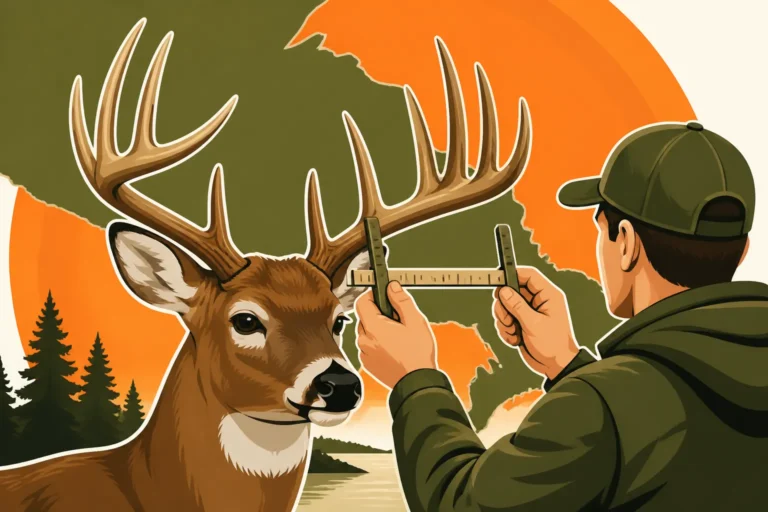
Ontario whitetail antler scoring rules explain how to measure typical racks and calculate symmetrical point deductions correctly.
Ontario white-tailed deer rankings in Boone and Crockett records reveal how regional trophy bucks measure up against North American standards.
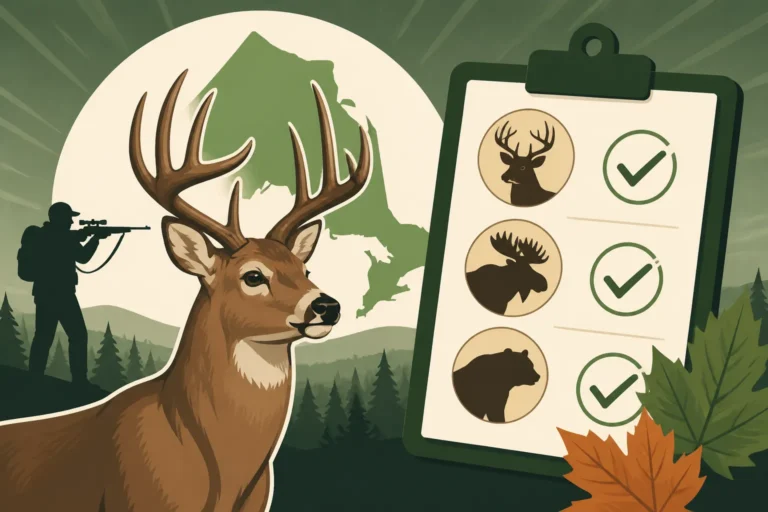
Official scoring systems and fair-chase ethics decide whether a harvest counts, going beyond antler size or skull mass to the effort and respect shown.
Ontario whitetail deer hunting strategies explain how nutrition and age between four and seven years create record book bucks.
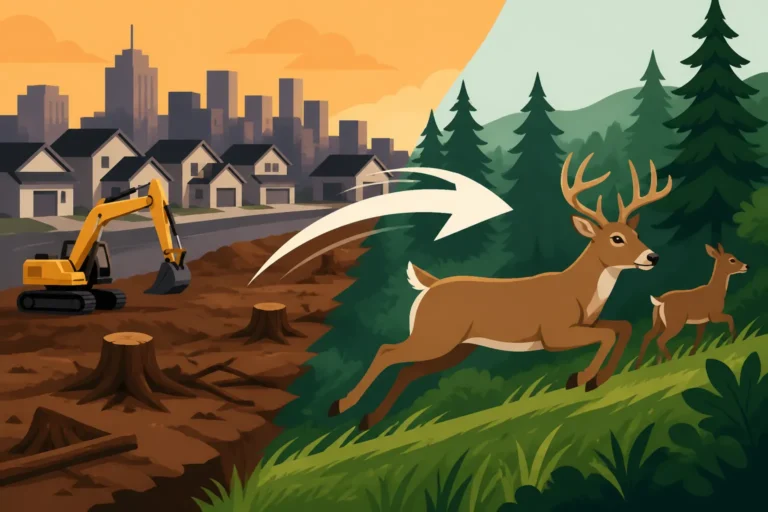
Urban sprawl in Ontario alters deer habitats, forcing hunters to adapt strategies as traditional migration routes vanish.
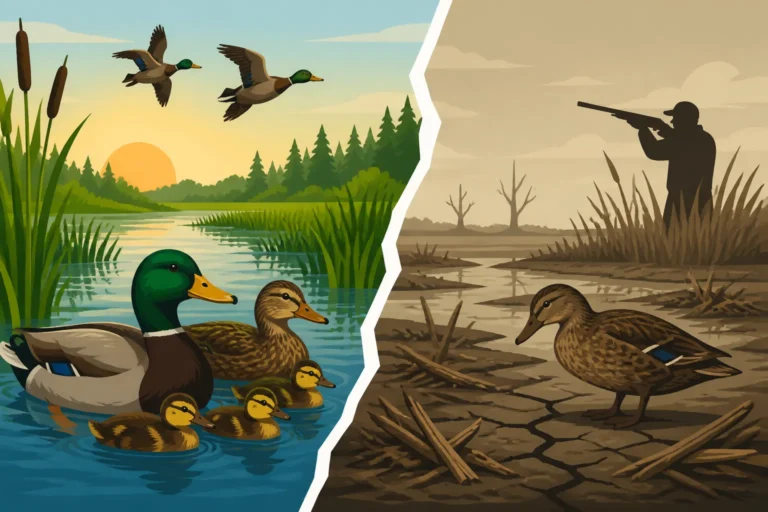
Wetland loss in Ontario destroys duck nesting grounds, food sources, and migration pit stops, threatening local populations.
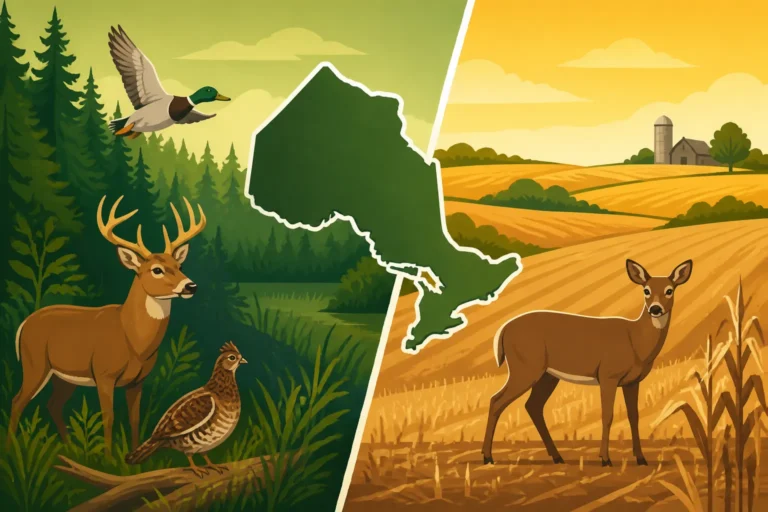
Ontario farmland changes, including larger fields and cash crops, impact game species like whitetail deer and wild turkeys.
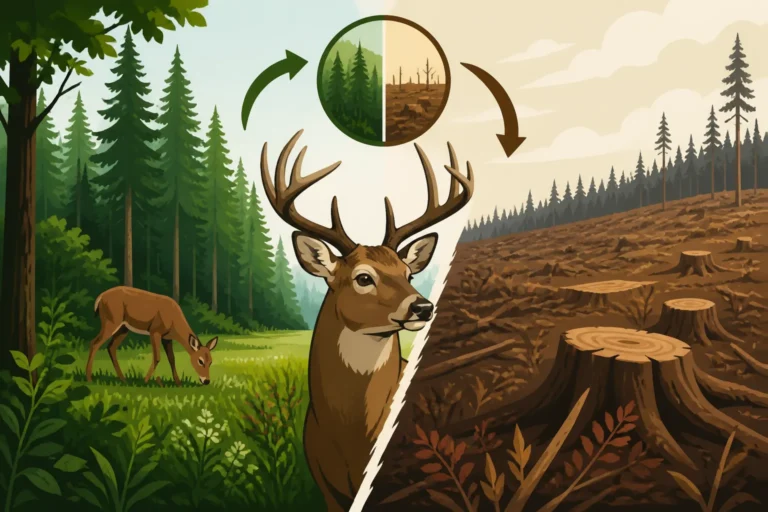
Logging cutblocks transform Ontario deer range, creating new food sources and shifting white-tailed deer movements across the landscape.
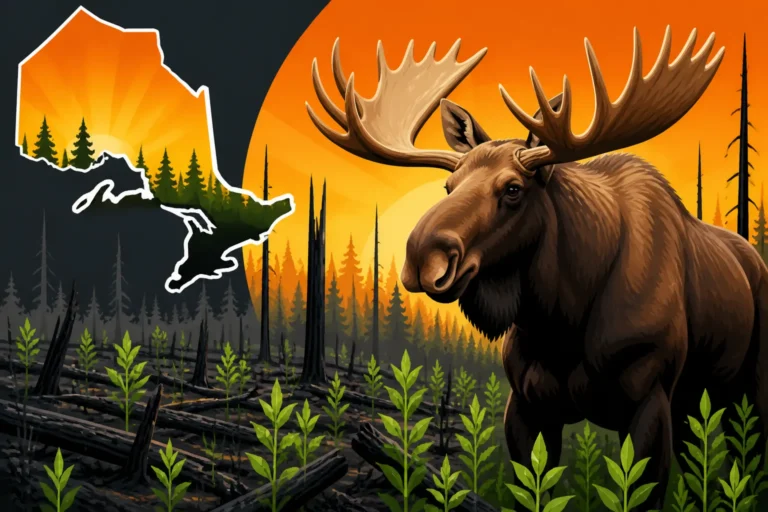
Forest fires in Northern Ontario create nutrient-rich aspen, willow, and birch that help bull moose grow massive antlers.
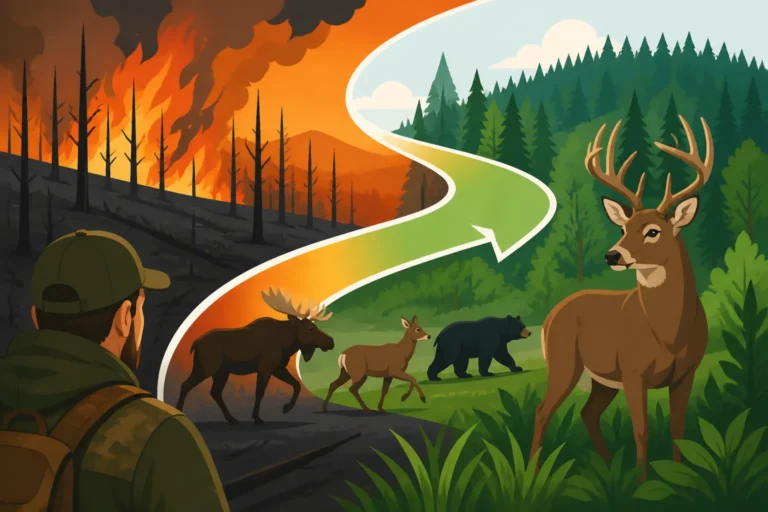
Wildfires reshape Ontario northern forests, displacing animals temporarily while clearing old growth to create diverse new habitats.