Hunting Ontario’s Southwest Agricultural Units
Hunting in Ontario's southwest agricultural units can be a completely different ballgame than tackling the vast northern forests, often leaving hunters feeling frustrated about access, navigating fragmented cover, and understanding how game animals use this unique, human-influenced landscape. This comprehensive guide will walk you through the specifics of hunting the highly productive farmlands and mixed agricultural regions of Southern Ontario, offering practical strategies for finding land, understanding local game behaviour, and making the most of these rich hunting opportunities.
Understanding the Southwest Ontario Agricultural Landscape
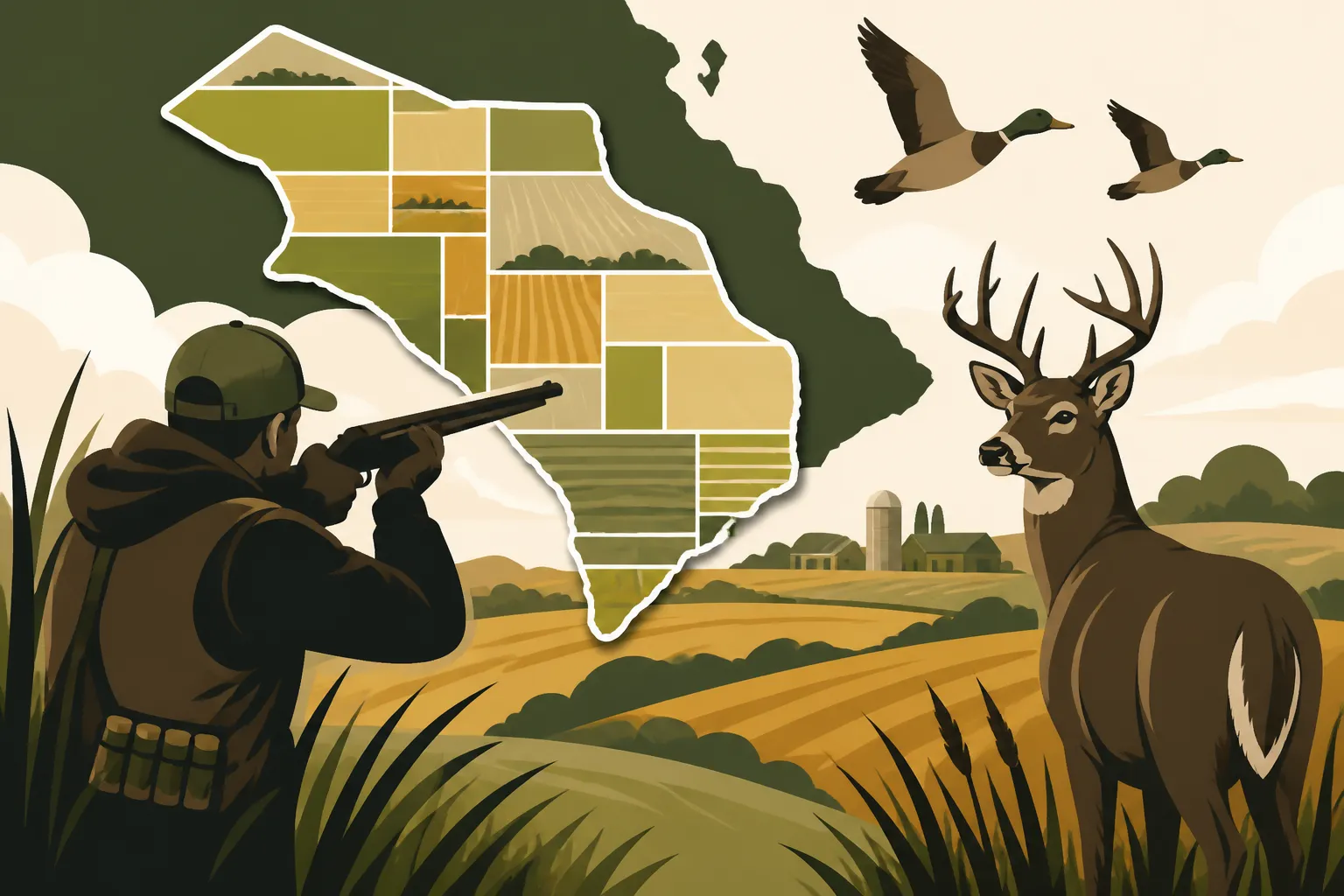
When we talk about Ontario's southwest agricultural units, we're really looking at a mosaic of private farmlands, small woodlots, fencerows, creek bottoms, and the occasional conservation area. This isn't the expansive, unbroken bush of the Canadian Shield or the Boreal Forest; instead, it's a patchwork shaped by generations of farming. This landscape, while heavily modified, offers an incredible bounty for certain game species due to abundant food sources and diverse cover.
The Unique Ecology of Farm Country
The ecology of these agricultural areas is defined by an interplay of cultivated fields and remnant natural habitats. You'll find vast stretches of corn, soybeans, winter wheat, and hayfields, which serve as primary food sources for many species, especially deer and wild turkeys. Interspersed within these fields are vital pockets of cover: small hardwood or cedar woodlots, often bordering creeks or low-lying areas, offering bedding and thermal protection. These isolated bush lots can act like magnets for game.
Beyond the larger woodlots, fencerows—those often overgrown lines of brush and trees dividing fields—are absolute highways for deer and other wildlife. They provide crucial travel corridors in an otherwise open landscape, connecting larger cover patches and providing concealment. Ditches and creek bottoms, even if seasonal, also offer linear cover and access to water, becoming natural pathways for animals moving between feeding and bedding grounds. Understanding this fragmented habitat is key; animals here move differently, often travelling shorter distances between abundant food and dense, if small, cover.
Key Game Species Thriving in Agriculture
The agricultural heartland of Southern Ontario is a biological powerhouse for certain species. White-tailed deer, in particular, flourish here. The rich diet of farm crops—corn, soybeans, alfalfa—provides a nutritional boost that often translates into larger body sizes and impressive antler growth, making this region a hotspot for hunters seeking heavy bucks. These deer often become nocturnal due to human presence but are present in high densities.
Wild turkeys have also seen an incredible resurgence in these agricultural zones. With ample grain fields for foraging and mature woodlots for roosting, their populations are robust. Coyotes, adapting perfectly to a mixed habitat, are also abundant, preying on deer fawns and small game. You'll also find healthy populations of small game like cottontail rabbits and snowshoe hares in thicker fencerows and woodlots, along with various upland birds, though often in lower densities than turkeys. Lastly, the numerous ponds and agricultural wetlands, coupled with vast grain fields, attract significant numbers of waterfowl, particularly Canada geese and various duck species, making excellent field and marsh hunting opportunities possible.
Navigating Access and Landowner Relations
Hunting in Southern Ontario's agricultural units means navigating a landscape dominated by private land. Unlike hunting vast tracts of Crown Land further north, securing access is almost always the biggest hurdle, and it hinges entirely on respectful landowner relations.
The Critical Importance of Permission
Let's be blunt: almost all the prime hunting ground in Southern Ontario's agricultural belt is privately owned. You cannot simply walk onto fields or woodlots without explicit permission, and doing so is not only illegal but also severely damages the reputation of all hunters. The success of your hunt, and indeed the future of hunting access for everyone, depends on your ability to build trust and good relationships with landowners. This means being polite, articulate, and understanding their concerns about liability, property damage, and safety.
The best approach is often in person. Dress neatly, introduce yourself respectfully, and have a clear, concise request. Start with smaller parcels or ask if they know someone who might grant permission. Offering to help with chores, offering some venison, or simply bringing a small token of appreciation once permission is granted can go a long way. Remember, you're building a relationship, not just asking for a one-time favour. Consistency and reliability are your best friends here. Many hunters have found success in Knocking on Doors in Southern Ontario, but it requires patience and a thick skin.
Utilizing Technology for Scouting and Planning
In a landscape where every field edge, woodlot, and fencerow counts, modern mapping technology is an absolute game-changer for hunting in agricultural units. Tools like onX Hunt and GoHunt, for example, provide invaluable layers of information that can make your scouting efforts vastly more efficient. These apps allow you to view property boundaries, landowner names, and aerial imagery right on your phone or computer.
Before you even knock on a door, you can use these tools to identify potential hunting spots: dense woodlots bordering crop fields, brushy creek bottoms acting as travel corridors, or strategically placed fencerows. You can mark access points, potential stand locations, and likely game trails. Beyond simply identifying private property, the aerial and topographical maps help you understand the lay of the land, how deer might move through it, and where the best cover is located. This pre-scouting, combined with local knowledge, is crucial. It also allows you to be specific and knowledgeable when speaking with a landowner, demonstrating that you've done your homework and understand their property. For more detailed insights, check out Scouting With Satellite Imagery in Ontario.
Whitetail Deer Hunting Strategies in Farm Units
Hunting whitetails in Southern Ontario's agricultural units requires a different mindset than hunting in the big woods. Here, deer are intimately tied to food sources and small, dense pockets of cover. Understanding their patterns and adapting your strategies accordingly is paramount.
Hunting Field Edges and Standing Crops
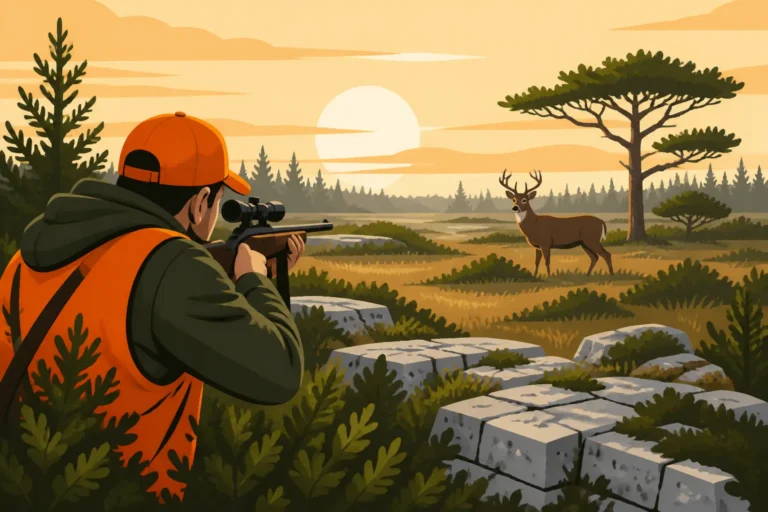
Deer in farm country absolutely live for the edges of fields and the security that standing crops provide. A standing cornfield, for instance, is not just a food source; it's a sanctuary. Deer will bed deep within these fields, emerging only at dusk or under the cover of darkness to feed in adjacent fields or move between woodlots. The key to hunting these areas is timing and patience. During archery season, especially, placing a stand along a Hunting a Standing Corn Field Edge can be incredibly effective, particularly if that edge borders a known travel corridor or a dense woodlot. You're trying to intercept deer as they transition from bedding to feeding.
Soybean fields are another magnet for deer, offering high-protein forage. Hunting these requires similar tactics, focusing on edges and natural funnels where deer enter and exit. For early season, or even during late gun season if crops are still standing, setting up in the afternoon for an evening hunt is often your best bet, catching deer moving out to feed. Conversely, early morning hunts can intercept them returning to bed. Wind direction is critical; you absolutely cannot afford to have your scent blowing into the field where deer are feeding or bedding. Consider a variety of setups, from elevated stands to ground blinds, depending on the cover and landowner preferences. Take a look at Hunting a Soybean Field at Dusk for more specific tactics.
Exploiting Woodlots, Fencerows, and Thickets
While the crops draw deer for food, the scattered woodlots, thick fencerows, and brushy creek bottoms are where whitetails find their security. These aren't just patches of trees; they are the bedding areas, the thermal cover during cold snaps, and the crucial travel routes connecting larger habitat blocks. Identifying these smaller, often overlooked pockets of cover and understanding how deer use them is a significant advantage. A narrow fencerow between two vast fields, for example, might seem insignificant, but it can be a primary highway for deer moving from a secluded bedding area to an evening feeding spot. Setting up to intercept movement along such a feature, especially where it bottlenecks or intersects with another cover strip, can be highly productive. More on this can be found in Hunting a Fencerow Between Two Fields.
Similarly, even small bush lots, if dense enough, will hold deer. These might be old growth hardwoods, thick cedar swamps, or young regenerating clearings. Deer will bed in the thickest cover they can find within these areas, often just inside the tree line, only a stone's throw from open fields. Hunting these areas often involves still-hunting along the edges, or strategically placing a stand where a well-used trail exits the cover. Focus on pinch points, saddles, or areas where two types of cover converge. Remember, even a slight elevation change can become a preferred travel route. Scouting these small pockets of cover thoroughly for rubs, scrapes, and fresh tracks is essential, as deer activity here can be highly concentrated. For more insights on this, refer to Hunting an Ontario Bush Edge.
Understanding Deer Movement and Rut Activity
Deer movement in Southern Ontario's agricultural units is heavily influenced by food availability, hunting pressure, and, of course, the rut. Early in the season, deer movement tends to be predictable: from bedding cover to food sources at dawn and dusk. As hunting pressure mounts, especially during the gun season, deer can become largely nocturnal, moving under the cloak of darkness. This means focusing your efforts on transition times, right at first light and last light, or on the fringes of thick cover where they feel most secure.
However, everything changes during the rut. The intense drive of bucks to find does overrides much of their caution, leading to increased daytime activity. The peak of the rut in this region typically occurs around When Ontario's Whitetail Rut Peaks, which falls into early to mid-November. During this time, bucks will be actively cruising fencerows, scent checking scrapes in woodlots, and chasing does across fields. This is when rattling, grunting, and doe bleats can be incredibly effective. Setting up in a travel corridor between known doe bedding areas or along a historically active scrape line can yield results. Hunters often find success with all-day sits during this period, as bucks can be on the move at any hour. Detailed strategies are available in Hunting the Rut in Early to Mid November.
Beyond Whitetails: Other Opportunities in Southwest Ontario
While whitetail deer often steal the spotlight, Ontario's southwest agricultural units offer a surprising array of other hunting opportunities. From the thunderous gobble of a spring tom to the swirling wings of a waterfowl spread, this diverse landscape provides action for various pursuits.
Spring and Fall Turkey Hunting
The wild turkey restoration story in Ontario is nothing short of incredible, and the agricultural belt is where they truly shine. With a perfect mix of mature hardwoods for roosting and vast grain fields for foraging, turkey populations are robust. Spring turkey hunting is a prime example, offering thrilling close encounters. Early mornings are spent listening for gobblers on the roost, then attempting to call them in as they fly down. Patience and realistic calling are paramount. Understanding local terrain and how turkeys use it—roosting on the highest ground, often near water, and then flying down to feed in fields—is key. More specific advice can be found in Calling a Gobbler Off an Ontario Roost.
Fall turkey hunting presents a different challenge. Flocks are often larger, and calling is less about breeding and more about re-gathering scattered birds. A popular and effective strategy is to break up a flock by running into it or otherwise scattering the birds, then setting up and calling them back in. This works because turkeys have a strong social drive to regroup. As with deer, gaining permission to access key feeding and roosting areas is vital for consistent success. Explore tactics for Breaking Up a Fall Turkey Flock for a productive fall hunt.
Waterfowl Hunting in Agricultural Fields and Wetlands
Southern Ontario's position along the Mississippi Flyway, combined with its extensive agriculture, makes it a waterfowl hunter's paradise. Field hunting Canada geese is particularly popular and highly productive. Geese readily feed in cut corn, winter wheat, and hayfields, often in massive numbers. Successful field hunting involves scouting to find where the birds are feeding, securing permission, and then setting up a realistic spread of decoys. Layout blinds are essential for concealment in open fields.
Beyond the fields, the region's numerous small wetlands, drainage ditches, and farm ponds offer excellent jump-shooting opportunities for ducks or hide-hunting in the marshes. Puddle ducks like mallards, wood ducks, and teal frequent these areas. Understanding their flight patterns and identifying preferred resting or feeding spots are key. Non-toxic shot is a legal requirement for all waterfowl hunting in Ontario. If you're looking for more on this, check out Field Hunting Geese in Ontario Stubble or Marsh Hunting Ducks on the Great Lakes.
Predator and Small Game Pursuits
The mosaic of fields, fencerows, and woodlots also creates ideal habitat for predators and small game. Coyotes are prevalent across the agricultural landscape and offer an exciting hunting challenge, especially in the winter months when their fur is prime. Calling coyotes at first light, or during low-light conditions, can be incredibly effective, drawing them in from considerable distances across open fields. They are highly intelligent and adapt quickly to hunting pressure, requiring varied tactics. For tips on how to approach this, refer to Calling Coyotes in Ontario Farm Country.
For small game enthusiasts, the thick fencerows and dense woodlots are perfect for cottontail rabbits and snowshoe hares. Hunting with small game dogs can be particularly productive, flushing rabbits from thick cover. Squirrels (grey and black varieties) are also abundant in the mature hardwood woodlots, providing excellent opportunities for still-hunting or using rimfire rifles. These species offer fantastic opportunities to introduce new hunters to the field or simply enjoy a day out when big game seasons are closed.
Essential Gear and Considerations for Farm Country Hunting
Hunting in Ontario's southwest agricultural units, with its unique blend of private land and fragmented cover, demands specific gear and a thoughtful approach to maximize success and ensure a positive experience for both hunter and landowner.
Weapon Choices and Shot Opportunities
The type of weapon you choose for hunting in agricultural units often depends on several factors: the species you're pursuing, local regulations, and the specific terrain. For deer, both firearms and archery tackle are common. If using a rifle, remember that distances can vary from dense, close-range woodlot shots to longer field crossings. Many Southern Ontario WMUs (Wildlife Management Units) have specific rules regarding weapon types, with some areas being "shotgun-only" zones or having restrictions on certain rifle calibres, often due to population density and safety concerns. Always confirm the regulations for your specific WMU. Legal Rifle Calibres for Big Game and Where Shotguns Only Are Allowed provide good starting points for understanding these rules.
Archery hunting offers the advantage of a longer season in many areas and is often more discreet in areas close to residences. For turkeys, shotguns with appropriate turkey loads are standard. For waterfowl, a shotgun with non-toxic shot is mandatory. Whatever your chosen weapon, ensure you are proficient and have practiced at realistic distances, as quick, ethical shots are often required.
Stealth, Scent Control, and Adaptability
In agricultural units, game animals are often more accustomed to human presence but also more wary due to higher population densities and hunting pressure. This makes stealth and scent control absolutely paramount. Deer, in particular, are incredibly sensitive to scent, and a slight shift in wind can blow your entire hunt. Always hunt with the wind in your favour, and use scent-eliminating sprays or ozone generators to minimize your human odour. Ground blinds can be very effective in these areas, offering excellent concealment and scent control, especially when set up well in advance.
Adaptability is another key trait for successful farm country hunters. Weather can change quickly, influencing game movement. Crop rotations mean that a prime spot one year might be a barren field the next. Be prepared to change your strategy, move your setup, or switch focus if conditions aren't right. Carry a good set of binoculars to scan field edges, and don't be afraid to try different areas on a piece of property if your initial spot isn't producing. Being flexible with your tactics and willing to adjust to what the animals are doing on a given day will greatly increase your odds.
Respecting Property and Community
This is perhaps the most crucial "consideration" when hunting agricultural units. You are almost always on private property, and your actions directly reflect on all hunters. Always enter and exit property as discussed with the landowner. Close all gates, avoid driving on wet fields, and be mindful of livestock and farm equipment. Never litter, and always pack out everything you pack in, including spent shell casings. If you harvest an animal, clean up thoroughly and remove all evidence of the gut pile, especially if visible from roads or homes.
Good communication is key. If you're running late, or if you plan to bring a friend, inform the landowner. Offering to share some of your harvest or simply checking in to report on game activity (even if you weren't successful) helps build goodwill. Remember, Ontario Trespass Law for Hunters is clear, and respect for private property is not just a legal obligation but an ethical imperative. Building strong relationships with landowners ensures continued access for yourself and contributes positively to the public image of hunting in Ontario.
| Game Species | Primary Agricultural Habitat Features | Best Time to Hunt | Common Hunting Methods |
|---|---|---|---|
| White-tailed Deer | Woodlots (bedding), Fencerows (travel), Corn/Soybean/Hay Fields (food) | Early morning, late afternoon; Rut (early-mid Nov) | Stand hunting (tree, ground blind), Still-hunting edges |
| Wild Turkey | Mature Hardwood Woodlots (roosting), Grain Fields (foraging) | Spring (early morning), Fall (scatter and call) | Calling, Ambush near roost/feed; Flock breaking (Fall) |
| Canada Goose | Cut Corn, Winter Wheat, Hay Fields (feeding), Wetlands (resting) | Early morning, late afternoon | Decoy spreads with layout blinds, Pit blinds |
| Ducks | Farm Ponds, Drainage Ditches, Small Marshes, Flooded Fields | Early morning, late afternoon | Jump-shooting, Decoy spreads from concealment |
| Coyote | Field edges, Woodlot perimeters, Open fields | Dawn, Dusk, Night (where legal); Winter | Calling (distress, howls), Ambush |
| Rabbit/Hare | Thick Fencerows, Brush Piles, Dense Thickets in Woodlots | Daylight hours, Especially after fresh snow | Still-hunting, Pushing brush, Dogs (beagles) |
| Grey Squirrel | Mature Hardwood Woodlots (acorns, den trees) | Early morning, late afternoon | Still-hunting, Spot and stalk |
Disclaimer
This article is for general informational purposes only and does not constitute professional advice. Laws, prices and regulations vary by location and change over time. Consult a qualified professional for guidance on your specific situation.