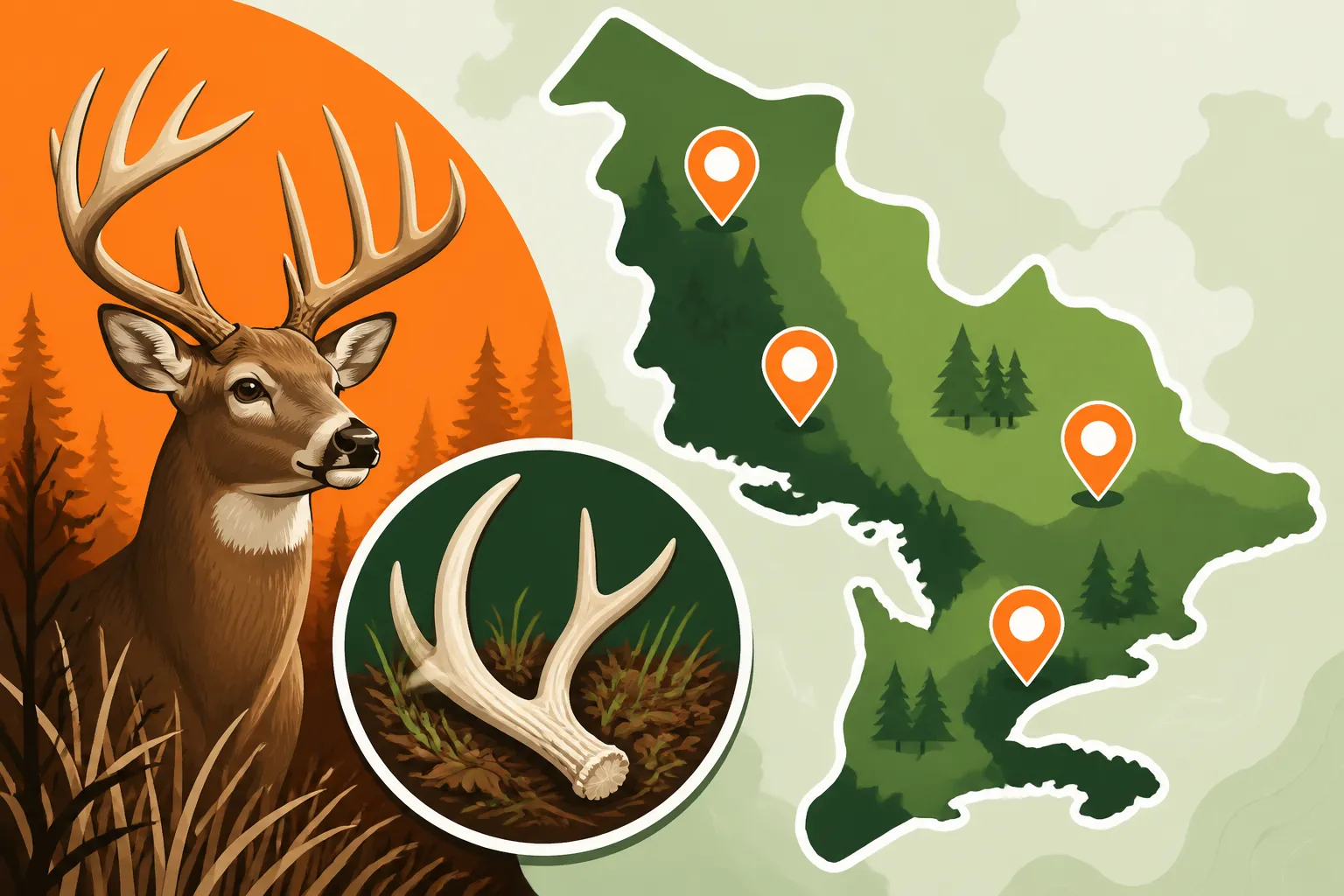
Where to Look for Sheds in Ontario
There’s nothing quite like the feeling of trudging through late-winter snow or early-spring mud, eyes peeled, hoping to spot that tell-tale curve of bone amongst the fallen leaves or tangled brush. For many of us, the hunt for shed antlers is a cherished tradition, a way to extend the deer season and connect with the landscape even after the guns and bows are put away. But let's be real, it can also be incredibly frustrating when you walk for hours, see plenty of deer sign, and come up empty-handed. If you're wondering Where to Look for Sheds in Ontario and how to improve your odds of finding those elusive treasures, this guide is for you. We'll delve into the whys and wherefores of shed hunting, helping you understand deer behaviour and habitat so you can put more bone in your truck.
Understanding When and Why Deer Shed Their Antlers in Ontario
Before you even step foot into the woods, knowing when and why deer drop their antlers is crucial. It sets the stage for where and when to focus your efforts, saving you countless hours of unproductive wandering. This isn't just a random event; it's a finely tuned biological process driven by hormones and environmental factors.
The Biological Clock: When Antlers Hit the Ground
In Ontario, most whitetail bucks typically shed their antlers anytime from late December right through to late March or even early April. There's no single "shedding day," unfortunately, which would make our lives so much easier! Instead, it’s a gradual process influenced by several key factors. Nutrition plays a huge role; bucks that entered the winter in peak condition, perhaps from a season with excellent acorn crops or productive farm fields, often hold their antlers longer. Conversely, a buck that’s been run ragged during the rut, or one struggling to find food in a particularly harsh winter, might shed earlier.
Weather is another major player. A sudden cold snap after a mild period, or prolonged periods of deep snow that make movement and foraging difficult, can stress deer and accelerate the shedding process. I've seen years where I found fresh sheds in January right after a brutal cold front, and other years where bucks were still carrying full racks well into March because the winter was mild. Pay attention to how the deer in your area look; if they seem lean and are grouped up tight trying to conserve energy, those antlers are likely to hit the ground sooner rather than later. For more on this, you might find When Ontario Bucks Drop Their Antlers helpful.
Why Bucks Shed: The Science Behind the Drop
So, why do they do it? It all comes down to hormones, primarily testosterone. After the intense breeding season, or rut, a buck's testosterone levels begin to fall. This drop signals the osteoclasts (specialized cells) at the pedicle – the base of the antler where it attaches to the skull – to start breaking down the bone. This creates a weakened layer, and eventually, the antler detaches. It's a natural cycle that allows bucks to grow a new, often larger and more impressive, set of antlers the following year.
Think of it like this: a buck spends an incredible amount of energy growing his antlers through the spring and summer, then even more energy defending territory and breeding during the fall. By late winter, those antlers are no longer serving a primary purpose and are just extra weight to carry around when food is scarce and survival is paramount. Dropping them allows the buck to conserve energy for basic metabolic functions and simply surviving the toughest part of the year. Plus, it frees up resources to start growing that new rack in the spring, once browse becomes available again. It’s a marvel of nature's efficiency.
Prime Habitat for Finding Whitetail Sheds
Knowing the "when" is just one part of the equation; understanding the "where" is equally, if not more, important. Sheds aren't just lying everywhere. Deer, especially bucks, spend their late winter and early spring in specific types of habitat, often dictated by food, cover, and travel efficiency. Focusing your efforts on these areas will drastically increase your success rate.
Wintering Areas and Browse Lines
When the snow gets deep and the temperatures plunge, whitetails in Ontario seek out thermal cover and readily available food sources. This makes wintering areas, or "deer yards," absolute hotspots for sheds. Look for dense cedar swamps, conifer stands (like pine or spruce plantations), or even thick tangles of multi-flora rose and other dense brush. These areas provide crucial protection from harsh winds and deep snow, creating a microclimate where deer can conserve energy.
Within these wintering areas, you'll often find distinct "browse lines" – the visible line where deer have eaten all the reachable vegetation up to a certain height. This is a dead giveaway that deer are spending significant time there, browsing on twigs, buds, and bark. Walk slowly through these areas, paying close attention to any changes in ground cover, especially near downed logs or thickets where a buck might shake an antler loose. A common Ontario sight, for instance, is How Deer Use a Cedar Swamp in Winter, which can be gold for shed hunters. Remember, the deeper the snow gets, the more concentrated deer become, making these spots even more productive.
Travel Corridors and Funnels
Deer are creatures of habit, especially in winter. They'll establish well-used trails between their bedding areas, feeding grounds, and water sources. These travel corridors, often worn down paths in the snow or mud, are excellent places to find sheds. Why? Because as a buck walks, jostles through brush, or jumps over obstacles like fences or fallen trees, an antler that's barely hanging on can be easily dislodged.
Look for natural funnels that constrict deer movement, forcing them into a smaller area. This could be a narrow strip of woods between two large fields, a low-lying creek bottom, a fencerow, or even a tight bottleneck around a beaver pond. Anywhere deer are forced to move predictably and perhaps expend a little more effort is a prime spot. Think about where a buck might jump over a log, squeeze through thick cover, or climb a steep bank – those sudden movements can be enough to knock an antler free. Hunting a Fencerow Between Two Fields highlights how deer use these linear features, and they're just as good for finding sheds.
Feeding Areas
Even in winter, deer need to eat, and where they eat, they often shed. As they drop their heads to browse or graze, a loosely attached antler can simply fall off. Focus on fields that held crops like standing corn or soybeans (even if harvested, they might still find residual grains). Oak ridges, where deer might be pawing through snow to find leftover acorns, are also excellent. If there's a food plot planted nearby, even if it's mostly eaten down, deer will frequent it.
Consider the edges of these feeding areas, particularly where they meet thick cover. Deer are cautious, and they'll often stage along the treeline before venturing out into open fields, or bed just inside the cover after a meal. This transition zone is a high-traffic area. If you find a field that deer have been actively feeding in, walk the edges thoroughly, then make passes through the field itself. Sometimes a buck will lie down in a field after feeding, and an antler might drop as he stands up. What Acorn Crops Do to Ontario Deer provides insight into a crucial food source that can draw deer in.
Bedding Areas
Just like us, deer need a place to rest and feel secure. Their bedding areas are typically located in thick cover that offers both protection from predators and shelter from the elements. This could be a dense stand of pines, a brushy hillside, or a thick cedar swamp. Bucks, especially those that are older and wiser, often prefer secluded, elevated spots where they can watch their backtrail.
When a buck lies down and stands up multiple times throughout the day, the gentle impact of his head against the ground or the movement of his body can cause an antler to fall. Walk slowly and deliberately through these thickets. It can be challenging, as visibility is often poor, but the payoff can be huge. Don't overlook small, isolated patches of thick cover within a larger bush lot – a single buck might use these for his daytime hideout. Look for flattened grass or snow, deer scat, and chewed-on browse that indicates recent bedding. Hunting a Hardwood Ridge for Whitetails is a good read, as these ridges often contain dense pockets of cover deer use for bedding.
Practical Strategies for a Successful Ontario Shed Hunt
Finding sheds isn't just about knowing where to go; it's also about how you go about it. A systematic approach, coupled with patience and a willingness to adapt, will yield far better results than aimless wandering. Here are some actionable strategies to help you fill your shed collection.
Timing Your Search
Patience is a virtue in shed hunting. While some dedicated hunters start looking in late December, the prime window for shed hunting in Ontario usually begins in February and extends through March, sometimes even into April, especially in northern regions. The biggest mistake you can make is going too early. If bucks are still carrying their antlers, you’re just pressuring them and potentially pushing them out of an area they might shed in later. I usually wait until late February or early March, when most of the deep snow has melted off the higher ground, but patches still remain in the low spots, making sheds stand out.
Repeated visits to promising areas are key. A buck isn't going to drop both antlers at the exact same time, nor will he drop them all in one spot. You might find one side on one trip and the other side (or even another buck's shed) a week later. Keep an eye on the weather and deer activity. A significant thaw followed by a hard freeze, or a period of intense feeding activity after a lull, can often trigger more shedding. If you find a fresh shed, it’s a good idea to revisit that immediate area several times over the next few weeks, as its mate might still be nearby.
Grid Searching and Pacing
The most effective way to cover ground and ensure you don't miss anything is to employ a systematic search pattern. "Grid searching" means walking back and forth in straight lines, much like a grid, ensuring you cover every square foot of an area. While this can feel tedious, it forces you to slow down and be thorough. Walk at a slow, deliberate pace, constantly scanning 10 to 20 feet ahead of you, and from side to side. Train your eyes to pick out the distinct curve or colour of an antler, which often looks like a piece of wood or a broken branch.
Imagine you're searching a 40-acre bush lot. Instead of just walking in a big circle or meandering, pick a starting point on one side and walk a straight line across, then turn around and walk a parallel line back, maintaining a consistent distance (say, 20-30 yards) between your passes. This ensures thorough coverage. When you find one, mark it with your GPS, and then expand your search in a wider circle around that initial find – the other side is often nearby.
Using Technology to Your Advantage
Modern mapping applications are a shed hunter's best friend. Tools like GoHunt (or similar mapping platforms) allow you to scout from your couch, identifying potential hot spots before you even leave home. You can look at satellite imagery to pinpoint dense cover, creek bottoms, old logging roads, and field edges that might serve as bedding, feeding, or travel corridors. Identifying these features on a map helps you plan efficient search routes, marking specific areas you want to hit.
Before your hunt, you can use these apps to set waypoints for potential areas of interest. During your hunt, if you find a shed, you can instantly mark its exact location. This is invaluable if you want to come back for the other side, or to revisit the spot next year. It also helps you track your coverage, showing where you've already walked and where you still need to search. Scouting With Satellite Imagery in Ontario offers more in-depth advice on leveraging these powerful tools for all your hunting and scouting needs.
Leveraging Snow Conditions
Snow can be both a blessing and a curse for shed hunters. While deep, fresh snow can completely hide sheds, melting snow in late winter can actually make them easier to spot. As the snow melts, it often exposes the dark ground, making sheds (which tend to be lighter in colour, especially fresh ones) stand out against the darker backdrop. Look for areas where snow is patchy, especially on south-facing slopes or along field edges where it melts first.
However, be cautious about going out immediately after a heavy snowfall. Give it a few days for some melting or for winds to blow snow off certain areas. Sometimes, a light dusting of fresh snow can actually highlight sheds, making them pop against the white. The trick is to observe how the snow is melting and to target those transitional areas where ground is becoming exposed. Remember, Hunting Ontario Late When Snow Piles Up can be challenging, but it also concentrates deer, making sheds more predictable.
Overcoming Challenges and Maximizing Your Chances
Shed hunting, like any outdoor pursuit, comes with its own set of challenges. But with the right mindset and a few tricks up your sleeve, you can overcome these hurdles and turn those frustrating empty-handed trips into successful outings.
The "Brown Stick" Phenomenon
You've been walking for hours, your neck is stiff from constantly scanning the ground, and every single brown stick, every broken branch, every faded leaf seems to mock you. This is the "brown stick" phenomenon, and it's perhaps the biggest frustration for shed hunters. Antlers, especially after weathering the winter, blend seamlessly into the forest floor. They're designed to be camouflaged!
The key to overcoming this is to train your eyes. Don't just look at the ground; learn to look for the distinct shape, curve, and texture of an antler. Focus on the mass of the beam, the tines reaching up, or the pedicle end where it broke off. Often, it's not the whole antler you see first, but a small part of it. Walk slowly, take breaks, and give your eyes a rest. Sometimes, stepping back and looking from a different angle can reveal a shed you just walked past. Imagine seeing a deer lying on the ground; what part would you expect to see first? Often, it's a curve or a tip of a tine.
Dealing with Competition and Pressure
Ontario has a growing community of shed hunters, which means popular spots, especially on easily accessible Crown land or well-known bush lots, can get picked over quickly. If you're consistently finding nothing in high-traffic areas, it's time to adapt your strategy. The early bird often gets the worm, so if you can, try to hit promising spots shortly after the optimal shedding period begins.
Another approach is to seek out less-pressured areas. This might mean walking further into the bush, scouting areas that are harder to access, or, ideally, securing permission to shed hunt on private land. Knocking on Doors in Southern Ontario isn't just for hunting season; it can open up exclusive shed hunting opportunities. Farmers are often happy for someone to walk their fields and woodlots, especially if you offer to keep an eye out for anything unusual. Respecting landowners and their property is paramount for maintaining these valuable relationships.
Respecting the Land
No matter where you're shed hunting, whether it's Crown land or private property, respecting the land and its wildlife is crucial. Always obtain permission before entering private property. On Crown land, abide by all regulations, including any rules about vehicle access or camping. Leave no trace; pack out everything you pack in, and perhaps even pick up a piece of litter you find.
Most importantly, be mindful of the deer themselves. While shed hunting, you might encounter deer. If you see them, observe them from a distance. Do not chase them, harass them, or push them. Late winter is a stressful time for deer, and unnecessary exertion can cost them vital energy. The goal is to find their dropped antlers, not to stress the animals. A shed hunt is about appreciating nature, not disrupting it. If you're unsure about land access, familiarize yourself with Hunting Ontario's Crown Land rules.
What to Do with Your Finds
Congratulations, you've found a shed! Now what? First, take a moment to appreciate the natural beauty and the story behind it. If you're using a mapping app like GoHunt, mark the exact location. This is especially helpful if you're hoping to find the matching side.
When you get home, many shed hunters like to clean their finds. A gentle scrub with a brush and some soapy water can remove dirt and grime. Avoid harsh chemicals or bleach, which can damage the bone. After cleaning, let them dry thoroughly. You can display them as natural decor, use them for crafts, or simply add them to your collection. Some hunters even sell them, but always ensure you're complying with local regulations regarding the sale of wildlife parts if that's your intention. Every shed tells a story of an Ontario buck, and finding them is a tangible connection to the wild.
Disclaimer
This article is for general informational purposes only and does not constitute professional advice. Laws, prices and regulations vary by location and change over time. Consult a qualified professional for guidance on your specific situation.