How Logging Cutblocks Change Deer Range
If you've spent any time hunting in Ontario, you know our forests are always changing. That quiet, mature stand you scouted last year might be a bustling hive of activity this year, thanks to logging. It can be frustrating when your familiar deer haunts suddenly look like a war zone, but understanding how logging cutblocks transform deer range can actually open up incredible new hunting opportunities. This guide will dive deep into how these managed forest areas impact white-tailed deer, helping you anticipate their movements and adapt your strategies.
The Dynamic Landscape of Ontario's Forests and Deer Habitat
Ontario's vast forested landscape, from the dense Boreal in the north to the mixed hardwoods in the south, is rarely static. Nature plays its part with windstorms, ice events, and even wildfires, but human activity, particularly logging, creates some of the most significant and predictable changes to deer habitat. Far from being purely destructive, these practices often kickstart a cycle of regeneration that can be incredibly beneficial for deer populations over time.
Initial Disturbance: The Immediate Impact of Logging
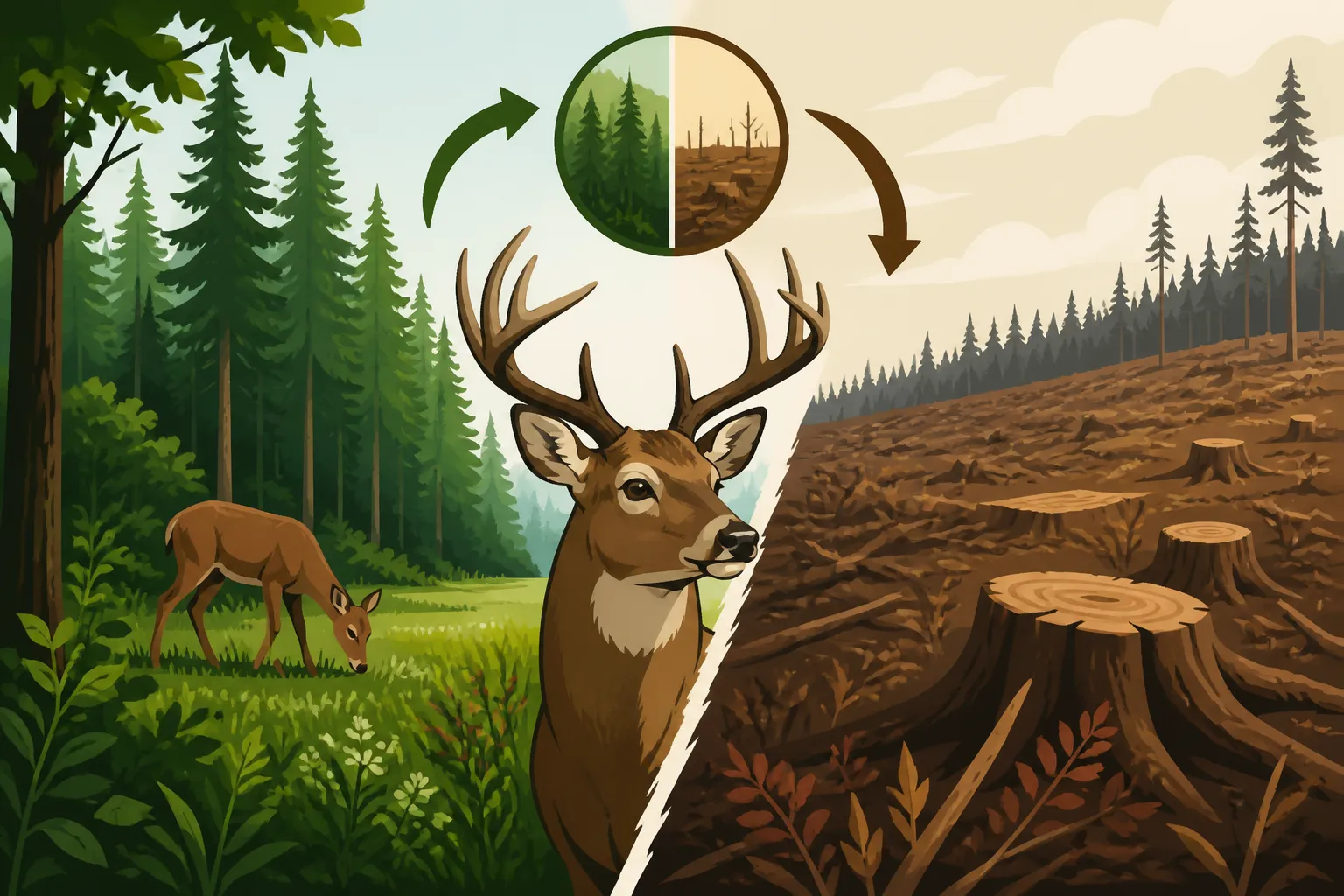
Let's be honest, when you first see a fresh cutblock, it can be a bit of a shock. The serene bush is suddenly loud with the roar of machinery, the crash of falling trees, and the constant movement of heavy equipment. For deer, this immediate period is undoubtedly stressful. They're sensitive creatures, and such intense disruption usually leads to temporary displacement. Deer that once called that specific area home will often move to adjacent, undisturbed cover. You might see them congregating in nearby swamps, thick stands of evergreens, or unlogged pockets of bush. It's a natural reaction to seek refuge from the perceived threat. However, this initial disturbance, while jarring, is a crucial first step in a much longer ecological process. It's the clearing of the old, making way for the new, and deer are remarkably adaptable to these shifts once the machinery pulls out.
The Post-Harvest Boom: New Growth, New Opportunities
Once the loggers leave and the dust settles, a different kind of life begins to emerge. Suddenly, sunlight, which was once filtered and scarce under a dense canopy, floods the forest floor. This influx of light, combined with disturbed soil, acts like a shot of adrenaline for dormant seeds and resilient root systems. In a remarkably short period, you'll see an explosion of growth. Different types of cuts, like clear-cuts or selective harvests, will yield different initial results, but the common theme is a rapid re-establishment of vegetation. Poplar, maple, cherry, various dogwoods, viburnums, and countless herbaceous plants, all highly palatable to deer, begin to sprout and flourish. This transformation turns a seemingly barren landscape into a vibrant, edible buffet. This stage is absolutely critical, as it provides the essential food sources that deer need to thrive, especially after a tough winter, as discussed in What Whitetails Eat Through a Hard Winter.
How Cutblocks Evolve into Prime Deer Foraging and Bedding Areas
It's truly fascinating to watch a cutblock mature. What starts as a chaotic jumble of stumps and slash quickly transforms into a haven for wildlife, particularly white-tailed deer. The key is understanding why deer are so drawn to these areas and how their needs are met by the regenerating forest.
Browse Bonanza: Why Deer are Drawn to Young Growth
One of the primary reasons deer flock to cutblocks is the sheer abundance and variety of tender browse. Mature forests, with their tall trees and shaded understories, often lack the diverse, low-growing vegetation that deer prefer. But a few years after a cut, those cutblocks are bursting with exactly that. Think about it: a young poplar stand offers countless saplings, rich in nutrients, all within easy reach. The same goes for regenerating maples, oaks, and a myriad of shrubs like beaked hazel, red-osier dogwood, and various berry bushes. This isn't just a snack bar; it's a full-on, all-you-can-eat buffet that provides the necessary protein and minerals for robust body growth and impressive antler development in bucks. This fresh growth offers a much higher nutritional value than the older, tougher browse found in mature forests. For a hunter looking for healthy deer, understanding these preferred food sources is paramount. It's like a natural deer magnet, pulling them in from surrounding areas.
Cover and Security: The Importance of Regenerating Forest
Beyond the food, regenerating cutblocks offer something equally vital: cover. As the young growth thickens, it creates incredibly dense areas that provide both thermal and hiding cover. Imagine a cold, windy November day; those tightly packed saplings and brush offer a fantastic windbreak and insulation. More importantly, this dense vegetation provides security from predators – both four-legged and two-legged. Fawns can easily disappear into the tangle, making it difficult for coyotes or wolves to spot them. For older deer, these areas become prime bedding grounds. They can bed down knowing that their outline is broken up by the thick foliage, giving them a sense of security while they rest. This combination of food and cover makes cutblocks an irresistible draw, essentially creating a deer factory where they can feed, bed, and feel safe. When you're trying to Hunting an Ontario Bush Edge, a regenerating cutblock provides excellent transition zones for deer moving between feeding and bedding.
Navigating and Hunting Deer in Ontario's Cutblocks
Hunting cutblocks effectively is a skill that takes practice and observation, but the rewards can be incredible. It's not like hunting open hardwoods or agricultural fields; it requires a different mindset and strategy. Knowing how deer use these evolving landscapes is your biggest advantage.
Reading the Stages of Regeneration
Not all cutblocks are created equal, and their appeal to deer changes dramatically over time.
- Fresh Cut (0-2 years): These are often messy, with logging slash, exposed ground, and very young sprouts. Deer will typically avoid the immediate, most disturbed areas but might browse the edges or nearby pockets of residual cover. They're more about the promise of future food than current sustenance.
- Young Growth (3-7 years): This is where it gets really interesting! The ground is now covered in dense, low-growing browse. Poplar, maple, and various shrubs are thriving, offering an abundance of food and excellent hiding cover. Deer will spend a lot of time in these areas, especially for feeding and daytime bedding. This is often the sweet spot for finding deer. Hunting a Cutover Three Years On delves into this in more detail.
- Mid-Stage (8-15 years): The trees are getting taller, and the canopy is starting to close in again. Some of the lower browse might be getting shaded out, and the thickest security cover is becoming more patchy. Deer still use these areas, but often as travel corridors or for bedding in specific dense pockets.
- Older Regeneration (15+ years): At this point, the cutblock is transitioning back into a younger forest. The trees are significant, and the browse is less abundant at ground level. Deer might still pass through or use it during specific times, but it loses some of its "deer magnet" appeal.
Understanding these stages is crucial for identifying where deer are likely to be focusing their activity. Using tools like GoHunt's satellite imagery can be incredibly helpful for pinpointing these different stages from your couch before you even step foot in the bush. Look for the distinct patches of lighter green (younger growth) compared to darker, more uniform stands of mature timber.
Strategic Hunting Approaches for Cutovers
Hunting cutblocks can be challenging because of the dense visibility, but it can also be incredibly rewarding because deer are often concentrated there. Still-hunting is a fantastic technique for these areas. Move incredibly slowly, pausing often, and scrutinize every patch of cover. Deer often bed just inside the thickest parts, relying on their camouflage and the dense foliage for concealment. You're less likely to spot a whole deer and more likely to see a horizontal line, an ear flick, or the curve of a back.
When considering stand placement, focus on the edges where the cutblock meets mature timber, swamps, or existing travel corridors. These transition zones are natural funnels where deer move between feeding and bedding areas. A well-placed stand on a ridge overlooking a regenerating cutblock, especially one with a good wind, can be deadly. Pay close attention to wind direction, as deer will often circle downwind to scent-check an area before entering it. In areas of very thick new growth, deer runs can be extremely subtle, sometimes just tunnels through the brush. Spotting these small trails and setting up near them can be key. For successful hunts, especially during the peak rut, understanding Hunting the Rut in Early to Mid November and its implications for deer movement through such diverse habitats is vital.
The Long-Term Ecological Balance and Management
The relationship between logging and deer habitat isn't just about what happens in the short and mid-term; it's also about a broader, long-term ecological balance. Good forest management practices are designed to consider wildlife needs, creating a mosaic of habitats across the landscape.
Sustainable Forestry and Deer Management
In Ontario, responsible forestry isn't just about harvesting timber; it's about managing the forest for its overall health and biodiversity, and that includes deer. Forest managers often plan cuts with wildlife in mind, ensuring a mix of age classes and types of habitat. For example, leaving unharvested buffers along waterways or creating smaller, staggered cutblocks rather than vast clear-cuts can provide continuous cover and minimize disruption. Wildlife biologists play a crucial role in advising on these plans, ensuring that the logging benefits species like deer. A well-managed forest, with a healthy rotation of cuts, can support a higher deer density over the long run by consistently providing that vital young growth for browse and cover. This careful planning is part of what helps Why Ontario Deer Numbers Swing in a more positive direction. Using tools like GoHunt can help you understand these management efforts by showing property boundaries and satellite imagery that reveals different forest stand types.
Challenges and Considerations for Hunters
While cutblocks offer fantastic hunting opportunities, they also present unique challenges. Access can be tricky; old logging roads might become overgrown, or new ones might be created, changing the landscape dramatically from year to year. It's crucial to consult updated maps, like those available through Scouting With Satellite Imagery in Ontario, and understand the specific rules for Hunting Ontario's Crown Land where many of these operations occur. Always be aware of active logging operations; safety is paramount, and you should never enter an active cutblock without permission and proper safety protocols.
Furthermore, while logging opens new areas, it can also concentrate hunting pressure. Be prepared to walk further or hunt smarter if you're in an accessible cutblock during a popular season. Respecting private land boundaries, which are often adjacent to Crown land logging, is also essential. Always know your Ontario's Wildlife Management Units and the specific regulations that apply to them. Ultimately, understanding how these areas are managed and how deer utilize them will make you a more adaptable and successful hunter in the ever-changing Ontario wilderness.
Summary of Cutblock Stages and Deer Use
To help put it all together, here's a quick overview of how deer interact with cutblocks at different stages:
| Cutblock Stage | Typical Appearance | Primary Deer Use | Hunting Considerations |
|---|---|---|---|
| 0-2 Years (Fresh) | Stumps, slash, disturbed ground, tiny sprouts | Edges for security, occasional browsing | High disturbance, low deer concentration in the core, scout adjacent areas. |
| 3-7 Years (Young) | Dense, low-growing shrubs and saplings (2-8 ft tall) | Primary feeding and bedding areas, high use | Excellent for still-hunting, stand placement on edges, look for subtle trails. |
| 8-15 Years (Mid) | Trees growing taller, canopy closing, less ground browse | Travel corridors, secondary bedding areas, browsing specific pockets | Deer still present but more dispersed, focus on transition zones and thicker remnants. |
| 15+ Years (Older) | Young forest, canopy largely closed, limited low browse | Travel routes, occasional cover | Less attractive for primary deer habitat, focus on connections to younger cuts or food sources. |
Disclaimer
This article is for general informational purposes only and does not constitute professional advice. Laws, prices and regulations vary by location and change over time. Consult a qualified professional for guidance on your specific situation.