How Turkeys Were Brought Back to Ontario
It's hard to imagine the Ontario landscape without the resounding gobble of a wild turkey echoing through the spring woods, or spotting a strutting tom across a field. Yet, for many decades, these magnificent birds were completely absent from our province. This guide is dedicated to explaining the incredible journey and dedicated efforts that brought wild turkeys back to Ontario, a true testament to conservation success.
The Silence of the Woods: Why Turkeys Vanished
For generations, the sight and sound of wild turkeys were simply gone from Ontario. This wasn't some sudden, mysterious disappearance; it was a slow, heartbreaking decline driven by a combination of factors that, in hindsight, seem almost inevitable given the era. Understanding this loss is crucial to appreciating the monumental effort it took to bring them back.
Habitat Destruction and Early Settlement
The arrival of European settlers in Ontario brought with it rapid changes to the natural landscape, which had a devastating impact on wild turkey populations. These birds thrive in mature hardwood forests with a mix of open areas, rich in mast crops like acorns and beechnuts. As farms sprung up and towns expanded, vast tracts of this essential habitat were cleared for agriculture, timber, and settlement. The continuous, unbroken forest that once stretched across much of Southern Ontario was fragmented, leaving isolated pockets too small or too disturbed to support viable turkey populations. Imagine a mosaic where critical pieces of their home were simply erased, leaving them with nowhere to hide, feed, or reproduce safely.
Beyond outright clearing, changes in forest management also played a role. Traditional farming practices, even those not directly clearing land, often altered the understory and mast production vital for turkeys. The subtle shifts in forest composition, favouring certain tree species over others, further degraded their remaining homes. For a bird so reliant on specific tree nuts for winter survival, these habitat losses were a death knell.
Unregulated Hunting Pressure
While habitat loss was a major long-term factor, the immediate cause of the wild turkey's disappearance was often direct hunting pressure, particularly in the early days of settlement. Back then, there were few, if any, regulations governing hunting seasons, bag limits, or methods. Turkeys were a valuable food source, and they were hunted relentlessly, often year-round, without any thought for population sustainability. Market hunting, where birds were harvested for commercial sale, further exacerbated the problem.
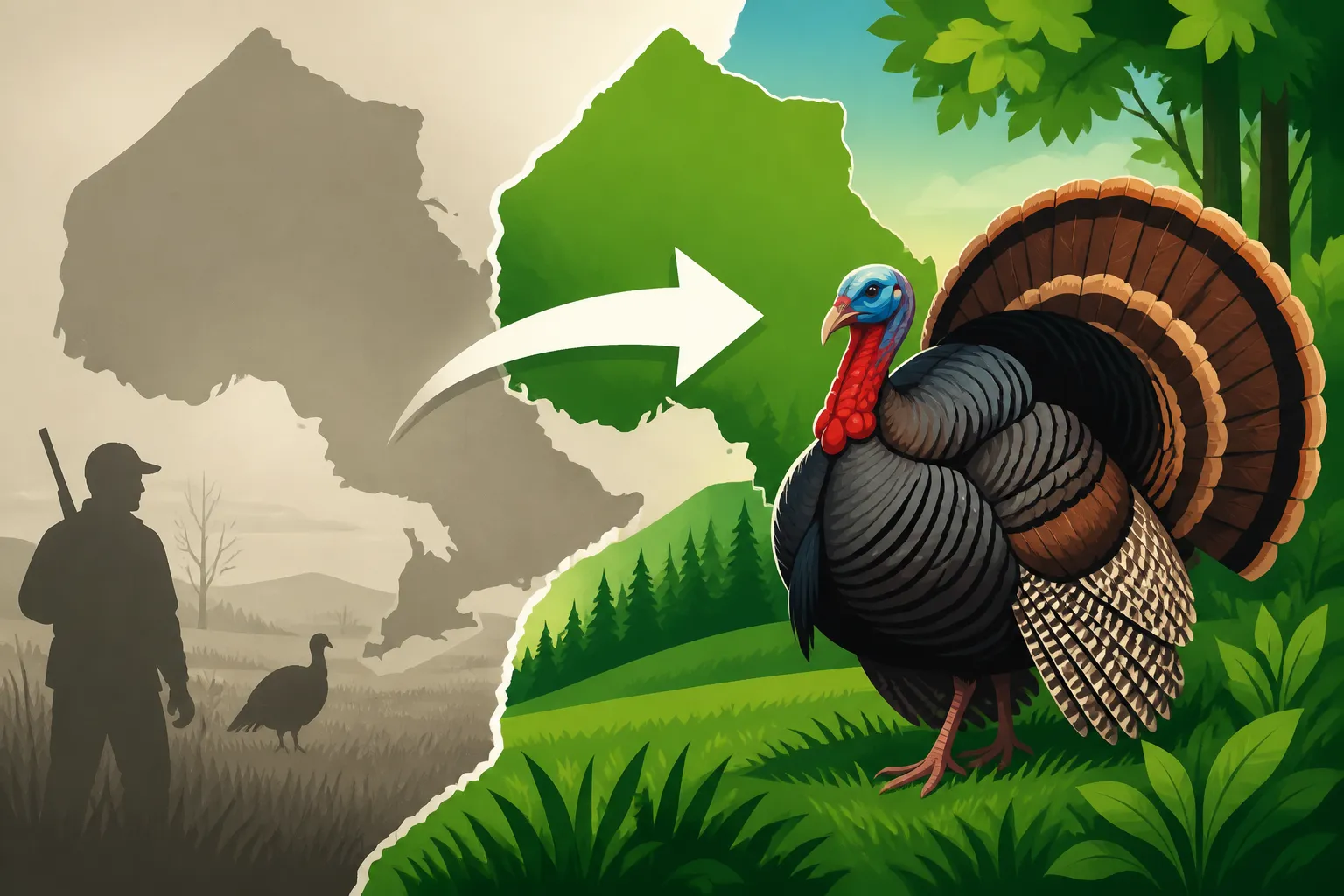
Imagine a time when you could simply walk into the woods and take as many birds as you could, whenever you wanted. With no conservation ethic or understanding of wildlife biology to guide practices, populations plummeted quickly. The sheer volume of birds taken, combined with their relatively slow reproductive rate compared to smaller game, meant they couldn't recover. By the early 1900s, wild turkeys were completely extirpated from Ontario, a grim reminder of what happens when conservation takes a backseat to immediate resource exploitation.
The Seeds of Revival: Planning the Comeback
The disappearance of wild turkeys was a stark lesson, and by the latter half of the 20th century, a growing understanding of wildlife management began to take hold. People recognized that if we wanted these magnificent birds back, it wouldn't happen on its own; it would require intentional, coordinated action.
Early Conservation Efforts and Research
Even before the active reintroduction began, there was a significant shift in thinking regarding wildlife. Conservation groups and government agencies started to emerge, advocating for sustainable practices and scientific management. Initial research focused on understanding the historical range of wild turkeys in Ontario, identifying potential suitable habitats that had since regenerated, and studying successful reintroduction models in other jurisdictions, particularly in the United States where similar declines had occurred. This groundwork was critical, providing the biological and ecological blueprints for a successful return.
Scientists meticulously studied the specific habitat requirements of wild turkeys – the ideal mix of mature hardwood forest, open fields, and proximity to water sources. They looked at mast crop availability, predator densities, and winter survival rates. This research ensured that when birds were eventually released, they would be placed in environments where they had the best possible chance to not just survive, but to thrive and reproduce. It was a painstaking process of gathering data, mapping potential release sites, and understanding the complex ecological puzzle.
Trap-and-Transfer Programs
The cornerstone of the wild turkey restoration effort was the trap-and-transfer program. This wasn't about raising turkeys in captivity and releasing them, which had largely proven ineffective in other areas. Instead, it involved trapping wild, healthy turkeys from established populations where they were abundant and then relocating them to suitable release sites in Ontario. The advantage of using wild-trapped birds is that they are already genetically adapted to survival in the wild, possess natural instincts, and are less prone to issues associated with captive breeding.
These programs required immense logistical coordination and collaboration. Often, this involved working with wildlife agencies in other states like Missouri, Iowa, and Michigan, where wild turkey populations had already recovered. Specialized rocket nets or cannon nets were used to capture flocks of birds in their home territories, which were then quickly processed, often banded, and transported in specially designed crates to waiting release sites in Ontario. Imagine the excitement and anticipation as those first crates were opened, releasing birds back into forests that hadn't heard a wild gobble in over a century. Ontario's Wild Turkey Restoration Story is truly a marvel of modern wildlife management.
The Resounding Gobble: A Story of Success
The efforts of countless individuals and organizations over many years bore fruit, leading to one of the most remarkable wildlife success stories in Ontario. The return of the wild turkey is not just a triumph for the bird itself, but for the resilience of our natural landscapes and the power of dedicated conservation.
Population Growth and Expansion
The initial trap-and-transfer releases, starting in the 1980s and continuing through the 1990s, were incredibly successful. The birds not only survived but began to reproduce, establishing new flocks. These new populations then started to expand their range, naturally colonizing adjacent suitable habitats. The carefully selected release sites, with their recovering forests and abundant food sources, proved to be ideal homes. It was a ripple effect, with each successful release contributing to a growing wild turkey footprint across the province.
The population growth wasn't always linear; there were challenges like harsh winters or localized predator pressure, but overall, the trend was overwhelmingly positive. From a handful of birds, the population exploded into the tens of thousands, eventually spreading across much of Southern and even parts of Central Ontario. This rapid expansion transformed the soundscape of our woodlands, bringing back a vibrant part of our ecological heritage. To truly appreciate this growth, consider comparing it to the initial number of birds released in each Ontario WMU group.
Here's a simplified look at the phases of turkey reintroduction and population growth in Ontario:
| Phase | Time Period | Key Activities | Population Status |
|---|---|---|---|
| Extirpation | Early 1900s | Loss of habitat, unregulated hunting | Zero wild turkeys |
| Research & Planning | 1970s – Early 1980s | Habitat assessment, studying US models | None yet, but groundwork laid |
| Initial Reintroductions | Mid-1980s – Early 1990s | First trap-and-transfer from other jurisdictions | Small, isolated populations emerging |
| Population Expansion | Mid-1990s – 2000s | Natural reproduction, spread into new areas | Significant growth, range expanding rapidly |
| Established & Huntable | 2000s – Present | Healthy, self-sustaining populations, hunting seasons | Abundant across suitable habitats, regulated hunting |
The Role of Hunter and Volunteer Support
The wild turkey comeback wasn't just a government initiative; it was a deeply collaborative effort that relied heavily on the passion and dedication of hunters and volunteers. Many local conservation groups, often comprised of avid hunters, played a critical role. They assisted with habitat improvement projects, such as planting food plots or improving forest cover around release sites. They also provided invaluable logistical support during trap-and-transfer operations, from transporting birds to helping monitor release sites.
Furthermore, these groups were instrumental in advocating for the restoration and helping to educate the public about the importance of sound wildlife management. Hunters, through their license fees, also provided crucial funding that supported many of these initiatives. When you go out into the woods today for Spring Turkey Hunting in Ontario, remember that the opportunity exists because of this collective effort. Tools like GoHunt can help you locate prime turkey habitat within these restored areas, allowing you to appreciate the fruits of their labour firsthand. Their tireless work, often unpaid, demonstrated a profound commitment to seeing wildlife flourish in Ontario again.
Turkeys Today: A Vibrant Part of Ontario's Ecosystem
Today, wild turkeys are a common and cherished part of Ontario's natural heritage. Their comeback is a testament to what's possible when science, dedication, and community effort combine for a common goal.
Modern Turkey Management and Seasons
With robust and healthy populations, wild turkeys are now managed as a sustainable game species in Ontario. This means carefully regulated hunting seasons are in place, designed to ensure the long-term health and stability of the turkey population while providing recreational opportunities for hunters. Ontario Spring Turkey Season Dates are eagerly anticipated by many, offering a chance to engage with these intelligent birds. Seasons are set based on population surveys, reproductive success, and an understanding of the birds' life cycles. These regulations include specific bag limits, allowable hunting methods, and designated hunting zones.
Conservation agencies continuously monitor turkey populations to adjust management strategies as needed. This proactive approach ensures that the success achieved through restoration continues into the future. It’s a delicate balance of providing opportunity while prioritizing the well-being of the species. For those interested in expanding their turkey hunting knowledge, resources like GoHunt often feature articles and maps detailing optimal hunting locations and strategies for different parts of the province. You can learn about everything from Calling a Gobbler Off an Ontario Roost to Decoy Placement for Pressured Ontario Gobblers.
Ecological Impact and Benefits
The return of the wild turkey has had a positive ecological impact on Ontario's ecosystems. As large ground-dwelling birds, turkeys play a role in seed dispersal, helping to propagate various plant species. Their foraging habits, which involve scratching through leaf litter for insects, seeds, and nuts, can help aerate soil and influence invertebrate populations. They are also a prey species for various predators, contributing to the broader food web.
Beyond their direct ecological roles, turkeys have brought an undeniable aesthetic and recreational benefit. Birdwatchers, hikers, and nature enthusiasts cherish the opportunity to observe them. For hunters, they represent a challenging and rewarding pursuit, connecting them directly to the land and the history of conservation. The wild turkey's return is a symbol of environmental recovery and a powerful reminder of the importance of protecting and restoring our natural world. While we celebrate their presence, we must also remember Why Deep Snow Limits Turkey Range and how crucial ongoing habitat protection is for their continued success.
The Future of Ontario's Wild Turkeys
The story of the wild turkey in Ontario is far from over. Ongoing management, habitat preservation, and careful monitoring will be essential to ensure their continued prosperity. As environmental conditions shift, and human populations continue to grow, new challenges may arise. However, the lessons learned from their incredible comeback provide a strong foundation for future conservation efforts.
Community involvement, scientific research, and responsible hunting practices will remain key pillars in safeguarding the wild turkey population. The passion that brought them back must continue to protect them. The vibrant gobble that now fills our spring woods is a melody of success, a reminder of what we can achieve when we commit to restoring and cherishing our natural heritage. So next time you're out in the bush, take a moment to appreciate these magnificent birds – they are living proof of what conservation can accomplish.
Disclaimer
This article is for general informational purposes only and does not constitute professional advice. Laws, prices and regulations vary by location and change over time. Consult a qualified professional for guidance on your specific situation.