Why the Elk Restoration Took Decades
If you're an Ontario hunter today, seeing a majestic elk stride through a forest clearing or hearing a bull bugle across a valley might seem like a natural part of our province's wildlife heritage. But what many don't realize is that these magnificent animals were once completely gone from Ontario, and bringing them back was a monumental, multi-decade undertaking filled with challenges. This guide will take you through the incredible journey of elk restoration in Ontario, revealing why it wasn't a quick fix, but rather a testament to perseverance, science, and the dedication of countless individuals.
The Echoes of a Vanished Past: Why Elk Disappeared from Ontario
It's hard to imagine now, but the vast landscapes of what we call Ontario were once home to thriving populations of elk. These weren't just a few scattered animals; they were an integral part of the ecosystem, much like moose and deer are today. Their presence shaped the forests and provided sustenance for Indigenous communities and early European settlers.
Historical Abundance and the Dawn of Extinction
Elk, specifically the Eastern elk subspecies, roamed Ontario for thousands of years, primarily in the southern and central regions where mixed forests and open lands provided ideal habitat. They were large, powerful animals, perfectly adapted to the varied terrain and seasons. Historical records and archaeological finds paint a picture of a species that was widespread, though perhaps not as numerous as some other cervids.
However, the arrival of European settlers brought profound changes to the landscape and wildlife populations. As agriculture expanded and settlements grew, the elk's natural habitat began to shrink and fragment. Their large size and delicious meat also made them highly sought after by hunters, and in an era before wildlife management or regulated seasons, hunting pressure became immense. It was a perfect storm of factors that rapidly pushed the species towards its demise in the province.
The Pressures of a Developing Frontier
The rapid expansion of logging operations in the 18th and 19th centuries further devastated elk habitat. Vast tracts of old-growth forest were cleared, removing both food sources and critical cover for these animals. Farmers often viewed elk as competitors for forage or potential threats to crops, leading to further persecution. This relentless pressure, combined with the lack of understanding about wildlife population dynamics, meant that elk had little chance of survival.
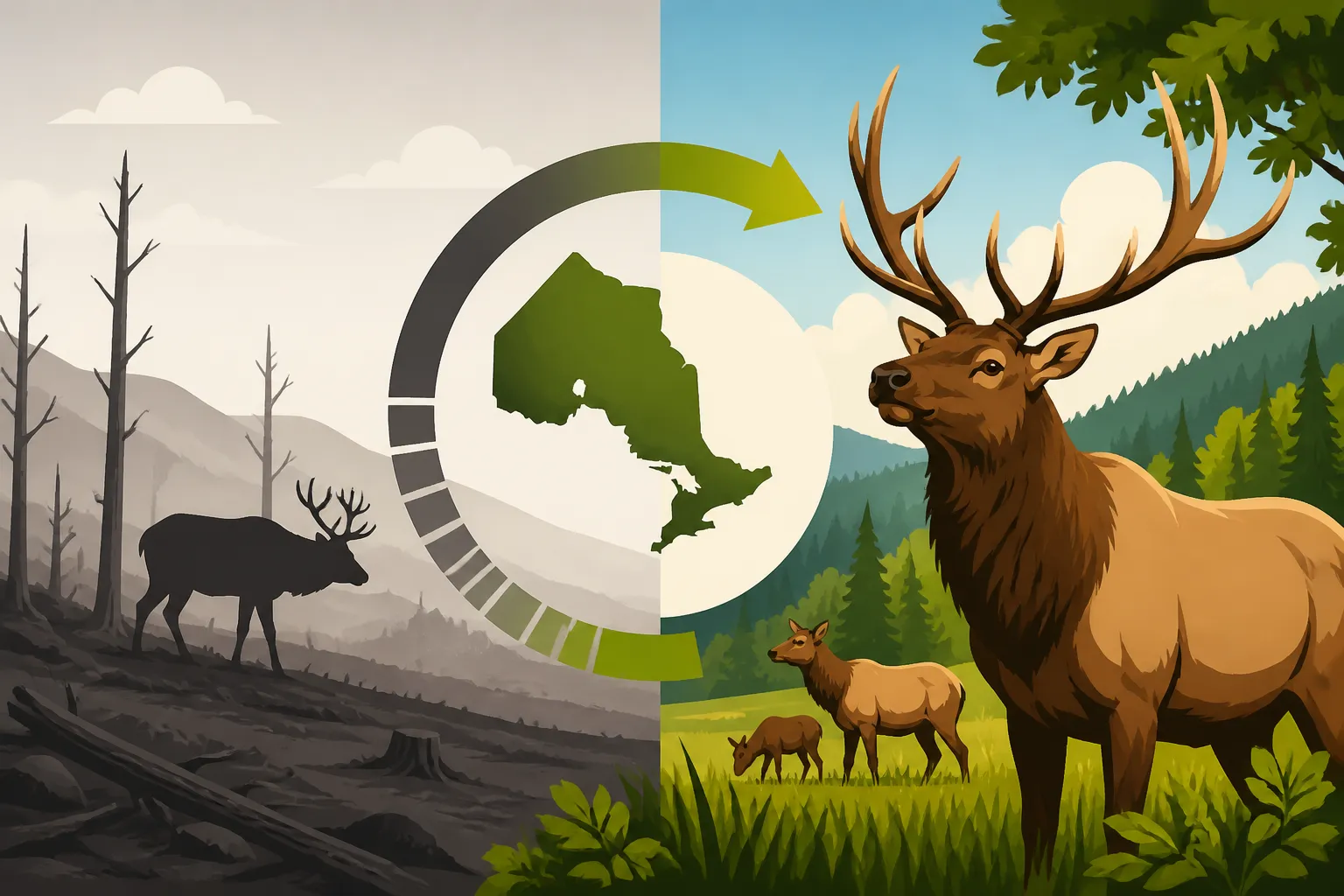
By the late 1800s, the writing was on the wall. Sightings became incredibly rare, and by the turn of the 20th century, the Eastern elk was considered extirpated from Ontario – completely wiped out. It was a sobering loss, one that left a significant void in the province's biodiversity and a missing piece in the historical tapestry of its wilderness. For generations of Ontarians, the majestic elk became a creature of legend, confined to old photographs and natural history books, a clear example of how quickly even robust wildlife populations can vanish without thoughtful management.
Failed Early Attempts: Learning the Hard Way
Interestingly, the idea of bringing elk back to Ontario isn't entirely new. There were some scattered attempts at reintroduction in the early to mid-20th century. These efforts, however, were largely uncoordinated, often based on good intentions rather than sound ecological science. Sometimes, elk were sourced from zoos or other areas without proper health screening, leading to disease issues.
The biggest challenge, though, was a lack of understanding of what elk truly needed to thrive. Release sites weren't always chosen with long-term habitat suitability in mind. Without proper follow-up, monitoring, and comprehensive management plans, these initial attempts often resulted in the released elk dispersing widely, failing to establish stable breeding populations, or succumbing to various pressures. These early failures, while disheartening at the time, were invaluable. They taught conservationists that simply dropping animals into the bush wasn't enough; a robust, long-term, and scientifically-backed strategy was absolutely essential.
Forging a New Future: The Blueprint for Modern Restoration
The hard lessons learned from past failures set the stage for a new, determined effort to bring elk back to Ontario. This time, the approach was going to be different, founded on scientific principles, extensive planning, and collaborative partnerships. It was clear that success would require more than just enthusiasm; it would demand meticulous execution and a commitment spanning decades.
The Power of Partnership and Scientific Rigor
The modern elk restoration initiative, primarily spearheaded by the Ontario Ministry of Natural Resources and Forestry (MNRF), gained significant momentum in the late 1990s and early 2000s. This wasn't a solo effort. It involved critical partnerships with conservation organizations like the Rocky Mountain Elk Foundation, local community groups, Indigenous communities, and a wide array of volunteers. These collaborations were vital for securing funding, generating public support, and providing on-the-ground assistance.
Crucially, the entire strategy was built on scientific research. Extensive studies were conducted to identify suitable habitats, analyze potential food sources, assess predator populations, and understand the social carrying capacity – meaning, how many elk the landscape (and local human communities) could realistically support without undue conflict. This scientific rigor, a stark contrast to earlier efforts, ensured that every decision was data-driven and aimed at long-term sustainability. For instance, detailed mapping and analysis, much like what a hunter might do to find prime spots using a tool like GoHunt for other species, was undertaken on a grand scale to pinpoint the best release zones for these new elk. We see the impressive outcome today in Ontario's Restored Elk Herd.
The Quest for Healthy, Genetically Sound Stock
One of the most significant hurdles was finding healthy, genetically diverse elk to reintroduce. You can't just pluck elk from anywhere and expect them to thrive. The goal was to source animals that were as close as possible to the historical Eastern elk in terms of genetics and that were accustomed to a similar boreal or mixed-forest environment. This meant looking to other provinces and states that had healthy, robust elk populations.
The primary source for Ontario's modern reintroduction came from Alberta and later from other western Canadian provinces. However, moving large, wild animals across thousands of kilometres is no small feat. It involved careful capture techniques, meticulous health screening for diseases like CWD (Chronic Wasting Disease) – a critical concern, as highlighted in discussions around What CWD Means for Ontario Deer – and often a quarantine period to ensure no pathogens were introduced to Ontario's existing wildlife. This wasn't just about moving animals; it was about protecting entire ecosystems, and these stringent protocols added layers of complexity and time to the process.
Overcoming Logistics: From Capture to Release
Imagine the logistical nightmare: coordinating teams of wildlife biologists, veterinarians, and transport specialists across vast distances. Elk had to be safely captured, often using specialized techniques like helicopter netting, then tranquilized, examined, tagged, and loaded into custom-built transportation trailers. These trailers were designed to minimize stress on the animals during the long journey back to Ontario.
Once in Ontario, the elk weren't just let go. They were typically held in large, temporary enclosures at the release sites for a period of acclimatization. This allowed them to recover from the stress of transport, get accustomed to their new surroundings, and bond somewhat as a herd before their final release into the wild. Each release was a carefully managed event, designed to give the elk the best possible start. From the initial planning to the final opening of the gates, each step was executed with precision, underscoring How Elk Came Back to Ontario through sheer effort and coordination.
The Gauntlet of Survival: Establishing Self-Sustaining Herds
Even after successful release, the journey was far from over. The real test began as these new populations navigated Ontario's wilderness, facing challenges that would determine whether the decades of effort would truly pay off. This stage demanded constant vigilance, adaptive management, and an understanding of the intricate dance between nature and human intervention.
Dispersal, Predators, and the Rhythms of Nature
Once released, elk have a natural tendency to explore, often dispersing widely from their initial release sites. This is a normal behaviour, but for small, nascent herds, it can make monitoring difficult and expose individuals to greater risks. Wildlife biologists used tracking collars, often with GPS capabilities, to monitor the elk's movements, survival rates, and reproductive success. This telemetry data was invaluable for understanding how the elk were adapting to their new home, as any experienced hunter knows the importance of Reading Sign After a Fresh Snow to understand animal movements.
Predation from wolves and black bears was another significant factor. While natural, and a sign of a healthy ecosystem, it could put a dent in small, vulnerable populations. Discussions often revolved around the balance of predator-prey dynamics, especially considering the presence of the What the Algonquin Wolf Actually Is in some areas and robust populations of Black Bears Across Ontario's Bush Country. The goal wasn't to eliminate predators, but to ensure the elk populations could grow robust enough to withstand these natural pressures, which takes considerable time for a slow-reproducing species like elk.
Navigating Human-Wildlife Coexistence
Bringing back a large species like elk also meant re-educating the public and managing potential human-wildlife conflicts. Farmers naturally worried about crop damage, while drivers had concerns about increased collisions with these large animals. Successful restoration wasn't just about the elk; it was about ensuring that local communities could coexist peacefully with them.
This involved extensive public education campaigns, working directly with landowners to address concerns, and implementing strategies to mitigate conflicts. It's a continuous process, as evidenced by ongoing efforts to ensure a harmonious relationship between wildlife and people. These community relations played a pivotal role in the long-term success of the project, demonstrating that conservation needs both biological science and social science to truly thrive. Hunters often rely on tools like GoHunt for land access information, but for the provincial government, managing access and coexistence on such a large scale is a complex ballet.
The Long-Term Commitment of Monitoring and Management
The restoration project wasn't a "set it and forget it" scenario. It required a sustained, long-term commitment to monitoring and adaptive management. Biologists continued to track herd health, assess calf survival, and monitor habitat conditions. If certain areas proved less suitable or if specific threats emerged, management strategies had to be adjusted.
This continuous oversight allowed conservationists to respond to challenges, refine their approach, and ensure the herds were on a path to self-sufficiency. It's a similar dedication seen in the ongoing management of other large game species, much like What Ontario Is Doing for Moose to address their own population dynamics and challenges. This unwavering commitment, year after year, was absolutely crucial in transforming a small number of reintroduced elk into the established populations we have today in places like the Bancroft-North Hastings area, which is now famously Where Ontario's Elk Herd Lives.
The Fruits of Persistence: A Legacy for Ontario Hunters and Wildlife
The decades of hard work, scientific dedication, and community collaboration have paid off in spectacular fashion. Today, Ontario's elk herds are a testament to what can be achieved with a long-term vision, providing ecological benefits and unique opportunities for hunters and wildlife enthusiasts alike.
The Evolution of Hunting Opportunities
For many hunters, the ultimate goal of elk restoration was the return of a big-game hunting opportunity that had been lost for over a century. However, this wasn't a hasty decision. The introduction of elk hunting seasons was carefully phased in, only occurring once populations were robust and self-sustaining enough to support limited harvest without jeopardizing their growth. This deliberate approach ensured that the ecological gains were not quickly undone by overhunting.
Today, elk hunting in Ontario is an extremely regulated and highly coveted experience. It operates on a draw system, emphasizing conservation and fair chase. Hunters who are lucky enough to draw a tag embark on an incredible adventure, often requiring extensive scouting and preparation. Knowing how to maximize your odds and what to do if you're successful is a big part of the planning, as highlighted in posts like Hunting a Drawn Ontario Elk Tag and understanding the specifics of Ontario's Resident-Only Elk Draw. It’s a privilege that underscores the success of the restoration.
Economic and Ecological Benefits
Beyond the hunting opportunities, the presence of elk brings significant ecological and economic benefits to the province. Ecologically, elk are large herbivores that play a role in shaping forest structure and vegetation, contributing to a more diverse and resilient ecosystem. They are a keystone species, influencing everything from plant growth to nutrient cycling, and their return helps restore a piece of Ontario's natural heritage.
Economically, the elk herds have become an attraction for wildlife viewers and photographers, drawing tourism to the regions where they reside. Hunting, though limited, also contributes to local economies through guide services, accommodations, and outfitting expenses. These benefits extend to communities near the elk range, providing a tangible return on the long-term investment in their restoration.
The Enduring Lesson of Patience and Conservation
The story of elk restoration in Ontario is a powerful lesson in conservation. It demonstrates that reversing past environmental mistakes is possible, but it requires immense patience, sustained effort, scientific understanding, and broad collaboration. It's not a quick fix, but a marathon that spans generations. It reminds us that wildlife management is a dynamic process, constantly adapting to new information and challenges.
The reintroduction of elk stands as a shining example of successful wildlife management and a point of pride for Ontarians. It shows what can be accomplished when people come together with a shared vision to heal and restore our natural world. For hunters, it's a profound reminder of the privilege of pursuing game, and the importance of supporting conservation efforts that ensure future generations will also have the chance to experience the wild beauty and challenge of Elk Hunting Ontario's Bancroft Herd.
Disclaimer
This article is for general informational purposes only and does not constitute professional advice. Laws, prices and regulations vary by location and change over time. Consult a qualified professional for guidance on your specific situation.