Getting a Non-Resident Export Permit
Congratulations on a successful hunting adventure in Ontario! Bringing your hard-earned game back home to your family and friends across the border can feel like navigating a dense cedar swamp without a compass. It’s an exciting time, but the paperwork can quickly turn that excitement into frustration. This comprehensive guide is here to demystify the process of obtaining an Ontario Non-Resident Export Permit, ensuring your prized meat and trophies cross the international border smoothly and legally, so you can focus on reliving those incredible moments.
Understanding the Need for an Export Permit
For non-residents, Ontario isn't just a place to hunt; it's a place where regulations are in place to manage its wildlife resources effectively. These rules extend to what you can and cannot take out of the province, and in what manner. Trying to cross the border without the proper documentation for your game can lead to serious headaches, delays, and even forfeiture of your harvest. It's not just about getting past a border agent; it's about respecting the province's wildlife management efforts.
Why Non-Residents Need One
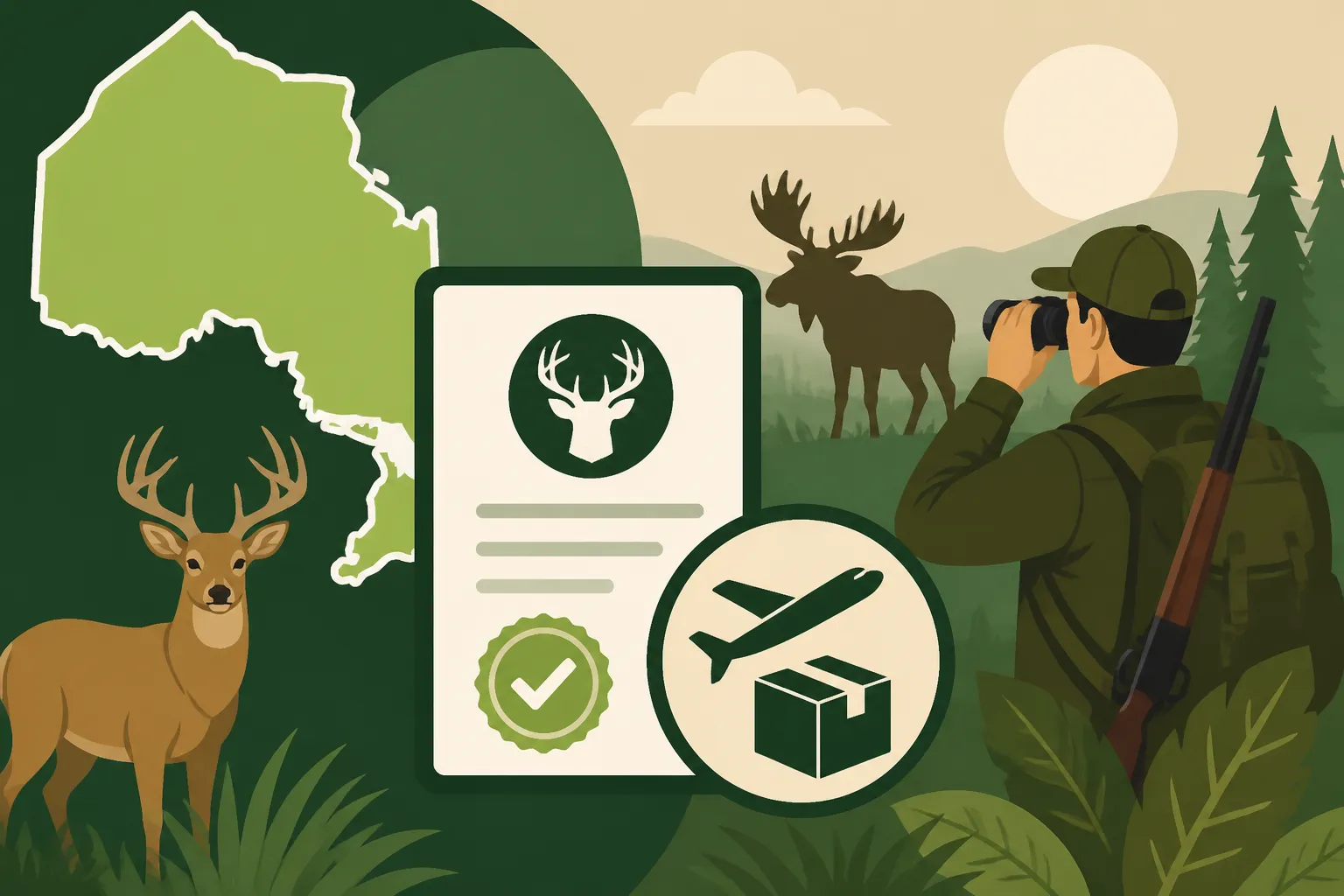
Simply put, if you’re a non-resident and you’ve harvested game in Ontario, you must have an Export Permit to legally take that game out of Canada. This isn't just an Ontario regulation; it's part of a larger framework that ensures legal trade and prevents poaching or the illegal movement of wildlife. Think of it as a passport for your deer, moose, or bear. Without it, Canadian customs officials and your own country's border agencies (like the U.S. Fish and Wildlife Service or USDA) have no way of verifying that your game was legally harvested.
Many hunters assume their valid hunting licence and tags are enough, but that’s where folks often run into trouble. While those documents prove you legally harvested the animal, the Export Permit proves you have permission to remove it from the country. This distinction is crucial. Imagine getting to the border after an amazing Moose Hunting Ontario's Northern Bush trip, only to be told your moose quarters can't cross. It's a devastating scenario that's entirely avoidable with proper planning. The permit serves as a critical link in the chain of custody, verifying that your game was taken according to all provincial laws and is now eligible for export.
What the Permit Covers and Doesn't Cover
The Ontario Non-Resident Export Permit specifically allows you to take legally harvested game animals (or parts thereof, like meat, hides, and antlers) out of Ontario and Canada. This includes species like white-tailed deer, moose, black bear, and certain small game and birds, depending on your licence and what you've harvested. It's designed to cover your personal harvest, not commercial trade.
However, it's important to understand its limitations. This permit does not exempt you from the import regulations of your home country. For example, if you're returning to the United States, you'll still need to comply with U.S. Fish and Wildlife Service (USFWS) and U.S. Customs and Border Protection (CBP) requirements. This might include a declaration form (like the USFWS Form 3-177) and potential inspection, especially for certain species or if you're bringing in parts that could carry disease. For instance, some states have specific rules about bringing in deer parts due to concerns about Chronic Wasting Disease (CWD), even if Ontario is CWD-free. It's always your responsibility to check both Canadian export rules and your home country's import rules for Taking Meat and Antlers Across the Border.
Furthermore, the permit specifically relates to legally hunted game. It doesn't cover live animals, nor does it cover any species listed under the Convention on International Trade in Endangered Species of Wild Fauna and Flora (CITES) without additional, specialized CITES permits. While most common game animals in Ontario aren't CITES-listed, species like wolves or certain furbearers might have additional requirements, so always verify if you're unsure. The permit essentially provides the Canadian government's blessing to export your game, but it doesn't give you a free pass through your own country's customs.
The Application Process for Your Export Permit
Getting your Non-Resident Export Permit is generally a straightforward process, but it requires attention to detail and a good understanding of what information you'll need at hand. Don't leave this to the last minute; it's far easier to handle while you're still in Ontario or at least well before you attempt to cross the border.
Where to Obtain the Permit
The good news is that obtaining an Ontario Non-Resident Export Permit is quite accessible. Most often, you'll secure this permit from a local Ministry of Natural Resources and Forestry (MNRF) office. These offices are scattered across the province, and it's a good idea to know the location of the nearest one to your hunting area, especially if you're heading to more remote regions like those you might find during a Black Bear Hunting in Ontario expedition. You can find a list of MNRF offices on the Ontario government website.
Many licensed outfitters who host non-resident hunters also have the authority to issue these permits directly. If you've booked a guided hunt, such as a Booking an Ontario Moose Hunt or bear hunt, your outfitter will often take care of this as part of their service package. This is a huge convenience and something you should confirm with your outfitter beforehand. They'll have all the necessary forms and knowledge of the process, making your life much easier, especially after a long, successful hunt. Don't be afraid to ask them about this when you're planning your trip or at the beginning of your stay.
Required Documentation and Information
To successfully apply for your Non-Resident Export Permit, you'll need to present several key pieces of documentation and information. It’s imperative to have these organized and easily accessible.
Here’s a breakdown of what you'll typically need:
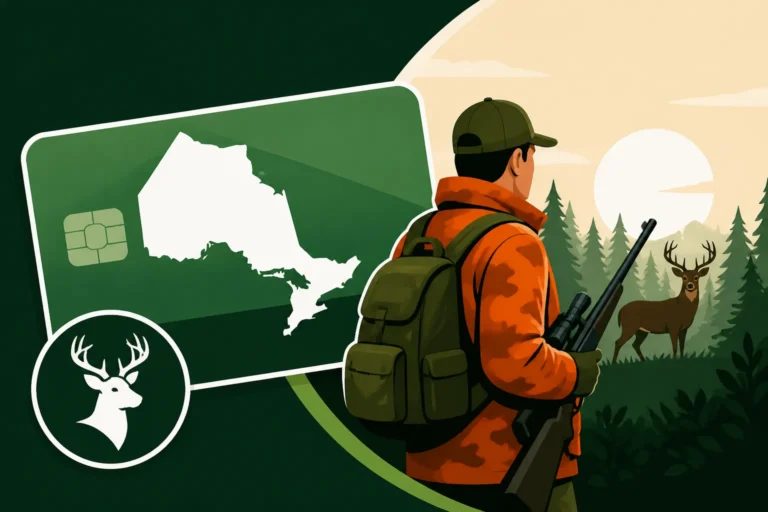
- Your Valid Outdoors Card: This is your core identification as a hunter in Ontario. If you're a non-resident, you'll have obtained one when you bought your Ontario Non-Resident Licence Options.
- Your Valid Non-Resident Hunting Licence: This proves your legal right to hunt in Ontario.
- Your Game Tag(s) for the Harvested Animal: This includes the specific tag(s) you notched and affixed to your animal immediately after harvest. This tag proves that you had the legal right to harvest that particular animal.
- Proof of Harvest Report: In Ontario, all hunters are required to report their harvest. Whether you reported online or by phone, you'll receive a confirmation number. This number is critical for your export permit application. Make sure you've completed your harvest report accurately and have the confirmation readily available.
- Evidence of Sex (if applicable): For some species, and depending on the specific tag, you might need to present evidence of the animal's sex. For instance, if you had an antlered moose tag, the antlers themselves serve as evidence. If you had an antlerless tag, ensuring the carcass shows definitive proof of sex (e.g., mammary glands for a cow moose) is important until you pass inspection.
- Personal Identification: A valid passport or other government-issued ID is usually required to confirm your identity as the permit applicant.
- Detailed Harvest Information: You’ll need to provide specifics about your hunt, including:
- The species of animal harvested (e.g., white-tailed deer, black bear, moose).
- The exact date of harvest.
- The Wildlife Management Unit (WMU) where the animal was harvested. Tools like GoHunt can be invaluable here for accurately pinpointing locations if you've marked your harvest site digitally.
- The specific parts of the animal you intend to export (e.g., meat, hide, skull, antlers).
It's a good practice to keep all these documents together in a waterproof folder throughout your hunt. Losing any of these items could jeopardize your ability to obtain the permit and, consequently, take your game home.
Timing Your Application
The best time to apply for your Non-Resident Export Permit is after you’ve harvested your animal and completed your mandatory harvest report, but before you start packing up to leave Ontario. Ideally, you want to get this done as soon as practical.
If you’re working with an outfitter, they will typically handle this for you a day or two before your departure. They understand the logistics and the importance of having everything in order. If you’re hunting independently, make sure you factor in time to visit an MNRF office during their operating hours. Weekends or holidays might mean offices are closed, so plan accordingly to avoid last-minute rushes or delays.
Consider this scenario: You've just wrapped up an incredible week, perhaps Rifle Hunting Ontario's Deer Season in a remote WMU. You've got your buck quartered and cooled, and you're ready to hit the road. If you didn't plan for a stop at an MNRF office, you could find yourself hours away from the nearest one, potentially delaying your trip or forcing you to make an inconvenient detour. Early planning makes for a much smoother exit.
Navigating the Border with Your Game
Getting the permit is one hurdle; crossing the border with your precious cargo is another. While the Export Permit is crucial, it’s just one piece of the puzzle when you're preparing to cross back into your home country.
Customs and Inspection Procedures
When you arrive at the border crossing, whether it's by vehicle or other means, you will need to declare all game and game products you are transporting. This is not the time to be vague or try to hide anything. Border agents are trained to spot discrepancies and omissions, and honesty is always the best policy.
Here’s a general rundown of what to expect:
- Canadian Exit: You’ll first deal with Canadian Customs. Present your Non-Resident Export Permit along with any other required documentation. They will verify your permit and ensure everything is in order for the game to leave Canada. This is usually a quick process if all your paperwork is correct.
- U.S. Entry (or other home country): Next, you’ll proceed to your home country's customs (e.g., U.S. Customs and Border Protection, CBP). Here, you will declare your game. You'll need:
- Your Ontario Non-Resident Export Permit: This shows the game was legally exported from Canada.
- Your hunting licences and tags: These further substantiate the legal harvest.
- USFWS Form 3-177 (if applicable): If you're entering the U.S. with specific wildlife (especially migratory birds or certain mammals), you might need to declare them on this form. It's often required for species like black bears. Check the USFWS website or call ahead to verify for your specific harvest.
- Evidence of Sex: Keep proof of sex (e.g., antlered head, specific carcass parts) with the animal until you've cleared customs, as agents may request to verify.
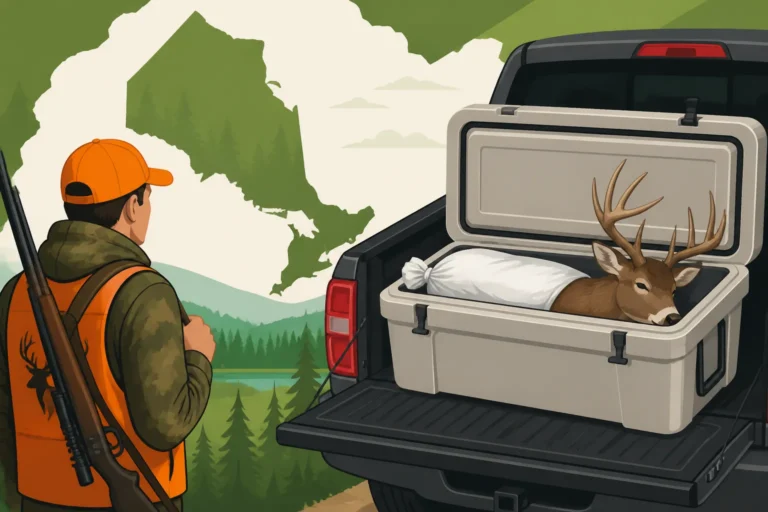
- Meat Packaging: Ensure your meat is properly packaged for transport. It should be clean, in sealed containers or bags, and ideally labelled by species. Border agents will be looking for cleanliness and adherence to health standards. For more information on this, check out our guide on Transporting Game Meat in Ontario.
Prepare for the possibility of an inspection. Customs agents may want to visually inspect your meat, skull, or antlers. Ensure everything is easily accessible, especially if you have packed it deep in a cooler or truck bed. Cooperation and courtesy go a long way in ensuring a smooth process. They're just doing their job, ensuring the integrity of wildlife management and public health.
Additional Considerations for Antlers, Hides, and Meat
Beyond the permit itself, there are specific practical considerations for different parts of your harvest.
Meat:
The primary concern for meat is usually health and disease prevention. The USDA (for U.S. entry) has regulations on bringing in game meat. Generally, deboned, clean meat from legally harvested animals is allowed. However, rules can change, especially regarding concerns like CWD. It's often recommended to debone all meat to minimize the risk of issues, as spinal cord or brain tissue can be problematic. Ensure your meat is frozen solid or kept on ice in coolers to maintain proper temperature during transport. Many hunting camps offer Ontario Meat Processing and Cold Storage options, which can be a lifesaver for ensuring your meat is professionally handled and ready for transport.
Antlers and Skulls:
If you're bringing back antlers (on a skull plate or full skull) or an entire skull for a European mount or taxidermy, ensure they are clean. This means no brain matter, no tissue, and no dirt. Skulls should be thoroughly cleaned and often bleached to prevent any biological material from crossing the border. A dirty skull or skull plate can easily be denied entry. Some hunters opt to have their skulls professionally cleaned by an Ontario taxidermist to avoid any issues. If you're looking into Shipping a Cape and Antlers Costs to have a professional handle it, discuss this option with your outfitter or a local taxidermist.
Hides and Capes:
Raw hides and capes (especially for bear or moose) are generally permissible, but they must be properly preserved. This usually means frozen solid or thoroughly salted. A hide that is just rolled up and starting to decompose will almost certainly be denied entry. If you plan to have a taxidermist across the border work on your trophy, ensure your cape is expertly fleshed, salted, and folded for transport. Again, professional services in Ontario can help ensure your cape is export-ready.
Here’s a helpful table summarizing key items for border crossing:
| Item/Part | Requirement for Export Permit Application | Requirement for Border Crossing (U.S.) | Notes |
|---|---|---|---|
| Outdoors Card | Required | Recommended (proof of legal harvest) | Your fundamental Ontario hunting ID. |
| Hunting Licence | Required | Required (proof of legal harvest) | Must be valid for the species and season. |
| Game Tag(s) | Required | Required (affixed to animal) | Proof of specific animal entitlement. |
| Harvest Report # | Required | Recommended (verification) | Essential for the Export Permit, shows compliance with reporting. |
| Export Permit | (The application itself) | REQUIRED (for all game parts) | The critical document for legal export. |
| Personal ID | Required (e.g., Passport) | Required | Standard identification for international travel. |
| Meat | Declare intent to export | Deboned, clean, properly packaged, frozen/chilled | Deboning is highly recommended; check for CWD-related restrictions by state. |
| Antlers/Skulls | Declare intent to export | Clean (no tissue/brain matter) | Thoroughly cleaned prevents biological material issues. |
| Hides/Capes | Declare intent to export | Frozen solid or thoroughly salted | Proper preservation is non-negotiable for raw hides. |
| USFWS Form 3-177 | Not applicable | Required for certain species (e.g., bear) | Pre-fill if possible; check USFWS for specifics on your harvested species. |
| Firearms | Not applicable | The Non-Resident Firearm Declaration | Separate process; ensure all firearms are declared and properly stored. If you're bringing a gun, ensure you understand Bringing Firearms Into Ontario rules. |
Common Pitfalls and Pro Tips
Even with all the information, it's easy to overlook small details that can cause big headaches. Learning from common mistakes can save you a lot of grief.
Avoiding Delays and Denials
The biggest pitfall is simply being unprepared. Many hunters underestimate the importance of the Export Permit and the various border requirements.
- Don't Assume Your Outfitter Handles Everything: While many excellent outfitters will assist you, always confirm their role. Don't just assume. Ask explicitly: "Will you be obtaining the Non-Resident Export Permit for my harvest?" and "What do I need to provide you for it?"
- Complete Your Harvest Report Immediately: Waiting until the last minute or forgetting to report your harvest is a surefire way to get denied an Export Permit. The confirmation number is tied to your legal harvest.
- Cleanliness is Paramount: As mentioned, dirty skulls, meat, or hides will raise red flags. Take the time, or pay a professional, to ensure everything is impeccably clean.
- Know Your Home State/Country's Import Rules: Canadian authorities can only tell you what's legal to export. It's your responsibility to know what's legal to import. This is a common area where What Non-Residents Get Wrong About Ontario often comes into play. Call your state's fish and wildlife agency or the USDA/USFWS for specifics before your hunt.
- Be Honest and Patient at the Border: Border agents are professionals. They've seen it all. Don't try to sneak anything through or get agitated if they ask questions or conduct an inspection. A calm, cooperative attitude will always serve you best.
Working with Outfitters and Taxidermists
One of the best "pro tips" for non-residents is to leverage the expertise of local professionals.
- Outfitters: If you're on a guided hunt, your outfitter is your best resource. Reputable outfitters, like those listed on Ontario tourism sites or through hunter reviews, know the export process inside and out. They often have the permit forms on hand and can facilitate the entire process for you, right from their camp. They can also advise on proper field dressing, meat care, and hide preparation to ensure it meets export standards.
- Taxidermists: If you plan on a shoulder mount or full mount, consider using an Ontario-based taxidermist. They are experts in preparing capes and skulls to meet all export and import regulations, as they ship trophies internationally regularly. This can save you a ton of stress and significantly reduce the risk of issues at the border. Many will also handle the necessary paperwork for you and ship the finished product directly to your home. While this might add to the cost, the peace of mind can be invaluable, especially for a once-in-a-lifetime trophy. They’ll also be familiar with Shipping a Cape and Antlers Costs and procedures.
By following these guidelines and preparing diligently, you can ensure that your Ontario hunting memories, and the game you harvested, make it safely and legally back home, ready to be enjoyed and cherished for years to come.
Disclaimer
The information provided in this guide is for general informational purposes only and does not constitute legal advice. Hunting regulations, border crossing requirements, and associated fees are subject to change without notice. It is the sole responsibility of the individual hunter to verify all current regulations with the Ontario Ministry of Natural Resources and Forestry (MNRF), Canada Border Services Agency (CBSA), and their respective home country's customs and wildlife authorities (e.g., U.S. Fish and Wildlife Service, USDA) before planning and undertaking any hunting trip or attempting to transport game across international borders.