How an Ontario Moose Hunt Party Works
The dream of heading out into Ontario's vast wilderness, calling in a bull moose, and bringing home a freezer full of meat is one many hunters cherish. But the reality of drawing a moose tag in Ontario can feel like an uphill battle, especially for individual hunters. That's why understanding how an Ontario moose hunt party works isn't just helpful; it's often the secret weapon for increasing your odds and making the entire experience more manageable and memorable. This comprehensive guide will walk you through the ins and outs of forming and participating in a moose hunt party, detailing everything from applications to the on-the-ground dynamics.
Understanding the Ontario Moose Hunt Party System
Let's face it, hunting moose in Ontario is a significant undertaking. The animals are huge, the landscape can be unforgiving, and the regulations around tags are intricate. For many, going it alone simply isn't feasible, nor is it as fun. That's where the moose hunt party system comes into play, offering a structured way for multiple hunters to combine their efforts and significantly improve their chances of securing one of those coveted tags.
What Exactly is a Moose Hunt Party?
At its heart, an Ontario moose hunt party is a group of two to four eligible hunters who decide to apply for a single moose tag together through the provincial draw system. Instead of each individual hunter applying separately and hoping for a one-in-a-million shot, they pool their collective moose points and apply as one unit. The province allocates tags based on a weighted draw system, heavily favouring applicants with more points. By forming a party, everyone's individual points are essentially added together, giving the group a much higher probability of drawing a tag than any single hunter could achieve on their own. It’s a smart way to navigate the competitive landscape of Ontario's Moose Tag Allocation Process.
The idea is simple: one successful application, one tag for the entire party. This means if your party draws a tag, only one moose can be harvested by any member of that party, regardless of how many individuals are in the group. This shared harvest responsibility is a cornerstone of the party system. It emphasizes teamwork not just in the application, but throughout the entire hunt, from scouting to tracking to packing out the meat.
Why Hunters Form Moose Hunt Parties
There are several compelling reasons why hunters choose to form moose hunt parties, extending far beyond just improving draw odds. These reasons speak to the practicalities, economics, and sheer enjoyment of the hunting experience itself.
Firstly, and perhaps most crucially, is the significant boost in draw odds. As mentioned, Ontario uses a points system where applicants accumulate points each year they are unsuccessful in drawing a tag. When you apply as a party, the system considers the average of all party members' points, and then that average is multiplied by the number of people in the party to create a "party points" total for the draw. This dramatically increases your chances compared to individual applications. For example, if two hunters each have 5 points, they apply as a party with 10 party points. If they individually applied, they'd each have a 5-point application. The difference is stark, especially in highly sought-after Wildlife Management Units (WMUs). This is a critical aspect of Ontario's Moose Points System.
Secondly, the logistics of a moose hunt are immense. A full-grown bull moose can weigh over a thousand pounds, and quartering it in the bush, then packing it out, is a monumental task. Doing this alone is virtually impossible and certainly unsafe. A party provides the necessary manpower, equipment, and collective knowledge to tackle such an endeavour. From setting up a robust camp to navigating remote terrain and processing the animal, many hands truly make light work. Imagine trying to get a moose out by yourself from a remote area; it's not a pleasant thought. Having a team ensures the safety and success of the hunt, especially when dealing with the heavy lifting and the demanding environment of the Ontario bush.
Thirdly, hunting is often a tradition and a social activity. Sharing the adventure with friends or family, making memories, and learning from each other's experiences adds an immeasurable value to the hunt. The camaraderie around a campfire after a long day of tracking, or the shared excitement of spotting a moose, is what makes hunting more than just a harvest. Many choose to hunt in groups simply because it’s a more enjoyable and fulfilling way to connect with nature and with each other. It fosters a sense of shared purpose and accomplishment that's hard to replicate on a solo hunt.
The Application Process for a Moose Hunt Party
Navigating the application process for a moose hunt party requires careful planning, coordination, and a clear understanding of the rules. It's not as simple as just putting names on a list; there are specific steps and timelines to adhere to.
Building Your Party and Assigning a Leader
The first step in forming a moose hunt party is to identify your fellow hunters. A party can consist of two, three, or four eligible hunters. "Eligible" means they must have a valid Outdoors Card and be eligible to hunt moose in Ontario. This is not the time to be shy; reach out to trusted hunting buddies, family members, or even experienced hunters you've met through local clubs. Compatibility is key here; you'll be spending a lot of time together in potentially challenging conditions, so choose people you can rely on and enjoy being around.
Once you have your group, you'll need to designate a Party Leader. This individual is crucial as they will be responsible for submitting the group's application and communicating with the Ministry of Natural Resources and Forestry (MNRF). The Party Leader's Outdoors Card number will be the primary identifier for the application, and they will manage the application on behalf of the entire party. They are the official point of contact and bear the responsibility for ensuring all information is accurate and submitted on time. It's often helpful if the Party Leader is also the individual with the highest number of moose points, as this maximizes the party's average.
Submitting Your Application
The application period for moose tags typically opens in the spring, usually around April, and closes in early May. This is the "primary allocation stage." The Party Leader will log into the Go Outdoors Ontario online licensing system (or visit a participating service provider) and initiate the group application. They will need the Outdoors Card numbers of all other party members, as well as their consent to be included in the application. Ensure all party members have renewed their Outdoors Cards and confirmed their eligibility well in advance of the deadline.
When submitting, the Party Leader will select the desired WMU(s) and tag type (e.g., bull, cow, calf). This is where strategic planning comes in. Your group should research WMU draw odds, moose populations, and access points. Resources like GoHunt can be incredibly helpful for analyzing past draw statistics and understanding which WMUs might give your party the best chance. Remember, if you're interested in Applying for a Bull Versus Cow Tag, discuss this as a group, as cow tags often require fewer points.
Once the application is submitted, everyone in the party will have their points registered towards that single application. It's important to understand that if your party draws a tag, all party members will have their moose points reset to zero, regardless of who actually harvests the animal. This is a common point of misunderstanding and something every member needs to be fully aware of before committing to a party. For a deeper dive into this, check out When Claiming a Tag Resets Your Points.
Understanding the Draw Results and Second Chance Allocation
After the application deadline, there's a waiting period as the MNRF processes the applications. Results are typically posted in early to mid-June. The Party Leader will be notified directly, and results can also be checked online via the Go Outdoors Ontario portal. If your party is successful, congratulations! The single moose tag will be issued to the Party Leader, who then distributes it to the designated hunter within the party for validation after a harvest.
If your party is unsuccessful in the primary allocation, don't despair! Ontario has a "Second Chance" allocation stage, usually opening in late June or early July. This stage allows hunters who were unsuccessful in the primary draw, or those who didn't apply, to try for any remaining or unclaimed tags. While the odds might be lower in this stage, it's still an opportunity. The same party rules apply, but often, the available tags might be for specific types (e.g., cow or calf only) or in less popular WMUs. This process is fully explained in The Second Chance Moose Allocation. Regardless of whether you get a tag in the primary or second chance draw, the next step is planning your actual hunt!
Practicalities of a Group Moose Hunt
Drawing a tag is just the beginning. The real work and adventure start with planning and executing the actual hunt. A moose hunt, especially in a remote part of Ontario, is a major logistical undertaking that demands cooperation, preparation, and realistic expectations from every member of the party.
Roles and Responsibilities Within the Party
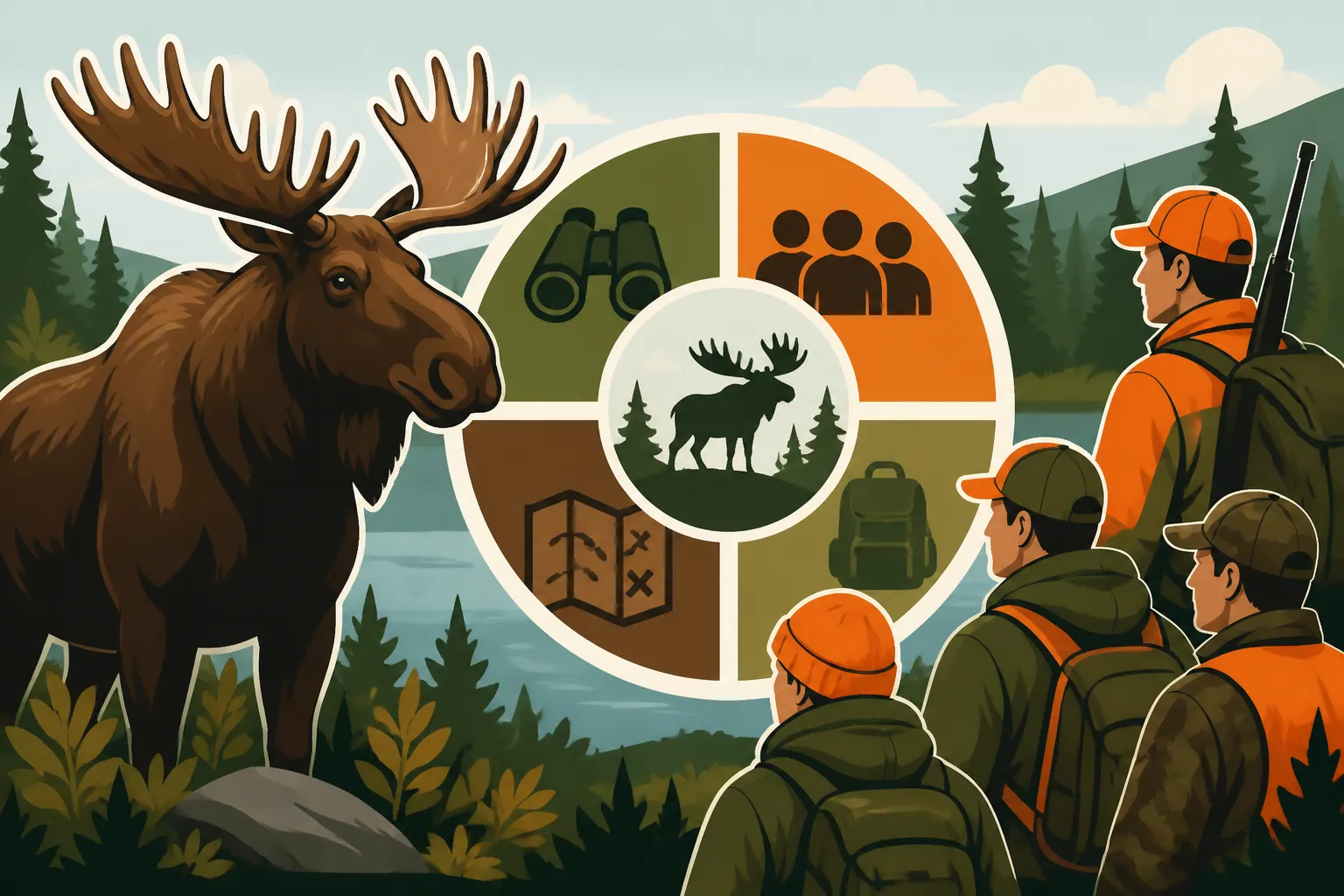
A successful moose hunt party thrives on clear roles and responsibilities. While there’s usually one designated Party Leader for the application, the on-the-ground leadership can be more fluid, or you might assign specific roles:
- Logistics Coordinator: This person might be in charge of camp setup, gear organization, food planning, and ensuring everyone has what they need. This often includes everything from securing a remote cabin, if using one, to packing all the necessary cooking equipment.
- Scouting Lead: Someone who enjoys reading maps, using GPS (or apps like GoHunt for mapping), and has a knack for finding prime moose habitat could take the lead on pre-season scouting or daily hunting plans. This involves identifying potential feeding areas, travel corridors, and bedding sites. For example, if you're Hunting Moose in Ontario's Boreal Forest, this person would focus on recent cutovers, beaver ponds, and willow thickets.
- Safety Officer: Essential for any backcountry hunt, this person ensures everyone knows emergency protocols, carries appropriate first-aid, understands firearm safety, and has communication devices like satellite phones or inReach devices. They'd also manage the group's whereabouts and check-in times.
- Butcher/Game Care Lead: Once an animal is down, the clock starts ticking. Someone with experience in field dressing and butchering large game is invaluable. They'll guide the party through the process of quartering the animal safely and efficiently, ensuring the meat is cared for properly. This could involve teaching newer hunters Quartering a Moose Alone in the Bush, even if it’s a group effort.
Beyond these specific roles, every member has a general responsibility to contribute to chores, maintain a positive attitude, and actively participate in the hunt. Open communication before and during the hunt prevents misunderstandings and fosters a cohesive team environment.
Logistics and Financials
A moose hunt is not a cheap endeavour, and transparency about finances is paramount. Before the hunt even begins, discuss and agree upon how shared expenses will be split. This includes:
- Licences and Tags: While individual licences are separate, the cost of the tag itself (which the Party Leader technically purchases) needs to be addressed.
- Travel Costs: Fuel for vehicles, float plane charters for remote camps, or even ATV rentals can add up quickly.
- Accommodation: Whether it's a remote cabin, wall tents, or a lodge, there will be costs associated.
- Food and Supplies: Group meals, water, camp amenities, and any shared hunting gear (like a game cart or hoist).
- Meat Processing/Cooling: If you plan to use a professional butcher or need to invest in large coolers and ice for transport.
Creating a shared spreadsheet for expenses is an excellent way to keep track and ensure fair distribution. Many parties pool money into a shared fund before the hunt to cover these costs. Discussing all potential costs upfront, including a contingency fund for unexpected expenses (like a flat tire or emergency fuel), will prevent friction later on.
Equipment and Preparation
A moose hunt requires specialized gear due to the size of the animal and the often-rugged terrain. Here’s a basic table of essential shared equipment for a moose hunt party:
| Category | Essential Items | Notes |
|---|---|---|
| Camp & Shelter | Wall tent(s) or cabin, cots, sleeping bags, wood stove, lantern(s) | Choose appropriate shelter for the expected weather. A wood stove is a game-changer for drying gear and staying warm. |
| Cooking | Camp stove, fuel, pots/pans, utensils, cooler(s), bear-proof food storage | Plan meals that are easy to prepare and high in energy. Freeze water bottles to double as ice for coolers. |
| Navigation | GPS devices (e.g., Garmin inReach, GoHunt app with offline maps), compass, paper maps | Multiple navigation tools are crucial. Ensure all members know how to use them. GoHunt offers excellent base maps and satellite imagery for detailed planning. |
| Game Handling | Heavy-duty game bags, sharp knives, sharpening stone, bone saw, rope, tarp, block and tackle | Crucial for efficient and hygienic field dressing. A block and tackle system is invaluable for hanging quarters. Consider a sturdy game cart or sled for easier extraction, especially if you're not using ATVs. |
| Safety & First Aid | Comprehensive first aid kit, satellite phone/InReach, signaling mirror, bear spray, headlamps | Always have multiple communication devices and a well-stocked first aid kit. Practice using them before the hunt. |
| Transportation | ATV/UTV (where permitted), canoe/boat, fuel, spare tires, repair kit | Depending on your WMU and access, you may need specific vehicles. Ensure they are well-maintained and you have spares for common issues. For those Hunting Moose From a Boat or Canoe, ensure you have safety equipment and proper licensing. |
Beyond shared gear, each hunter needs their own personal hunting equipment: firearms (and ammunition), hunting clothing suitable for Ontario's variable fall weather, sturdy waterproof boots, and personal hygiene items. Pre-season fitness is also often overlooked; a moose hunt can be physically demanding. Long hikes, dragging game, and cold weather all take a toll.
On-the-Ground Dynamics and Execution
Once you're in camp, the real dance of a party hunt begins. Daily routines should be established, from wake-up calls to hunting strategies. Mornings might involve everyone heading out in different directions to cover more ground, or a focused effort on a specific area identified during scouting. In the evening, regrouping to share observations, review plans, and assess the day's progress is vital.
Communication is key, especially if hunting in different areas. Agree on communication methods (radios, hand signals) and check-in times. Respecting each other's hunting styles and preferences is also important. Not everyone wants to sit in a stand all day, nor does everyone want to still-hunt through thick bush. Finding a balance that caters to the strengths and desires of the group will lead to a more harmonious and ultimately more successful hunt. Remember, the goal is a shared experience and a shared harvest, not individual glory. When the moment comes to harvest an animal, the entire party is responsible for ensuring the proper tagging and reporting procedures are followed. This includes accurately completing the tag and attaching it to the animal immediately, as per Ontario Tag Notching and Attachment Rules.
Working together, supporting each other, and embracing the challenges as a team is what truly makes an Ontario moose hunt party work. It's an unforgettable journey that forges bonds and creates stories that last a lifetime.
Disclaimer
The information provided in this guide is for general informational purposes only and does not constitute legal advice. Hunting regulations in Ontario can change frequently. Hunters are solely responsible for understanding and complying with all current federal, provincial, and local hunting laws and regulations. Always consult the official Ontario Hunting Regulations Summary and the Ministry of Natural Resources and Forestry (MNRF) website for the most up-to-date and accurate information before planning any hunting trip.