Hunting a Hydro Line Right-of-Way
Finding productive hunting ground in Ontario can feel like a puzzle, especially when so much of the best habitat seems locked behind private land or miles of dense, unbroken bush. But sometimes, the most promising spots are hiding in plain sight, in places most folks drive right past. Hunting a hydro line right-of-way offers a unique set of opportunities and challenges, and with the right approach, these often-overlooked corridors can be absolute game magnets. This guide will walk you through how to unlock their potential for a successful hunt.
Understanding Hydro Line Right-of-Ways as Wildlife Corridors
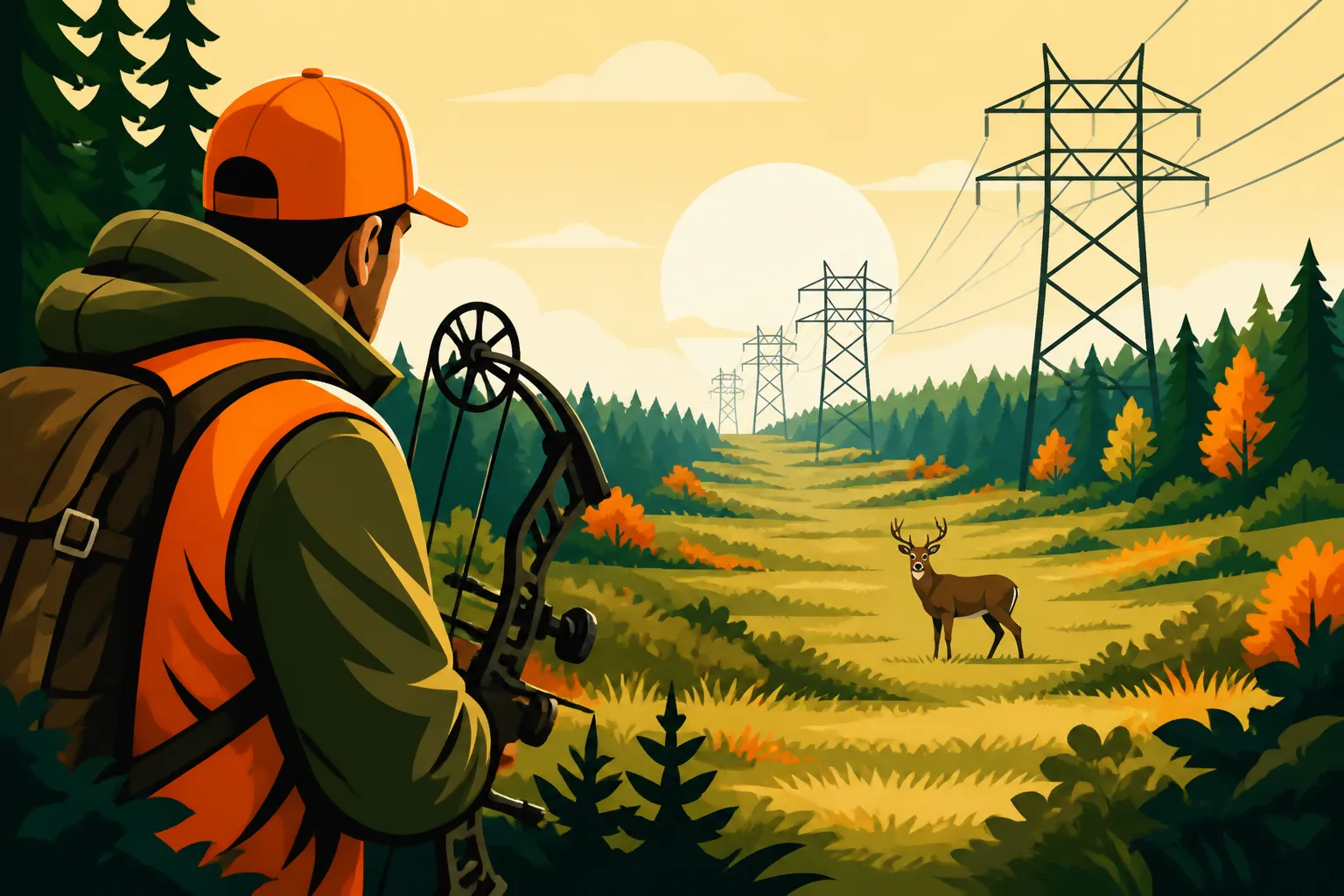
Hydro line right-of-ways, those cleared strips of land beneath power transmission lines, might seem like an odd place for wildlife, but they are, in fact, incredibly valuable to many species across Ontario. Instead of a uniform forest canopy, you find a diverse mosaic of grasses, shrubs, young trees, and scattered mature timber along the edges. This isn't just a cleared path for maintenance; it's an ecological hotspot.
Why Hydro Lines Attract Game
The primary reason these corridors act as game magnets is the sheer amount of "edge" habitat they create. Think about it: a hydro line cuts through dense forest, creating an abrupt opening. This edge effect is a goldmine for wildlife. Deer, for example, thrive where they can browse on varied vegetation, find cover close by, and move easily. The sun-drenched openings within the right-of-way promote the growth of berry bushes, young deciduous saplings, and tender herbaceous plants – all prime forage. Animals don't just use these for food; they use them for travel. Imagine being a big buck trying to move between two prime bedding areas or a moose looking for a quick route between feeding grounds; a cleared hydro line offers a less obstructed path than pushing through thick timber. It's a natural highway for them.
Beyond food and travel, these areas provide crucial security and thermoregulation. The taller shrubs and young trees within the right-of-way offer bedding cover, especially in areas where dense forest might lack low-lying escape routes. On chilly mornings, south-facing slopes along a hydro line will warm up faster, drawing deer and other animals to bask. Conversely, in the heat of early season, the shaded edges provide a cooler retreat. The diversity of plant life along these edges also supports a wider array of insects and small mammals, which in turn attracts predators and upland birds, creating a bustling ecosystem that benefits many different game species.
Legalities and Access for Hunting
Before you even think about setting foot on a hydro line right-of-way with your hunting gear, you need to understand the legal landscape in Ontario. Most hydro corridors are owned by power companies, primarily Hydro One in Ontario, or by other private entities. While these companies often allow public access for recreational purposes, including hunting, it's not a given, and rules can vary depending on the specific location and the underlying land ownership. You absolutely must verify access. Hunting on private land without permission is trespassing, and even if the hydro line itself is on Crown Land, adjacent private parcels might restrict access.
Start by identifying the specific Wildlife Management Unit you're interested in by using resources like Reading an Ontario WMU Map Before You Go. Then, research the land ownership. Tools like the GoHunt app can be incredibly helpful here, as they often overlay property lines and Crown Land boundaries over satellite imagery, giving you a clearer picture of who owns what. If it's private land, you need to get explicit permission from the landowner and understand any rules Hydro One might have. If it's on Hunting Ontario's Crown Land, access is generally permitted, but always confirm any local restrictions or special regulations for that specific right-of-way. Remember, safety is paramount; stay clear of towers, guy wires, and any operational equipment. Respect safety signage, and never shoot towards power lines.
Scouting and Strategy for Hydro Line Hunts
Once you've confirmed your legal access, the real work—and fun—begins. Scouting a hydro line right-of-way is a bit different than scouting a solid block of timber, largely due to its linear and often more open nature. You're looking for specific features that concentrate game movement and activity within this elongated corridor.
Reading Sign Along the Right-of-Way
Hydro lines are fantastic places to read animal sign because the ground is often less vegetated, making tracks and other indicators easier to spot. Look for deer tracks, especially those leading into and out of the dense cover along the edges. Big, deep tracks often belong to mature bucks, particularly when found near rubs or scrapes. Rubs—where bucks have scraped their antlers on small trees—and scrapes—patches of ground where they’ve pawed away leaves and urinated—are clear indicators of buck activity. Pay attention to their freshness; shiny sap on a rub or moist ground in a scrape tells you it's recent. Along a hydro line, these signs are frequently found at bottlenecks or where the line crosses a natural travel corridor like a creek or a small ridge.
For moose, look for their distinctive large tracks and evidence of browsing on deciduous saplings and shrubs. They'll often strip bark or break off branches to feed. Bear sign might include scat, torn-up logs where they've dug for grubs, or tracks, particularly in soft ground or mud. Turkeys will leave tracks in dusty spots or feed scratches where they've raked leaves for acorns and insects. Don't overlook the edges of the right-of-way where it meets the forest. These are transition zones, and game often stages here before entering the open. Use an app like GoHunt to mark these areas of fresh sign and build a picture of animal movement patterns.
Best Times and Conditions to Hunt
Hunting a hydro line right-of-way effectively means paying close attention to the time of day and prevailing weather conditions. During the early morning and late evening, especially in low light, deer and moose are more likely to be out in the open, feeding or traveling. This is particularly true during the rut when bucks are actively seeking does. Midday can still be productive, especially if you're still-hunting the edges, as animals might be bedded just inside the tree line, getting up for a quick browse.
Weather plays a huge role. On crisp, still mornings after a light rain, the ground is soft, making tracks obvious, and scents linger, which can be great for calling or still-hunting. During periods of high wind, game animals often seek more sheltered areas within the treeline, but the hydro line itself can still be a good travel corridor if it offers some protection. For species like turkeys, calm, clear mornings are ideal for hearing their gobblers and setting up. Similarly, if you're Hunting Ruffed Grouse on an Ontario Bush Road or nearby covers, the hydro line edges can offer good opportunities, especially during overcast days when they might venture out for grit.
Setting Up for Success: Stands, Blinds, and Movement
Once you've done your scouting and have a good idea of where animals are moving and feeding along the hydro line, it's time to think about your setup. Given the open nature of many right-of-ways, concealment and strategic positioning are critical.
Optimal Stand and Blind Placement
For deer and moose, the edges of the hydro line are your best friends. Animals are often wary of crossing large open areas, so they tend to stick close to the cover of the forest edge. Placing a treestand 10-20 yards inside the timber, overlooking the edge of the right-of-way, can be incredibly effective. This gives you a clear view of the open strip while keeping you concealed in the natural canopy. Look for pinch points where the hydro line narrows or where natural terrain features (like a small creek or a rock outcrop) funnel game into a specific crossing. If you're planning to hunt in areas that tend to get busy, you might want to review Hanging a Stand on an Ontario Bush Edge for more tips on discreet setup.
Ground blinds can also work very well, especially if you set them up well in advance to allow animals to get used to them. Position them against a thick bush or a cluster of small trees on the edge of the right-of-way, ensuring your silhouette is broken up. Remember to consider your wind direction; animals will often try to circle downwind of an open area before crossing. Using scent control is even more critical in these more open environments where your scent can carry further.
Still-Hunting and Driving Strategies
Hydro lines are almost custom-made for still-hunting, especially for species like deer, small game, and even bear if you're cautious. The relatively open ground makes it easier to move quietly and scan ahead. Walk slowly, pausing frequently to glass the edges and the open corridor. Always keep the wind in your face or quartering. Pay particular attention to small dips, rises, or thickets within the right-of-way itself; these are prime spots for animals to bed down or browse. If you're on a multi-day trip, consider changing your approach. For example, if you're looking for moose, you might find success by Hunting Moose Off a Bush Road that connects to the hydro line, using the linear features to cover ground.
For small groups, a hydro line can also be perfect for a quiet drive. One or two hunters can slowly push through a section of the right-of-way, moving game towards standers positioned at strategic escape routes further down the line or where it crosses a known game trail. This works particularly well for deer in the later seasons when they become more nocturnal and hold tight in cover. Always ensure clear communication and safety protocols, including knowing exactly where every hunter is positioned and wearing appropriate blaze orange, as per How Much Blaze Orange Ontario Requires.
Species-Specific Approaches to Hydro Line Hunting
Different game animals utilize hydro line right-of-ways in unique ways, and tailoring your approach to the specific species you're after will significantly boost your chances of success.
Deer and Moose Tactics
For whitetail deer, hydro lines are often travel corridors between feeding and bedding areas, or they can be feeding areas themselves if the forage is appealing. Look for crossings where the right-of-way intersects old logging roads, creek bottoms, or natural funnels in the terrain. Placing a stand or blind near these intersections can be deadly. During the rut, bucks will cruise these open strips, scent-checking the edges for does. This is a prime time to use calls; a well-placed grunt or rattle might pull a curious buck out of the timber and into your shooting lane. Consider how Rattling and Calling Ontario Whitetails might be amplified in such open spaces. Early season, when foliage is still thick, is great for still-hunting the edges, focusing on fresh browse sign. Later in the season, when snow falls, tracks become obvious, and deer often yard up near thermal cover adjacent to the right-of-way.
Moose, especially younger bulls and cows, will also use hydro lines as travel routes and feeding grounds. They're particularly fond of the regenerating deciduous growth that springs up in these cleared areas. Look for boggy sections or areas with willows and dogwood, which are favoured moose foods. Similar to deer, they'll use these lines to traverse larger areas. If you're on a moose hunt, keep an eye on your GoHunt map; these lines often connect to other productive areas, making them part of a larger travel network. For larger bulls, you might find them sticking closer to the denser cover, but still using the edges for easier movement.
Bear, Turkey, and Small Game Opportunities
Black bears are opportunists, and hydro line right-of-ways provide a smorgasbord of their favourite foods. In spring, they'll often emerge from dens and hit these lines for early greens, dandelions, and the promise of small berry crops. Come late summer and fall, if there are wild raspberries, blueberries, or saskatoons growing, bears will frequent these areas to fatten up before denning. Setting up a stand overlooking a patch of berries or a section with active bear sign can be highly effective. Remember to check regulations on baiting, as rules vary.
Wild turkeys also love hydro lines, especially for their open nature which allows them to strut, dust themselves, and forage for insects and seeds. In spring, gobblers will often use these lines as strutting grounds, making them excellent spots for calling and setting up decoys. If you're Spring Turkey Hunting in Ontario, a hydro line crossing a hardwood ridge can be an ideal setup. In the fall, turkey flocks will often move along these corridors, feeding.
For small game, hydro lines are fantastic. Rabbits and hares will find cover in the thicker shrubby growth and feed on the diverse vegetation. Grouse, both ruffed and spruce, will often be found along the edges where the cleared land meets the timber, particularly where there's good clover growth or berry bushes. Walk these lines slowly, with your dog if you have one, and you'll likely flush birds. The sheer amount of accessible edge habitat also means you might find fox and coyote activity, making them good spots for calling predators, especially during early morning or late evening.
| Game Animal | Why Hydro Lines Attract Them | Hunting Considerations |
|---|---|---|
| Whitetail Deer | Edge habitat, varied browse, travel corridors, open for rutting activity. | Hunt edges, pinch points, stand inside treeline, use calls in rut. |
| Moose | Regenerating browse, travel routes between core areas. | Look for boggy sections, willow/dogwood, fresh tracks; good for still-hunting. |
| Black Bear | Early greens, berry patches, insect sources (logs/stumps). | Overlook berry patches, scout for fresh sign, consider baiting legality. |
| Wild Turkey | Strutting grounds, dusting areas, abundant insects/seeds, open visibility. | Spring calling & decoys, fall flock hunting, focus on transition zones. |
| Ruffed/Spruce Grouse | Edge habitat, clover, berries, grit sources. | Still-hunt edges slowly, use a dog, focus on early morning/late evening. |
| Rabbit/Hare | Thick shrubby cover, diverse vegetation. | Walk thicker sections with a small game dog, check brush piles. |
| Coyote/Fox | Prey concentration (deer, small game), open lines for travel/hunting. | Early morning/late evening calling, position for long shots in open. |
Disclaimer
Hunting is a challenging and rewarding activity that requires careful planning, adherence to regulations, and respect for wildlife and the environment. This guide provides general information and strategies; however, local conditions, specific regulations, and personal skill levels can vary greatly. Always consult the most current Ontario hunting regulations, obtain necessary licenses and tags, and prioritize safety above all else. Remember that responsible hunting practices ensure the future of this tradition for everyone.