Hunting a Cutover Three Years On
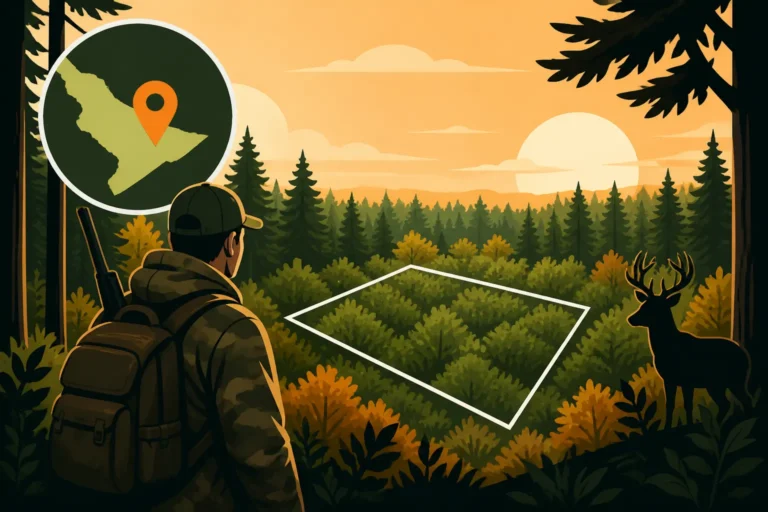
There's nothing quite like the feeling of finding that perfect hunting spot, that hidden gem where game animals seem to congregate. But let's be honest, those prime locations aren't static. Habitats change, timber gets cut, and what was once a deer highway can become a quiet patch of nothing within a season or two. This guide is all about one of those incredibly productive, yet often misunderstood, habitat types: the cutover, specifically when it hits that magical three-year mark here in Ontario. We'll dive deep into why these areas are magnets for game and how you can effectively hunt them, turning those dense, regenerating blocks into your next success story.
Why the "Three-Year Mark" Matters in a Cutover
When a section of forest is logged, it doesn't stay barren for long. The natural world quickly reclaims it, and in Ontario, this process creates dynamic, high-value wildlife habitat. The three-year mark isn't just an arbitrary number; it represents a sweet spot in this regeneration cycle, offering a unique combination of food and cover that's hard for many game animals to resist.
The Lifecycle of a Cutover: From Slash to Success
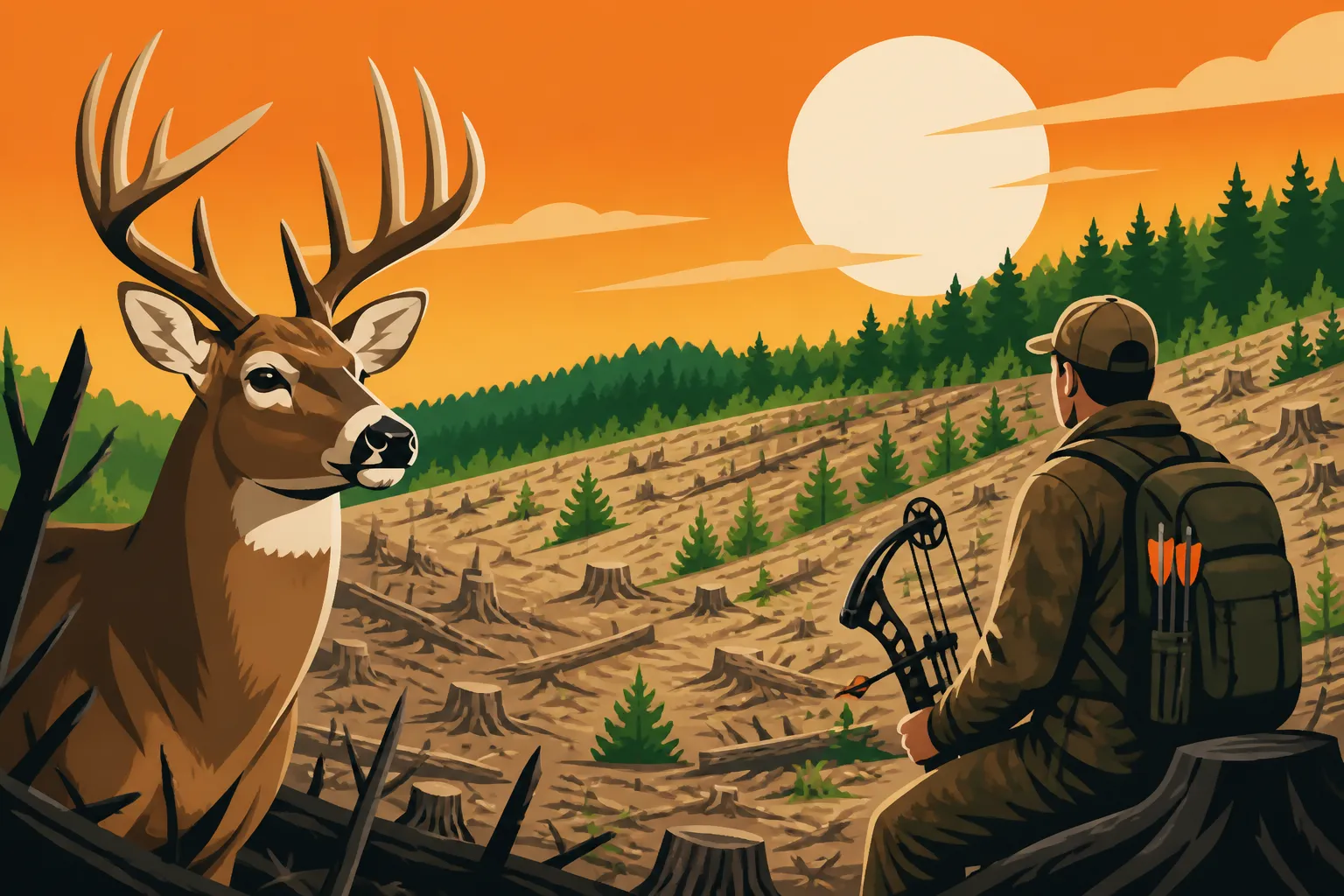
Immediately after a logging operation, what you're left with is a landscape of stumps, downed tops, and often, piled brush and debris. This initial stage, sometimes called "slash," can be pretty tough to navigate and doesn't offer much in the way of browse. However, the forest floor, now exposed to sunlight, quickly awakens. Within the first year, you’ll see grasses, fireweed, and pioneer species starting to pop up. This is usually followed by a vigorous surge of woody regeneration.
By the second and third year, those tiny saplings – things like trembling aspen, white birch, red maple, and various willows – are really starting to take off. They're still young enough to be tender and highly palatable, making them excellent browse for deer and moose. Simultaneously, the density of these young trees and shrubs creates incredibly thick cover, providing security from predators and harsh weather. It’s a jungle, but a nutritious, safe jungle for wildlife. Contrast this with a 10-year-old cutover, where many of those trees are now too tall for deer to browse, and the ground cover might have thinned out considerably due to shading. The three-year sweet spot is all about accessible food and dense cover.
Why Game Animals Gravitate Towards Young Regeneration
It's simple ecology, really. Game animals, whether they're massive moose or wary whitetails, are constantly seeking the best combination of food and security. A cutover that's three years into its regrowth offers both in spades. For deer, it's a buffet of tender shoots and buds, often at eye-level. The dense thickets provide escape cover, allowing them to bed down feeling safe from prying eyes and the elements. You’ll find them browsing vigorously in these areas, especially during the colder months when other food sources might be scarce or less palatable.
Moose, with their longer legs and larger appetites, also love these areas. They'll munch on the same young aspen, birch, and willow, often leaving distinctive browse lines and broken saplings. The dense cover also offers them thermal protection, which is crucial in Ontario's varying temperatures. Beyond the big game, upland birds like ruffed grouse absolutely thrive in these young, brushy environments. They feed on buds and catkins of aspen and birch, find shelter in the tangled branches, and use downed logs for drumming. Woodcock will also frequent the damper, softer soil areas within or around cutovers, probing for worms. These zones are ecological powerhouses, supporting a diverse array of species due to the sudden influx of resources and structural complexity.
Scouting and Locating Productive Three-Year Cutovers
Finding that perfect three-year-old cutover is half the battle, and it requires a combination of modern technology and good old-fashioned legwork. Don't expect to just stumble upon these goldmines; they often take some dedicated research and scouting.
Leveraging Digital Tools and Satellite Imagery
In today's world, we have incredible resources at our fingertips that can drastically cut down on wasted time. Start by utilizing online mapping tools. Platforms like Google Earth, often with historical imagery layers, allow you to literally scroll back through time to see when an area was cleared. This is invaluable for identifying specific logging operations and estimating their age. Look for areas that show distinct differences in forest cover between a few years ago and the present. You'll see patches that transition from mature forest to bare ground, and then to a lighter green fuzz as regeneration begins.
Beyond general satellite imagery, consider investing in a dedicated hunting app like GoHunt. Many of these apps offer specific layers for Crown Land, recent logging activity, and even property boundaries, which can be critical here in Ontario. They help you visualize the terrain, identify access points, and pinpoint those potential three-year-old cutovers. You can also look at forestry planning maps or speak with local Ministry of Natural Resources and Forestry (MNRF) offices, who sometimes have information on planned or recent harvests. Once you identify a promising area, pay close attention to the topography – subtle ridges, creek bottoms, or swamp edges within the cutover can act as natural travel corridors or bedding areas that game prefer. Learning how to effectively use tools like these for Scouting With Satellite Imagery in Ontario can give you a massive advantage. Don't forget to cross-reference with an official Reading an Ontario WMU Map Before You Go to ensure you're within a legal hunting zone and understand the specific regulations for that Wildlife Management Unit.
Boots-on-the-Ground Reconnaissance
Once you've narrowed down some potential areas on your map, it's time to put boots on the ground. There's simply no substitute for walking the terrain, ideally in the off-season when there's no foliage or snow, allowing you to see the structure of the land and any lingering sign. During this reconnaissance, you're not just looking for a cutover; you're looking for evidence that game is actively using it.
Search for fresh deer trails weaving through the dense regrowth, especially on the edges or where different cover types meet. Look for rub lines on small saplings (from bucks) or fresh droppings. For moose, keep an eye out for broken saplings, which indicate they've been feeding heavily, or large tracks in muddy areas. Ruffed grouse will leave droppings under preferred roost trees or dusting bowls in dry soil. You might even find a drumming log – a specific log a male grouse uses to attract mates. Pay attention to transition areas, such as where the cutover meets an older stand of timber, a swamp, or a field. These "edge habitats" are often high traffic areas for game moving between food and heavier cover. By Reading Whitetail Sign in Ontario Hardwoods you can gain critical insights into deer movement and bedding patterns, which are often amplified in the rich environment of a cutover. Don't be afraid to walk well off the beaten path; often, the best areas are those requiring a bit more effort to reach, accessible perhaps by Hunting an Old Logging Road in the North.
| Feature / Benefit | At 1-2 Years Post-Cut | At 3-5 Years Post-Cut (Sweet Spot) | At 6-10+ Years Post-Cut |
|---|---|---|---|
| Browse (Food) | Emerging, limited woody browse. | Abundant, tender woody browse at accessible heights. | Woody browse becoming taller, less accessible for deer. |
| Cover (Security) | Sparse cover, mostly low-lying vegetation. | Dense, chest-high to head-high regeneration. Excellent. | Thins out as canopy closes; less ground-level cover. |
| Thermal Regulation | Limited protection from sun/wind. | Excellent protection from elements. | Moderate protection, but less dense at ground level. |
| Navigability (Hunter) | Relatively easy, but still some slash piles. | Very challenging due to dense growth and slash. | Easier as trees mature and undergrowth thins. |
| Game Species Attracted | Early successional species (rabbits, small birds). | Deer, moose, grouse, woodcock, rabbits. | Deer (edge), some moose, fewer grouse, mature forest species. |
| Hunting Strategy | Primarily scouting or very early season hunting. | Still-hunting, stand hunting edges, flushing. | Stand hunting edges, more open country tactics. |
Hunting Strategies for Three-Year Cutovers
Once you've identified your target cutover and done your scouting homework, it's time to think about how to actually hunt these unique environments. The density of a three-year cutover presents both challenges and opportunities.
Approaching Deer and Moose in Dense Cover
Hunting deer or moose in a thick, regenerating cutover often feels like navigating a maze. The dense cover means visibility is extremely limited, and movement can be loud. For these reasons, still-hunting or methodical sneaking is often incredibly effective. Move slowly, taking one or two steps, then pausing for several minutes to scan, listen, and glass every little opening. Look for horizontal lines (the back of an animal) in a vertical world of saplings. Pay attention to any flick of an ear, a patch of contrasting color, or the glint of an antler. This method requires immense patience, but it allows you to cover ground quietly and detect game before they detect you.
Another highly effective tactic is to identify natural funnels or pinch points within the cutover and set up a stand or ground blind on the edge. Animals, particularly deer, will often follow the path of least resistance. This might be a slightly less dense section, an old skidder trail that's now overgrown but still detectable, or a transition line where the cutover meets mature timber or a swamp. Placing a stand strategically where these travel corridors emerge from or enter the thickest part of the cutover can offer you those critical few seconds of an unobstructed shot. Think about where deer might exit to feed in an adjacent field or move between bedding areas. Understanding the dynamics of Hunting Ontario's Mixed Hardwood Bush can provide additional insights, as cutovers often exist within these larger forest ecosystems. The way How Logging Cutblocks Change Deer Range is also crucial, as these habitat alterations fundamentally shift where deer will move, bed, and feed.
Flushing Grouse and Woodcock
For upland bird hunters, three-year cutovers are absolute gold. Ruffed grouse thrive in this dense, young cover. The strategy here is often to walk them up or, even better, use a good flushing dog. Walk slowly and deliberately, zigzagging through the densest patches. Grouse will often hold tight, preferring to let you walk past before busting out, so be ready for quick shots. Pay particular attention to the edges of the cutover, especially where it meets more open forest or old logging roads, as grouse will often feed or dust themselves in these areas.
Woodcock, on the other hand, prefer moister, softer ground where they can probe for worms. If your cutover has low-lying, damp sections or is adjacent to a swamp or creek bottom, these are prime areas to find woodcock. Again, a flushing dog can be invaluable here, helping to locate and flush these camouflaged birds. The sheer density of the cover means that shots will be close and fast, so practice your snap shooting and don't expect long-range opportunities.
Considering the Wind and Access
Regardless of the species you're pursuing, always, always play the wind. In thick cover, scent travels just as effectively, if not more so, than in open areas. Approaching a cutover with the wind in your face is paramount to avoiding detection. This might mean taking a much longer, circuitous route to get to your desired hunting spot.
Access is another critical factor. Cutovers can be brutal to navigate silently. Old logging roads that penetrate the cutover are your best friend. Even if they're overgrown, they offer a slightly less noisy path. Plan your entry and exit routes meticulously, especially if you plan on still-hunting deep into the block. Consider what kind of noise you're making – not just your footsteps, but gear rattling, clothing rustling against branches. Every little sound is magnified in the quiet woods, and in dense cover, animals are extra vigilant.
Common Challenges and How to Overcome Them
Hunting three-year cutovers isn't without its difficulties. The same features that attract game can also make hunting incredibly challenging. Being prepared for these hurdles will make your hunt much more enjoyable and successful.
Navigating Thick Undergrowth and Old Slash Piles
The absolute densest parts of a three-year cutover can feel like an impenetrable wall of tangled saplings, downed tops, and thorny bushes. Movement is slow, loud, and physically demanding. Expect to push through thickets where you can barely see your feet, let alone a deer. This calls for specific gear choices. Durable, rip-stop hunting clothing is a must to protect against thorns and sharp branches. A good quality, comfortable backpack that won't snag easily is also vital.
Instead of fighting every inch, sometimes it's smarter to scout for the "paths of least resistance" that game animals are already using. Look for faint game trails that weave through the undergrowth – these are often slightly easier to move through. When you encounter a significant slash pile or an exceptionally dense section, consider circling around it rather than plowing through. The noise you make breaking through branches will alert every animal within earshot. Patience and choosing your route carefully will serve you far better than brute force.
Dealing with High Hunting Pressure
Because cutovers are known game magnets, especially in more accessible areas, they can also attract a fair amount of hunting pressure. If you're hunting on Hunting Ontario's Crown Land, you might find other hunters working the same blocks. This pressure can push game deeper into the thickest, nastiest parts of the cutover, making them even harder to access.
To overcome this, be willing to walk further and work harder than most other hunters. The deepest parts of large cutovers, especially those far from roads or obvious access points, often hold undisturbed game. Use your mapping tools to identify remote pockets or areas that require crossing a marsh or a challenging ridge to reach. Sometimes, hunting later in the day, when other hunters have already moved through, can be effective, as pressured animals might start moving again. Alternatively, targeting areas that are just adjacent to heavily pressured cutovers – perhaps a small, unlogged swamp or a thick stand of pines nearby – can also be productive, as game will often retreat there for safety.
Extraction Challenges in Remote Cutovers
Filling a tag deep inside a dense, remote cutover is a fantastic feeling, but the immediate thought that often follows is: "Now what?" Extracting a deer or especially a moose from such challenging terrain can be an epic undertaking. The tangled undergrowth, uneven ground, and potential for deep snow or mud can turn a short drag into an all-day ordeal.
Preparation is key here. If you're hunting alone, consider bringing a game cart, even if you think you might not need it. A sturdy cart can save your back and sanity, particularly for deer. For moose, quartering the animal on site is almost always necessary. This means having the right tools: a sharp knife, a saw, game bags, and possibly a small tarp to keep meat clean. For larger animals, you'll also need a plan for getting help or making multiple trips. Always carry a headlamp, even if you plan to be out before dark, as field dressing and extraction can often take longer than anticipated. Familiarize yourself with techniques for Dragging a Deer Out of a Swamp if your cutover borders low-lying areas, and always have a way to protect your meat from spoilage, especially during Ontario's early seasons where temperatures can swing.
Disclaimer
Please remember that hunting regulations and safety practices are paramount. Always consult the most current Ontario Hunting Regulations Summary, ensure you have the appropriate licenses and tags, and hunt ethically and responsibly. Safety should always be your number one priority when in the field.