Hunting an Ontario Bush Lot You Just Got
You’ve finally done it – you’ve secured your very own piece of Ontario bush, a private slice of wilderness to call your own. The excitement is probably buzzing through you, imagining all the deer, moose, or bears that might wander through. But then the questions start piling up: where do you even begin with a brand-new hunting property? This guide is here to cut through the overwhelm, helping you systematically transform that raw piece of land into your personal hunting sanctuary, from understanding its potential to strategically placing your stands.
Unveiling Your New Bush Lot's Potential
When you first step onto that fresh parcel of land, it can feel like a blank canvas, full of mystery and possibility. It's exhilarating, but also a bit daunting. Where are the deer coming from? Where do they bed down? What makes this particular patch of bush attractive to game? These are the questions every hunter asks themselves, and finding the answers starts with a thorough understanding of your new domain.
Initial Walk-Through and Boundary Marking
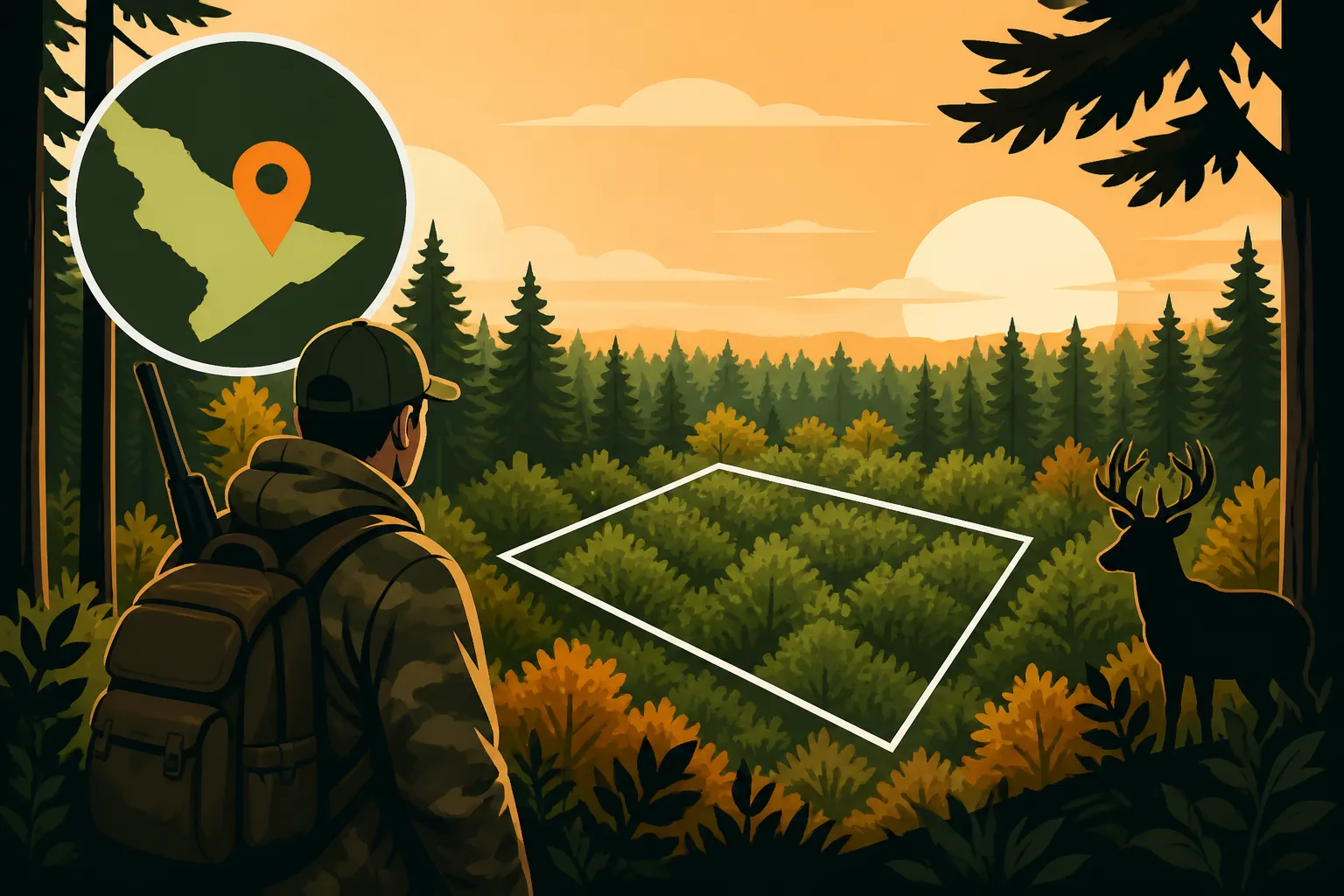
Your very first step, even before you think about hanging a stand or setting up a trail camera, is to get intimately familiar with your property lines. It might sound obvious, but an accidental trespass can quickly sour relations with neighbours and lead to legal headaches. Grab a GPS unit or a reliable mapping app on your phone, like GoHunt, and walk every single boundary.
As you walk, pay attention to the terrain. Are there old fencelines, natural barriers like creeks, or changes in vegetation that denote the property edge? Mark these physical boundaries with flagging tape, small reflective markers, or even brightly painted stakes. This isn't just for you; it clearly communicates your property lines to anyone else who might be in the area, be it other hunters, hikers, or even local trappers. Documenting these boundaries on a digital map, perhaps on a platform that integrates with GoHunt, can save you a lot of headaches down the line, especially when considering What Ontario Trespass Law Requires. Think of this as laying the groundwork for all future hunting activities, ensuring you're always operating within your legal rights and respecting your neighbours.
Topographical and Habitat Assessment
Now that you know where your property is, it’s time to figure out what your property is. This involves a deep dive into the topography and the types of habitat present. Hills, valleys, swamps, ridges, thick cedar stands, open hardwoods, old growth pines, cutovers – each of these features plays a crucial role in how game animals use your land.
Start with a detailed map. Topographical maps are fantastic for identifying elevation changes and water features. Satellite imagery, which you can often layer onto a good mapping app, provides an incredible bird's-eye view, revealing different timber types, open areas, and potential travel corridors that might not be obvious from the ground. Look for pinch points, saddles, benches, and funnels. These are natural pathways that deer and other animals prefer to use, often offering excellent ambush opportunities. Consider how these features relate to potential bedding areas (often dense cover, thickets, or north-facing slopes for thermal cover) and feeding areas (hardwood ridges with acorns, clearings with browse, or agricultural edges if your lot borders farmland). Understanding Hunting Deer in Ontario's Mixed Forest will be key here, as many bush lots feature a mosaic of timber.
Strategic Scouting and Game Sign Interpretation
With the foundational understanding of your property's layout, it's time to become a detective. Game animals leave clues everywhere, and learning to read these signs is paramount to understanding their movements and habits on your new bush lot. This phase is less about hunting and more about observation, patience, and meticulous note-taking.
Identifying Key Travel Corridors and Bedding Areas
As you walk your property, you're not just rambling; you're looking for highways and bedrooms. Whitetails, in particular, are creatures of habit. They'll use the path of least resistance when traveling between bedding and feeding, or when moving through their home range. Look for well-worn deer trails, especially those that connect different habitat types or funnel through dense cover. These are your primary travel corridors.
Bedding areas are often a bit trickier to pinpoint. Deer seek security and comfort. In a cedar swamp, it might be the thickest part where they can escape wind and snow. On a hardwood ridge, it might be a small, dense pocket of younger growth or an area with good visibility to detect predators. Look for impressions in the leaves or snow where deer have laid down, often surrounded by droppings. Over time, you'll start to notice patterns: deer might bed on south-facing slopes in winter for warmth, or in dense shadows during hot early fall days. Using a tool like GoHunt to mark these observations on your digital map will allow you to build a comprehensive picture of how game uses your land. This careful observation is crucial for Reading Whitetail Sign in Ontario Hardwoods.
Locating Feeding Hotspots and Water Sources
Every living creature needs food and water, and game animals are no exception. Pinpointing where animals are consistently feeding is just as important as knowing where they sleep. During your scouting trips, be on the lookout for natural food sources. In autumn, this might mean oak ridges loaded with acorns, apple trees along old farmsteads, or stands of beech nuts. In spring and summer, fresh new growth in clearings or browse lines in poplar stands become attractive. If your property borders agricultural fields, pay close attention to the edges of those fields, especially standing corn or soybean fields, as they offer both food and cover.
Water sources are another critical element, especially in drier years or during the warmer early seasons. Creeks, springs, beaver ponds, or even low, marshy areas can serve as vital watering holes. Game animals will often create well-used trails leading directly to these water sources. By mapping these feeding and watering spots using your GoHunt app, you can identify logical staging areas and pinch points where animals will naturally congregate before moving to bed or feed. This intelligence will directly inform your stand placement and hunting strategy.
Developing Your Hunting Strategy and Setup
Now that you've got a detailed understanding of your property and the game that inhabits it, it's time to shift from detective work to strategic planning. This is where you start to visualize your hunts, choose your stand locations, and think about how you'll manage your property for long-term success.
Stand Placement and Access Routes
Choosing the right stand location is arguably the most critical decision you'll make. It’s not just about seeing deer; it’s about having ethical shot opportunities and, perhaps even more importantly, silent, undetected access. You need to consider prevailing wind directions, sun angles, and how you’ll get in and out without spooking game.
For a new bush lot, start with a few strategic stand locations. Don't overdo it. Focus on high-traffic areas you've identified: a pinch point between a swamp and a ridge, a travel corridor leading to a major food source, or a funnel where multiple trails converge. Consider both morning and evening setups, taking into account how deer will move at different times of the day. Remember to always approach your stand with the wind in your face or crosswind, never from downwind. Create clear, quiet access routes to your stands, clearing away crunchy leaves or obstacles if necessary. For more specific advice, check out Hanging a Stand on an Ontario Bush Edge. A well-placed stand with a discreet approach will dramatically increase your chances of success.
| Scouting Method | Primary Goal | Best Season | Pros | Cons |
|---|---|---|---|---|
| Boots on the Ground | Identify trails, rubs, scrapes, bedding, food | Year-round | Most detailed, firsthand knowledge, fresh sign | Time-consuming, can disturb game, weather dependent |
| Trail Cameras | Monitor game movement, patterns, inventory | Year-round | Passive, 24/7 surveillance, captures nocturnal data | Requires regular checks, battery life, theft risk |
| Aerial/Satellite Maps | Macro view of habitat, topography, boundaries | Year-round | Efficient for large areas, planning, remote scouting | Lacks ground-level detail, can be outdated |
| GoHunt/Mapping App | Combine data, mark waypoints, track routes | Year-round | Integrates multiple data types, real-time tracking | Requires device, signal, subscription |
| Glassing | Observe game in open fields, clearings | Early morning/late evening | Non-invasive, identifies current patterns | Limited to visible areas, requires distance |
Utilizing Trail Cameras and Other Monitoring Tools
Trail cameras are your silent scouts, working 24/7 to gather intelligence when you're not there. Strategically deploy cameras on known travel corridors, near rubs and scrapes, or over potential food sources. They can help you identify specific bucks, understand their routines, and determine peak activity times. Look for cameras that offer good battery life and quick trigger speeds, especially in areas where animals might be moving quickly.
Beyond cameras, consider other monitoring tools. Tracks in soft soil or snow can tell you a lot about the size and direction of travel. Rubs on trees and scrapes on the ground (especially in the pre-rut and rut) are direct communication signs left by deer, indicating their presence and often their social hierarchy. Listening for sounds – distant coyote howls, hooting owls, or rustling leaves – can also provide clues about what’s happening on your property. Remember, this isn't just about deer; listening for the distinct drumming of a Ruffed Grouse Hunting Ontario's Bush Roads or the calls of other wildlife can enrich your experience and expand your hunting opportunities.
Habitat Improvement and Land Management
Acquiring a bush lot isn't just about hunting what's there; it's about shaping the land to attract and hold more game. This is where land management comes into play, a long-term commitment that can yield incredible rewards. Start small, perhaps by hinge-cutting some less desirable trees to create bedding cover or clearing small areas to encourage new browse growth.
If your property has open areas, consider planting a small food plot. Even a quarter-acre of clover or brassicas can be a huge draw for deer, especially when surrounding natural food sources are dwindling. Consult with local agricultural experts or experienced land managers to determine what grows best in your soil and climate. Think about creating or enhancing water sources, or even thinning out dense stands of conifers to promote hardwood growth. Remember, even little changes, when consistently applied over time, can make a significant difference to the overall health and attractiveness of your bush lot for wildlife. This kind of hands-on management turns your lot into a dynamic, productive habitat, giving you even more reason to spend time Hunting an Ontario Bush Edge.
Navigating the Seasons on Your Own Land
Once you've done the groundwork, the real fun begins: hunting your very own private bush lot. But even with all the scouting and planning, each season presents its unique challenges and opportunities. Being adaptable and understanding how game behavior changes throughout the year is crucial for maximizing your success.
Early Season Opportunities and Challenges
The early season, typically late September through October for bowhunters in Ontario, brings a different set of conditions. The woods are still thick with foliage, making visibility a challenge. Insects can still be present, and temperatures can swing wildly, making Hanging Meat in Fall Temperature Swings a real concern if you're successful.
However, the early season also offers unique opportunities. Deer are often still on predictable summer patterns, hitting reliable food sources before the rut kicks in. They might be less pressured than later in the season, particularly if your property is relatively undisturbed. This is a great time to focus on food plots or natural mast crops. Utilize observation stands on field edges or near water sources. Pay close attention to wind, as deer will often be active for longer periods on cooler, breezier days. If you're into Bowhunting Ontario's Long Archery Season, these early weeks can be incredibly rewarding for patient hunters.
The Rut: Peak Action on Your Property
For many, the rut is the undisputed king of hunting seasons. Typically peaking in early to mid-November in Ontario, this is when bucks are actively seeking does, leading to increased movement and a higher chance of encountering a mature deer. All that pre-season scouting will pay off now.
During the rut, bucks become less cautious. They'll travel traditional corridors, but also venture into areas they might avoid during other times of the year, following doe scent. Focus your efforts on pinch points, saddles, and areas where you’ve identified high doe traffic. Rattling and grunt calls can be incredibly effective, especially if you know there are active bucks in the vicinity. This is often the time when Hunting the Rut in Early to Mid November provides the most exhilarating action, so be ready to sit long hours and be persistent. If you've got good buck sign – fresh rubs and scrapes – that’s where you should be.
Late Season Strategies and Winter Considerations
As November turns to December and the temperatures drop, hunting transitions into the late season, often with muzzleloader opportunities in designated WMUs. Snow can be both a blessing and a curse. It makes tracking easier and reveals fresh sign more readily, but it also means deer are focused primarily on survival.
During the late season, deer shift their focus to finding reliable food sources and thermal cover. Hardwood ridges with lingering mast, standing corn fields if your property borders them, or even clearings with any remaining browse become critical. Deer will often yard up in thick cedar swamps or dense conifer stands to escape deep snow and cold winds. If your property has such cover, concentrate your efforts on the edges, especially those that border food. This is when understanding Where Ontario Whitetails Yard in Deep Snow becomes paramount. While the cold can be brutal, the opportunity to hunt unpressured deer on your own land, especially after a fresh snowfall, can lead to incredible success.
Final Thoughts on Your Hunting Haven
Owning your own hunting bush lot in Ontario is a dream come true for many. It’s an ongoing journey of learning, managing, and connecting with the land. From those first tentative steps mapping your boundaries with a GPS or a GoHunt app, to successfully harvesting an animal you’ve carefully patterned, every moment builds a deeper connection. Embrace the process, keep learning, and most importantly, enjoy the privilege of creating your own personal hunting legacy.
Disclaimer
The information provided in this guide is for general informational purposes only and does not constitute legal or professional advice. Hunting regulations and land management practices can change, and it is the hunter's responsibility to consult the most current Ontario Hunting Regulations Summary and all relevant local laws before engaging in any hunting activities. Always prioritize safety and ethical hunting practices.