Running Beagles on Ontario Snowshoe Hare
There’s nothing quite like the sound of a beagle pack in full cry, the high-pitched chorus echoing through Ontario’s snow-laden bush, signaling they’ve jumped a snowshoe hare. Many of us know the frustration of still-hunting for these elusive critters, only to have them vanish into the thick cover. This guide is all about embracing the time-honored tradition of running beagles on snowshoe hare, helping you understand the strategy, the habitat, and the pure joy of this quintessential winter pursuit in Ontario.
The Irresistible Charm of Running Beagles for Snowshoe Hare
For generations, the thrill of chasing snowshoe hare with a dedicated pack of beagles has been a cornerstone of winter hunting in Ontario. It's not just about filling the freezer, though that's a welcome bonus; it's about the entire experience: the companionship of your dogs, the crisp winter air, and the unique game of cat-and-mouse played out in the bush.
The Art of the Chase
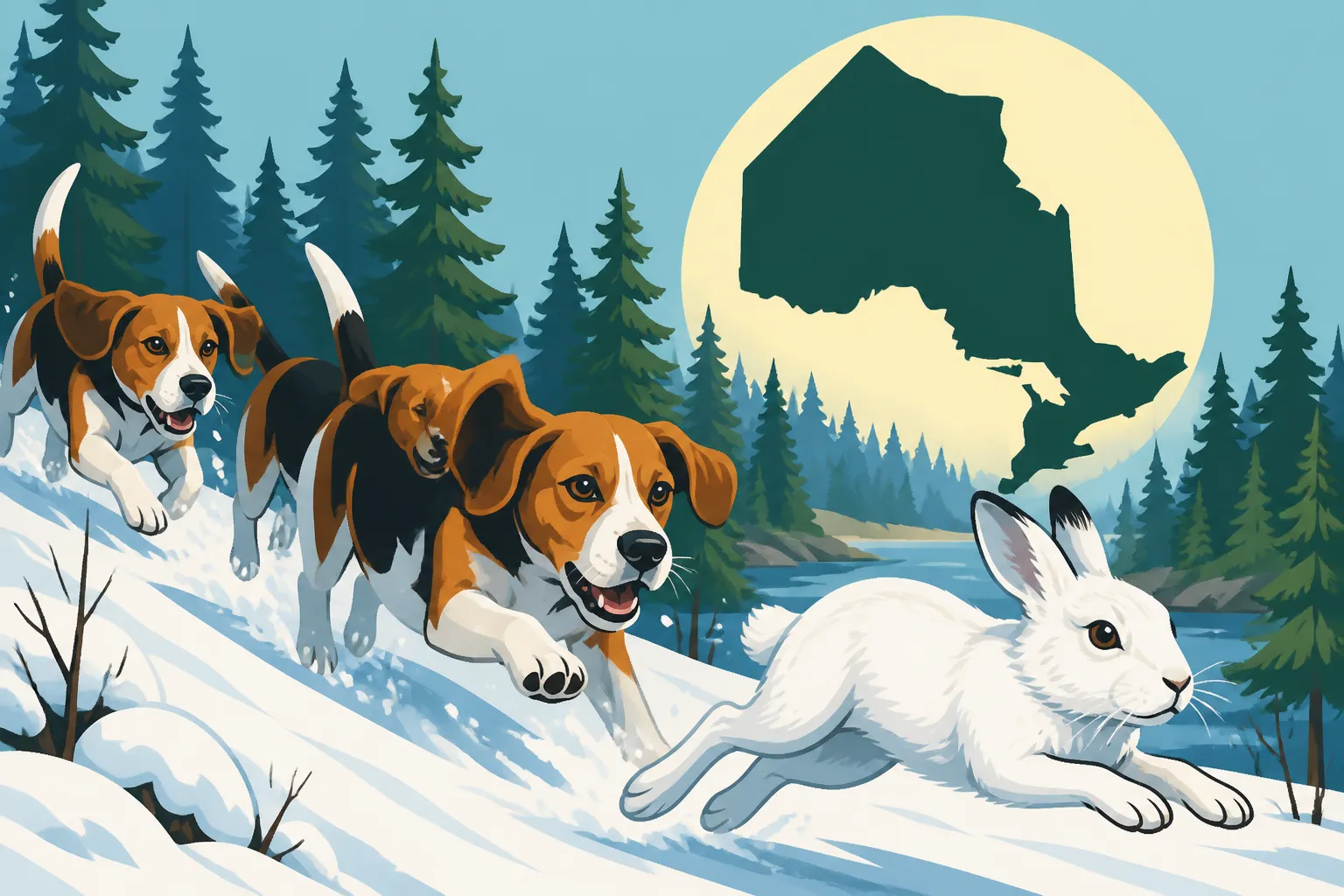
Unlike many other forms of hunting, beagle hunting for hare is less about stealth and more about letting your dogs do what they were bred to do. When the beagles hit a fresh track, the magic truly begins. Their baying starts as an excited chatter, then builds into a full-throated, continuous chorus as they hot-trail a hare. Snowshoe hare, true to their name, have large feet that allow them to navigate deep snow with ease, and they use this advantage to full effect, often running in large circles or figure-eights to try and throw off their pursuers.
This circular running pattern is key to the hunt. A good beagle pack will stay right on the hare's heels, never giving up. As hunters, our job is to position ourselves strategically along these likely escape routes or natural funnels, waiting for the hare to loop back. It requires patience and a keen ear, listening to the cadence of the dogs' voices to anticipate where the hare might emerge. The excitement builds with every bay, every turn, knowing that any moment, that grey-brown flash could appear from the thick alders or a dense cedar swamp edge. It’s a truly interactive hunt, where the dogs are the main actors, and you’re a crucial part of the supporting cast, ready to make a clean shot when the opportunity arises.
The Unforgettable Soundscape of the Bush
There’s a certain nostalgia that comes with the sound of a beagle pack. It’s a primal sound, yet incredibly refined by generations of selective breeding. In the silent, vast expanse of the Ontario winter forest, that chorus of hounds carries for what feels like miles. Each dog has its own unique voice, and as an experienced hunter, you’ll learn to recognize individual barks, how they change with the freshness of the track, or if the hare has momentarily given them the slip.
This auditory experience is often the most cherished part of the hunt. It connects you to a tradition that stretches back centuries, a simple pleasure in a complex world. The sound is not just noise; it’s communication, a narrative unfolding in real-time. It tells you if the hare is still running strong, if it’s doubled back, or if the dogs are momentarily puzzled. For many, it's the soundtrack of winter, a reminder of cold mornings, good company, and the unwavering dedication of a well-trained pack. This profound connection to the landscape and the dogs is what makes running beagles on snowshoe hare so much more than just a hunt – it’s an immersive outdoor adventure. To truly appreciate this pursuit, one must understand the unique characteristics of the game itself, as discussed in detail in our guide on Snowshoe Hare and Its Ten Year Cycle.
Uncovering Prime Snowshoe Hare Habitat in Ontario
Finding snowshoe hare in Ontario isn't usually the biggest challenge, but finding plenty of them for a good beagle run requires knowing their preferred haunts. These adaptable little creatures thrive in specific types of cover, especially where they can find both food and sanctuary from predators.
The Thick Stuff: Conifer Swamps and Regeneration
Snowshoe hare absolutely love dense, regenerating forests and coniferous swamps. Think about those areas you usually try to avoid walking through because they're just too thick – that's prime hare country. Young spruce and cedar thickets, often found in low-lying areas or along swamp edges, provide excellent year-round cover. The dense canopy offers protection from raptors like owls and hawks, while the tangled undergrowth makes it difficult for terrestrial predators like coyotes and foxes to maneuver.
In winter, these areas become even more critical. The thick conifer branches hold snow, keeping the ground underneath relatively clear, which helps the hares move and forage. They also feed on the bark, twigs, and buds of these very trees. You'll often find them along the edge of a cedar swamp, where it transitions into mixed woods or even a beaver meadow crossing. These edges offer a diversity of food sources while still providing quick access to the safety of the thick cover. When you're scouting, look for those impenetrable green patches on a map or satellite imagery; that's where your beagles are likely to get hot on a track.
Other Favoured Haunts: Logging Cuts and Hydro Lines
Beyond the classic swamps, snowshoe hare are also big fans of logging cuts that are 3-15 years old. These areas, sometimes called "cutovers," quickly regenerate with a mix of young deciduous and coniferous trees, shrubs, and briars. This burst of new growth provides an abundant food supply and the kind of dense, tangled shelter that hares adore. The sheer volume of cover makes it difficult for predators and offers endless escape routes for a running hare.
Similarly, hydro line rights-of-way and old logging roads that have grown in are excellent places to find hare. These linear features often cut through diverse habitat, creating edges where different vegetation types meet. The open canopy of a hydro line allows sunlight to reach the ground, promoting shrub and brush growth, while the adjacent forest provides shelter. When Hunting a Hydro Line Right-of-Way or Hunting an Old Logging Road in the North, keep an eye out for fresh tracks. These locations serve as natural highways for wildlife, and hares frequently use the dense growth along their edges for both feeding and refuge. A good strategy is to walk these lines, letting your dogs work the edges, or position hunters at points where hare might cross to another section of cover.
To help visualize prime hare habitat, consider the table below, which outlines common habitat types and their characteristics for snowshoe hare in Ontario:
| Habitat Type | Key Characteristics | Why Hare Love It | Best Time to Hunt |
|---|---|---|---|
| Cedar/Spruce Swamps | Dense conifers, wet ground, thick undergrowth | Excellent year-round thermal and visual cover, abundant food | Winter (deep snow highlights tracks and funnels hare) |
| Young Logging Cutovers | Regenerating deciduous/coniferous saplings, brambles | High density of forage, tangled escape cover | Fall/Winter (post-leaf drop for visibility) |
| Hydro/Utility Lines | Linear clearings, regenerating shrubs, adjacent forest | Edge habitat, diverse food, travel corridors, easy dog access for hunters | Fall/Winter |
| Poplar/Aspen Stands | Young, dense poplar, often near water or mixed forest | Abundant browse (bark, buds), dense understory protection | Fall/Winter (especially good food source) |
| Pine Plantations | Dense rows of young pines, sometimes with thick undergrowth | Excellent visual cover, some browse, good thermal protection | Winter |
When planning your hunt, consider using mapping tools like GoHunt to identify these types of cover. Their satellite imagery can quickly highlight areas of dense regeneration, coniferous stands, and old logging infrastructure, allowing you to Scouting With Satellite Imagery in Ontario and pinpoint potential hotspots before you even leave home. This pre-scouting can drastically improve your chances of a successful and exciting day out with your beagles.
Training and Managing Your Beagles for Ontario Hare Hunts
A successful snowshoe hare hunt with beagles isn't just about finding the right cover; it's heavily reliant on a well-trained, cohesive pack of hounds. Training beagles is a continuous process, building on their natural instincts and refining them into a disciplined, effective hunting team.
Nurturing Natural Instincts and Pack Dynamics
Beagles are born to chase, but good training hones that instinct into a productive hunt. Early exposure to game, even in a controlled environment, is crucial. Start young pups on "drag lines" with hare scent, gradually moving to letting them work actual tracks. The key is to encourage their natural drive while teaching them to stay focused. A good pack needs to work together, pushing the hare without getting so far ahead they lose the scent or split up.
Pack dynamics are incredibly important. Each dog will have its role: some are excellent starters, always quick to find a fresh track; others are superb "drivers," pushing the hare steadily; and some are reliable "linestayers," capable of unraveling a cold trail. Observing your dogs and understanding their strengths allows you to build a complementary pack. Encourage teamwork and reward collective success. When they get a hare running, their combined voices are not just music to a hunter's ear, but also a form of communication that keeps the hare moving in a predictable pattern. Learning to Rattling Volume in Thick Bush for deer is one thing, but listening to the subtleties of a beagle pack's communication is another, telling you volumes about the chase.
Key Commands and Tracking Tools
While beagles are largely self-sufficient once on a track, a few key commands are essential for control and safety. "Come," "No," and "Kennel" are fundamental. Beyond that, specialized commands to encourage them to "hunt it up" or to "leave it" (if they get on something other than a hare, like a deer) are invaluable. Consistency is king; every handler in your group should use the same commands and expectations.
In Ontario's vast bush, especially with snow on the ground, dogs can easily range out of sight and hearing. GPS tracking collars, like those compatible with the GoHunt app, are absolutely indispensable. These systems allow you to see your dogs' real-time locations on a map, track their progress, and know if they’ve gone off course or found themselves in a tricky spot. Some systems even allow you to communicate with the dog or activate a locator light or sound. This technology not only ensures the safety of your valuable hunting partners but also helps you position yourself more effectively for the shot. Imagine being able to see on your GoHunt map that your pack is bringing the hare right towards a known crossing point – that’s a game-changer. These tools, alongside traditional methods, are key to a successful Rabbit and Hare Hunting in Ontario experience.
Essential Gear and Safety for Beagle-Powered Hare Hunts
Hunting snowshoe hare with beagles in Ontario often means pushing through thick cover in winter conditions. Being prepared with the right gear and prioritizing safety isn't just a good idea; it's absolutely crucial for a successful and enjoyable day.
Layered Clothing and Footwear for the Bush
Ontario winters can be notoriously unpredictable, swinging from mild to bitterly cold in a single day. Layered clothing is your best friend. Start with a moisture-wicking base layer to manage sweat, add an insulating mid-layer (fleece or down), and top it with a durable, waterproof, and windproof outer shell. Given the amount of pushing through brush and potential for light snow or freezing rain, robust materials are key to prevent tears and keep you dry. Blaze orange is often a legal requirement and always a smart choice for visibility, especially when you're moving through thick cover with other hunters. Ensure you meet the Ontario Blaze Orange Requirements before heading out.
Footwear is equally critical. You'll be spending hours on your feet, often walking through deep snow, over uneven terrain, and potentially through wet areas. Insulated, waterproof boots that offer good ankle support are non-negotiable. Look for boots designed for cold weather, with ample tread for traction on snow and ice. Consider bringing gaiters to prevent snow from entering your boots, keeping your feet dry and warm. Many seasoned hunters will also pack a spare pair of socks in a waterproof bag, just in case.
Navigation, Communication, and First Aid
Getting turned around in Ontario's bush, especially in areas with similar-looking regeneration or dense swamps, is easier than you think. A reliable GPS device or a smartphone with mapping capabilities (like the GoHunt app, which works well even offline with pre-downloaded maps) is essential. Always carry a physical compass and a Reading an Ontario WMU Map Before You Go as a backup. Knowing What to Do If You Get Turned Around is vital, so familiarize yourself with your chosen WMU beforehand. Communication is another key safety aspect; while cell service can be spotty in the backcountry, carrying a two-way radio or a satellite communication device can be a lifesaver in an emergency.
A comprehensive first-aid kit is also a must-have, not just for humans, but for your dogs too. This should include supplies for cuts, scrapes, sprains, and basic wound care. For your beagles, consider carrying paw protection (booties), antiseptic wipes, vet wrap, and any specific medications they might need. Be prepared for potential encounters with other wildlife, though snowshoe hare hunting typically takes place in areas where larger predators might be present but are rarely a direct threat to hunters. Keeping your dogs close and aware of their surroundings, particularly if they are getting far ahead, is always prudent.
Dog Safety and Comfort
Your beagles are your partners, and their safety and comfort are paramount. In addition to GPS collars, consider reflective vests for your dogs to enhance their visibility, especially if they are ranging far or if you're hunting near roads. Protect their paws from ice, snow, and sharp debris by using protective wax or booties, particularly for dogs with sensitive pads.
Ensure they stay hydrated and have access to high-energy food throughout the day. Pack a small dog first-aid kit, as mentioned earlier, and know how to use it for common hunting injuries. If the weather is exceptionally cold, or if they are prone to getting chilled, consider dog jackets. After the hunt, always check your dogs thoroughly for cuts, scrapes, thorns, or ticks, and ensure they have a warm, dry place to rest. Their well-being directly contributes to the success and enjoyment of future hunts. When planning your Hunting Ontario's Small Game trips, remember to prioritize the care of your canine companions above all else.
Disclaimer
Hunting is an inherently risky activity. This guide is for informational purposes only and does not substitute for professional training, adherence to all local regulations, or personal responsibility. Always prioritize safety, respect wildlife, and obtain all necessary licenses and permits before hunting. Conditions in the Ontario bush can change rapidly; be prepared for all eventualities.