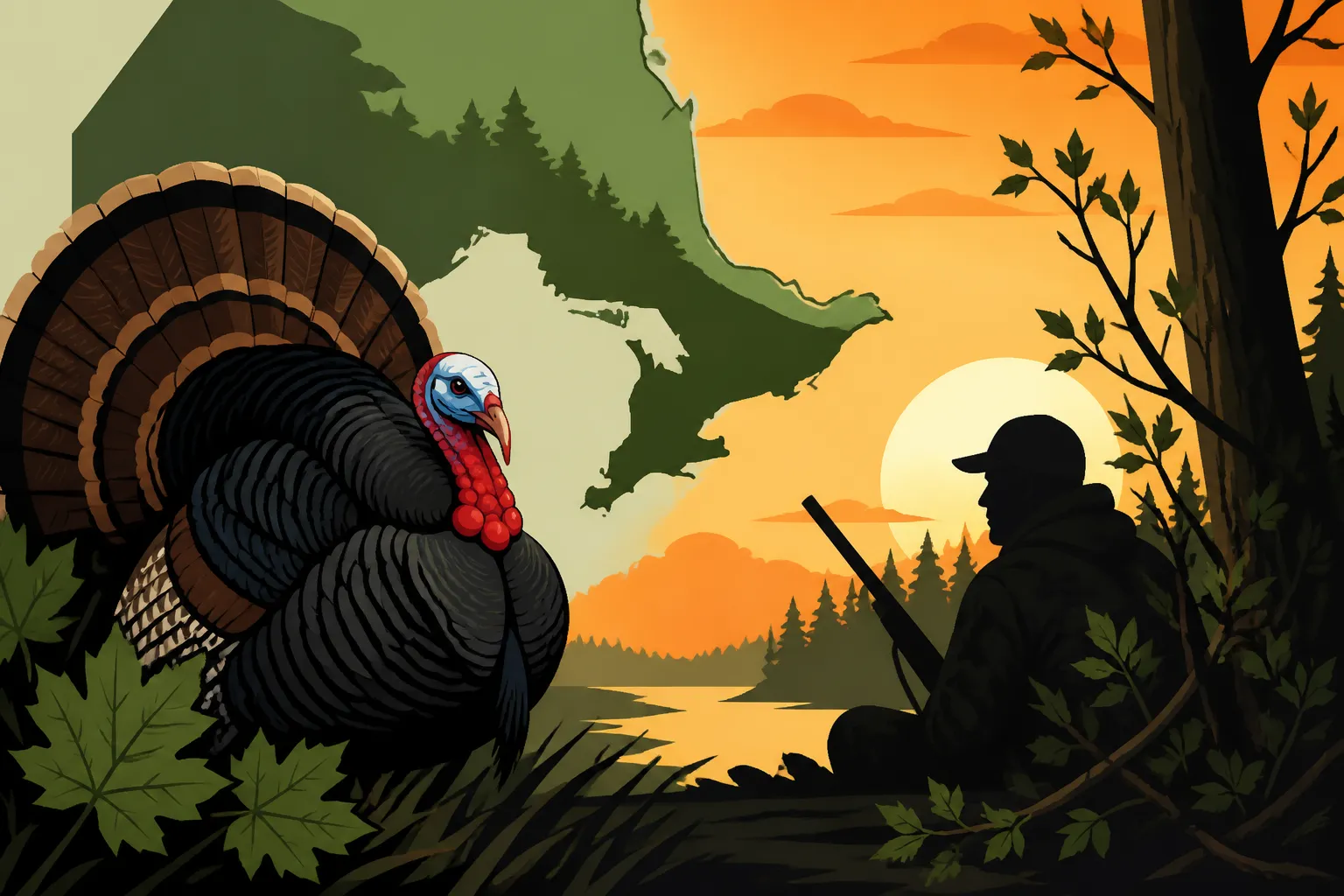
When Ontario Gobblers Go Quiet in Late May
You've been experiencing that early spring turkey season rush, right? Those booming gobblers sounding off from every ridge, the air thick with anticipation, and birds practically running into your decoys. It's exhilarating! But then, late May hits, and suddenly, the woods fall silent. Those once-eager gobblers seem to vanish, and your confident calls are met with nothing but crickets. This shift can be incredibly frustrating, leaving you wondering if all the birds were harvested or if you've completely lost your touch. This guide is here to unravel the mystery of why Ontario gobblers go quiet in late May and equip you with the knowledge and tactics to find success even when the woods feel dead silent.
Understanding the Late May Gobbler Slump
That vibrant, vocal behaviour we all chase in early spring is heavily tied to the initial stages of the breeding cycle. As the season progresses into late May, fundamental shifts occur in both the turkeys' biological drivers and their environment, leading to a noticeable drop in gobbling activity and changes in their patterns.
Post-Breeding Season Dynamics
By late May, the peak breeding frenzy is well past for most wild turkeys across Ontario. Many hens have already been bred and are now diligently sitting on their nests, incubating clutches of eggs. This is a critical biological phase, and it means the primary motivation for gobblers – attracting receptive hens – significantly diminishes. Think about it: why would a gobbler risk attracting predators with loud vocalizations if the ladies he's trying to impress are already busy nesting?
Instead of spending their mornings strutting and gobbling aggressively, gobblers often revert to smaller bachelor groups or even become solitary. Their focus shifts from breeding to self-preservation and regaining condition after the demanding rigours of the breeding season. They’re still around, but their priorities have changed dramatically, leading to less visible and audible activity. You're no longer dealing with a lovesick adolescent, but a weary veteran.
Environmental and Pressure Factors
Beyond biological changes, the environment itself conspires to quiet the woods in late May. One of the most significant factors is the explosion of new foliage. Early in the season, before the leaves fully emerge, sound travels far, and visibility is excellent. A gobble from 800 yards away can sound like it's just over the next knoll. But by late May, the trees have fully canopied, and undergrowth has blossomed. This dense vegetation not only muffles sound, making those distant gobblers even harder to hear, but it also creates a visual barrier, allowing turkeys to move more stealthily and feel more secure.
Compounding this is the cumulative effect of hunter pressure. Ontario's spring turkey season often sees a flurry of activity in the early weeks. Gobblers quickly learn to associate human presence with danger. Birds that were callable and responsive in April or early May become "call-shy" or simply ignore calls altogether. They've heard it all, seen it all, and survived by being wary. This makes hunting pressured Ontario gobblers a whole different ball game. Add in warmer temperatures, which can make turkeys less active during the heat of the day, and the increasing presence of bothersome insects like mosquitoes and blackflies, and you have a recipe for quiet woods.
Where Gobblers Go When They Go Quiet
When the gobblers seemingly disappear, they haven't actually vanished into thin air. They've simply changed their patterns and retreated to areas that offer security, new food sources, and respite from both hunters and the elements. Finding them now requires a different kind of detective work.
Shifting Foraging Habits
In early spring, turkeys often frequent fields and open areas, feeding on waste grain or early green sprouts. However, as late May progresses, their diet shifts significantly. Insect populations explode, and new green vegetation becomes abundant in the dense woods. Gobblers will seek out areas rich in these new food sources.
This often means they move away from the highly visible field edges and into the timbered creek bottoms, the edges of swamps, and mature hardwood stands where insects are plentiful and tender plants flourish. Look for areas with a mix of habitat: where an old clear-cut meets a mature forest, or where agricultural fields transition into thick bush. These "edge habitats" are often overlooked but can be goldmines for feeding turkeys. Consider areas where you might normally find small game species like ruffed grouse, as these habitats often overlap with what late-season gobblers are looking for. They're still feeding heavily, but they're doing it in places that provide more cover and less human disturbance.
Seeking Solitude and Security
Gone are the days when a big tom would strut openly in a field for hours. By late May, gobblers prioritize security above all else. They'll retreat into dense cover, seeking refuge in thick cedar swamps, tangled pine plantations, and remote sections of the bush that offer excellent escape routes and concealment. These are the places where a tom feels safe from predators and, crucially, from hunters.
These security zones might be adjacent to food sources or water, but the cover itself is the main draw. They'll use these areas as loafing spots during the middle of the day, and they might even roost there. This means you might have to penetrate deeper into the woods than you did earlier in the season. Think about Hunting a Cedar Swamp Edge or Hunting a Pine Plantation Edge — these types of dense cover, often with limited visibility, become preferred hideouts. They might still utilize travel corridors between these thickets and feeding areas, but their overall disposition will be much more reclusive.
Adapting Your Tactics for Late May Success
Success in late May hinges on adjusting your approach. What worked in April likely won't cut it now. You need to become more of a stealthy hunter and less of a loud caller.
Emphasize Scouting and Observation
This cannot be stressed enough: late May hunting is primarily about scouting and observation, even if gobblers aren't talking. Forget relying solely on shock gobbling. You need to become a silent woodsman. Spend time before your hunt driving roads, walking trails, and using good optics (binoculars, spotting scopes) to simply watch and listen. Locate fresh turkey sign: tracks in soft dirt, dusting bowls in dry soil, fresh droppings, and distinct strut marks. These subtle clues tell you that birds are in the area, even if they're not vocalizing.
Using a mapping application like GoHunt can be a game-changer for this kind of scouting. It allows you to analyze satellite imagery to identify potential strutting zones, dense escape cover, and crucial travel corridors between different habitat types. You can mark potential roosting sites and feeding areas from afar. Knowing where these birds should be, even if they're not gobbling, is your starting point. You're looking for patterns, not just sounds.
Calling and Decoy Strategies
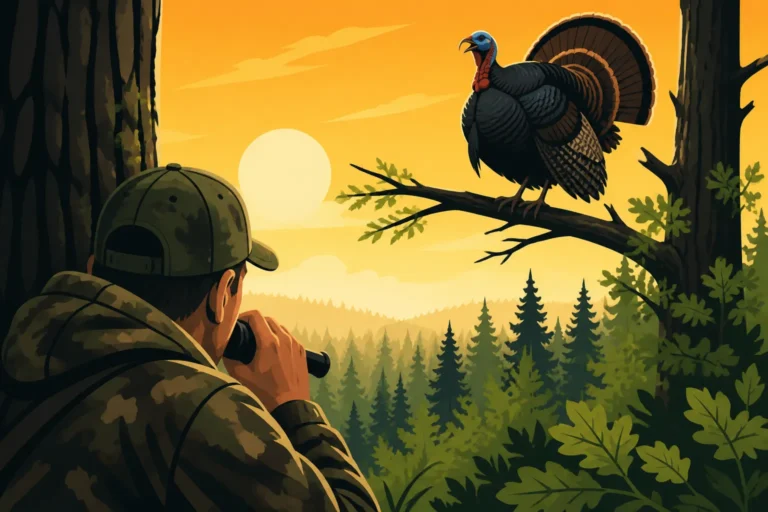
The aggressive calling that might have pulled a hot gobbler across three fields in April will often scare off a call-shy late-season bird. Now, less is definitely more. Focus on soft, subtle calling: light tree yelps, contented clucks, and purrs. Imagine a lonesome hen looking for company, not an excited hen screaming for a tom. You want to sound natural and non-threatening. When it comes to Rattling Volume in Thick Bush, you're often better off with minimal calling, letting the bird come to investigate quietly.
Decoy usage also needs a strategic adjustment. A full strutting tom decoy or a jake might have worked wonders early on, but in late May, it can be too aggressive and intimidating for wary gobblers, especially if they're already in bachelor groups. A single hen decoy, perhaps in a feeding or breeding pose, is often more effective. This offers a non-threatening visual that might pique a tom's curiosity without raising red flags. Remember, Decoy Placement for Pressured Ontario Gobblers is crucial – make sure your setup provides a clear shot and accounts for their approach from cover.
Still Hunting and Ambush Techniques
Since gobblers are less vocal and more reclusive, sitting and waiting on a known pattern often yields better results than trying to "run and gun." Identify key travel routes: field edges, pinch points between swamps and hardwoods, creek bottoms. Get into position well before dawn, and patiently wait. This is where patience is truly a virtue. You might sit for hours without a sound, then suddenly a silent tom appears.
"Still hunting" – moving slowly and deliberately through the woods, stopping frequently to look and listen – can also be effective in thick, quiet cover. This is a tactic often used when Hunting Deer in Ontario's Mixed Forest or even Small Game Hunting in Ontario. Focus on areas with fresh sign, like the edges of a Hunting a Standing Corn Field Edge or a food plot, and set up in a blind or against a natural backrest that breaks up your outline. You're not trying to call a bird to you from a distance; you're trying to ambush a bird moving through its daily routine.
The Impact of Late Season Hunter Pressure
Ontario's turkey woods see a fair bit of activity, especially in the early part of the season. By late May, the cumulative effect of this pressure profoundly impacts turkey behaviour, forcing hunters to get creative and think outside the box.
Educated Birds and Their Habits
Imagine being chased daily for weeks. That's essentially what many gobblers experience. They become incredibly wary, developing an uncanny ability to identify hunters. They learn to associate vehicle sounds, certain calling sequences, and even specific locations with danger. These "educated birds" are the ones that ignore your perfect hen yelp, or hang up just out of range, silent and suspicious.
They might even change their roosting patterns, opting for less accessible areas deeper in the bush. Their approach to calls becomes more cautious; they might circle widely to get downwind, or they might simply shut up and slip away unnoticed. This is why a strategic approach is necessary, and why understanding the nuances of how a tom responds (or doesn't respond) is key to Calling a Gobbler Off an Ontario Roost successfully.
Adapting to Their Avoidance
To counter these educated birds, you need to adapt. One highly effective strategy is to hunt during the mid-day hours. While most hunters are heading home for lunch or calling it quits, turkeys, particularly late in the season, often become more active between 10 AM and 2 PM. They've had time to clear the roost, feed a bit, and feel less pressured. This is often when a lone hen might briefly wander or a gobbler might feel secure enough to make a soft call.
Moving deeper into less accessible areas is another critical adjustment. If a spot is easy to reach, it's likely been pressured. Utilize that GoHunt app to find pockets of public land or private properties you have permission on that are a significant walk from any road. These overlooked spots often hold less pressured birds. Being extra stealthy – silent approaches, careful setups, and minimizing movement – becomes paramount. If you do find a less pressured bird, you might be able to be a bit more aggressive with your calling, but always err on the side of caution. Remember, the goal is to make the bird want to come to you, not to alarm it.
Practical Tips for Late May Gobblers in Ontario
Late May hunting presents unique challenges, but with a few practical adjustments, you can still fill your tag. It's about preparedness and understanding the nuances of the season.
Gear Adjustments
The weather in late May can be highly variable in Ontario. While mornings might still be cool, the afternoons can get surprisingly warm. Dress in layers that you can easily shed as the day warms up. Hydration is key, so carry more water than you think you'll need.
Perhaps the biggest gear consideration for late May is bug protection. Mosquitoes and blackflies are typically out in full force. A good head net, bug spray (with DEET or Picaridin), and even bug-resistant clothing are highly recommended. There's nothing worse than having your concentration broken by a swarm of buzzing insects. A comfortable, lightweight blind or a cushion for longer sits can also make a huge difference in your ability to remain patient and still.
Location, Location, Location
As mentioned, where you hunt is more critical than ever. Focus on areas that provide turkeys with everything they need in close proximity: food, water, and thick cover. This often means targeting transitional zones or "edges" where two different habitat types meet. Think about where a hardwood ridge meets a low-lying cedar swamp, or where a dense pine plantation borders an open field. These are natural travel corridors and feeding areas.
Utilize tools like GoHunt or local conservation authority maps to identify these hotspots, especially those away from main roads. Areas around Bancroft or the Kawartha Highlands, known for their mixed forests, can be particularly productive if you find the right blend of habitat. Don't be afraid to Scouting With Satellite Imagery in Ontario to pinpoint these less obvious, harder-to-reach pockets of prime habitat. The less human disturbance, the better your chances.
Early Morning and Late Evening Still Hold Promise
Even though general gobbling activity decreases, turkeys are creatures of habit. They still typically vocalize right off the roost in the morning and sometimes again just before flying up to roost in the evening. These short windows can be your best chance to locate a bird.
Be in your chosen spot well before dawn, and listen intently. A lone gobble right after fly-down, or a fly-up cackle, can tell you exactly where a bird is and give you a brief opportunity to set up. Similarly, sitting until fly-up time can provide a chance to intercept a bird heading to its roost. Remember, When Ontario Gobblers Start Strutting might be earlier in the season, but even quiet birds will still move to and from their roosts, offering predictable patterns for the patient hunter. This often means a longer day in the woods, but perseverance is often rewarded when the birds are tight-lipped. Don't forget how to effectively Telling a Jake From a Longbeard either, as jakes are still very active and can be viable targets in late May.
Comparing Early vs. Late May Turkey Hunting Tactics
To highlight the shift in strategy, here's a quick comparison of how your approach might change from the peak of early season to the quiet of late May.
| Feature / Tactic | Early May (Peak Breeding) | Late May (Post-Breeding Slump) |
|---|---|---|
| Gobbling Activity | High, consistent, enthusiastic | Low, sporadic, often subdued |
| Hunter Pressure | High, especially on opening day/weekends | Moderate to low, as many hunters give up |
| Foliage Density | Low to moderate, good visibility and sound travel | High, dense canopy and undergrowth, muffled sound |
| Gobbler Motivation | Attracting hens for breeding | Security, feeding, recovering condition |
| Calling Strategy | Aggressive yelps, cutts, fly-down cackles | Soft clucks, purrs, subtle yelps, less frequent |
| Decoy Strategy | Strutter/jake with hens often effective | Single hen, feeding hen, non-aggressive postures preferred |
| Preferred Habitat | Open fields, field edges, strutting zones | Thick cover, creek bottoms, dense swamps, agricultural edges |
| Scouting Emphasis | Listening for gobbling, roosting sites | Locating fresh sign (tracks, droppings), observing patterns |
| Time of Day | Primarily early morning | Early morning, often productive mid-day, late evening |
| Patience Level | Moderate, birds often responsive | High, long sits, ambush tactics |
Disclaimer
Hunting in Ontario requires adherence to provincial regulations. Always consult the most current Ontario Hunting Regulations Summary available from the Ministry of Natural Resources and Forestry (MNRF) before heading out. Ensure you have all necessary licences, tags, and validations, and understand the specific rules for your Wildlife Management Unit (WMU) and the species you are hunting. Stay safe, hunt ethically, and respect the land.