Decoy Placement for Pressured Ontario Gobblers
It's incredibly frustrating when you've done everything right – found the birds, set up quietly, made the perfect calls – only to have that big gobbler hang up just out of range, drumming and strutting but refusing to commit. This happens far too often with pressured Ontario gobblers, who've heard it all before and seen every trick in the book. This guide is here to help you break through that wary behaviour by mastering advanced decoy placement, turning those frustrating hang-ups into successful harvests.
Understanding the Wary Nature of Pressured Gobblers
Let's face it, Ontario's wild turkeys are smart. They don't get big by being foolish, especially not in areas that see consistent hunting pressure. These aren't the naive longbeards you might encounter on private, unhunted ground. Pressured gobblers have learned from their past experiences and the experiences of their buddies. They've seen decoys before, and they've likely seen some bad setups or heard some bad calling. This makes them incredibly cautious, often "hanging up" just beyond shooting range, evaluating the situation for what feels like an eternity.
Why Gobblers Become Pressure-Wise
Think about it from their perspective. A young jake might charge right into a decoy spread, full of bravado. But after a few seasons of close calls, or watching other birds get tagged out, a mature gobbler develops a healthy dose of suspicion. They've heard calls from every direction, seen decoys that look a bit too perfect, or noticed something unnatural in the setup. They quickly learn to scout an area thoroughly from a distance before committing. This is particularly true in more accessible areas like those found when Hunting Deer in Southern Ontario Farmland This wariness is often magnified if they've had a bad encounter themselves, perhaps being shot at near a decoy spread. Their survival instincts kick in hard, making them circle, observe, and often, retreat if anything feels off.
Common Hang-Up Scenarios
You've probably lived this nightmare: the gobbler is fired up, answering your calls, and you can tell he's heading your way. Then, he steps into view at 70 yards, struts hard, gobbles a few more times, and then… nothing. He just stands there, perfectly camouflaged against the backdrop, perhaps behind a small rise or a line of trees, refusing to close the distance. He’s looking for something to feel right, something to give him the confidence to commit. Maybe he's looking for the hen to come to him, or he expects another tom to challenge him. Sometimes, he's just assessing the terrain, looking for other turkeys, or spotting predators. Often, the decoys are visible, but the setup doesn't quite convince him. He’s waiting for a sign, and if he doesn't get it, or if he gets a wrong sign, he's gone. This can happen whether you're trying to Call a Gobbler Off an Ontario Roost
The Psychology Behind Decoy Selection and Setup
Decoys aren't just plastic birds; they're communicators. They're telling a story to that incoming gobbler, and for pressured birds, that story needs to be absolutely convincing. Every detail, from the type of decoy to its precise orientation, plays a role in either luring him in or confirming his suspicions.
Decoy Types and Their Messages
Choosing the right decoy is more nuanced than just grabbing a hen. Each type sends a specific message:
- Standing Hens: These communicate contentment and safety. They’re browsing, feeding, or just relaxing. This is a subtle, inviting signal that can often ease a wary gobbler's suspicion. A single standing hen can be incredibly effective, especially if you want to avoid appearing too aggressive.
- Feeding Hens: Even more relaxed than a standing hen, a feeder decoy implies a secure environment. Birds don't typically feed if they sense danger. This can be a strong draw for a tom looking to gather his harem in a safe spot.
- Breeding or Lying Down Hens: These are powerful signals, suggesting a hen that is ready and receptive. For a gobbler whose primary drive is breeding, this can be irresistible. Be careful, though, as this can also draw in other, more dominant toms, creating a competitive scenario.
- Submissive Jake: A smaller jake, often in a half-strut or feeding pose, can sometimes entice a mature gobbler to come in and assert dominance without feeling overtly threatened. It's a low-stakes challenge.
- Full Strut Jake or Tom: This is the most aggressive decoy. It dares a dominant gobbler to come in and fight. While it can work spectacularly on aggressive birds, it can also deter highly pressured or less dominant gobblers who want to avoid confrontation. For pressured birds, this can be a double-edged sword – if he's seen too many of these end badly, he might just walk away. The key is knowing the mood of the birds in your area, and for that, diligent Scouting a Wildlife Management Unit
Realism and Natural Movement
The best decoy in the world is useless if it looks fake or unnatural. Modern decoys, like those from Avian-X or Dave Smith Decoys, offer incredible realism in both form and paint scheme. They mimic the subtle iridescence of real feathers, the exact body posture, and even the feather texture.
But realism goes beyond just the look. It's also about movement. Static decoys can often be spotted as artificial. Adding subtle movement can make a huge difference. This might be a slight breeze causing a tail feather to wiggle, or using a decoy that incorporates a fan that you can activate from your blind. Even a simple string attached to a stake that allows you to subtly twitch a decoy can be enough to catch a gobbler's eye and convince him it's real. When hunting wide-open spaces like a Hunting a Field of Standing Corn that bit of movement can be critical for visibility and believability.
Advanced Decoy Configurations for Tricky Birds
When dealing with pressured gobblers in Ontario, a single hen or a standard jake-and-hen setup might not cut it. We need to think outside the box and use configurations that specifically address their caution and provide maximum realism.
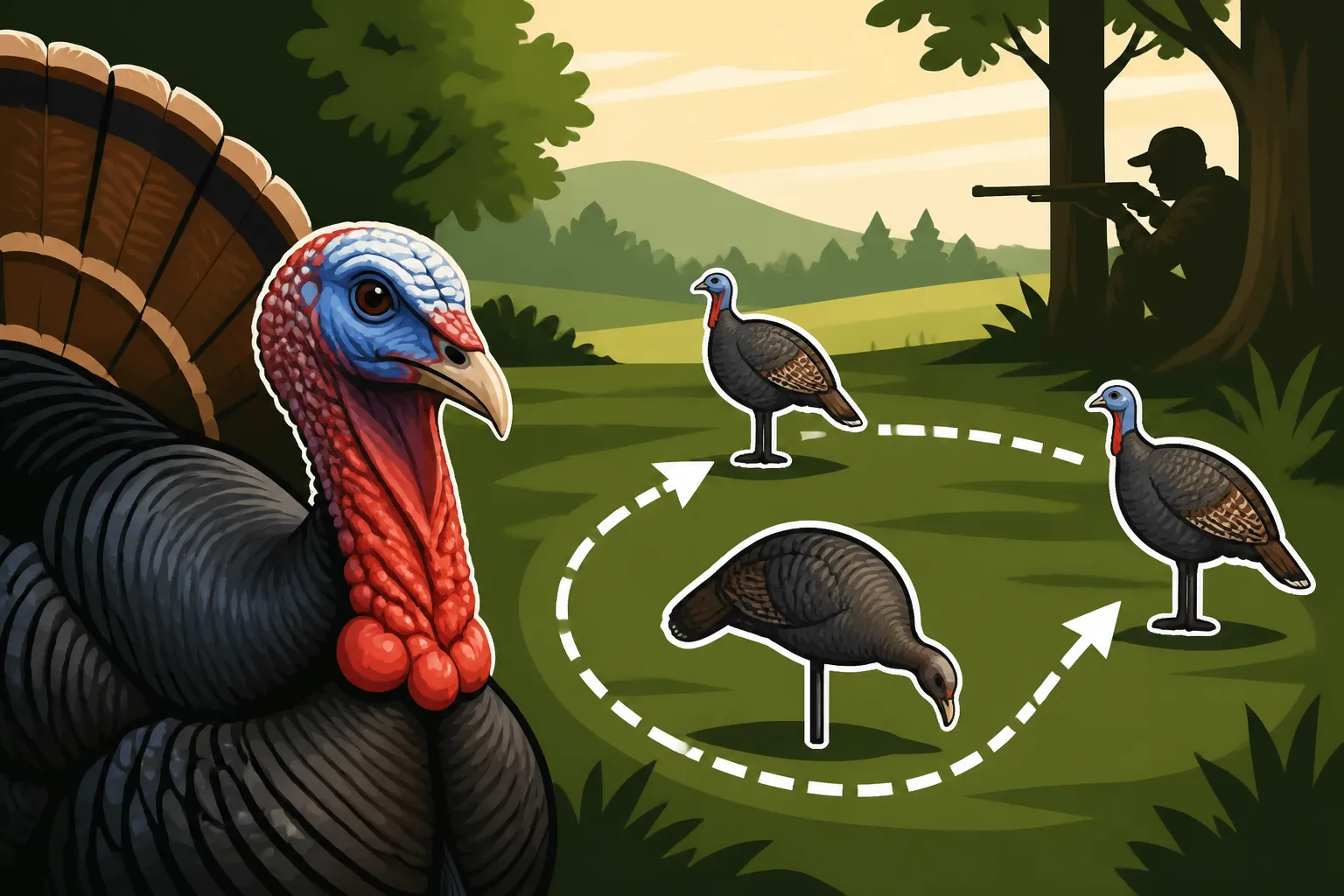
The "Distant & Indifferent" Spread
This setup is designed for gobblers that are extremely wary and constantly hang up at long distances. The goal is to make your decoys appear natural, yet slightly out of reach or not overtly interested in the gobbler, challenging him to close the distance.
- Setup: Place a single hen decoy, or perhaps two hens (one standing, one feeding), about 30-40 yards from your position, positioned broadside to where you expect the gobbler to approach. Crucially, have them facing slightly away from the expected approach direction, or completely ignoring it. Their heads should be low, or looking towards each other, appearing completely unconcerned.
- Psychology: This setup doesn't scream "come here!" Instead, it subtly says, "we're here, we're safe, and we're not waiting for you." This indifference can be maddening for a dominant gobbler who expects hens to flock to him. It often triggers his instinct to investigate and assert himself by walking over to the seemingly disinterested hens.
- Application: This works exceptionally well in large fields or along field edges where gobblers have a wide view and typically stop short. It forces them to overcome their caution and commit to covering the last 50-100 yards.
The "Breeding Pair Challenge"
Sometimes, a submissive jake isn't enough to pull in a really dominant, pressured longbeard. He needs a stronger challenge, or a more direct incentive.
- Setup: Place a breeding hen (lying down, receptive pose) with an upright, aggressive jake decoy positioned behind her, as if attempting to breed. Position this pair about 15-20 yards from your blind, again, slightly quartering away from the expected approach.
- Psychology: This is a direct challenge to a dominant tom's breeding rights. Seeing a jake attempting to breed a hen will often bypass a pressured gobbler's caution and trigger an immediate, aggressive response. He'll want to run off the jake and claim the hen for himself. The close distance ensures he's in range when he commits.
- Considerations: This is an aggressive setup and can sometimes scare off less dominant birds. However, for that really stubborn, dominant longbeard who has been hanging up, it's often the push he needs. Make sure your calls match the visual – soft, contented clucks or even excited purrs to indicate the hens are ready. This can be deadly effective when you're Hunting the Rut in Early to Mid November
The "Strutter Backdoor" Setup
Gobblers often circle widely when approaching a decoy spread, especially if they're pressured. They want to come in from a position where they can survey the scene for danger. This setup uses that tendency against them.
- Setup: If you know a gobbler consistently circles to your left, place your main decoy spread (e.g., two hens and a jake) 25 yards in front of you. Then, place a full-strut gobbler decoy 10-15 yards behind your position, angled away from you but facing the general direction the circling gobbler will approach from.
- Psychology: When the gobbler circles, he'll see the full-strut decoy behind your position first. This decoy looks like a rival tom unaware of the approaching gobbler, and it presents an easy target for a dominance display. The gobbler, focused on confronting the strutter, will often march right past your blind, offering a close shot. The full strutter behind you appears less threatening to him than if it were directly facing his approach.
- Application: This takes careful planning and knowledge of the terrain and the bird's typical approach routes. It's particularly useful in areas with good cover around your blind, like a cedar swamp edge, allowing the circling bird to remain out of sight until he’s committed to approaching the strutter. You'll need to be extra vigilant and ready to pivot for a shot.
Decoy Table: Scenarios and Recommended Setups
Here's a quick guide to some common scenarios and effective decoy strategies for pressured Ontario gobblers:
| Scenario | Decoy Configuration | Placement & Orientation | Why it Works for Pressured Birds |
|---|---|---|---|
| Wary, Hangs Far Back (70+ yd) | 1-2 Feeding/Standing Hens | 30-40 yards out, quartering away or slightly oblivious to expected approach. | Low-pressure, inviting, challenges gobbler to cover distance. Less threatening. |
| Dominant, Needs a Challenge | 1 Breeding Hen + 1 Aggressive Jake | 15-20 yards out, jake behind hen, broadside or slightly angled from approach. | Triggers strong territorial/breeding instinct, forces commitment. |
| Circles Widely, Comes from Behind | Main Spread (2 hens, 1 jake) + 1 Full Strut Tom | Main: 25 yards front. Strutter: 10-15 yards behind blind, facing circling approach. | Uses circling habit against him, presents an easy target for dominance. |
| Open Field Edge, Sparse Cover | 2 Feeding Hens, 1 Standing Hen (spread out) | 20-30 yards out, spread 10-15 ft apart, creating a natural-looking small flock. | Appears like a natural, calm flock; wide spread mimics foraging behaviour. |
| Small Woodlot/Bush Edge | 1 Standing Hen (or 1 Jake) | 10-15 yards out, just inside or on the edge of the opening. | Less is more in tight spaces, avoids clutter, looks natural for limited visibility. |
Adapting Your Decoy Strategy to Ontario's Diverse Terrain
Ontario offers incredibly diverse turkey habitats, from the expansive fields of the southwest to the mixed forests of the central region and the rugged shield country further north. Your decoy strategy needs to be flexible enough to work in all these environments. Using mapping tools like GoHunt, you can really pinpoint exactly where that rise is, or where a fenceline creates a natural funnel, giving you a huge advantage when planning your setup.
Open Farmland and Field Edges
Southern Ontario, especially in areas like Prince Edward County or the Norfolk Sand Plain, features large agricultural fields bordered by woodlots. Turkeys here often roost in the woods and feed in the fields.
- Challenges: Long sightlines mean gobblers can spot your decoys (and you!) from a great distance. Wary birds will often stop short at the field edge or the first significant rise.
- Decoy Strategy:
- Visibility is Key: Use decoys that stand out against the field, but don't overdo it. A maximum of three realistic decoys is often plenty.
- Elevation Advantage: If possible, place your decoys on a slight rise or knoll within the field. This increases their visibility to approaching birds and helps them appear more dominant.
- Edge Placement: Position your decoys 20-30 yards out from the field edge where you are set up. This gives the gobbler enough space to commit to entering the field but keeps him within range. Consider setting up near a natural funnel point, like a break in a fencerow or a low spot in the terrain.
- Utilize Natural Cover: Set your blind up against a thick fencerow or the edge of a woodlot. If you're Hunting a Standing Corn Field Edge positioning yourself against the standing corn can provide excellent concealment, allowing you to place decoys further out into the open.
- Example: Imagine a gobbler strutting parallel to a long fencerow between two fields. Instead of putting your decoys right up against the fencerow, place a breeding pair 25 yards into the field, forcing him to leave the cover of the fence and commit to the open. This is where your GoHunt app's satellite imagery can show you those subtle elevation changes that are perfect for decoy placement.
Mixed Forest and Woodlots
Moving into central or eastern Ontario, you'll encounter more mixed forests, smaller clearings, and bush lots. Visibility is often limited, and turkeys might be less accustomed to wide-open spaces.
- Challenges: Limited sightlines mean decoys might not be seen from afar. Gobblers often move through the timber and can appear suddenly. Over-decoying can look unnatural in a small clearing.
- Decoy Strategy:
- Less is More: In these settings, a single hen or a single jake is often more effective than a large spread. The goal is to look natural in a more confined space.
- Strategic Gaps: Place your decoy in a natural opening, like a logging road turnaround, a small clear-cut, or a beaver meadow crossing. Position it so it's visible from key travel corridors or from where you expect the gobbler to enter.
- Close Quarter Placement: With reduced visibility, bring your decoys closer – 10-15 yards is often ideal. This ensures that when the gobbler does commit, he's well within effective shooting range.
- Facing Away from Approach: If you know a gobbler's general travel route, try placing your single hen with her tail facing his direction of travel. This makes her appear "unaware" and can draw him in for a closer look, as if sneaking up on her.
- Example: You're Hunting a Bush Lot Beside a Farm and know a gobbler often comes from a dense conifer stand into a small hardwood clearing. Instead of placing three decoys, opt for a single feeding hen about 12 yards from your blind, just on the edge of the clearing. This looks like a natural, solitary bird browsing. This understated approach can often be the key to success.
Bush Roads and Logging Trails
Many hunters in Ontario, especially when pursuing Spring Turkey Hunting in Ontario, find success hunting along old bush roads or logging trails. These act as natural travel corridors and provide clearings for strutting.
- Challenges: Gobblers often use these roads for travel and strutting but can be wary of anything unusual. Hunters frequently set up along these, so birds become conditioned.
- Decoy Strategy:
- Center of Attention: If the road is relatively wide, place a strutter decoy in the middle of the road, 20-25 yards from your position. Hens can be placed a few yards off to the side, slightly behind it, as if observing the strutting tom.
- Road Intersections: Intersections of trails or roads are excellent ambush points. Set up your decoys where they are visible from multiple directions, allowing you to intercept birds traveling from different parts of the bush.
- Edge of Cover: Always try to keep your setup tight to the edge of the cover, so you can be concealed but your decoys are in the open. You might be Setting Up Against a Big Maple or a thick cluster of pines.
- GoHunt Mapping: Before heading out, use the mapping features on GoHunt to identify key intersections or wide spots on logging roads in your chosen WMU. This reconnaissance can help you plan your precise setup location.
- Example: You're on an old logging road, and a gobbler is hammering down the hill. You quickly set a submissive jake 15 yards out in the center of the road, with a breeding hen slightly behind it. This scenario, a jake attempting to steal a hen, can often provoke an aggressive charge from a dominant tom, eliminating his cautious approach.
Remember, the goal with pressured gobblers isn't just to put a decoy out; it's to create a convincing, low-risk, high-reward scenario that overrides their inherent caution. By understanding their psychology and adapting your strategy to the specific environment, you'll greatly increase your chances of calling in those tricky birds. Don't forget to secure your Ontario Wild Turkey Licences and Tags before heading into the field.
Disclaimer
Hunting is an activity that carries inherent risks. Always prioritize safety, adhere to all local, provincial, and federal hunting regulations, and ensure you have the necessary licenses and permits. The information provided in this guide is for educational and entertainment purposes only and should not be considered a substitute for professional instruction or official government publications. Conditions in the field can change rapidly; always be prepared and aware of your surroundings.