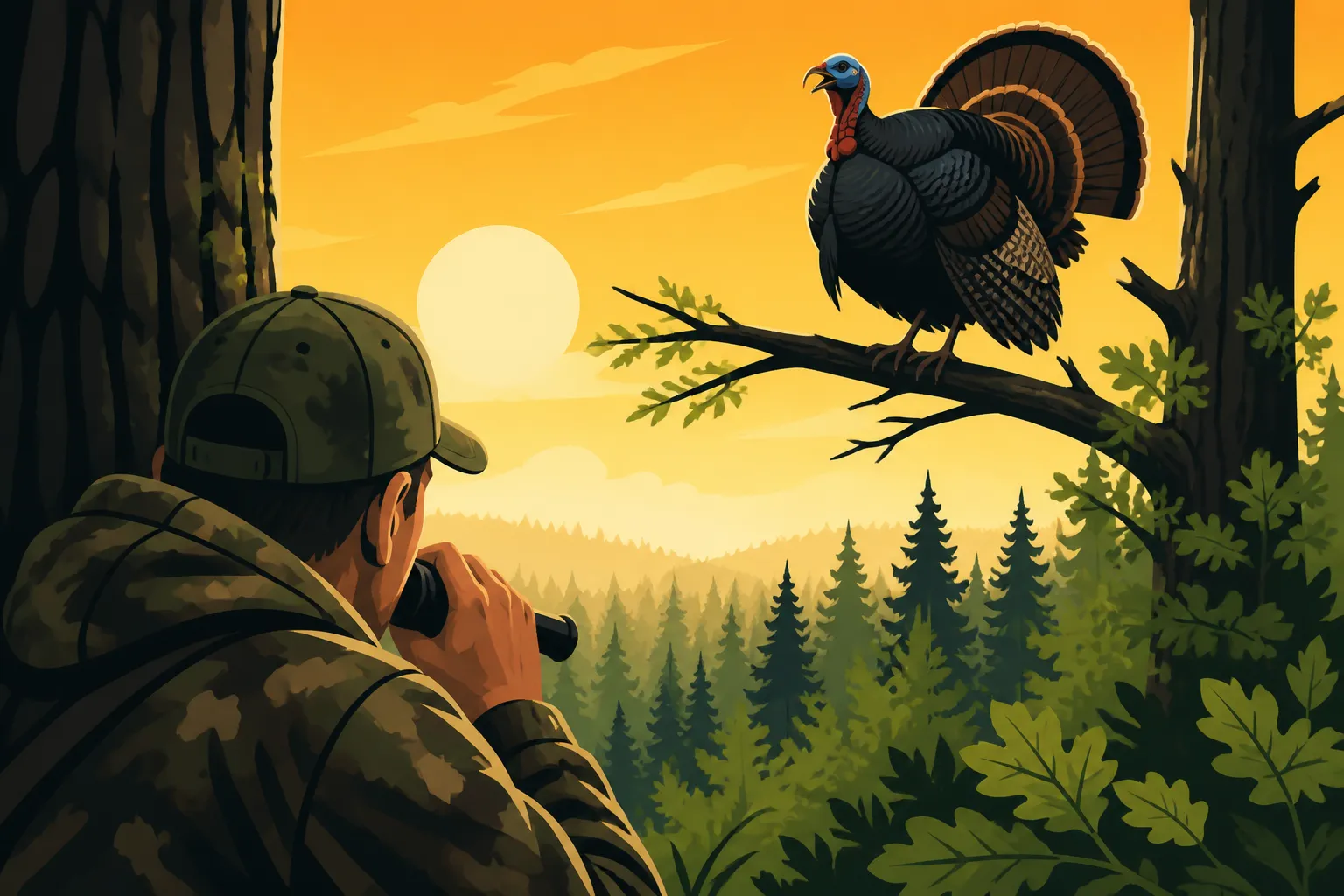
Calling a Gobbler Off an Ontario Roost
That feeling when a big tom absolutely erupts on the roost, his gobble echoing through the crisp Ontario morning, only to have him hang up or disappear with his real hens can be incredibly frustrating. We’ve all been there, perched silently in the dark, convinced we had him, only to watch him fly down in the wrong direction. This guide is all about mastering the art of calling a gobbler off his roost, giving you the best chance to tag that elusive spring bird right here in Ontario.
Understanding the Roosting Game: Before Dawn Breaks
Before you even think about putting a call to your lips, you need to understand why gobblers roost where they do and what their morning routine typically looks like. This isn't just about finding a tree; it's about anticipating their every move as the first rays of light touch the bush.
Why Gobblers Roost High
Imagine you’re a wild turkey. You’re not exactly the apex predator of the Ontario forest. Coyotes, foxes, great-horned owls – they’re all looking for an easy meal, especially at night. So, turkeys naturally seek safety in numbers and elevation. They’ll fly up into the tallest, stoutest trees they can find, often on a ridge or overlooking a valley, giving them a commanding view and making it harder for ground predators to sneak up. They prefer branches that are somewhat horizontal and sturdy enough to support their weight for hours.
This instinct for safety is paramount. They’re not just picking a random spot; they’re choosing a strategic perch. They want to be able to see and hear any danger as dawn approaches. This also means that when they fly down in the morning, they're looking for a safe landing zone, usually an open area where they can quickly assess threats before heading to their feeding grounds or breeding areas. If you've done your Scouting With Satellite Imagery in Ontario and on-the-ground recon, you might have a good idea of these spots.
The Morning Roost-to-Ground Sequence
The morning ritual of an Ontario gobbler is a predictable, yet sometimes frustrating, dance. It starts in the dark, well before official shooting light. As the first hints of grey appear in the eastern sky, hens will often start with soft, contented tree yelps and clucks. They're just waking up, letting the flock know they're there. Then, the gobblers chime in. Their initial gobbles from the roost are often their most enthusiastic, trying to gather hens. They're basically saying, "Hey ladies, I'm over here, come to me!"
Once it's light enough to see predators on the ground, the hens will typically fly down first, often with a loud "fly-down cackle." This is a definitive sound, a declaration that they’ve hit the ground safely. The gobblers, being naturally cautious and often expecting the hens to come to them, will usually wait a bit longer, sometimes gobbling a few more times from the branch before finally gliding to the ground. This transition period, from the first tree yelp to when the gobbler's feet touch the dirt, is your absolute prime window to influence his behaviour. Many a hunter has missed their shot because they didn't anticipate this sequence.
Deciphering Gobbler Communication: Calls That Connect
You’ve found your spot, tucked into the dark bush, and you hear him hammer on the roost. Now what? The key isn't just making turkey sounds; it's understanding what those sounds mean and when to use them.
Subtle Calls: Mimicking the Waking Hen
When a gobbler is still on the roost, he’s in a vulnerable position. He’s not looking for a fight; he’s looking for companionship and safety. Your initial calls should mirror this mood. Think soft, sleepy tree yelps. These are quiet, almost muffled yelps, perhaps 3-5 notes, sounding like a hen just stretching her wings and announcing her presence to the flock. You might throw in a few soft clucks or purrs. The goal is to make him aware of your "presence" as a seemingly uninterested hen just waking up, not to aggressively challenge him or pull him right in.
Many hunters make the mistake of hammering him with loud, aggressive calls right off the bat. This often spooks him or makes him suspicious. He's heard it all before from other hunters. Instead, ease into it. Wait for him to gobble on his own, then respond softly. If he gobbles harder, you can slightly increase your volume or add a few more yelps, but always err on the side of subtlety. This is especially true for Pressured Ontario Gobblers who have heard every trick in the book. A good friction call, like a slate or crystal call, can give you that soft, realistic sound needed for those delicate tree yelps.
Aggressive Calls: Once He Hits the Ground (or Just Before)
The game changes once the turkeys start to fly down. As soon as you hear those tell-tale wing beats or a fly-down cackle from real hens (or if you decide to mimic one yourself), you can become a bit more assertive. A realistic fly-down cackle, followed by some excited yelps and cutting, can make a gobbler think a hot hen just landed and is ready to get on with her day. This is where a mouth call or diaphragm call shines, allowing you to mimic a series of calls without moving your hands.
The timing here is critical. If he’s still on the limb, a fly-down cackle might convince him to get down sooner, especially if he thinks a hen is landing near you. Once he’s on the ground, assembly yelps – louder, more rapid yelps – can suggest a hen is trying to gather other birds, or even that she's eager to meet up. If he gobbles hard at your yelps, try a soft purr or cluck, then go silent. Make him think you’re walking away, playing hard to get. This often pushes a reluctant gobbler to come investigate. Don't be afraid to mix it up. Sometimes a few minutes of silence after an aggressive series can be the most effective "call" of all.
Here’s a simple table to help visualize call types and their best use for roosted birds:
| Call Type | Sound Description | Best Use (Gobbler on Roost) | Best Use (Gobbler on Ground/Flying Down) | Tool Examples |
|---|---|---|---|---|
| Tree Yelp | Soft, sleepy, 3-5 notes, contented | First light, subtle invitation, announcing presence | Rarely used once on the ground | Slate, box, diaphragm |
| Soft Cluck & Purr | Quiet, contented, barely audible | Early morning, reassuring, "I'm here, I'm safe" | Close range, drawing him the last few yards, appearing relaxed | Slate, diaphragm, mouth call |
| Fly-Down Cackle | Rapid, excited series of yelps and clucks | When real hens fly down, or to trigger early fly-down | Immediately after landing, drawing attention | Diaphragm, box (fast hand needed) |
| Assembly Yelp | Louder, more urgent, 5-10 rapid yelps | Rarely, only if he's highly engaged on roost | After fly-down, gathering hens, showing eagerness | Slate, box, diaphragm |
| Cutting | Sharp, abrupt, excited bursts of sound | Rarely, might be too aggressive too early | After fly-down, demanding attention, sounding feisty | Diaphragm, slate (sharp strike) |
GoHunt offers some excellent resources and articles on advanced calling techniques that can further refine these skills, helping you produce more realistic and varied turkey sounds.
Strategic Setup: Positioning for Success
Once you've done your Scouting a Wildlife Management Unit and located a likely roost tree, your setup is arguably more important than your calling prowess. A perfect call from a poor position will rarely seal the deal.
Approaching and Positioning Yourself
The most crucial time is often the hour before first light. You need to get into position silently and without spooking anything. Turkeys have incredible hearing and eyesight, even in low light. Use terrain features like ridges, creek bottoms, or dense cedar swamps to mask your approach. Try to be in your final setup spot at least 45 minutes to an hour before you expect the first gobble. That means leaving your vehicle or camp early.
Your ideal setup will be 100 to 200 yards away from the roost tree, if possible. This distance is a sweet spot: close enough for him to hear your calls clearly, but far enough that he won't be able to pick you out of the shadows if he flies down towards you unexpectedly. Crucially, position yourself between the roost tree and where you expect the gobbler wants to go. This could be a food plot, an open field, or a logging road where he typically gathers his hens. Your goal is to intercept him on his way. This could be on a Hunting a Hardwood Ridge for Whitetails if turkeys are using the same terrain, or a Hunting a Beaver Meadow Crossing for morning hydration.
Utilizing Decoys and Terrain
Decoys can be a game-changer, but they can also be a liability, especially for Decoy Placement for Pressured Ontario Gobblers. If you're hunting public land or areas with a lot of pressure, sometimes no decoy is the best decoy. However, if you're on private land or confident in the area, a single hen decoy, or a hen and jake combo, can provide a visual target for a gobbler. Place your decoy(s) about 20-30 yards from your position, giving the gobbler something to focus on other than your blind spot.
Always set up with your back against a wide tree trunk, rock, or other substantial cover. This breaks up your outline and protects your back from any approaching gobbler or, more importantly, another hunter. Turkeys have a nearly 270-degree field of vision, so even the slightest movement can give you away. Ensure you have a clear shooting lane in the direction you expect the gobbler to approach, but also be ready for him to pop up anywhere. Remember to consider your silhouette against the rising sun – always try to keep the sun at your back if possible, making it harder for the gobbler to see you while your position is illuminated. You might find yourself Setting Up Against a Big Maple for ideal concealment.
Troubleshooting: When Gobblers Hang Up or Go Silent
Even with perfect calling and setup, turkeys are notoriously unpredictable. They have a mind of their own, and often, that mind tells them to do the exact opposite of what you expect.
The Dreaded "Hanging Up" Scenario
This is perhaps the most common frustration in turkey hunting. The gobbler is gobbling his head off, responding to every call, getting closer and closer… and then he stops. He's usually just out of range, maybe 70-100 yards, and he won't take those last few steps. He expects you, the "hen," to come to him. This is a test of patience, and many a hunt has been ruined by an impatient hunter moving too soon.
When he hangs up, resist the urge to immediately call aggressively or stand up. Go completely silent for 10-15 minutes. Let the woods breathe. Sometimes, a lack of response will make him curious enough to take a few more steps. If that doesn't work, try a few very soft clucks and purrs, almost like you're losing interest and moving away. You can also try to "read" the ground between you and him. Is there a fence, a creek, or an impenetrable thicket he doesn't want to cross? If so, you might have to try a slow, deliberate crawl or a wide flanking move, using the terrain to cover your approach, but this is risky. Some hunters even try a subtle "GoHunt" calling app tactic where they mimic a different hen slightly farther away to draw him out.
When the Gobbler Goes Silent
A gobbler going silent can mean a few things, and not all of them are bad. He might have simply committed and is now sneaking in quietly, trying to surprise the "hen." Or, he might have spotted something that spooked him (maybe you, maybe a predator), or he’s simply lost interest and moved off with real hens.
If he goes silent after intense gobbling, give it time. Stay put for at least 20-30 minutes. Scan the area constantly, especially where you last heard him. Use your binoculars to pick apart every shadow. Sometimes, you'll see him materialize silently out of the bush. If nothing happens after a good waiting period, you have two options: either cautiously move to a new location, perhaps trying to cut him off if you suspect his travel path, or call sparingly with very soft, contented clucks and purrs to see if he'll reveal himself. Don't be afraid to take a long walk around and try Calling a Gobbler Off an Ontario Roost from a different angle, covering ground in Hunting an Ontario Bush Edge.
The Impact of Real Hens and Other Hunters
One of the biggest challenges in calling a gobbler off the roost is the presence of real hens. If he already has a harem of real hens with him, he has no incentive to come to your calls. He’s the king of his roost, and he expects his ladies to come to him. In this scenario, your best bet is often to try to call the hens to you. If you can draw in the hens, the gobbler will often follow. Use excited yelps and cuts, mimicking a particularly eager hen. Patience is vital here; sometimes you have to wait for the hens to disperse later in the morning before he becomes more receptive.
Other hunters are an unfortunate reality, especially on public land. It's not uncommon to hear multiple calls in the morning, or to have another hunter walk in on your setup. Always be aware of your surroundings, wear blaze orange when moving through the bush (it's not required for turkey hunting while set up, but wise for moving), and make sure you've confirmed your target. If you suspect another hunter is working the same bird, you might consider backing out and finding another area to ensure safety. Familiarize yourself with Ontario Spring Turkey Season Dates and Ontario Wild Turkey Licences and Tags to ensure you are always compliant and safe.
Final Thoughts on Roosted Gobblers
Calling a gobbler off the roost is an experience unlike any other in Spring Turkey Hunting in Ontario. It’s a chess match of wits, patience, and realistic sound. Remember that every bird is different, and what works one day might not work the next. Pay close attention to subtle cues from the gobbler – the intensity of his gobble, the direction it's coming from, any changes in his cadence. Sometimes a soft series of calls is all it takes; other times, silence is your most potent weapon.
Don’t get discouraged if it doesn’t work every time. That’s just turkey hunting in Ontario! Keep practicing your calls, honing your setup, and learning from every encounter. Before you know it, you’ll be hearing those thunderous gobbles and watching a big tom strut right into your shooting lane.
Disclaimer
Hunting is an activity with inherent risks. Always prioritize safety, understand and follow all local hunting regulations, and be aware of your surroundings. This guide provides general information and should not replace professional instruction or official government resources.