Calling a Bull Moose in the Rut
The distinct, guttural grunts and desperate wails of a cow moose seeking companionship can stir the deepest instincts of a bull, but getting those sounds just right, and at the right time, feels like an art form that often leaves hunters frustrated and empty-handed. This guide is all about demystifying the art of calling a bull moose during Ontario's rut, helping you understand their language and behaviours to bring that massive animal into range.
Understanding the Moose Rut and Their Mindset
The moose rut in Ontario is a period of intense activity, marked by bulls seeking cows, challenging rivals, and generally throwing caution to the wind in their pursuit of breeding. It's a prime time for hunters, but you need to understand the underlying motivations driving these magnificent animals. You're not just making noise; you're speaking their language, attempting to tap into their most powerful desires. Without understanding this, your calls might just be background noise.
When Ontario's Moose Rut Peaks
Knowing the exact timing is absolutely crucial for success. In much of Ontario, especially across the vast boreal forests, the moose rut typically begins in late September and can run well into October. The peak action, however, often lands in the first two weeks of October. This isn't a hard and fast rule, though; slight variations can occur based on weather patterns, specific regions, and even lunar phases, which some old-timers swear by. You'll notice increased activity as bulls start to travel more, leaving fresh sign and becoming more vocal. Checking the official Ontario hunting summary for your specific Wildlife Management Unit (WMU) will give you the precise season dates, but understanding the general window for When Ontario's Moose Rut Peaks can help you plan your time in the bush.
The Moose Mindset During the Rut
During the rut, a bull moose has essentially two things on his mind: finding a receptive cow and asserting dominance over other bulls. This intense focus makes them more vulnerable to calling, but also more unpredictable. They are driven by instinct, often ignoring potential dangers they might otherwise shy away from. A bull looking for a cow will respond to a convincing cow call, hoping to find the source of the sound. Conversely, a dominant bull, or one feeling challenged, might come in aggressively to investigate another bull's presence. Understanding this duality – the desire for a mate and the urge to dominate – allows you to tailor your calling strategy, shifting from seductive to challenging as the situation demands. Their minds are almost singularly focused on procreation and competition, making them less wary if you hit the right notes.
Reading Moose Sign for Calling Success
Before you even think about calling, you need to find where the moose are. Reading sign is your first step. During the rut, moose leave behind a wealth of clues. Look for freshly rubbed trees, where bulls have scraped their antlers to mark territory and remove velvet. These rubs will be on saplings or smaller trees, often with bark stripped off and the underlying wood exposed. You’ll also find fresh tracks, especially larger bull tracks, showing increased travel. Wallaby pits, or "rut pits," are another strong indicator – these are shallow depressions in the ground where bulls have urinated and rolled, leaving a strong scent. If you find these signs, especially fresh ones, you're in an active area, greatly increasing your chances of calling success. GoHunt mapping tools can be invaluable here, allowing you to scout potential areas from home and identify features like old logging cuts or beaver ponds where moose activity might be concentrated. This pre-scouting, combined with fresh ground sign, helps pinpoint where to set up.
Essential Calls and Techniques for Ontario Moose
Moose calling isn't just one sound; it's a repertoire of vocalizations and environmental sounds designed to mimic real moose interactions. You need to be able to replicate these realistically and deploy them strategically to draw in a bull. It takes practice, but the rewards are well worth the effort. Think of it as telling a story with sound, one that a bull moose will want to investigate.
Mastering the Cow Call
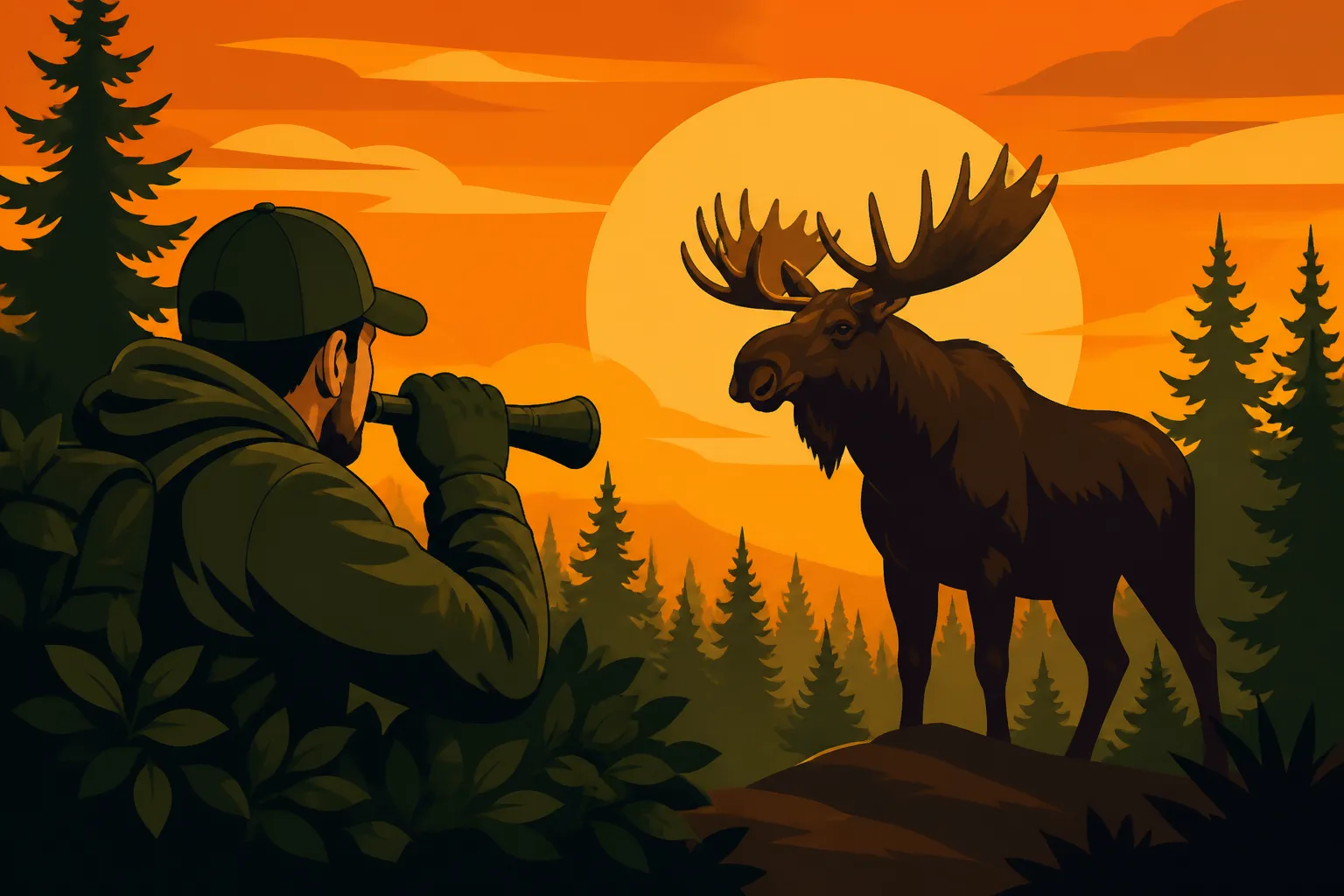
The cow call is often the most effective tool in your arsenal, particularly in the early and peak stages of the rut when bulls are actively seeking mates. A good cow call is a long, drawn-out wail, often with a slightly pleading tone at the end. It's meant to sound like a lonely cow advertising her presence. There's no single "perfect" cow call, as individual cows have different vocalizations, but consistency and realism are key. Practice making a sound that carries well through the dense Ontario bush. You can use your natural voice, a birch bark horn, or various commercial calls. The key is to project the sound, letting it echo and inviting a response. Sometimes, a series of shorter, softer cow calls can also pique a bull's interest, suggesting a cow that might be about to move off, prompting him to close the distance. This call is your primary invitation, your "hello, I'm here."
Aggressive Bull Grunts and Challenges
While the cow call is about attraction, bull grunts and challenges are about dominance and territoriality. These calls are best used when you've located a bull, or if you want to challenge a bull that's been responding to your cow calls but isn't committing. A bull grunt is a deeper, more guttural sound than a cow call, often short and sharp. It mimics a bull asserting his presence. If you hear a distant bull respond with a similar grunt, you can escalate with a more aggressive challenge. This might involve a series of grunts, sometimes followed by a snort or a short, sharp bellow. Be cautious with these; a bull coming to a challenge will likely be more aggressive and less forgiving of mistakes. They often come in silently, ready for a confrontation. When done right, these calls can pull in a big bull looking for a fight, especially in areas where moose densities mean more competition.
The Art of Raking and Antler Sounds
Beyond vocalizations, simulating the sounds of a moose rubbing its antlers against trees – known as "raking" – can be incredibly effective. This isn't just noise; it’s a direct simulation of a bull marking territory, venting frustration, or challenging another bull. To rake, use a large, dry shoulder blade, a stick, or even actual antlers if you have them, and scrape them against brush, small trees, or the ground. Break branches, thrash saplings, and really make some noise. This often works best in conjunction with bull grunts. Imagine a bull tearing up the bush, showing off his power. The sound of real antlers cracking against wood can be an undeniable magnet for a bull moose looking to see who's moved into his backyard. It adds a visual and auditory realism that vocal calls alone sometimes can't achieve. Combine this with a grunt and some cow calls, and you’re painting a very convincing picture of a moose party in the bush.
| Call Type | Primary Purpose | Best Use Case | Risk Level | Notes |
|---|---|---|---|---|
| Cow Call | Attract an interested bull looking for a mate | Early/Peak rut, when bulls are searching | Low (attraction) | Long, drawn-out wail, often pleading. Most versatile. |
| Bull Grunt | Assert presence, challenge other bulls | After a cow call response, or to locate a bull | Medium (challenge) | Deeper, guttural, short. Can be combined with raking. |
| Raking/Antler | Simulate bull thrashing, marking territory | With bull grunts, to draw in aggressive bulls | Medium (challenge) | Scrape branches, break twigs. Adds realism. |
| Dominant Bellow | Direct challenge to an aggressive bull | When a bull is responsive but hesitant, or aggressive | High (confrontation) | Loud, snorting grunts. Use with caution. |
Setting Up for Success: Location, Wind, Patience
Making the right calls is only half the battle. Your setup, including where you position yourself, how you manage your scent, and your overall approach, can make or break a hunt. A perfect call delivered from a poor location or into the wrong wind is just a wasted effort. This is where strategic thinking and understanding the environment truly come into play, especially when hunting in vast and unforgiving landscapes like Moose in Ontario's Boreal Forest.
Choosing the Right Calling Location
Selecting your calling spot is paramount. You want a location that offers good visibility and shooting lanes in the direction you expect a moose to approach, but also provides natural cover for you. Elevated positions, like a small ridge or a rise, can help your calls carry further and give you a better vantage point. Consider natural travel corridors such as game trails, creek bottoms, or the edges of clearings. Areas around Hunting Moose Around an Ontario Beaver Pond are often moose magnets, providing food and water. Avoid setting up in dense, impenetrable cover where you can't see an approaching moose or get a shot. Also, think about your escape route or where you want the moose to be for an easier retrieval, especially if you're alone and wondering about Quartering a Moose Alone in the Bush. A good location maximizes your ability to hear, see, and react to a bull's approach.
Wind Direction and Scent Control
This cannot be stressed enough: wind is your number one enemy when hunting moose. A moose's sense of smell is legendary, and if a bull gets even a whiff of human scent, he's gone, usually without you ever knowing he was there. Always set up with the wind in your face, or quartering to you, so your scent is blowing away from the direction you expect the moose to come from. Use scent-eliminating sprays on your clothes, and avoid strong-smelling foods, colognes, or anything artificial. It's often helpful to position a hunting partner downwind slightly, acting as a spotter, if local regulations allow. Be mindful of swirling winds, especially in hilly or broken terrain. Checking the wind constantly with a puff bottle or wind indicator is a habit every successful moose hunter lives by. Neglecting the wind is a rookie mistake that guarantees failure, even if your calling is impeccable.
Patience and Persistence in the Calling Game
Moose hunting, especially calling, demands an incredible amount of patience and persistence. You can't just make a few calls and expect a bull to come charging in. Often, you'll sit for extended periods, making calls every 15-30 minutes, sometimes even longer. A distant bull might take an hour or more to slowly circle downwind and approach. Don't get discouraged if you don't hear an immediate response. Keep calling, varying your sequence and intensity. Sometimes, the most subtle, barely audible response is all you'll get, and it’s up to you to interpret that tiny sound as a sign of interest. Many hunters give up too soon, missing out on a bull that was slowly working his way in. Dedicate full days to a calling stand if possible. Remember, hunting for What a Big Bull Moose Weighs is a marathon, not a sprint, and persistence truly pays off. If you’re not getting responses in one area after a few hours, consider a slow, quiet move to a new location, maybe 500 meters away, and start the sequence again.
Common Mistakes and Troubleshooting Moose Calling
Even experienced callers make mistakes. The key is to recognize them, learn from them, and adjust your strategy. Moose are wild animals, and they don't always follow the script. Understanding what not to do is just as important as knowing what to do when Calling Moose in Ontario's Boreal Forest.
Over-Calling and Under-Calling
One of the most common pitfalls is striking the wrong balance with call volume and frequency. Over-calling can make you sound unnatural, like an overeager, desperate animal, which can spook wary bulls. It can also make it harder for you to hear subtle responses from a distant moose. On the flip hand, under-calling means your calls aren't carrying far enough or aren't consistent enough to grab a bull's attention. A good rule of thumb is to start with a series of cow calls, wait 15-20 minutes, then perhaps follow up with some raking and a grunt. Listen intently between calls. If a bull responds, you might reduce your calling frequency and volume, letting him come to you. Think of it as a conversation: you respond, then you listen. If a bull is coming in hot, you might even go silent to avoid giving away your exact position, letting curiosity bring him the rest of the way. Tools like GoHunt can help you understand the terrain, which impacts how far calls will carry.
Misinterpreting Moose Responses
A bull moose doesn't always roar or crash through the bush when he's interested. Sometimes, their responses are incredibly subtle. You might hear a faint twig snap in the distance, a barely audible grunt, or the rustle of leaves as they move slowly. Don't dismiss these quiet sounds; they can be the most dangerous. A silent approach means a smart bull, and you need to be ready. Learn to distinguish natural bush sounds from moose sounds. If you hear what sounds like a rock hitting another rock, or a heavy footfall, it could be a bull carefully approaching. Another common response is for a bull to circle downwind to get your scent before committing. This is why vigilance and constant wind checking are so crucial. If a bull stops responding to your calls, it doesn't always mean he's gone; he might be circling. Anticipate this and adjust your position or be ready for a silent visitor.
Dealing with Unresponsive Bulls
There will be times when, despite your best efforts, a bull simply won't respond or commits to coming in. Don't take it personally; there are many factors at play. He might already have a cow, be too far away, or simply not be in the mood. If a bull grunts back but hangs up out of sight, try varying your calls. If you've been doing cow calls, introduce some light raking or a softer bull grunt to make him think another bull is moving in on his potential mate. If he's completely silent, consider a long, slow circle to try and get downwind of where you heard him last, or even come back to the same spot a few hours later. Sometimes, a change in weather or time of day can make all the difference. Remember, the moose rut can be intense, but moose are still cautious animals. Keep experimenting with your calls, be patient, and don't be afraid to try a different location or tactic, perhaps one you scouted using GoHunt maps that shows promising cover or feed.
Disclaimer
Hunting involves inherent risks. Always prioritize safety, understand and follow all Ontario hunting regulations, and ensure you have the proper licenses and tags. This guide offers general information and does not substitute for personal research, professional instruction, or adherence to local laws. Ensure you are familiar with Ontario Hunting Licences and What They Cost and all specific rules for your chosen WMU.