Hunting a Hydro Corridor Edge
It's incredibly frustrating when you're scouting for prime hunting ground in Ontario, especially if you're hitting public land, and it feels like every good ridge or cedar swamp has already been walked by a dozen other hunters. Finding those overlooked, high-potential areas can feel like searching for a needle in a haystack, but sometimes, the best spots are hiding in plain sight. This guide is all about one such often-underestimated gem: the hydro corridor edge, and how you can effectively hunt it for a variety of game.
Why Hydro Corridors Are Wildlife Magnets (and Hunter Hotspots)
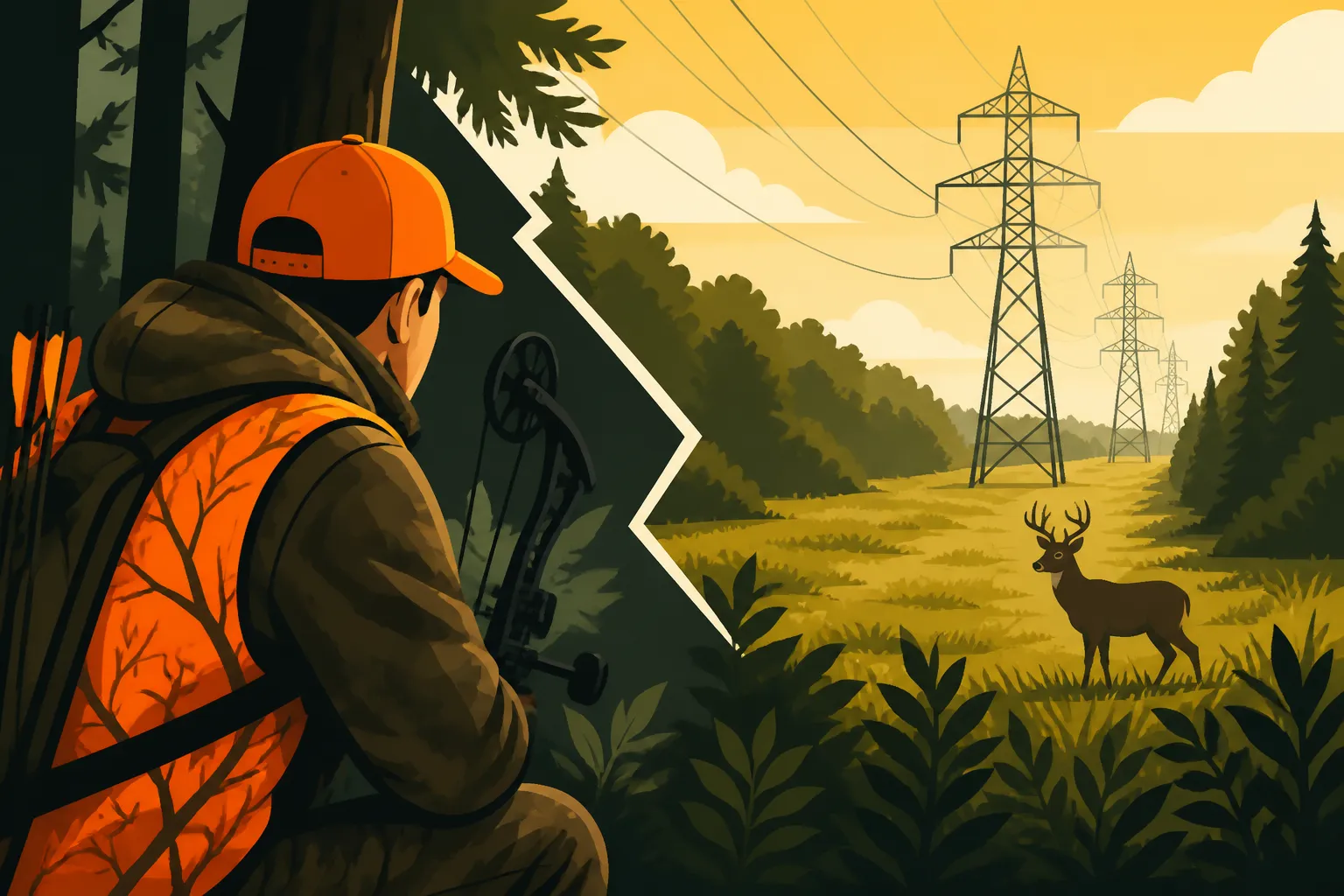
Hydro corridors, those long, cleared swathes of land beneath power lines, might seem like barren, noisy places. But to the keen eye of an Ontario hunter, they are ribbons of opportunity, often overlooked by those who prefer the deep bush. These linear clearings create unique habitat features that act like a giant magnet for wildlife, making them fantastic spots for deer, moose, bear, and even smaller game.
The "Edge Effect" and Habitat Diversity
Think about it: a hydro corridor is, by its very nature, a massive "edge." It's where the dense forest suddenly meets an open, sun-drenched strip. This junction, known as the "edge effect," creates a wildly diverse ecosystem compared to either the deep woods or a perfectly uniform clearing. Along these edges, you'll find a greater variety of plant life. The sunlight penetrating the forest floor encourages the growth of shrubs, saplings, and herbaceous plants that simply can't thrive under a dense canopy. This means more browse for deer and moose, more berries for bears, and more cover for smaller animals.
Because of this constant interplay between sun and shade, open ground and dense cover, the microclimates along a hydro corridor edge are also incredibly varied. One side might be sheltered from a prevailing wind, offering a cozy bedding area, while the other side, bathed in morning sun, provides ideal feeding grounds. It’s this diversity that makes these strips so attractive to a wide array of game species looking for food, cover, and travel routes.
Travel Routes and Funnels for Big Game
One of the most valuable aspects of a hydro corridor from a hunting perspective is its function as a natural highway system for wildlife. Imagine a vast expanse of dense bush; moving through it can be slow and arduous for any animal. A cleared hydro corridor offers a faster, easier path. Deer, moose, and even bears will often use these corridors to travel from bedding areas to feeding grounds, or to connect different blocks of cover without having to fight through thick undergrowth.
These clearings also act as natural funnels. If you have two large blocks of forest separated by a hydro corridor, game animals moving between those blocks will often be pushed along the edge of the corridor, or even cross it at specific, predictable points. These choke points, often where the corridor narrows, dips into a low spot, or crosses a natural drainage, become prime ambush sites. Learning to identify these crossing points is key to successful hunting along a hydro corridor. They're essentially the highways and intersections of the wild, and knowing them can put you right in the path of a cruising buck or a travelling bear. This is a lot like Hunting a Fencerow Between Two Fields, where the linear feature dictates animal movement.
Food Sources and Browsing Opportunities
Beyond simply offering an easier path, the hydro corridor provides an abundance of food sources that might not be available elsewhere in the immediate vicinity. The regular maintenance that keeps these corridors clear often involves selective cutting or mowing, which promotes the growth of early successional plants – those pioneer species that spring up rapidly in disturbed areas. Think about young aspen and poplar shoots, various berry bushes like raspberries and blueberries, and a host of grasses and forbs.
For a whitetail deer, these tender young shoots are highly palatable and nutritious. For a black bear, the berry crops can be an irresistible draw, especially in late summer and fall when they're bulking up for winter. Moose will browse on the willow and other woody shrubs that thrive in the open sunlight. The sheer volume and diversity of these food plants mean that game animals are not just passing through the corridor; they are actively feeding along its edges, often lingering for extended periods. This offers excellent opportunities for still-hunting or setting up a stand where the animals come to dine.
Scouting and Planning Your Hydro Corridor Hunt
Like any successful hunt in Ontario, a hydro corridor hunt begins long before you ever step foot in the bush with your rifle or bow. Thorough scouting and meticulous planning are absolutely crucial, especially since these areas can sometimes present unique challenges and opportunities.
Using Topo Maps and Satellite Imagery
Before you even lace up your boots, you should be pouring over maps. Digital tools are your best friend here. Platforms like onX Hunt or GoHunt allow you to layer satellite imagery over topographical maps, giving you an incredible birds-eye view of the landscape. You can easily identify hydro corridors, see how they cut through different types of cover – from dense pine plantations to open hardwoods or even swamps. Look for key features where the corridor intersects other appealing habitat types. Does it cross a creek bed? Does it run parallel to a major ridge? Does it pinch down between two swamps?
These online mapping systems are invaluable for Scouting With Satellite Imagery in Ontario. Pay close attention to how the corridor connects existing game trails, known bedding areas, and feeding zones. A hydro line that connects a large cedar swamp (a prime wintering or bedding area) to an agricultural field (a major food source) is pure gold. Mark potential ambush points, such as bends in the corridor, slight rises in elevation that offer good visibility, or areas where thick cover comes right up to the edge. Don't forget to check property lines on these maps, especially if the corridor traverses a mix of Crown and private land.
Ground Scouting for Sign and Travel Patterns
Once you've identified promising areas on your maps, it's time to hit the ground. Ground scouting is where you confirm your theories and find the real-world evidence of game activity. Walk the edges of the corridor, not necessarily right down the middle, but along the treeline where game feels most secure. Look for fresh tracks entering and exiting the corridor, especially where it crosses drainages or where the treeline offers easy access.
Pay close attention to rubs and scrapes along the timber edge – these are clear indicators that deer are using the area regularly, especially during the pre-rut and rut. Look for browse lines on shrubs and saplings, indicating feeding activity. In areas known for moose or bear, keep an eye out for larger tracks, scat, and claw marks on trees. Try to determine the prevailing direction of travel. Are deer mostly moving from north to south, or east to west? Are they entering the corridor from specific bedding pockets and heading towards particular feeding areas? Understanding these patterns will dictate your stand placement and hunting strategy. Remember, Reading Whitetail Sign in Ontario Hardwoods is a crucial skill, and it applies just as much to the edges of a hydro line.
Understanding Access and Regulations
Before you commit to hunting a specific hydro corridor, it's absolutely vital to understand the access and regulations that apply. First and foremost, you need to know if you're on Crown Land or private property. While many hydro corridors traverse Crown Land, many also cut through private woodlots or farmland. Hunting Ontario's Crown Land comes with its own set of rules, but hunting private land always requires permission from the landowner. Never assume; always ask. Trespassing can lead to serious penalties and gives all hunters a bad name.
Beyond property lines, be aware of the specific Wildlife Management Unit (WMU) you are in. Different WMUs can have different season dates, bag limits, and even specific weapon restrictions. Some WMUs might be shotgun-only zones, for instance. Always consult the current Ontario Hunting Regulations Summary for your specific WMU. Also, consider the specific rules that might apply to linear features. While generally you can't shoot across a road, a hydro corridor is typically not considered a road for this purpose, but exercise extreme caution and always be certain of your target and what lies beyond. You should always be Reading an Ontario WMU Map Before You Go.
Hunting Strategies for Hydro Corridor Edges
Now that you've scouted, mapped, and planned, it's time to think about execution. Hunting a hydro corridor edge offers some unique advantages, but also requires specific tactics to make the most of its characteristics.
Stand Placement and Ambush Points
The key to successful hydro corridor hunting, especially for deer and moose, often lies in strategic stand placement. You want to be positioned where you can intercept game moving along the edge or crossing the open strip. Look for pinch points – areas where the dense bush narrows the corridor, or where a slight dip in the terrain might encourage animals to cross. A small rise or knoll overlooking a popular crossing can be an ideal spot.
Your stand, whether it's a treestand or a ground blind, should be set up inside the timber, perhaps 10-20 yards in, rather than right on the exposed edge. This provides critical cover, breaks up your silhouette, and allows you to observe game approaching the corridor without being easily seen. Always set up with the wind in your favour, considering the prevailing wind direction for the time of day you'll be hunting. The openness of a hydro corridor means your scent can travel a long way, so managing it is paramount. Think about how a deer might use a Hunting a Hardwood Ridge for Whitetails for travel, and apply that same logic to the corridor edge.
Still-Hunting and Driving the Edges
Hydro corridors aren't just for sitting in a stand. They can be excellent for still-hunting, especially if you move slowly and deliberately, hugging the timber edge. The key is to move with the wind in your face or quartering, taking a few steps, then pausing to observe for long periods. Use the natural undulations of the terrain and the sparse cover along the edge to break up your outline. This works particularly well in the early morning or late evening when game is most active and often feeding along the edges.
For a more active approach, especially in larger, wider corridors, small deer drives can be incredibly effective. With one or two partners, you can slowly push a section of the timber edge, while another hunter (or two) posts strategically on the opposite side or downwind, anticipating game trying to slip across the opening. This tactic is especially potent during gun season. For moose, still-hunting or calling along the timber edge, especially where the corridor passes near swampy areas or beaver ponds, can draw a bull out. Hunting Moose Off a Bush Road is a similar tactic, using linear features to your advantage.
Considering Different Game Species
While deer and moose are often the primary targets, don't overlook other species that thrive around hydro corridors. Black bears, for instance, are frequent users of these clearings, especially when berry bushes are fruiting. Setting up a stand near a thick patch of berries on the edge of a corridor, or along a known travel route bears use to access those berries, can be highly effective for Black Bear Hunting in Ontario.
For small game enthusiasts, hydro corridor edges can be fantastic for grouse and rabbits. The mix of young growth and dense cover provides ideal habitat for ruffed grouse, and you can often find them dusting themselves in the open gravel or feeding on the edges. Still-hunting the edges with a shotgun, or even with a pointing dog, can yield great results. Ruffed Grouse Hunting Ontario's Bush Roads follows a similar principle – using linear features and their edges for hunting. Rabbits and hare will also often utilize the dense shrubbery along the corridor for cover, darting out into the open to feed.
Common Challenges and How to Overcome Them
Hunting hydro corridors offers fantastic opportunities, but like any hunting scenario, it comes with its own set of challenges. Being aware of these and having strategies to overcome them will significantly increase your chances of success and ensure a safe, enjoyable hunt.
Dealing with Visibility and Openness
The very thing that makes hydro corridors attractive – their openness – can also be their biggest challenge. Long sight lines mean game can spot you from a distance, and there's often less natural cover to conceal your approach or your stand. This requires extra vigilance and careful planning.
To overcome this, always position yourself inside the timber edge, not directly in the open. Use natural features like downed trees, large rocks, or thick clusters of evergreens to break up your outline, even if you're in a stand. When still-hunting, move at an incredibly slow pace, using the "stop-and-go" method. Take two or three steps, then stop and thoroughly scan the area for several minutes before moving again. Utilize binoculars to glass the entire corridor and the opposing treeline for any subtle movement. In low light conditions, like dawn and dusk, the visibility challenge is somewhat mitigated, which is often when game is most active anyway.
Managing Wind and Scent in Linear Terrain
Wind is always a critical factor in hunting, but its behavior in a hydro corridor can be particularly tricky. The cleared path can act like a wind tunnel, channeling your scent directly downwind for long distances. A slight crosswind in the timber might become a direct headwind or tailwind once it hits the open corridor.
This makes meticulous scent control even more vital. Shower with scent-eliminating soaps, wear freshly laundered hunting clothes, and use scent-eliminating sprays on your gear. Most importantly, always play the wind. Have multiple stand locations identified for different wind directions, or be prepared to change your approach if the wind shifts unexpectedly. If the wind is swirling or unpredictable, it might be best to hunt a different type of cover, like a Hunting a Cedar Swamp Edge, where the wind patterns are more consistent, or even try calling or driving tactics that allow you to move with the wind advantage. Pay attention to how thermals work, too – rising in the morning and falling in the evening – as they can carry your scent vertically as well as horizontally.
Hunter Pressure and Ethical Considerations
Because hydro corridors are often easily accessible and can be productive, they sometimes see more hunter pressure than deep wilderness areas. This is especially true for corridors that run close to towns or popular access points. Increased pressure can make game more wary and push them into nocturnal patterns or into thicker cover during daylight hours.
To counter this, try to find less obvious access points, or be willing to walk further into a corridor than most other hunters. Often, the best spots are a mile or more from the nearest road. Hunt during weekdays if possible, when pressure is typically lower. If you encounter other hunters, always be courteous and respect their space. Never crowd another hunter's setup. Safety is paramount; always be certain of your target and what lies beyond, especially with the long sight lines. Remember that even in open areas, you need to know your backdrop and be aware of any buildings, roads, or other hunters. And always have a plan for what to do if What to Do If You Get Turned Around in unfamiliar territory, even if it seems straightforward.
Here's a quick look at the pros and cons of tackling a hydro corridor:
| Feature | Pros | Cons |
|---|---|---|
| Visibility | Long sight lines offer early detection of game. | Openness makes hunters easily spotted by game. |
| Access | Often easy to access due to clearings and service roads. | Easy access can lead to higher hunter pressure. |
| Habitat | Strong "edge effect" creates diverse food and cover. | Can be less aesthetically pleasing than deep wilderness. |
| Game Travel | Natural funnels and travel routes for big game. | Game can quickly cross and disappear into dense cover on either side. |
| Food Sources | Abundant browse and berry crops attract various species. | Food sources can vary year to year (e.g., berry crop failures). |
| Noise | Constant hum of power lines can sometimes mask hunter noise. | The hum can be distracting; machinery might be present for maintenance. |
Disclaimer
This article is for general informational purposes only and does not constitute professional advice. Laws, prices and regulations vary by location and change over time. Consult a qualified professional for guidance on your specific situation.