Ontario WMUs That Need a Boat
It’s a common scenario: you’re poring over an Ontario Wildlife Management Unit (WMU) map, dreaming of untouched bush and big game, when suddenly you realize that vast swaths of prime habitat are completely cut off by lakes, rivers, and swamps. This guide is for every hunter who’s looked at those blue areas and wondered how on earth to reach the other side, specifically identifying WMUs where a boat isn’t just an option, but a fundamental necessity for a successful and safe hunt.
Understanding Ontario's Water-Rich Hunting Grounds
Ontario is a land of incredible natural beauty, but it's also a land defined by water. From the countless lakes and rivers of the Canadian Shield to the expansive wetlands of the Hudson Bay Lowland, water shapes the landscape and, consequently, the hunting opportunities. Ignoring these aquatic features means missing out on some of the most remote and rewarding hunting experiences the province has to offer.
Identifying WMUs Dominated by Waterways
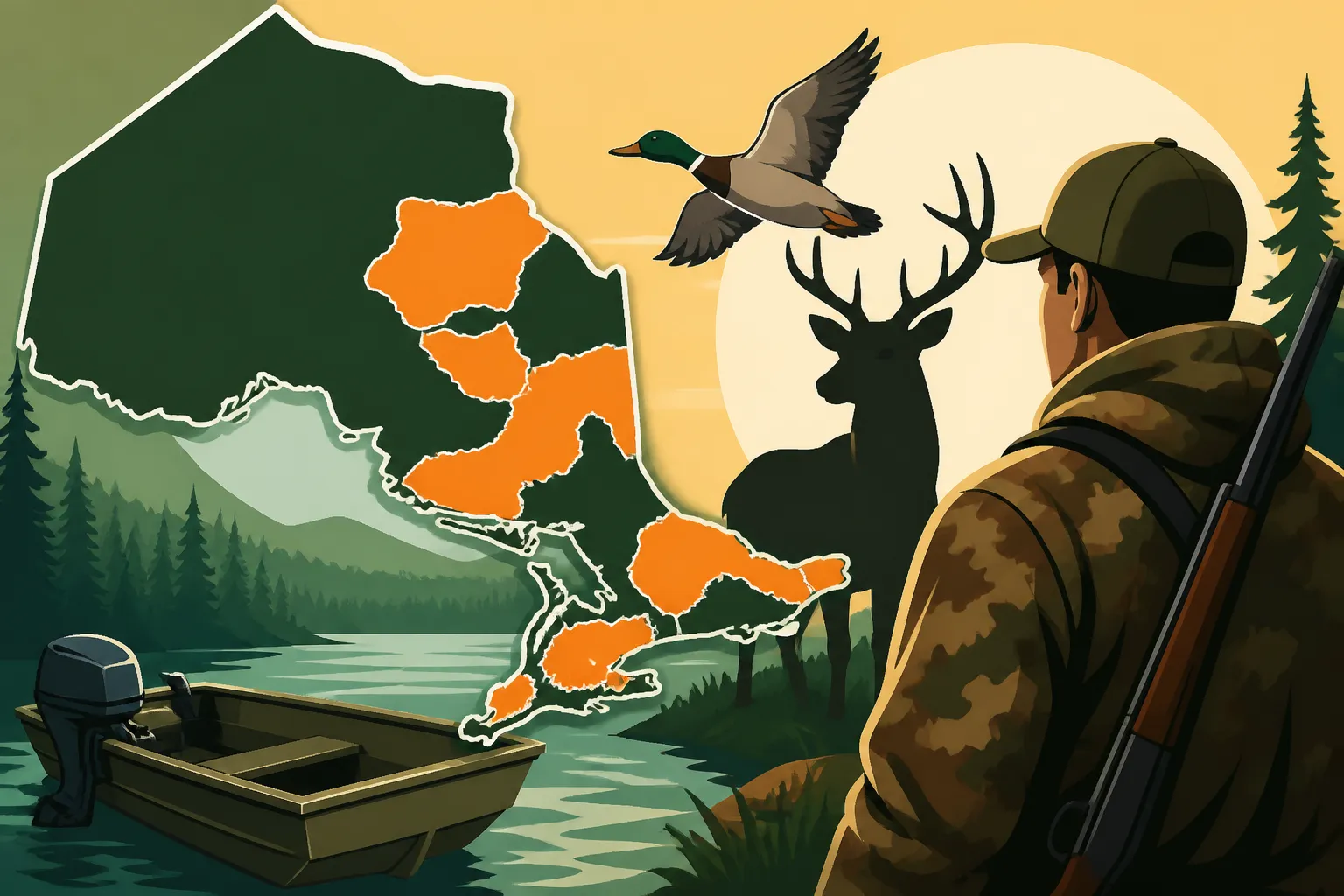
When you examine a provincial WMU map, certain regions immediately stand out due to their intricate network of lakes, rivers, and wetlands. These aren't just small ponds; we're talking about large, interconnected systems that create natural barriers to land-based access. Northwestern Ontario, with its vast tracts of boreal forest dotted by countless lakes like Lake of the Woods, Rainy Lake, and Lake Nipigon, is a prime example. These areas often have limited road infrastructure, meaning that once you leave the main highways, your primary means of travel becomes water. The same holds true for parts of Northeastern Ontario, especially the more remote areas leading towards James Bay, where rivers become the highways.
Think about WMUs like those encompassing the Lake of the Woods Area, Hunting the Nipigon Country, or Hunting the Rainy River Country. These aren't places where you simply pull off the road and walk in. They are characterized by massive bodies of water, islands, peninsulas, and river systems that carve up the land. Even WMUs further south, like those in the Haliburton Highlands or around Hunting the Muskoka Bush, can have substantial lake systems that funnel game movement and restrict foot access, making a boat incredibly valuable, if not essential, for reaching certain pockets of public land.
Why Traditional Land Access Falls Short
Relying solely on walking or ATVs in these water-dominant WMUs severely limits your options. Imagine a situation where you’ve scouted an incredible looking ridge or a cedar swamp on satellite imagery, only to find that it's completely surrounded by a wide river or a sprawling beaver flowage. Without a boat, that promising hunting spot becomes a frustrating mirage. You might spend days hiking around, trying to find a narrow crossing or a forgotten portage, only to discover it’s impassable or on private land.
This is especially true for hunters targeting moose or bear in the northern reaches of the province. These animals often frequent areas close to water, using shorelines for travel, feeding, and escaping pressure. To effectively pursue them, you need to be able to navigate these waters, access islands, or reach remote shorelines that have never seen human boots. Furthermore, the sheer scale of some of these water bodies means that walking around them is simply not feasible within the timeframe of a typical hunting trip. You're talking about dozens, if not hundreds, of kilometers of shoreline.
The Strategic Advantage of Boat Access for Hunters
Having a boat fundamentally changes how you approach hunting in Ontario's water-rich WMUs. It transforms barriers into highways, opening up a world of possibilities that land-locked hunters can only dream of.
Unlocking Remote Hunting Grounds
A boat allows you to bypass the limited road access and dive deep into areas that receive minimal hunting pressure. Think of the thousands of islands on large northern lakes, many of which are Crown Land and hold excellent game populations simply because they are difficult to reach. A sturdy boat, perhaps a canoe or an aluminum runabout, can get you to these islands, offering you exclusive access to untouched territory. You can push further up remote rivers, exploring tributaries and beaver ponds that are impossible to reach on foot. Canoe-In Hunting on Ontario Crown Land can be an incredibly rewarding experience, providing solitude and the chance at truly wild animals.
Consider a scenario where you've used a mapping tool like onX Hunt to identify a promising pinch point on a peninsula, but the only way to get there involves crossing a kilometer of open water. Without a boat, you're stuck looking at it on a screen. With a boat, that remote peninsula becomes your hunting ground. You can load up your gear, cross the water, and set up camp in a spot where the game is less wary due to infrequent human encounters. This access isn't just about getting there; it's about getting to the best places that require extra effort.
Enhancing Game Recovery and Logistics
Beyond simply accessing remote areas, a boat is an invaluable tool for game recovery, especially for larger animals like moose or bear. Imagine harvesting a bull moose deep in a swampy area, a kilometer from solid ground. Without a boat, you're facing an arduous, potentially multi-day pack-out through thick, unforgiving terrain. With a boat, that same animal can often be quartered and loaded, then transported much more efficiently to your vehicle or camp. This isn't just about convenience; it's about preserving meat quality, especially during Meat Care in Ontario's Warm Early Seasons, and ensuring a safe and manageable recovery. Getting a Moose Out by Canoe is a time-honored tradition in Ontario for a reason.
Furthermore, a boat allows you to transport significantly more gear than you could ever carry on your back. This means you can bring more comfortable camping equipment, extra food and water, specialized hunting tools, and even a small stove. This extra capacity enhances comfort, safety, and your ability to stay longer in remote areas, increasing your chances of success. When Hunting Moose From a Boat or Canoe, for example, you can cover more ground, carry calling equipment, and have a more flexible approach to your hunt.
Increased Safety and Mobility
Water travel, when done responsibly, can be safer and more efficient than slogging through dense bush, especially in areas with challenging terrain. A boat offers a quick escape route in case of sudden weather changes, an unexpected injury, or simply to reposition to a more promising area without having to backtrack for miles on foot. Being able to quickly move across a lake or up a river means you're not confined to a single area, giving you valuable flexibility.
Of course, water travel comes with its own set of safety considerations – always wear a PFD, understand the weather, and know your vessel's limits. But in many northern WMUs, the alternative of deep bush travel can present even greater risks, from getting turned around in featureless terrain to encountering uncrossable swamps. Tools like onX Hunt are fantastic for marking your boat launch, potential landing spots, and emergency routes, providing a crucial layer of navigation and safety.
Choosing the Right Watercraft for Your Ontario Hunt
The "best" boat for your Ontario hunt really depends on the type of hunting you'll be doing, the species you're after, the specific WMU, and your budget. There's no one-size-fits-all answer, but understanding the pros and cons of common options will help you make an informed decision.
Canoes and Kayaks
For solo hunters or small parties looking for a truly authentic backcountry experience, canoes and kayaks are incredibly versatile. They are lightweight, relatively inexpensive, and can access very shallow water. Many remote WMUs have established portage routes, remnants of old trapping lines or logging operations, that connect lakes and rivers, making a canoe ideal for reaching areas deep in the bush. Hunting a Beaver Flowage in the Bush or exploring small, unnamed lakes often requires the maneuverability of a canoe.
However, canoes and kayaks have limited carrying capacity, especially for large game, and offer little protection from the elements. They can also be unstable in rough water, so careful weather monitoring is crucial on larger lakes. While they allow for quiet travel, which is fantastic for sneaking up on waterfowl or surprising a deer along the shoreline, they require more physical exertion to paddle, particularly when loaded down with gear.
Jon Boats and Small Aluminum Boats
For many Ontario hunters, a 12-to-16-foot aluminum jon boat or utility boat with a small outboard motor is the workhorse of choice. These boats are durable, relatively stable, and can handle a decent chop on moderately sized lakes. Their flat or modified-V hulls make them suitable for shallow water navigation, and they have ample space for gear, camping supplies, and even a quartered deer. They are perfect for accessing larger lakes and rivers that crisscross WMUs, providing a solid platform for reaching islands or remote shorelines.
The main downsides include the need for a trailer to transport them, their susceptibility to strong winds (especially the flat-bottomed jon boats), and the noise of an outboard motor, which can alert game. They also require more maintenance than a paddle craft. However, the ability to cover significant distances quickly and carry substantial loads makes them incredibly popular, especially for moose, bear, or Waterfowl Hunting Across Ontario.
Larger Fishing Boats and Deeper V-Hulls
If your hunting takes you onto larger, more exposed bodies of water like the Great Lakes shorelines or big northern lakes known for unpredictable weather, a deeper V-hull fishing boat (16-20+ feet) might be necessary. These boats offer superior stability and handling in rough water, a drier ride, and often come equipped with more robust navigation and safety features. They have excellent carrying capacity and can be outfitted with powerful motors, allowing you to cover vast distances rapidly.
The trade-offs are significant: higher cost, heavier weight (requiring a larger vehicle and trailer), and limited access to very shallow water or tight rivers. They also burn more fuel. While perhaps overkill for a small pond, if you're venturing out onto Lake Superior or Lake Huron for a duck hunt, or crossing a massive northern lake to reach a remote camp, the safety and capability of a larger vessel are unparalleled.
| Boat Type | Pros | Cons | Ideal for |
|---|---|---|---|
| Canoe/Kayak | Lightweight, quiet, shallow water access, portable | Limited capacity, unstable in rough water, no weather protection | Solo/small parties, portaging, quiet stalks, Hunting a Beaver Dam Crossing |
| Jon Boat/Aluminum | Durable, good capacity, decent stability, outboard power | Can be loud, susceptible to strong winds, trailer needed | Most general hunting, river travel, moderate lakes |
| Deeper V-Hull | Excellent stability in rough water, high capacity, comfortable | Expensive, heavy, less shallow water access, high fuel consumption | Large lakes, open water, long distances, rough weather |
Planning and Executing Your Boat-Accessed Hunting Trip
Embarking on a boat-accessed hunt requires more meticulous planning than a typical road-side foray. Every detail, from your navigation strategy to your emergency preparedness, becomes amplified when you’re relying on a boat to reach and return from remote locations.
Pre-Trip Scouting and Navigation
Before you even launch your boat, comprehensive scouting is absolutely critical. Use satellite imagery and digital mapping tools like onX Hunt or GoHunt extensively. Look for potential launch points, safe anchorages, and clear routes through the water. Identify any hazards like rapids, shoals, or beaver dams that might impede your progress. Mark these points on your GPS. It’s also wise to research the specific WMU's regulations regarding water access, camping on Crown Land, and any restrictions on motorized vessels. Remember, a physical map and compass are always good backups, especially in Where Ontario Cell Coverage Ends.
Consider what kind of landing spots you'll need. A sandy beach might be ideal, but often you'll be pulling up to rocky shores or muddy banks. Factor in the wind direction and how it might affect your ability to land or retrieve your boat safely. If you’re planning a multi-day trip, scout potential camp spots on islands or remote shorelines, looking for dry ground and shelter from the wind. Knowing the Ontario Crown Land Access Rules and Camping Rules on Ontario Crown Land will be essential for a legal and enjoyable trip.
Essential Gear and Safety Considerations
Your gear list for a boat-accessed hunt will be more extensive than for a walk-in hunt. Beyond your hunting equipment and typical camping supplies, you’ll need a robust set of boating safety gear. This includes PFDs for everyone on board, a sound-signalling device, a bailing device, a buoyant heaving line, and navigation lights for low light conditions. A spare paddle, a small repair kit for your boat, and a full tank of fuel (plus extra in a properly secured container) are non-negotiable.
Also, be prepared for unpredictable Ontario weather. Conditions on a lake can change rapidly, turning calm waters into treacherous chop in a matter of minutes. Always check the marine forecast before you head out, and be willing to change your plans if conditions are unfavorable. What to Do If You Get Turned Around takes on a whole new meaning when you're on a large body of water far from shore. Inform someone reliable of your float plan, including your intended route, destination, and expected return time. This is your most important safety net.
Managing Game in Remote, Water-Bound Terrain
Successfully harvesting game in these remote WMUs is only half the battle; the other half is getting it out. This is where the boat truly shines, but it still requires careful planning. If you're after a large animal like a moose, you'll need a strategy for quartering it quickly and efficiently in the field. This means having the right tools (sharp knives, a small axe or saw) and a plan for keeping the meat clean and cool. Field Dressing in Warm Ontario Weather is a critical skill, as warm temperatures can quickly spoil meat.
Consider bringing robust game bags to protect the meat from flies and dirt. Having a tarp or two can be invaluable for creating a clean workspace or protecting meat from rain. Once quartered, loading the heavy pieces into your boat will require teamwork and careful maneuvering to maintain stability. Secure the meat properly to prevent shifting during transit. The goal is to get that precious protein from the bush to a cooler as quickly and safely as possible.
Disclaimer
This article is for general informational purposes only and does not constitute professional advice. Laws, prices and regulations vary by location and change over time. Consult a qualified professional for guidance on your specific situation.