Rules on Shooting Across a Road
It’s a scenario many of us have faced in the Ontario bush: you’re walking along an old logging cut or a quiet stretch of gravel, and suddenly, that mature whitetail buck or a majestic bull moose steps out on the other side of what looks like a road. Your heart pounds, the perfect shot presents itself, but then that nagging question creeps in – “Can I shoot across this road?” This isn't just a minor detail; misunderstanding the rules on shooting across a road in Ontario can lead to serious legal trouble, not to mention putting public safety at risk. This guide will meticulously break down Ontario's regulations, help you understand the nuances, and ensure you hunt legally and responsibly.
Understanding Ontario's Road Hunting Regulations
The rules around hunting and roads in Ontario are designed primarily for public safety and to maintain ethical hunting standards. It’s not always intuitive, especially when you’re deep in Crown Land and what looks like a road might just be an old overgrown trail. But the law is clear, and it’s up to us as hunters to know it inside and out.
The Core Prohibition: Why You Can't Shoot Across a Road
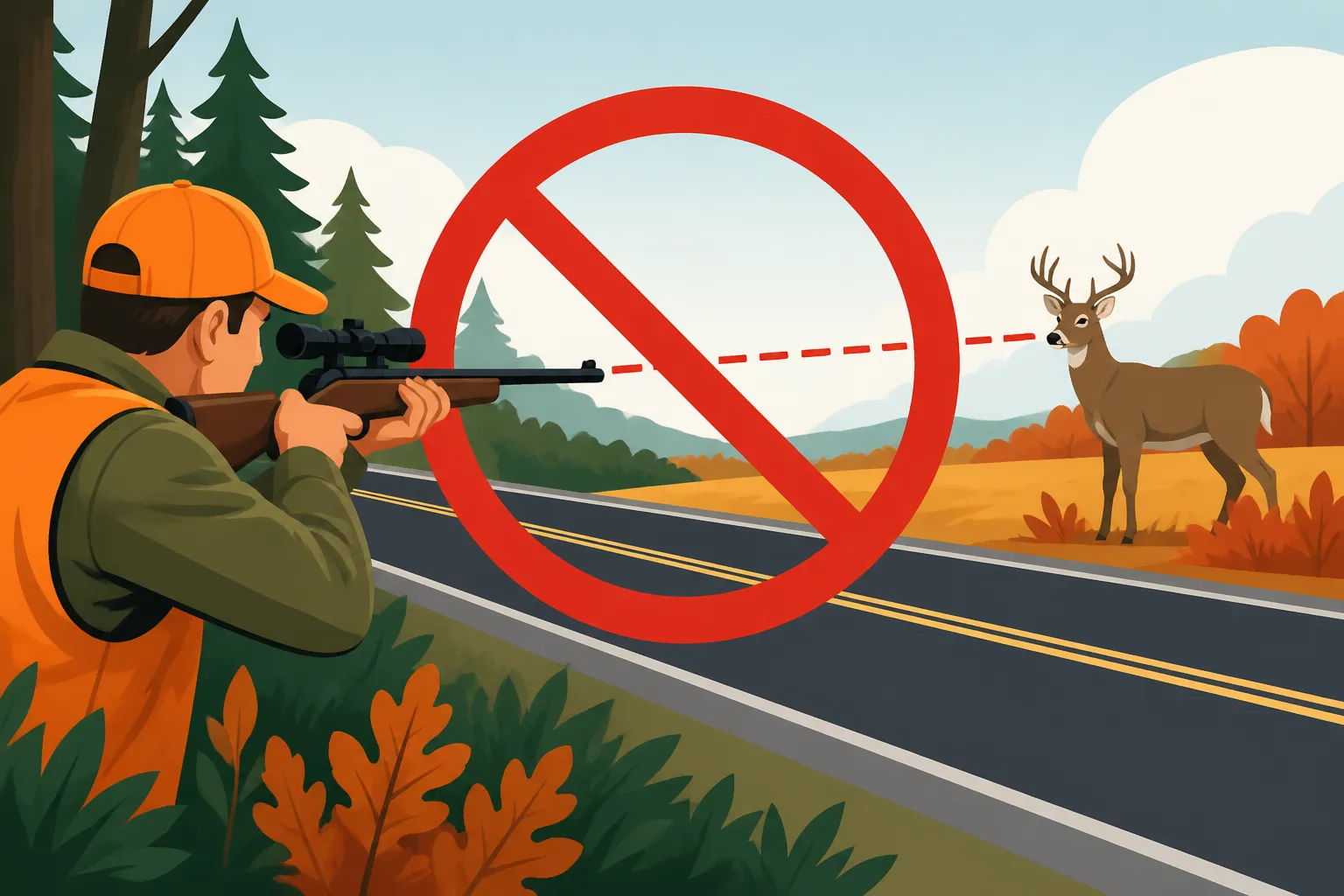
Let's cut right to it: in Ontario, it is generally illegal to discharge a firearm or bow across a public road. This isn't just about paved highways; it extends to various types of public access routes. The intent behind this regulation is crystal clear: preventing stray projectiles from endangering motorists, pedestrians, or adjacent private property. Imagine the tragic consequences of a bullet meant for a deer striking a vehicle or someone out for a hike on the other side of the road. It's a risk no responsible hunter should ever take. This rule also helps prevent the perception of hunting being unsafe, which is vital for maintaining our hunting privileges. It's about respecting non-hunters and ensuring our sport is conducted with the utmost care.
Consider a common scenario: you're walking a hydro line right-of-way, which might seem like an ideal game corridor. A deer busts out, heads for the bush, and there’s a gravel township road separating you from its escape route. Even if the road is deserted, discharging your firearm across it to take the shot is strictly prohibited. The danger isn't just immediate traffic; it's the unknown beyond the visible stretch of road. Your projectile could travel much further than you think, and its path after leaving your barrel is unpredictable.
Defining a "Road" in the Context of Hunting Law
This is where things can get a little tricky, because what we perceive as a road and what the law defines as a road can sometimes differ. Generally, "road" includes King's Highways, municipal roads (paved or gravel), and even some maintained private roads or resource access roads if they are open to public use. It's not just about the asphalt; it's about public access.
A designated "road allowance" that might only be a barely visible track in the bush still often falls under this definition. However, a private farm lane that is clearly marked "Private Property – No Trespassing" and only serves a single dwelling might not be considered a public road. This is a critical distinction. If you’re Hunting Ontario's Crown Land, you’ll encounter everything from well-maintained gravel roads to ancient, overgrown logging trails. Always err on the side of caution. If it looks like something a vehicle could drive on, or if it's delineated on a map as a road, treat it as such. Tools like GoHunt can be invaluable here, offering detailed mapping layers that often distinguish between public roads and private trails, though always cross-reference with official government maps and signs on the ground.
The Safety Implications of Road Hunting Restrictions
The primary driver behind these regulations is public safety. A bullet can travel for miles, and an arrow can maintain dangerous velocity over considerable distances. When you shoot across a road, even a seemingly quiet one, you lose control over what lies beyond your immediate line of sight. This could be another hunter, a hiker, a cyclist, or even livestock on private property. Beyond the obvious danger, there's the ethical consideration. As hunters, we are stewards of the land and responsible advocates for our sport. Engaging in practices that are perceived as reckless or dangerous undermines public support for hunting and can lead to stricter regulations for everyone. This includes maintaining a responsible zone of fire and always having a safe backstop. We also have a responsibility to know and abide by Ontario Blaze Orange Requirements to maximize visibility, especially in areas where other recreational users might be present.
Imagine hunting near a popular cottage country area, even if you’re on Crown land. A seemingly deserted backroad could suddenly see a family driving by or walking their dog. The consequences of a misjudgment are not just legal, but potentially life-altering for everyone involved.
Practical Scenarios and Common Misconceptions
Understanding the letter of the law is one thing, but applying it in the dynamic environment of an Ontario hunt can throw a few curveballs. Hunters often find themselves in situations that blur the lines between what’s clearly a "road" and what’s not.
When a Road Isn't Just a "Road" for Hunters
This is where the gray areas can pop up. You might be deep in a Hunting Ontario's Mixed Hardwood Bush, following an old two-track that was once a logging road but is now barely distinguishable from a game trail. Is that still considered a "road" for hunting purposes? The safest answer is always "yes" if there's any ambiguity. The law doesn't always distinguish between a paved highway and an unmaintained municipal road allowance.
However, a truly abandoned, overgrown skidder trail that is demonstrably not open to public vehicle traffic and has reverted primarily to a foot trail for hunters or ATVs (where permitted) might be a different story. The key is public access and potential for vehicle traffic. An ATV trail, even if it's regularly used by hunters or recreational riders, might not always be legally classified as a "road" in the same vein as a public access municipal road. This is a subtle but important distinction; you need to be certain. If there's signage, follow it. If in doubt, don't shoot across it. Remember, rules for using ATV Rules on Ontario Crown Land can also affect how such trails are classified and regulated.
To help clarify, here’s a simple table outlining common road types and their general classification for shooting rules:
| Road Type | Public Access | Generally Prohibited to Shoot Across? | Notes |
|---|---|---|---|
| King's Highways (400 series, etc.) | Yes | Yes | Absolutely no exceptions. High traffic, high danger. |
| Municipal Roads (Paved/Gravel) | Yes | Yes | Publicly maintained, regardless of surface. |
| Maintained Resource Roads (Logging) | Often (check) | Yes | Often open to public, even if private companies manage them. High traffic for industrial vehicles. |
| Unmaintained Municipal Road Allowances | Legally Public | Yes | Even if overgrown, legally still a public right-of-way. |
| Private Farm Lanes/Driveways | No (private) | No (but respect property laws) | If strictly private and posted, not a public road. Still need a safe backstop and Ontario Trespass and Landowner Law. |
| ATV Trails / Game Trails | Varies | Generally No (but use caution) | Not usually considered "roads" for this specific rule, but extreme caution and backstop are paramount. |
Note: This table provides general guidance. Always consult the most current Ontario Hunting Regulations Summary for precise legal definitions and rules.
Dealing with Game Near Roadways
So, you’re hunting a beautiful section of hardwood bush and a deer bolts, crosses a gravel road, and stands tantalizingly on the other side. What do you do? The answer is simple: you don't shoot. It's frustrating, I know, but that animal is now in an unshootable zone from your current position. Your options are to let it go, or if it's safe and legal to do so, move your position to get off the road, establish a safe backstop, and ensure you're not shooting across any part of the public road. This might mean a long stalk or waiting until the animal moves further away from the road, deep into the bush.
What if you take a shot, the animal runs, and then collapses on or across a public road? Retrieving game from a roadway or property adjacent to a roadway might require specific actions. While the act of shooting across a road is illegal, retrieving legal game is generally permitted. However, you must cease all hunting activities and secure your firearm or bow before approaching the road. If the game is on private property across the road, you still need to respect Ontario Trespass and Landowner Law and obtain permission from the landowner before crossing their boundary to retrieve your animal. Always prioritize safety and legal compliance, and if a large animal like a moose is down on a major road, contacting local authorities might be prudent for traffic control.
Specifics for Different Road Types
As hinted earlier, the specific classification of a road can make a difference. King's Highways and paved municipal roads are obviously no-go zones. Their high traffic volume and dense surrounding infrastructure make any discharge of a firearm near them incredibly dangerous and strictly illegal.
Moving to lesser-trafficked areas, gravel municipal roads or managed resource roads (like those used for forestry operations) still fall under the "no shooting across" rule. Even if you haven't seen a vehicle for hours, these are public rights-of-way. They are often marked on Reading an Ontario WMU Map Before You Go, and you should assume they are active until proven otherwise.
Private property access roads, as mentioned, are a unique category. If a road is entirely within private land and clearly not for public use, marked with "Private Road" or "No Trespassing" signs, then it’s generally treated as part of the private property. However, this doesn't give you free rein. You still need to ensure your shot has a safe backstop and that you have permission to hunt that private land. You wouldn't want a stray bullet ending up in a barn or a farmhouse. When you’re Hunting an Ontario Bush Lot You Just Got, always make sure you understand all access points and road classifications.
Navigating the Law and Staying Safe
The vastness of Ontario's landscape means varying road types and access points. It's paramount that hunters are well-versed in the regulations, not just to avoid penalties but to uphold the integrity of our sport.
Consulting the Ontario Hunting Regulations Summary
There is no substitute for the official source. Every hunter in Ontario should have a current copy of the Ontario Hunting Regulations Summary. This document is updated annually and details all the legal requirements, season dates, bag limits, and general regulations, including specifics on shooting across roads. You can find it online through the provincial government website, or pick up a physical copy wherever hunting licences are sold. Don't rely solely on what you think you remember from last year; rules can change. For example, some years there are specific rule updates, which you can track by looking at Where Ontario Rules Changed This Year.
Beyond the summary, tools like the GoHunt app or website can be incredibly helpful. They often integrate WMU boundaries, Crown land layers, and even identify various road types, allowing you to visually plan your hunt and identify potential problematic areas before you step foot in the bush. Using these digital resources in conjunction with the official regulations summary will give you the most comprehensive understanding of where you can and cannot hunt, and critically, where you can and cannot shoot. Before your next big trip, I'd strongly recommend doing some scouting with satellite imagery in Ontario, which can help you identify roads, trails, and potential hunting zones well in advance.
Ethical Hunting Practices Around Roads
Beyond the legal minimums, ethical hunting dictates that we always prioritize safety and respect for the environment and other users. This means:
- Positive Target Identification: Never shoot at movement, sound, or a patch of colour. You must clearly identify your target and be absolutely certain of what it is before taking a shot.
- Safe Backstop: Always ensure there is a safe and impenetrable backstop behind your target. This means hills, thick earth, or dense bush that will absorb your projectile, not open sky or beyond a ridge where a bullet could travel indefinitely. This is especially crucial when hunting near any type of road.
- Zone of Fire: Be aware of your surroundings and your potential zone of fire. This means knowing where your hunting partners are, where private property lines lie, and where any public access routes exist.
- Scouting: Thoroughly Scouting a Wildlife Management Unit beforehand can help you identify high-traffic areas, designated roads, and potential pinch points where game might cross unshootable areas. This preparation allows you to plan your approach and avoid those frustrating "unshootable" situations.
- Silence is Golden: In many areas, roads are where non-hunters might be. Keeping a low profile, parking discretely, and generally being respectful helps maintain a positive image of hunters.
Remember, every time you pull the trigger or release an arrow, you are responsible for that projectile until it comes to a complete stop. This is the fundamental principle of firearms safety that applies universally, but especially when near anything that could be considered a public thoroughfare.
Penalties for Non-Compliance
Breaking the rules on shooting across a road is not a minor infraction. The penalties for non-compliance can be severe and can include:
- Hefty Fines: Significant monetary penalties are common.
- Seizure of Equipment: Your firearm, bow, vehicle, and other hunting equipment could be seized.
- Licence Suspension: You could lose your hunting licence for a period, or permanently.
- Imprisonment: In serious cases, particularly where there is property damage or endangerment to human life, jail time is a possibility.
- Criminal Charges: Beyond hunting infractions, dangerous acts can lead to criminal charges.
The Ministry of Natural Resources and Forestry (MNRF) conservation officers take these laws very seriously. They are trained to investigate and enforce these regulations rigorously. Knowing Ontario Penalties for Hunting Violations is important, not to scare you, but to impress upon you the importance of adherence. It’s simply not worth the risk. Always prioritize safety, understand the law, and make informed decisions in the field. After all, a successful hunt isn't just about filling your tag; it's about doing so legally, safely, and ethically.
Disclaimer
The information provided in this guide is for general informational purposes only and does not constitute legal advice. Hunting regulations in Ontario are subject to change and interpretation. Hunters are responsible for consulting the most current official Ontario Hunting Regulations Summary, relevant provincial statutes, and municipal bylaws before engaging in any hunting activities. Always prioritize safety and exercise extreme caution when discharging a firearm or bow.