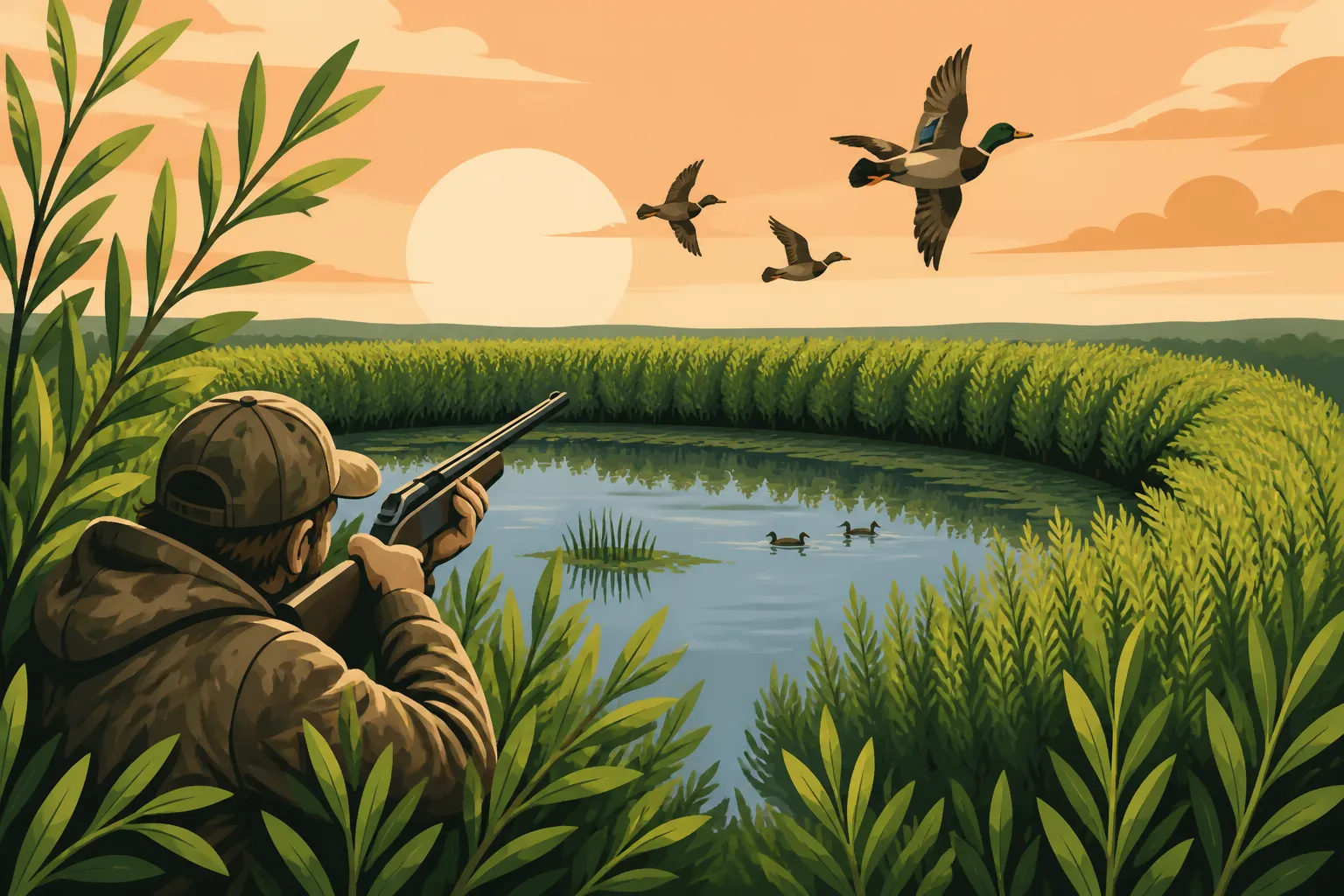
Hunting a Willow Ring Around a Wetland
One of the most frustrating things as an Ontario hunter can be knowing game is in an area, but struggling to pinpoint exactly where they are bedded down or traveling, especially in thick, swampy terrain. You've scouted the field edges, checked the hardwoods, but you just can't seem to get on a track. This guide is all about honing in on a less obvious, but incredibly productive, habitat feature: the willow ring around a wetland. We're going to break down why these overlooked spots are goldmines for deer and other game, how to scout them effectively, and proven strategies to fill your tag when hunting these challenging but rewarding areas in Ontario.
Understanding the Willow Ring Ecosystem in Ontario
Willow rings, often found bordering marshes, beaver ponds, or low-lying agricultural fields, are a distinct and incredibly valuable habitat for a variety of game species across Ontario. They're not always easy to hunt, but their dense, interwoven nature provides exactly what animals need: food, water, and most importantly, cover from predators and the elements. Think of them as natural fortresses.
Why Deer (and Other Game) Love Willow Rings
Deer, especially, are drawn to willow rings like magnets. The thick tangles of willow, alder, and other brush provide unparalleled security cover. A big buck, often pressured from surrounding woodlots and fields, will slip into these dense areas, knowing he's practically invisible. Not only does it offer refuge, but these damp environments often hold succulent browse plants even when drier uplands have lost their appeal. During hunting season, particularly when the leaves start to drop elsewhere, the willows often retain their foliage longer, offering a crucial visual screen.
But it’s not just deer. Moose will utilize these areas, especially where larger willows and dogwood provide ample browse and thermal cover. Bear often skirt these edges, foraging for berries or other food sources. And let's not forget the smaller game. Rabbits and hares find excellent protection and food in the dense undergrowth, which in turn attracts predators like coyotes. Waterfowl, too, will use the open water of the wetland itself, but the surrounding willows provide nesting cover and escape routes. It’s a complete ecosystem in a relatively small footprint.
Identifying Productive Willow Rings on the Landscape
Not all willow rings are created equal. A small, sparse patch might offer some cover, but you're looking for the larger, denser, more established ones. These are often found where water is consistently present, forming a natural buffer between open water and drier upland. Look for areas with a mix of willow species, alders, and perhaps some red osier dogwood, creating a multi-layered canopy that's tough to see through. Sometimes, a willow ring will be part of a larger marsh complex, while others might stand out as an isolated island of cover in an otherwise open agricultural landscape.
Pay attention to their proximity to other habitat types. A willow ring bordering a standing cornfield, a hardwood ridge, or a dense cedar swamp acts as a perfect transition zone. Deer will often bed deep in the willow ring during the day, then emerge under the cover of dusk to feed in the adjacent fields or travel to other cover. Hunting a Cedar Swamp Edge is another great read on how these dense cover types connect. Also, consider the size and shape. Long, narrow rings that connect two larger blocks of cover can serve as excellent travel corridors.
Seasonal Changes and Their Impact
The effectiveness of a willow ring as a hunting spot shifts dramatically with the seasons. In early archery season, when temperatures are still mild and mosquitoes are fierce, these areas can be super thick. The foliage provides maximum cover, but it also makes visibility a huge challenge for the hunter. This is when game can melt away almost silently.
As fall progresses and leaves drop from deciduous trees, the willow rings become even more attractive to deer seeking security. While some willow leaves might also drop, the intricate branch structure still offers substantial concealment. When the snow starts to fly, especially deeper snow, these wetlands and their edges often provide crucial thermal cover, trapping warmth and sheltering animals from bitter winds. This is a prime time to find deer yarding up in these areas, or at least using them heavily for travel between feeding and bedding. Understanding these seasonal shifts is key to knowing when and how to approach these areas.
Scouting and Planning Your Hunt
Effective hunting in willow rings around wetlands hinges on meticulous scouting. You can't just wander in; these spots demand a thoughtful, strategic approach due to their dense nature and often challenging access.
Using Mapping Tools to Your Advantage
Before you even step foot in the bush, modern mapping tools like onX Hunt or GoHunt are your best friends for scouting willow rings. These platforms allow you to zoom in and identify wetland edges, dense vegetation patches, and potential travel corridors. Look for the distinct green or brown patterns indicating thick brush surrounding blue areas (water). You can often differentiate between open water, marsh grass, and the denser, treed areas that form a willow ring.
Use the satellite imagery to pinpoint potential entry and exit points, especially important for wind direction. Mark down specific features like narrow bottlenecks, small rises within the wetland, or even patches of darker, thicker cover that might indicate preferred bedding. You can even use historical imagery to see how water levels might change or how a beaver dam has altered the landscape over time. This virtual scouting saves you countless hours and helps you formulate a solid plan before you ever get your boots wet. Scouting With Satellite Imagery in Ontario provides more tips on leveraging these tools.
Ground Scouting Techniques for Willow Rings
Once you've done your digital homework, it's time for boots-on-the-ground scouting. This is where you confirm your suspicions and find the fresh sign. Approach willow rings cautiously, especially during hunting season, as you don't want to bump game out prematurely. Look for subtle trails entering and exiting the thicket, often barely visible tunnels through the dense brush. These will be worn down from repeated use.
Pay close attention to the edges where the willow ring transitions to fields or other forest types. You're looking for rubs on small saplings, fresh scrapes, and most importantly, tracks. In the soft, damp soil common around wetlands, tracks are often preserved well, giving you a clear picture of what animals are using the area and how recently. If you find multiple fresh tracks, especially larger ones, you know you're in a high-traffic zone. During the pre-rut, these areas can be absolute hotspots of deer activity.
Reading Sign in and Around the Wetland Edge
Reading the sign around a wetland edge is slightly different from a hardwood bush. Droppings will be plentiful, giving you an idea of diet and recent activity. Look for browse lines on the willows themselves – torn leaves or broken twigs indicating deer have been feeding there. Often, you’ll find patches of matted-down grass or flattened reeds deep within the ring, indicating bedding areas. These might be tricky to spot without getting into the thickest part, so observe from the perimeter first.
If it's waterfowl season, look for disturbed mud along the water's edge, indicating ducks or geese have been feeding. Feathers caught in the willows can also confirm their presence. For coyotes, look for scat and tracks along the drier edges or established game trails. The key is to piece together the story the land is telling you. A fresh rub, a well-used trail, and recent droppings all point to active game and help you decide where to hang a stand or plan your ambush. Reading Whitetail Sign in Ontario Hardwoods covers general sign reading, but adapt those principles to the damp environment of a willow ring.
Effective Hunting Strategies for Willow Rings
Hunting willow rings requires specific tactics different from hunting open woods or fields. The dense cover that attracts game also presents a challenge to the hunter, demanding careful planning and execution.
Stand Placement and Wind Considerations
When it comes to stand placement, subtlety is key. You're often dealing with limited visibility, so focusing on pinch points, funnels, or specific trails leading into and out of the willow ring is crucial. Think about the dominant wind direction. Because these areas are often low-lying and damp, thermals can be tricky, sometimes sinking early in the morning or rising unpredictably in the evening. Always try to position yourself so your scent is blowing away from where you expect game to appear or from known bedding areas within the ring.
A treestand offers a huge advantage, allowing you to see over some of the dense brush and giving you a better shot angle. Look for a sturdy tree on the edge of the willow ring, perhaps a larger poplar or maple that has grown tall enough to offer a clear view into the willows or across an adjacent field. If no suitable trees exist, a ground blind well-camouflaged into the thicket can also be effective, just be mindful of your scent cone. Hanging a Stand on an Ontario Bush Edge offers more general advice on stand placement.
Still-Hunting and Drives Through Willow Rings
Still-hunting through a willow ring can be incredibly effective, but it requires immense patience and quiet movement. The dense cover makes it hard for animals to see you, but it also means they can be incredibly close without you knowing it until it's too late. Move slowly, taking one or two steps, then pausing for several minutes to scan, listen, and let the woods settle. Focus on the ground in front of you, looking for deer legs or the flick of an ear. Always hunt into the wind to keep your scent from giving you away. This method is particularly good in the late season when snow might muffle your footsteps, making it easier to sneak through the dense cover.
For larger groups, small, quiet drives can be highly productive, especially during firearms season. Position standers at known escape routes or along the downwind edge of the willow ring, then have one or two drivers slowly push through the densest parts. The key is slowly. You're not trying to spook deer into a full sprint; you're trying to ease them out, allowing the standers to get clean, ethical shots. Communication is vital in such drives, especially using radios or pre-arranged signals. Remember, safety first, always know where your hunting partners are. Deer Drives With Three or Four Hunters has more details on coordinating these efforts.
Calling and Decoying Strategies
Calling can be very effective in the dense cover of a willow ring because deer are often nearby but out of sight. Grunt calls can pique a buck's curiosity, making him take those few extra steps needed to come into view. During the rut, rattling antlers can simulate a fight, drawing bucks in looking for a challenge or an easy doe. Because visibility is limited, deer will often approach cautiously, trying to pinpoint the source of the sound. Be ready!
Decoying can be trickier due to the limited open space. However, if you find a small, open pocket or a subtle clearing within the willow ring, a well-placed doe decoy might convince a cruising buck to commit. Always position your decoy downwind of your stand so an approaching buck will likely circle downwind, bringing him into your shooting lane. Just make sure the decoy is visible enough to draw attention but not so exposed that it looks out of place. This often means finding a natural opening that isn't completely swallowed by the brush.
Overcoming Challenges and Maximizing Success
Hunting willow rings isn't without its challenges. The very features that attract game can also make the hunt more difficult for the hunter. Anticipating and preparing for these hurdles will significantly increase your odds of success.
Dealing with Wet Conditions and Difficult Terrain
Wet feet and mucky boots are almost a guarantee when hunting willow rings. These areas are typically saturated, so waterproof footwear is non-negotiable. Think hip waders or chest waders if you plan on venturing deep into the wetland itself. The soft, uneven ground, often filled with hidden roots and water-filled depressions, makes moving quietly and safely a challenge. Take your time, test your footing, and consider using a sturdy hiking stick for balance and to probe ahead.
Getting turned around in the dense, monotonous cover is also a real risk. Always carry a GPS device or use a mapping app like onX Hunt on your phone, marking your entry point and planned routes. What to Do If You Get Turned Around offers essential advice for navigating unfamiliar territory. Dress in layers, as the exertion of pushing through thick cover can make you sweat, even on cold days, leading to a chill once you stop moving.
Managing Pressure in Productive Areas
Willow rings, once discovered, can become magnets for other hunters, especially if they are close to public access or known hunting grounds. Over-pressuring these areas can quickly turn them from hotbeds of activity into barren zones. If you find a productive willow ring, try to hunt it sparingly. Choose your days wisely, perhaps focusing on weekdays or during less popular times of day.
Consider a multi-pronged approach: hunt the edges early in the season, then perhaps a still-hunt through the interior later when the leaves are down. If you notice other hunters frequenting the area, think about how the deer might be reacting. They will likely become nocturnal or move deeper into the thickest, least accessible parts of the willow ring. Adapting your strategy based on perceived pressure is crucial for continued success.
Post-Shot Tracking in Thick Cover
This is where the real test often lies. After the shot, tracking a deer or other game animal into a dense willow ring can be a monumental task. Visibility is poor, blood trails can be sparse on wet ground, and the thick brush makes moving difficult. Give the animal ample time before tracking to ensure it has expired. If possible, mark the exact spot of the shot and the animal's last known direction of travel.
Enlist a partner if you can, creating a grid search pattern. Move slowly, looking for even the smallest speck of blood, disturbed vegetation, or broken branches. If you lose the trail, back out, reassess, and start from the last confirmed sign. A flashlight, even in daylight, can help illuminate blood on leaves or branches. Remember, once you're in the thicket, every yard counts. Be persistent, patient, and methodical. Dragging a Deer Out of a Swamp shares practical advice that's highly relevant here, as getting an animal out of a wetland can be just as tough as finding it.
Comparing Willow Ring Hunting Strategies
| Strategy | Best For | Pros | Cons | Key Considerations |
|---|---|---|---|---|
| Treestand | Edges, pinch points, openings | Elevated view, scent control, wide shot arc | Limited setup spots, fixed position | Wind direction, tree availability, clear shooting lanes |
| Ground Blind | Dense interior, low pressure | Excellent concealment, adaptable location | Limited visibility, harder scent control | Meticulous camouflage, patient waiting, clear view lanes |
| Still-Hunting | Thick cover, late season | Flexible, covers ground, intimate hunt | Requires immense patience, very slow pace | Hunt into wind, silent movement, constant scanning |
| Small Drive | Firearms season, group hunt | Moves game, covers large area quickly | Requires multiple hunters, safety critical | Clear communication, known escape routes, slow push |
| Calling | Anytime, dense cover | Draws game into range, works out of sight | Game might circle downwind, requires practice | Match call to season, be ready for quick shot |
Hunting a willow ring around a wetland is a quintessential Ontario hunting experience that rewards patience, careful scouting, and a willingness to embrace challenging terrain. By understanding the unique appeal of these habitats and employing the right strategies, you can unlock some truly incredible hunting opportunities right here in our own backyard.
Disclaimer
This article is for general informational purposes only and does not constitute professional advice. Laws, prices and regulations vary by location and change over time. Consult a qualified professional for guidance on your specific situation.