Why Shield Country Holds Fewer Deer
Many hunters, drawn by the vast, wild landscapes of Ontario's Canadian Shield, arrive with visions of abundant whitetails, only to find the deer population much sparser than anticipated. This can be a real head-scratcher and frankly, a bit disheartening when you've put in the effort. This guide aims to pull back the curtain on the unique environmental challenges that make the rugged Shield Country a less hospitable home for deer, helping you understand why those whitetail numbers are lower and how that understanding can shape your hunting approach.
The Unforgiving Foundation: Geology and Soil Limitations
When you look at the majestic rock formations of the Canadian Shield, it’s easy to be awestruck by its ancient beauty. But for a whitetail deer, that granite bedrock and thin, acidic soil represent a fundamental challenge to survival. Unlike the rich, fertile agricultural lands of southern Ontario, where deep topsoil supports lush growth, the Shield offers a starkly different environment.
Think about it: deer are creatures of sustenance. They need a steady diet of nutritious forage to grow strong, produce fawns, and simply survive, especially through those long, cold Ontario winters. The soil quality directly dictates the quality and quantity of the plants that grow. In Shield Country, the soil is often derived from igneous rock, meaning it’s typically low in essential minerals like calcium, phosphorus, and nitrogen. These are the building blocks for healthy plant growth, which in turn fuels deer health, body mass, and, yes, antler development. A buck in the Shield simply won't have access to the same mineral-rich browse as one munching on alfalfa in a southern field. This fundamental lack of high-quality nutrition means deer here are often smaller, less numerous, and have lower reproductive rates. It's a continuous nutritional uphill battle for them.
This geological reality also heavily influences land use. You won't find vast fields of corn, soybeans, or winter wheat in the heart of the Shield. Agriculture, where it exists, is sparse and often localized to small pockets of better soil, usually near river valleys or old lakebeds. The sheer scale of barren rock and thin soil means the foundational food chain for a thriving deer population just isn't there in the same abundance as in areas with deeper, richer soils. When you're Hunting a Rock Ridge in Shield Country, you're often hunting ground that offers very little in the way of consistent, high-energy food sources for deer. This isn't to say there are no deer, but their numbers are naturally capped by the very earth beneath their hooves.
A Forest of Survival: Vegetation and Food Scarcity
Beyond the soil, the type of vegetation that thrives in Shield Country is another significant factor in why deer populations are lower. While southern Ontario often boasts mixed forests with a strong component of deciduous trees like maples, oaks, and ash, the Canadian Shield is predominantly characterized by boreal and mixed-boreal forests. These are dominated by coniferous species such as black spruce, balsam fir, jack pine, and white pine.
Coniferous forests, especially dense stands, offer very little in the way of palatable and nutritious browse for deer. While deer will nibble on cedar or fir in a pinch, these species are often low in nutritional value and difficult to digest, especially during winter. Picture a deer trying to find sustenance in a vast, dark spruce swamp – it's a desperate situation. Contrast this with a rich hardwood forest or a farmland edge where deer can feast on tender young shoots, leaves, and a variety of understory plants. Hunting Ontario's Mixed Hardwood Bush offers a much different experience for deer than a pure conifer stand.
The lack of consistent, high-energy food sources is particularly critical when facing down a long winter. In areas with rich deciduous forests, deer benefit from mast crops like acorns and beechnuts, which are packed with carbohydrates and fats. These are vital for building up fat reserves. In many parts of the Shield, these mast trees are scarce or entirely absent. Instead, deer might rely on isolated pockets of poplar, birch, or willow, often found along waterways or in areas regenerating after logging or fire. This scattered and unpredictable food supply forces deer to travel further and expend more energy, leaving them vulnerable. When using mapping tools like GoHunt, pay close attention to the vegetation layers to pinpoint these smaller, more productive pockets.
The Northern Gauntlet: Predation and Winter Severity
If geological and vegetative limitations make life hard for Shield Country deer, then the combined forces of predation and severe winters often deliver the knockout punch to their population numbers. This isn't like the relatively milder winters of southwestern Ontario, and the predator dynamics are entirely different.
First, let’s talk about predators. The vast, unbroken wilderness of the Canadian Shield is prime habitat for species like wolves, coyotes, and black bears. These predators play a crucial role in maintaining ecological balance, but for deer, it means constant pressure. While Calling Coyotes in Ontario Farm Country might be about managing their numbers in an agricultural setting, in the Shield, coyotes and especially wolves are integral parts of the ecosystem, consistently hunting deer. A healthy, robust deer population can often withstand this pressure, but when deer are already stressed by poor nutrition and harsh conditions, even moderate predation can have a disproportionate impact on their survival rates. Fawns, in particular, face a gauntlet of predators in their first few weeks of life, further limiting recruitment into the adult population.
Then there's winter. Oh, those Shield Country winters can be brutal. Deep, persistent snow is a primary limiting factor for deer populations across northern latitudes. When snow depths exceed 20-30 inches, deer struggle to move, feed, and escape predators. Their shorter legs become a hindrance, and simply moving from one browse patch to another becomes an energy-draining ordeal. This is when deer rely heavily on traditional "deer yards" – usually dense cedar swamps or conifer stands that offer some thermal cover and a limited food supply. However, even these yards are finite, and competition for resources within them can be intense. For more on this, you might find Where Ontario Whitetails Yard in Deep Snow sheds light on this critical winter strategy. How Deep Snow Shapes Ontario Game is a constant reality here, and deer are particularly susceptible.
The table below illustrates some key differences in deer habitat factors between the Shield Country and southern Ontario:
| Factor | Canadian Shield (North/Central Ontario) | Southern Ontario (Farm Belt) | Impact on Deer Population |
|---|---|---|---|
| Geology/Soil | Thin, acidic soils, granite bedrock, low mineral content | Deep, fertile, rich topsoil (glacial till/clay) | Limits nutritious forage; smaller deer, lower density. |
| Dominant Vegetation | Coniferous (spruce, pine, fir), mixed boreal | Deciduous (maple, oak), mixed hardwoods, agriculture | Less palatable browse; limited mast crops. |
| Food Availability | Sparse, low nutrition, seasonal, limited agriculture | Abundant, high nutrition, year-round, vast agriculture | Direct impact on health, reproduction, and density. |
| Winter Severity | Deep, persistent snow; prolonged cold | Shorter periods of deep snow; milder temperatures | High energy expenditure; increased vulnerability to predation. |
| Predator Pressure | Higher density of wolves, coyotes, bears | Lower density of large predators (mostly coyotes) | Significant impact on fawn and adult survival rates. |
| Deer Density | Generally low to moderate, localized pockets | High to very high | Directly reflects habitat quality and carrying capacity. |
These factors compound one another. A deer that is nutritionally stressed from poor summer browse and a lack of mast will enter winter with fewer fat reserves. When deep snow forces it to expend massive amounts of energy just to move, it becomes an easy target for a hungry wolf pack, or succumbs to disease or starvation. This constant struggle for survival means that while deer do exist in Shield Country, their numbers are intrinsically limited by the carrying capacity of this challenging environment.
Adapting Your Hunt: Strategy for Shield Country Deer
Understanding why Shield Country holds fewer deer isn't just academic; it profoundly impacts how you should approach your hunt. If you go in expecting a high-density, target-rich environment, you're setting yourself up for disappointment. Instead, embrace the challenge and adjust your strategy.
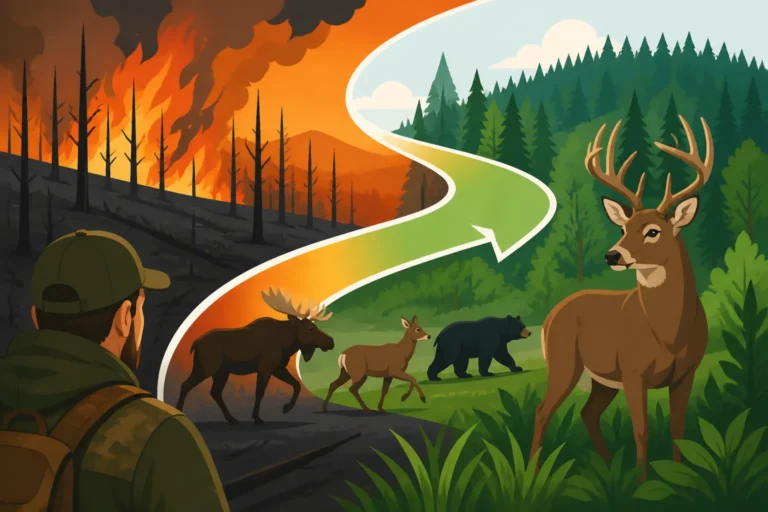
The first and most critical step is meticulous scouting. Forget about just walking into a vast block of bush and hoping for the best. In low-density areas, you're looking for anomalies – those small pockets of better habitat that deer simply must use. This means seeking out areas with a higher component of deciduous trees, recent clear-cuts or burns that are regenerating with tender young growth, south-facing slopes that melt snow faster, or the edges of beaver ponds and creek bottoms. These specific habitat features will concentrate deer in an otherwise vast landscape. Tools like GoHunt can be invaluable here, allowing you to pour over satellite imagery and topo maps to identify these hotspots before you even set foot in the woods. Pay attention to how deer move through these areas, perhaps along an old logging road or a subtle ridge. Scouting a Wildlife Management Unit effectively becomes even more important when deer are spread thin.
Secondly, change your hunting style. Still-hunting and tracking become much more effective strategies than sitting in a stand over a heavily used trail that might not exist. If you're patient and methodical, moving slowly through the woods, stopping to glass and listen, you'll cover more ground and increase your chances of intercepting a moving deer. Similarly, tracking a fresh set of prints in new snow can lead you directly to a bedded deer. In the denser cover that deer often utilize for refuge in the Shield, getting close without being detected is paramount. You might even find yourself on a Canoe-In Hunting on Ontario Crown Land trip, where you're truly getting into remote areas that require this kind of adaptable hunting.
Finally, manage your expectations and savor the experience. Hunting in Shield Country is less about filling the freezer quickly and more about the adventure, the solitude, and the satisfaction of harvesting an animal from a truly wild, challenging landscape. The deer you do encounter here are often incredibly resilient and wary, making success all the more rewarding. It's about being immersed in nature, experiencing the call of a wolf or spotting a moose, even if the deer aren't as thick as you might hope. Sometimes, the reward is simply Sitting All Day in an Ontario Blind and witnessing the subtle movements of the forest. The journey itself becomes the trophy.
Disclaimer
This article is for general informational purposes only and does not constitute professional advice. Laws, prices and regulations vary by location and change over time. Consult a qualified professional for guidance on your specific situation.