Canada Goose Numbers Around Ontario Cities
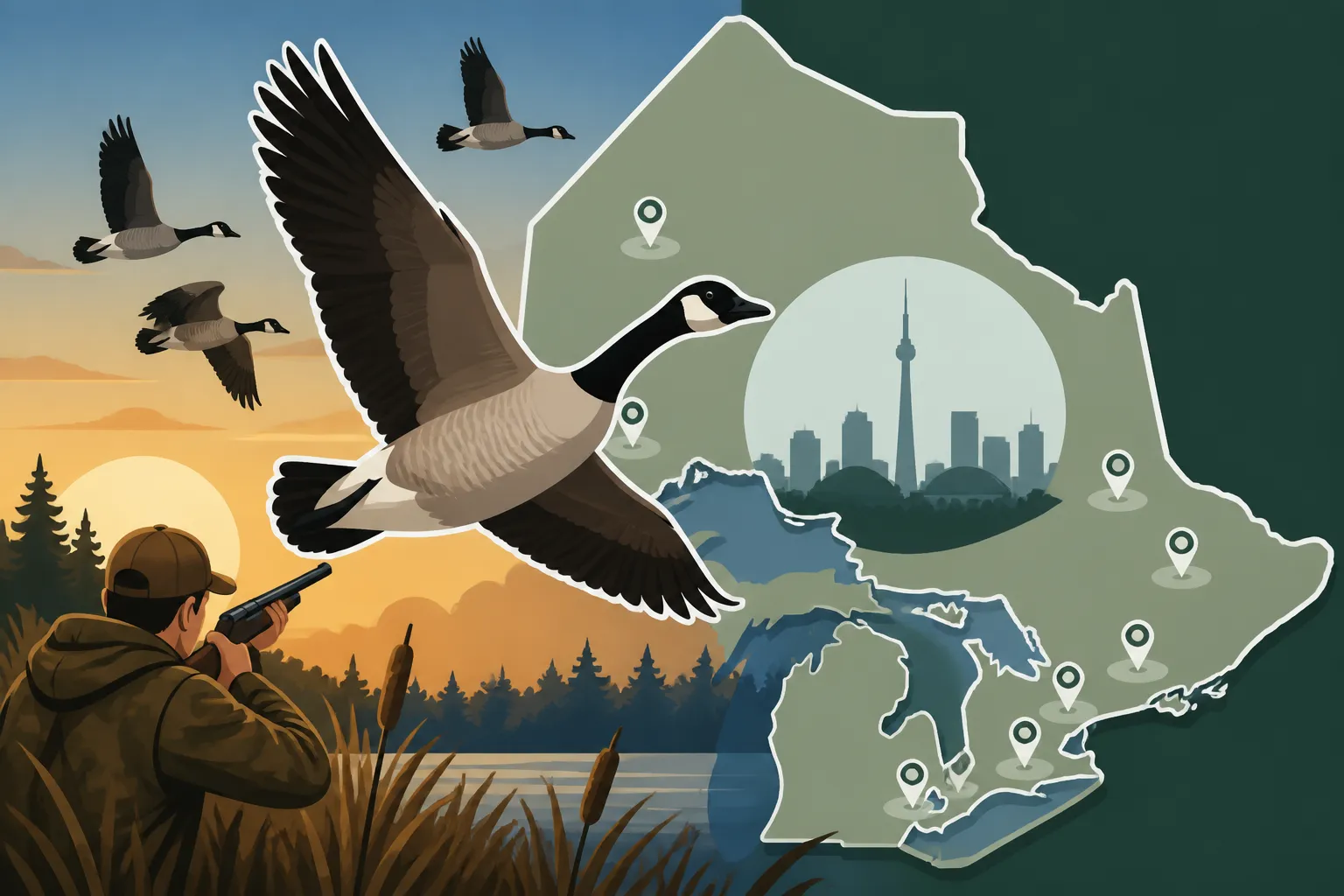
Many hunters find themselves scratching their heads, wondering where the birds have gone, only to look up and see flocks of Canada geese flying directly over their homes in Ontario cities. The truth is, Canada goose numbers around Ontario cities and suburban areas have seen a remarkable boom, creating unique opportunities and challenges for hunters. This guide will explore why these big birds are increasingly drawn to urban environments, what it means for hunting access, and how you can ethically pursue them closer to home.
Why Canada Geese Flock to Ontario's Urban and Suburban Landscapes
It's a phenomenon that often baffles those new to waterfowl hunting, or even seasoned veterans used to chasing birds in vast agricultural fields far from civilization. Yet, the Canada goose has adapted exceptionally well to living alongside us, leveraging the very features of our cities and suburbs for their survival and proliferation. Understanding this adaptation is the first step in effectively hunting these birds.
Abundant and Consistent Food Sources
If you’ve ever walked through a city park, a golf course, or even just driven past a municipal green space, you’ve likely seen Canada geese contentedly grazing. These manicured lawns are essentially endless buffets for them. Grasses, clover, and various weeds provide readily available, high-energy food sources that require minimal effort to obtain. Unlike a farmer's field that gets plowed under, or a natural marsh that might freeze over, urban green spaces often offer a consistent food supply throughout much of the year, even into the colder months when snow cover might be thinner due to urban heat islands. This isn't just about survival; it's about thriving, allowing geese to maintain excellent body condition and raise healthier broods.
Furthermore, many suburban areas are fringed by agricultural fields that act as crucial feeding grounds, especially during migration and in the shoulder seasons. While the heart of a city might not be a cornfield, the sprawling edges of communities often blend into productive farmland, giving geese the best of both worlds: safe urban roosts and rich rural dining. This pattern provides a predictable food cycle that geese quickly learn and exploit.
Perceived Safety and Reduced Predation
One of the most significant draws for geese in urban settings is the dramatic reduction in natural predators. While coyotes and foxes do exist around the edges of cities, their populations are often lower, and their hunting success rates might be hampered by human presence and activity. The concrete jungles and bustling parks, while teeming with people, offer a relative sanctuary from the traditional predators that might harass them in more wilderness settings. This perceived safety allows geese to feed and rest with less vigilance, expending less energy on constant watchfulness.
Beyond natural predators, urban areas often provide sanctuary from hunters themselves. Many municipal bylaws prohibit the discharge of firearms within city limits, and large public parks are typically off-limits to hunting. This creates vast no-hunting zones where geese can congregate, molt, raise young, and roost without fear of being pursued. They quickly learn these safe havens, treating them as impenetrable fortresses. This lack of hunting pressure contributes directly to the increasing Canada goose numbers around Ontario cities.
Ideal Shelter and Roosting Habitats
Canada geese need water for safety, for roosting overnight, and as a quick escape route. Urban and suburban areas, surprisingly, offer an abundance of suitable water bodies. Stormwater retention ponds, golf course water features, municipal reservoirs, and even larger rivers and creeks that flow through or skirt cities provide safe overnight roosts. These water bodies often have gently sloping banks and open sightlines, which are perfect for geese to scan for threats. The sheer number of these smaller, accessible water sources means geese don't have to travel far from their feeding grounds to find a safe place to spend the night.
These urban water sources are often less disturbed than their rural counterparts. While a farmer might drain a pond, or a natural wetland might dry up in a drought, urban water features are generally maintained and remain consistent. This reliability is another key factor in why these birds choose to settle and breed so close to human development. If you're looking for where the birds might be, mapping tools like GoHunt can be incredibly useful for identifying these key water features and understanding the surrounding land use patterns.
The Unique Challenges and Opportunities of Hunting Urban Geese
Hunting geese in and around Ontario cities is certainly not your grandfather's goose hunt in a vast, sprawling cornfield. It comes with its own distinct set of hurdles that can be incredibly frustrating, but for those who adapt, it also presents some remarkable advantages that traditional hunting doesn't always offer. It's a game of finesse, patience, and often, incredible social awareness.
Navigating Access and Public Perception
This is probably the biggest headache for anyone looking to tap into the thriving Canada goose numbers around Ontario cities. Much of the prime urban goose habitat is either publicly owned land where hunting is prohibited, or smaller private parcels that are difficult to gain permission for. Convincing a homeowner or business owner to allow hunting on their property, especially when it’s close to other residences, can be an uphill battle. Property owners might be concerned about safety, noise, or negative reactions from neighbours. Ontario Trespass and Landowner Law is something every hunter needs to understand intimately when operating near populated areas.
Furthermore, public perception is a huge factor. While legal and ethical, hunting so close to populated areas can sometimes draw unwanted attention or even criticism from non-hunters who don’t understand or appreciate the sport. Hunters operating in these zones become de facto ambassadors for the entire hunting community. This means being extra meticulous about safety, respecting property, being discreet, and leaving no trace. A negative incident can quickly lead to more restrictions and make access even harder for everyone.
Understanding and Adhering to Complex Regulations
When you hunt in more remote areas, you typically only have to worry about federal and provincial regulations. Closer to cities, you often add a third layer: municipal bylaws. These local ordinances can dictate everything from where you can discharge a firearm, to specific noise restrictions, or even limitations on when and how you can access certain properties. It's not uncommon to find areas where hunting is permissible by provincial law, but local bylaws make it effectively impossible. This patchwork of rules requires diligent research for each specific area you intend to hunt. Resources like the Ontario Hunting Regulations Summary, coupled with local municipal websites, become indispensable tools. Checking current Ontario Game Bird Seasons and Limits and specific Ontario Goose Season Dates by District is always your first step, but don't forget the local flavour.
Additionally, while federally mandated Non-Toxic Shot Requirements for Waterfowl apply everywhere for waterfowl, some areas might have specific rules about minimum distances from dwellings or roads. This complexity can be intimidating, but it’s absolutely non-negotiable for a safe and legal hunt. Failing to understand these regulations can lead to severe penalties and further jeopardize hunting access in sensitive areas.
Opportunities: Proximity, High Numbers, and Predictable Birds
Despite the challenges, the opportunities for urban goose hunting are incredibly appealing. The sheer proximity to home means less travel time and expense, making it feasible to squeeze in a hunt before or after work, or for just a few hours on a weekend morning. This accessibility allows for more frequent scouting and hunting trips, significantly increasing your chances of success without dedicating an entire day or weekend to travel.
The most exciting part, of course, is the Canada goose numbers around Ontario cities. These areas often hold huge concentrations of birds. While they might be "educated" to human presence, they also have incredibly predictable patterns. They'll leave the same roost pond at roughly the same time, fly the same flight lines, and descend upon the same few fields day after day. This predictability, once understood through diligent scouting, can be a major advantage. You're not necessarily dealing with birds that have been heavily pressured by hunters, but rather birds that are accustomed to ignoring humans in their daily routines, which can be exploited by a well-concealed hunter.
Strategies for Successful Urban and Suburban Goose Hunting
Okay, so you understand why the geese are there and the general lay of the land. Now, how do you actually put some of these urban birds in the freezer? It requires a slightly different approach than the traditional big-spread, wide-open field hunt, emphasizing stealth, local knowledge, and good old-fashioned grit.
Scouting is Absolutely Paramount
In urban and suburban settings, scouting isn't just a good idea; it's the entire foundation of your hunt. You're often dealing with smaller parcels of land, intricate flight paths through corridors of buildings or trees, and specific feeding preferences. You can't just set up anywhere and expect birds to magically appear. You need to identify precisely where the birds are roosting, what specific fields or lawns they are hitting, and their exact flight lines in and out. This often means driving around the area during peak feeding times (early morning and late afternoon), parking discreetly, and simply observing.
Pay attention to flight altitudes and directions. Are they coming from a specific pond? Are they landing in a particular corner of a field? Are they consistently flying over a certain tree line? GoHunt’s detailed mapping features, with satellite imagery and property lines, can be invaluable here. You can mark roosting ponds, potential feeding spots, and map out flight corridors before you even step foot out of your truck. This level of detail in Scouting Fields for Ontario Waterfowl is what makes the difference between a successful hunt and a frustrating morning watching birds fly past just out of range. Don’t underestimate the power of simply observing from a distance with binoculars; the geese will tell you everything you need to know.
Gaining Access to Huntable Land
This is where the rubber meets the road. Finding a landowner willing to grant permission is critical. Forget about Crown Land here; it's almost non-existent in the high-density urban goose zones. Your focus needs to be on private properties. This could be anything from a farmer with a small field bordering a subdivision, to a business owner with a large corporate lawn, or even a golf course manager facing nuisance geese problems. Getting Permission for a Goose Field often involves more than just a quick knock on the door. It means presenting yourself professionally, clearly explaining your intentions, demonstrating your commitment to safety, and often offering to help with other tasks around the property.
Sometimes, a landowner dealing with excessive goose droppings or damaged crops might be more receptive to a controlled, ethical hunt. Be polite, be persistent, and be patient. Leave your contact information if they're not home, and follow up if you don’t hear back. Building a relationship is key, and proving yourself as a responsible hunter can open doors for future seasons. Always clarify the exact boundaries of where you're permitted to hunt, and ensure you understand any specific conditions the landowner might have.
Decoy Spreads and Concealment for Pressured Birds
Urban geese, while often accustomed to human presence, are incredibly wary of anything out of place in their familiar feeding grounds. This means your concealment has to be top-notch. Forget about relying on a few sparse bushes; you'll likely need a well-brushed layout blind or a highly effective natural hide. Think creatively about existing features like fence rows, drainage ditches, or the edges of hedgerows. Your hide needs to be practically invisible from above.
Your decoy spread might also differ. Instead of hundreds of decoys, you might find success with a smaller, more realistic spread of a dozen or two full-body or shell decoys. Think about what looks natural in a smaller, manicured setting. Fewer, high-quality decoys can often be more effective than a massive, unnatural-looking spread. Focus on realistic postures – some feeding, some sentry, some resting. Placement is key; imitate a natural flock feeding calmly. Consider leaving a landing zone directly in front of your hide to draw them in close.
Adapting Your Calling Techniques
You're not often going to be trying to pull birds off a mile-high migration flight in these urban scenarios. Instead, you're trying to convince local birds to commit to your spot. This often calls for less aggressive, more conversational calling. Use soft clucks, murmurs, and feeding calls to create the impression of a contented, safe flock already on the ground. Overly loud or excited calling can sometimes spook birds that are used to a quieter, less chaotic environment.
Save the louder hail calls for birds that are still a good distance out, if at all. Once they're turning and showing interest, switch to softer, more subtle calls. A simple "honk" followed by a few quiet "clucks" can often be all it takes to seal the deal. Remember, these birds are used to ignoring people; you’re trying to make them notice your spread as a natural, safe extension of their daily routine, not spook them with an overly aggressive sales pitch.
Navigating Regulations and Ethical Considerations
Successfully hunting Canada geese near Ontario cities isn't just about sharp shooting and clever concealment; it's fundamentally about being a responsible, knowledgeable, and ethical hunter. The scrutiny is higher, and the consequences of missteps can be far-reaching, affecting not just your own ability to hunt but potentially the access of others too.
Federal, Provincial, and Local Bylaws
As we touched on, the regulatory landscape is a bit of a layered cake. At the top, you have federal regulations that govern migratory birds, dictating species, bag limits, and overall season frameworks. You'll need a federal Migratory Game Bird Hunting Permit, in addition to your Ontario Resident Licence Options. Then comes the provincial overlay, which sets specific Ontario Goose Season Dates by District and daily bag limits within those federal frameworks. This is where you confirm your specific WMU's open dates.
Finally, and most critically in urban areas, are the local municipal bylaws. These often cover discharge of firearms, minimum distances from roads or dwellings, and noise ordinances. It’s imperative to check the municipal website for the specific township, city, or county you plan to hunt in. Never assume! What's legal 10 kilometers down the road in a rural township might be strictly prohibited just outside the city limits. Ignorance of these laws is no excuse and can lead to serious legal trouble. A quick search on GoHunt's mapping features can sometimes help identify the exact municipality you're dealing with, making the bylaw research easier.
Mandatory Non-Toxic Shot and Firearm Specifics
For all waterfowl hunting in Canada, including Canada geese, Non-Toxic Shot Requirements for Waterfowl are strictly enforced. This means steel, bismuth, or other approved non-toxic alternatives are the only legal options; lead shot is prohibited. This isn't just a suggestion; it's law designed to protect waterfowl and the environment from lead poisoning. Always ensure your ammunition meets these requirements before heading out.
When it comes to firearms, shotguns are the primary tool for goose hunting. Ensure your shotgun is in good working order and that you are proficient with it. For safety and ethical reasons, understanding your effective range with your chosen load is crucial. Wounded birds flying off and landing in inaccessible or sensitive areas can quickly become a public relations nightmare. Practice your shooting and know your limits, especially when hunting close to populated areas.
Being a Stellar Ambassador for Hunting
When you're hunting in the shadow of urban sprawl, you are quite literally hunting in the public eye. Your actions, good or bad, reflect on every other hunter in Ontario. This means ethical behaviour isn't just a personal choice; it's a collective responsibility. Always retrieve every bird you shoot, and ensure you dispatch any wounded birds quickly and humanely. Meat Care in Ontario's Warm Early Seasons can be critical, as urban proximity means warmer microclimates sometimes, and you want to ensure you respect the animal by properly handling the meat.
Respect private property absolutely, whether you have permission or not. Leave no trash, spent shells, or other evidence of your hunt. Be discreet when transporting firearms and harvested birds. If approached by curious non-hunters, be polite, educate them if they're open to it, and always remain calm. Think of it as a chance to show what responsible hunting looks like. By adhering strictly to regulations, maintaining impeccable ethics, and being respectful of both the land and its human occupants, you can ensure that hunting opportunities for Canada goose numbers around Ontario cities continue to exist for years to come.
| Feature | Urban/Suburban Goose Hunting | Rural Goose Hunting |
|---|---|---|
| Goose Density | Often very high, concentrated in smaller areas. | Variable, can be high but often more spread out. |
| Hunting Pressure | Low to non-existent in sanctuaries, but high human activity. | Moderate to high, depending on area and accessibility. |
| Food Sources | Abundant, consistent (manicured lawns, golf courses, parks). | Variable (agricultural fields, natural forage, water bodies). |
| Roosting Areas | Ponds, reservoirs, rivers within city limits. | Large lakes, marshes, remote water bodies. |
| Access Difficulty | High for permission, limited public land, bylaws. | Easier on Crown land, farmers often more open to hunters. |
| Regulations | Federal, provincial, AND often municipal bylaws and discharge limits. | Primarily federal and provincial regulations. |
| Concealment Needs | Critical, often sparse cover, requires adaptable blinds. | Important, often more natural cover available. |
| Public Interaction | Very high, requires extreme caution and respect. | Lower, typically fewer non-hunters encountered. |
| Required Gear | Often lighter, portable blinds, fewer decoys. | More extensive decoy spreads, layout blinds, larger vehicles. |
Disclaimer
This article is for general informational purposes only and does not constitute professional advice. Laws, prices and regulations vary by location and change over time. Consult a qualified professional for guidance on your specific situation.