How Heavy an Ontario Wolf Gets
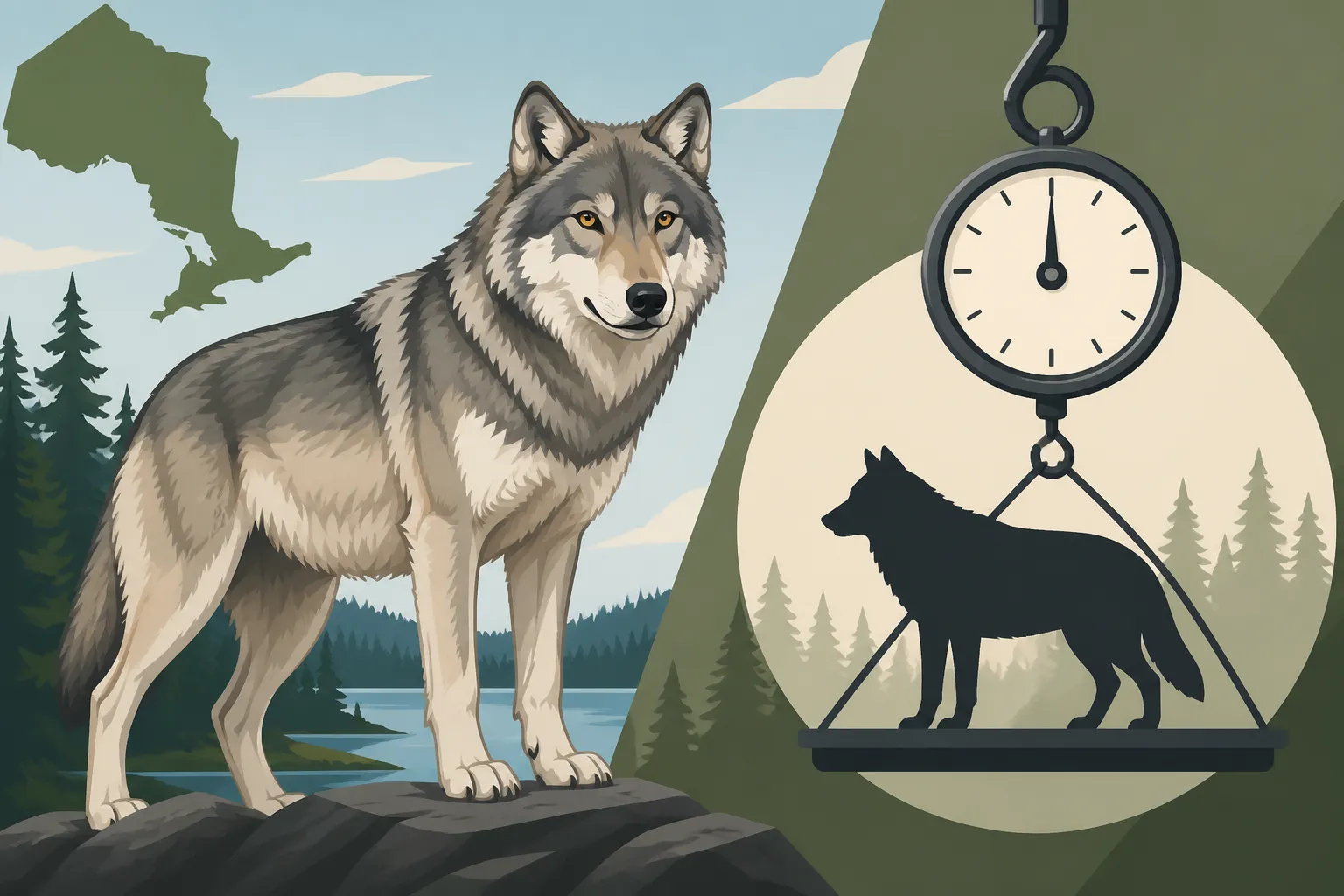
It's completely natural to wonder about the size and power of the wild animals that roam Ontario's vast wilderness, especially when it comes to predators like wolves. There's a certain awe and maybe even a touch of trepidation that comes with imagining encountering one of these magnificent creatures in the bush. Understanding "how heavy an Ontario wolf gets" isn't just a matter of curiosity; it's vital for hunters to appreciate the animal they pursue and for anyone venturing into their territory to grasp the scale of these apex predators. This guide will dive deep into what you can expect in terms of wolf size across our diverse landscapes.
Understanding Ontario's Wolf Species and Their Size Potential
When we talk about wolves in Ontario, it's not a single, monolithic species. Our province is a fascinating crossroads for different wolf populations, each with its own typical size range and characteristics influenced by genetics, environment, and prey availability. It's a complex picture, but understanding these distinctions is key to truly appreciating the varied wolf populations we have.
The Eastern Wolf vs. the Northwestern Wolf
Ontario is home to two primary wolf types that often overlap and sometimes interbreed, making identification a nuanced affair. In the more southern and central parts of the province, particularly around the Algonquin region, you'll find what is often referred to as the Eastern Wolf (though sometimes controversially called the Algonquin Wolf or even a distinct ecotype of grey wolf). These animals are generally smaller than their western counterparts, often displaying a mix of coyote and wolf traits due to historical hybridization. They're built for agility in mixed forests, preying on deer and smaller game. An adult Eastern Wolf typically weighs less than a full-blooded Grey Wolf from further north.
As you head north and west into the vast boreal forests and tundra regions of Ontario, particularly north of Lake Superior and towards Manitoba, the larger Northwestern Wolf, a subspecies of the Grey Wolf, becomes more prevalent. These are the wolves that often come to mind when people envision a "classic" wolf – big, powerful animals capable of bringing down moose and caribou. Their larger size is an adaptation to their environment, where larger prey animals are more common and survival in deep snow requires greater bulk and strength. The presence of these two main types, with areas of genetic mixing, means that the term "Ontario wolf" can cover quite a range of sizes. Understanding these distinctions helps hunters and outdoor enthusiasts better interpret what they see in the wild, knowing that a wolf in Algonquin Park might look quite different from one near Lake of the Woods. If you're wondering about the specific genetics, you might find more detail in What the Algonquin Wolf Actually Is.
Factors Influencing Wolf Weight in Ontario
A wolf's weight isn't just about its species or subspecies; many environmental and biological factors play a significant role. Just like humans, wolves vary greatly depending on their individual circumstances. One of the most critical factors is diet and prey availability. In areas where large prey such as moose and deer are abundant, wolves tend to be healthier and larger. Conversely, in regions with scarcer food resources, wolves might be smaller or less robust. A good example of this is seen in the difference between wolves in Ontario's far north, where moose are a primary food source, versus those in more fragmented southern habitats where deer and even beaver might constitute a larger portion of their diet.
Age and sex are also huge determinants. Adult male wolves, or "alpha males," are almost always larger and heavier than adult females. A young wolf, even one that is nearly full-grown, will still be gaining muscle and bone density, and thus weight, compared to a fully mature animal. Older wolves, particularly those past their prime, might show signs of wear and tear, including injuries or dental issues that can impact their ability to hunt effectively, potentially leading to weight loss. Health and genetics, of course, play their part too. A wolf that has suffered an injury, illness, or has poorer genetics for growth might be smaller than its peers. The terrain itself can also influence size; wolves that routinely travel vast distances in deep snow or rugged country might develop greater musculature, adding to their overall weight. Environmental factors and the health of local ungulate populations directly impact how large these predators can truly grow.
Typical and Maximum Weights for Ontario Wolves
So, what kind of numbers are we actually talking about when it comes to wolf weight in Ontario? It's easy to get carried away with stories of monstrous wolves, but it's important to differentiate between typical averages and those rare, exceptional giants. Most wolves you encounter will fall within a predictable range, and it's those averages that give us the most practical understanding.
Average Weights You Might Encounter
For an adult Eastern Wolf, the typical range is often somewhere between 60 to 85 pounds. Males tend to be on the higher end, sometimes pushing into the low 90s, while females are usually a bit smaller, perhaps in the 50 to 75-pound range. These are animals of considerable size, much larger than an average coyote, but not the behemoths that populate some of the legends. They are lean, agile, and incredibly powerful for their size, built for endurance and quick bursts in the forest.
When we look at the Northwestern Wolf in northern and western Ontario, the numbers climb quite a bit. Adult males in these regions commonly weigh between 90 to 140 pounds, with large individuals certainly capable of exceeding that. Females, while still smaller than males, often range from 70 to 110 pounds. A 120-pound wolf is a formidable animal, a true testament to the strength and resilience of northern predators. It's crucial to remember these are averages; a particularly good year for prey, a dominant animal, or unique genetics can always result in an individual pushing the upper limits of these ranges. These differences in average size across the province are a direct reflection of the varying ecosystems and available prey that these animals call home. Understanding these averages can be helpful for those who spend time in specific regions, perhaps looking at Hunting Wolves in Ontario's North.
The Upper Echelon: Record and Exceptional Weights
While the average wolf in Ontario is certainly impressive, stories and occasional verified reports of exceptionally large wolves do exist. These are the outliers, the truly dominant or fortunate individuals that have thrived, often for many years, in prime habitats with abundant food. While it's difficult to verify every historical claim, wolves weighing in excess of 150 pounds are considered very rare but not impossible, especially among the largest Northwestern Wolf populations. There have been accounts, though not always officially recorded or easily substantiated, of wolves taken in Ontario's far north that pushed towards the 160-pound mark or even slightly more. These are animals that have likely benefited from exceptional hunting prowess, a lack of injury, and a consistent, high-quality diet of large ungulates throughout their lives.
It's important to approach these "record" weights with a healthy dose of realism. Just like with trophy deer or moose, truly massive wolves are not the norm. They are the exception, a testament to the wild's capacity to produce truly magnificent specimens under ideal conditions. For hunters, encountering a wolf of this caliber is a once-in-a-lifetime event, requiring a significant amount of luck and often occurring in remote areas where human pressure is minimal. These extraordinary animals serve as a reminder of the wild power that still exists in Ontario's deepest bush, and why respecting these creatures and their habitat is so important.
Why Wolf Weight Matters to Hunters and Conservationists
Understanding wolf weight isn't just a fun fact; it carries significant implications for those who interact with these animals, whether through hunting or conservation efforts. The size of an animal impacts everything from hunting strategy to ecological assessments, making it a critical piece of information.
Implications for Hunters
For hunters targeting wolves, knowing the potential size of the animal you're pursuing is absolutely crucial. A larger wolf means a larger target area for a clean, ethical shot, but it also means a more robust animal that can potentially travel further after being hit, increasing the challenge of tracking and recovery. Shot placement becomes even more paramount with a bigger animal, as a marginal hit on a 140-pound wolf could lead to a very difficult, if not impossible, recovery scenario. Hunters using calls or blinds need to be prepared for the sheer scale of a large wolf if one commits. The physical effort required to move or pack out a large wolf is also considerable, especially in remote northern terrain. Just like any big game, proper meat care in the field is vital, and a larger animal means more work. You might find some helpful context on dealing with large game in various conditions by reading Meat Care in Ontario's Warm Early Seasons or Dragging a Deer Out of a Swamp.
Furthermore, distinguishing wolves from coyotes, especially the larger Eastern Coyotes or their hybrids, can be tricky. While a full-grown Northwestern Wolf is unmistakably larger than any coyote, an Eastern Wolf might fall into a grey area where size alone isn't a definitive identifier. Hunters must rely on a combination of factors – overall body structure, head shape, ear size, gait, and vocalizations – in addition to estimated size to make a positive identification before pulling the trigger. This is particularly relevant in areas where both species and hybrids coexist, emphasizing the need for positive identification before harvesting an animal.
Conservation and Population Health
From a conservation standpoint, wolf weight can be a valuable indicator of ecosystem health. A population of consistently robust, healthy, and large wolves often suggests a thriving prey base and a balanced ecosystem. Conversely, a noticeable trend towards smaller wolves, or wolves in poorer physical condition, could signal issues with prey availability, disease, or habitat degradation. Scientists and wildlife managers often track these metrics through studies and harvest data to assess the health of wolf populations and the broader ecological communities they inhabit. For instance, if moose populations decline in a particular area, it's reasonable to expect that the wolves relying on them might also be affected in their size and overall health.
The presence of particularly large, dominant wolves can also be an indicator of a stable social structure within a pack. These individuals often lead the hunt, ensure the pack's success, and contribute to the genetic health of future generations. Understanding where the largest wolves are found can help conservationists identify prime habitats that support healthy predator-prey dynamics. Ontario's ongoing efforts to monitor and manage its wolf populations rely on such data to ensure the long-term viability of these vital predators within our diverse landscapes. More broadly, looking at the full spectrum of Ontario's Predators and Furbearers gives a sense of the ecological role wolves play.
Distinguishing Wolves from Coyotes (and Hybrids) by Size and Other Clues
It's a common dilemma for hunters and outdoor enthusiasts: you catch a glimpse of a canid in the bush, and your mind immediately races – is it a wolf or a coyote? The truth is, while size is a major factor, it's not the only factor, especially in Ontario where the lines can be blurred by hybrids. It pays to know what else to look for.
Visual Cues Beyond Just Size
When you're trying to tell a wolf from a coyote, especially when you can't get a perfect read on its size, you need to consider a suite of visual cues. Think of it like a checklist. Wolves, even the smaller Eastern Wolves, generally have a broader, blockier head with a wider muzzle compared to the more slender, pointed snout of a coyote. Their ears tend to be shorter, more rounded, and less prominent than the often-tall, pointed ears of a coyote. A wolf's chest is deeper, its legs appear more substantial, and its overall body length is significantly greater. They carry more bulk and muscle.
The tail is another good indicator. A wolf's tail is usually shorter relative to its body, thicker, and often carried low, sometimes even dragging the ground, rarely curled upwards. Coyotes, on the other hand, often have a bushier, longer tail that's frequently held higher, sometimes even tucked when running or stressed. The coat colour can also vary, but it's not a definitive marker as both can range from grey to brown, black, or reddish hues. Instead, focus on the overall impression: a wolf projects an air of powerful density, while a coyote appears lankier and more "dog-like" in comparison. Remember, when in doubt, it's always best to err on the side of caution. For a direct comparison, you might want to look up Telling a Coyote From a Wolf.
The Challenge of Eastern Coyote/Wolf Hybrids
Here in Ontario, especially in the central and southern regions, the challenge of identification is magnified by the presence of Eastern Coyote/Wolf hybrids, sometimes colloquially referred to as "coywolves." These animals are the result of historical interbreeding between Eastern Wolves and coyotes, and they present a fascinating, if sometimes confusing, genetic mosaic. These hybrids can be significantly larger than pure coyotes, often reaching weights that overlap with the smaller end of the Eastern Wolf spectrum. This makes size an even less reliable standalone indicator.
These hybrids tend to exhibit a blend of characteristics. They might have a slightly broader head than a typical coyote but still lack the full bulk of a wolf. Their legs might be longer and more robust than a coyote, but their overall musculature may not match a northern Grey Wolf. It's an ongoing area of study for wildlife biologists, and it highlights why hunters must be extremely diligent in their identification. Without genetic testing, it can be nearly impossible to definitively classify some individuals. This is particularly important for hunters, as regulations regarding wolves and coyotes can differ, and unintended harvest of a protected wolf or hybrid is a serious concern. The complexities of this genetic mixing are a big part of Why Ontario Has So Many Coyotes in some areas.
| Characteristic | Eastern Wolf (Central/Southern ON) | Northwestern Wolf (Northern/Western ON) | Eastern Coyote/Coywolf (Across ON) |
|---|---|---|---|
| Typical Weight (lbs) | 60 – 90 | 90 – 140+ | 30 – 60 (up to 70 for large hybrids) |
| Body Build | Muscular, athletic, lean | Very robust, heavy bone structure | Slender, lanky, more dog-like |
| Head Shape | Broad, blocky muzzle | Very broad, powerful, wide snout | Narrower, pointed muzzle |
| Ears | Shorter, rounded, less prominent | Short, rounded, set wide apart | Taller, pointed, often prominent |
| Tail | Shorter, thick, often carried low | Thick, bushy, carried low, often dragging | Bushier, longer, often carried higher/tucked |
| Legs | Substantial, long | Very thick, long, powerful | Relatively slender, long |
| Primary Prey | Deer, beaver, small game | Moose, caribou, deer, beaver | Deer fawns, rabbits, rodents, birds |
Disclaimer
This article is for general informational purposes only and does not constitute professional advice. Laws, prices and regulations vary by location and change over time. Consult a qualified professional for guidance on your specific situation.