Taking Meat and Antlers Across the Border
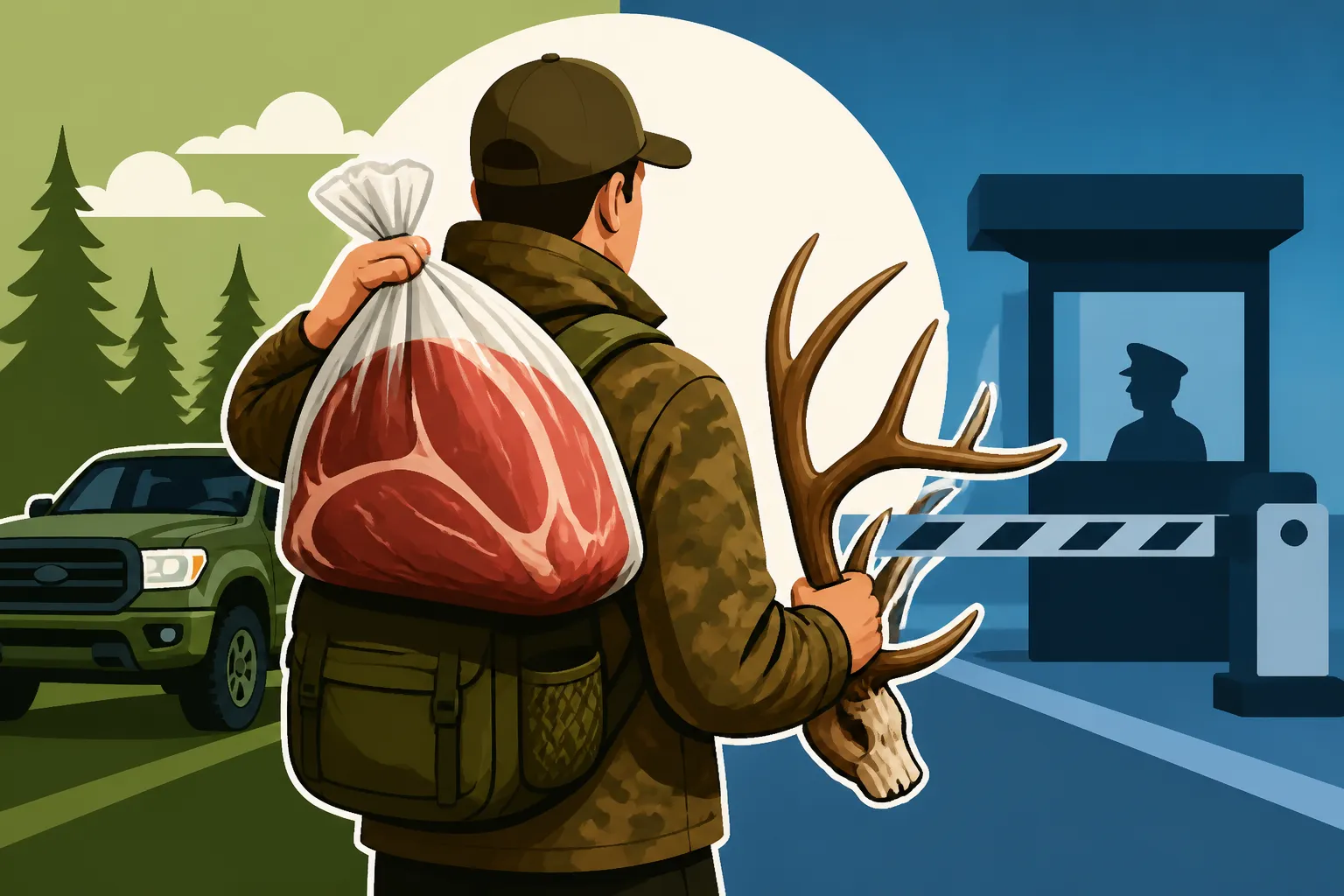
There’s nothing quite like the feeling of a successful hunt in the vast wilds of Ontario, but that triumphant feeling can quickly turn to a knot of anxiety when you start thinking about getting your hard-earned game meat and beautiful antlers back home, especially if "home" means across the border into the United States. Many hunters dread the thought of navigating customs, worried about paperwork, regulations, and the dreaded possibility of having their prized harvest confiscated. This guide is here to untangle that web of rules and ensure your journey back across the border with your Ontario hunting trophies and meat is as smooth as possible.
Understanding the Regulations for Bringing Game Across the Border
Bringing game animals, their meat, or their parts across international borders is never as simple as tossing it in the cooler and heading for the checkpoint. You're dealing with a complex interplay of federal and provincial (or state) laws on both sides of the Canada-U.S. border. The key to a stress-free crossing is understanding these regulations before your hunt even begins.
Federal vs. Provincial Rules
In Canada, you’re not just dealing with Ontario’s Ministry of Natural Resources and Forestry (MNRF) rules; you also have federal regulations from agencies like the Canadian Food Inspection Agency (CFIA) and the Canada Border Services Agency (CBSA) to consider. The MNRF sets the seasons, bag limits, and licensing requirements for hunting specific species within Ontario, like securing your Ontario Hunting Licences and What They Cost and carrying your Ontario's Outdoors Card Explained. They also dictate how you legally harvest and possess the animal, including tagging and reporting.
However, once you start thinking about taking that animal out of the province, federal rules kick in. The CFIA is concerned with animal health and food safety, ensuring that any meat products crossing borders don't pose a risk of disease or contamination. The CBSA, on the other hand, is the actual border enforcement agency, checking your declarations and documentation against both federal and provincial laws. It’s a bit like juggling, where you need to keep all these balls in the air simultaneously. For example, while Ontario may have rules on Transporting Game Meat in Ontario within its borders, those don't automatically override international customs regulations when you reach the border. You need to adhere to both.
US Federal and State Regulations
Just when you thought you had the Canadian side figured out, remember that the United States has its own set of rules, and they can be equally, if not more, stringent. At the federal level, the U.S. Department of Agriculture (USDA) and U.S. Customs and Border Protection (CBP) are the primary agencies you’ll interact with. The USDA is primarily concerned with preventing the introduction of animal diseases, especially those like Chronic Wasting Disease (CWD), which we'll delve into more later. This means they have strict rules about which parts of an animal can cross the border.
Beyond federal regulations, each individual state has its own wildlife and importation laws. What's perfectly acceptable for entry into Michigan might be a no-go for Pennsylvania or Wisconsin. Some states have specific rules about what parts of a deer, moose, or bear can enter, especially if you're coming from an area where CWD is present or even just monitored. It’s absolutely crucial to check the regulations of your home state and any states you might be driving through. A general guide for this can often be found through services like GoHunt, which compile information from various state agencies, making it a valuable tool for pre-trip planning.
Preparing Your Game Meat for Cross-Border Transport
The way you handle and prepare your game meat can make or break your border crossing experience. This isn't just about preserving the quality of your venison; it's about meeting strict health and safety standards.
Processing Requirements
For most hunted game meat to cross into the U.S., it generally needs to be deboned and properly processed. This is a critical step. "Deboned" means exactly that: all bone, spinal cord, and brain tissue must be removed. This largely stems from concerns about diseases like CWD, where these tissues are considered high-risk for carrying prions. While What CWD Means for Ontario Deer is an ongoing conversation, and Ontario has robust Ontario's CWD Surveillance Program, the U.S. border officials take a very cautious approach.
The meat should also be thoroughly cleaned of any dirt, hair, or other contaminants. Packaging is equally important; use clean, sturdy, leak-proof packaging, clearly labeled with the species, the date of harvest, and your name. Think vacuum-sealed bags, good quality freezer paper, or heavy-duty plastic wraps within insulated coolers. Simply throwing chunks of meat into a plastic grocery bag won't cut it and will almost certainly lead to rejection at the border. Remember, the goal is to present a clean, professional product that clearly meets food safety standards.
Health and Inspection Certificates
For most common game species like white-tailed deer, moose, or bear harvested in Ontario and entering the U.S. for personal consumption, a specific CITES (Convention on International Trade in Endangered Species of Wild Fauna and Flora) permit is usually not required unless it's a particularly exotic or protected species (which isn't typically the case for the main big game in Ontario). However, you do need to be prepared with proof that the animal was legally harvested and is fit for consumption.
This means having your validated hunting tag, a copy of your Getting a Non-Resident Export Permit, and any documentation provided by your outfitter or butcher. If you had your meat professionally processed in Ontario, some butchers can provide a receipt or statement indicating the meat was processed to health standards. While not always strictly required for personal consumption, having an official-looking document can certainly ease the process at the border. It acts as an additional layer of verification that your meat isn't just a random piece of animal but a legally hunted and handled food product. Always keep these documents readily accessible, separate from your main luggage, so you can present them quickly to a border services officer.
Transporting Antlers and Trophies
Bringing home a set of majestic antlers or a beautiful bear hide is often just as important to a hunter as the meat itself. However, these "trophy" items also come with their own set of rules and preparation requirements to successfully cross the border.
Antler Preparation and Cleaning
When it comes to antlers, the primary concern for border agencies is the potential for biological contamination, particularly related to CWD. Raw, unprocessed skull plates or antlers with brain or spinal cord tissue still attached are generally prohibited from entering the U.S. The golden rule here is "clean and dry." This means you need to meticulously clean any skull plates attached to your antlers. All brain tissue, meat, and other organic matter must be removed.
Once clean, the skull plate needs to be completely dried. Many hunters go a step further and bleach the skull plate for good measure, giving it that pristine, white look. For antlers that are shed or detached from the skull, this is less of a concern, as they inherently lack the problematic tissues. If you're planning a shoulder mount, ensure your taxidermist prepares the skull plate and cape according to international export standards. It’s an extra cost, yes, but far less hassle than having your trophy delayed or seized at the border because a tiny piece of brain matter was overlooked.
Taxidermy and Export Permits
For hunters taking a full shoulder mount or a bear rug, the process often involves an Ontario taxidermist. It’s common practice for many hunters to leave their trophies with a reputable taxidermist in Ontario, who will then handle the complex process of tanning, mounting, and shipping the finished product directly to your home state. This often includes navigating the necessary permits and customs declarations on your behalf, significantly simplifying your border crossing experience.
If you choose to transport your raw hide or antlers yourself, you absolutely must obtain an Ontario The Non-Resident Export Permit Explained. This permit, issued by the Ontario Ministry of Natural Resources and Forestry (MNRF), verifies that your trophy was legally harvested and is permitted to leave the province. You can often obtain this permit at an MNRF office or sometimes through your outfitter, especially if you've booked a guided trip. Without this document, your ability to cross the border with your trophy is severely jeopardized. While the export permit primarily covers Canadian regulations, it's the document U.S. customs officials will look for to ensure legal harvest. For more details on the export permit process, you might want to look at Getting a Non-Resident Export Permit.
Required Documentation for a Smooth Border Crossing
Think of your paperwork as your hunting license for the border crossing itself. Having every single document in order and easily accessible is paramount. Missing even one seemingly small piece can lead to significant delays, frustration, or even denial of entry for your game.
Essential Papers to Have on Hand
When you roll up to the border, the customs officer will want to see proof that you legally hunted the animal, that you're permitted to export it from Canada, and that you're allowed to import it into the U.S. Here's a checklist of what you absolutely need:
- Your Valid Ontario Hunting Licence: This shows you were legally permitted to hunt in the province.
- Your Ontario Outdoors Card: Your unique identifier in Ontario's hunting system.
- Validated Game Tags: The physical tags attached to your harvested animal, showing species, date, and location. These are critical.
- Non-Resident Export Permit: This document, obtained from the MNRF, is your ticket to legally take game out of Ontario.
- Proof of Ownership: This could be your hunting license, the validated tag, or a receipt from an outfitter.
- Firearms Declaration (if applicable): If you brought a firearm into Canada, you'll need the original declaration form (RCMP 5589/5590) to take it back across. Check out Bringing Firearms Into Ontario for more on this.
- Passport or NEXUS Card: Your primary identification for crossing the border.
Always carry original documents, but it's a very good idea to have photocopies or digital backups on your phone. Keep these papers organized, perhaps in a dedicated folder, and easily accessible – not buried under a pile of gear in the back of your truck. This preparedness shows customs officials you’re serious and have nothing to hide.
Here’s a handy table summarizing these critical documents:
| Document | Purpose | Where to Get It | Important Notes |
|---|---|---|---|
| Ontario Hunting Licence | Proof of legal hunting permission in Ontario | Ontario Ministry of Natural Resources and Forestry (MNRF) | Must be current for the season and species hunted. |
| Ontario Outdoors Card | Your unique hunter ID in Ontario | MNRF | Valid for 3 calendar years. |
| Validated Game Tag(s) | Proof of legal harvest and species/sex taken | Attached to your hunting licence | Must be properly notched and attached to the game as per regulations. |
| Non-Resident Export Permit | Authorization to remove game/trophies from Ontario | MNRF Office or authorized issuer (e.g., outfitter) | Crucial for meat, hides, and antlers. Mandatory for non-residents. |
| Passport/NEXUS Card | Primary identification for international travel | Your government's passport office | Ensure it's valid and unexpired. |
| Non-Resident Firearm Declaration | Permission to bring firearms into Canada (and back to the U.S.) | Canadian Border Services Agency (CBSA) at entry point | Original copy required for return. |
| State Import Regulations Check | Confirmation of your home state's rules | Your state's Department of Natural Resources/Fish & Game | Crucial for avoiding issues on the U.S. side beyond federal rules. GoHunt is a good resource here. |
| Butcher/Taxidermist Receipts | Documentation of professional processing/preparation | Your chosen service provider in Ontario | Not always mandatory but can ease inspection and provide proof of proper handling. |
Dealing with Border Officials
Approach the border crossing with confidence, honesty, and respect. When asked by a Customs and Border Protection officer, clearly and truthfully declare everything you are bringing across, including all game meat, hides, and antlers. Don't try to hide anything, even if you're unsure about its legality. It’s far better to declare it and let them tell you it's prohibited than to be caught attempting to smuggle it.
Be prepared to answer questions about where you hunted, what you harvested, and how it was processed. Have your documents ready to hand over. Patience is also a virtue here. Border crossings can take time, especially if they decide to conduct a more thorough inspection. Remain calm, polite, and cooperative. Remember, their job is to protect national borders and resources, and your cooperation helps them do that efficiently.
Common Pitfalls and How to Avoid Them
Even seasoned hunters can stumble when it comes to cross-border transport. Being aware of the most common pitfalls can help you steer clear of trouble.
Overlooking State-Specific Rules
This is a huge one, and it catches many hunters off guard. While you might be meticulously compliant with Canadian federal and Ontario provincial laws, and even U.S. federal laws, your specific home state (or any state you drive through) can have additional, unique regulations regarding importing game. For instance, some states have very strict rules about bringing in deer or elk from any jurisdiction, including Ontario, due to CWD concerns, even if U.S. federal regulations might permit it.
The mistake many make is assuming that if the federal agents let them through, they're good to go. Not true. Your state's Department of Natural Resources or equivalent agency often has the final say on what crosses its border. You could technically clear federal customs only to be pulled over later in your home state and find yourself in violation of local game laws. Before you even leave for Ontario, do your homework: contact your state’s wildlife agency directly, or use a reliable hunting app like GoHunt that specifically details import regulations for various states. This proactive step can save you a world of headache and potential fines.
Improper Meat Preparation
Another common reason for rejection at the border is improperly prepared meat. This often boils down to two things: not deboning completely and not keeping the meat clean and cool. Deboning needs to be thorough; any bone fragments, spinal cord, or brain material found will likely lead to the meat being denied entry. This is especially true for deer and moose due to CWD concerns. This is also why many outfitters and experienced hunters opt for professional meat processors in Ontario, as they understand the strict requirements for cross-border transport.
Furthermore, meat must be kept in prime condition. This means proper field dressing, quick cooling, and sanitary packaging. If you're hunting in warmer early seasons, like the late September archery opener, this is even more critical. Meat that shows signs of spoilage, is heavily soiled, or is simply not packaged securely could be rejected on health grounds. Ensure your coolers are well-stocked with ice or frozen gel packs, and that your meat is wrapped to prevent contamination and leakage. Check out Meat Care in Ontario's Warm Early Seasons for tips on keeping your harvest pristine.
Incomplete Documentation
Imagine this scenario: you've had a fantastic hunt, bagged a beautiful whitetail, meticulously processed your meat, and cleaned your antlers. You pull up to the border, confident, only to realize you left your Non-Resident Export Permit on the kitchen table back at camp. Or perhaps you have the permit, but your hunting tag wasn't properly filled out or attached to the animal. These are not hypothetical nightmares; they happen. A single missing or improperly completed document is often enough for border officials to refuse entry for your game.
The frustration is immense because it’s usually an easily avoidable oversight. Before you even pack your bags to leave Ontario, sit down with your checklist and confirm every single piece of paper is present, filled out correctly, and corresponds to your harvest. This includes your What a Non-Resident Deer Licence Costs, all tags, and the export permit. Don't wait until you're at the checkpoint to discover a problem. A final document check can be the difference between a triumphant return home and a heartbreaking farewell to your hard-earned game at the border. Remember, a smooth crossing is all about preparation, and that starts long before you reach the customs booth. For more on planning your entire adventure, consider reading Booking an Ontario Hunting Trip.
Disclaimer
Please remember that hunting regulations and border crossing requirements are subject to change. While this guide provides comprehensive information, it is always your responsibility to verify the most current regulations with the relevant Canadian and U.S. authorities (e.g., MNRF, CBSA, CFIA, USDA, CBP, and your specific state wildlife agency) before your hunt and before attempting to cross the border. This information is for general guidance only and should not be considered legal advice.