Where Spruce Grouse Has No Season
It’s a common frustration when you’re eagerly planning your upland bird hunt in Ontario, poring over the regulations, and suddenly you hit a snag: confusion about seasons for specific species. Many hunters wonder if there’s a place "Where Spruce Grouse Has No Season" in Ontario, assuming certain areas might be permanently closed. This guide is here to clear up that confusion, explain the realities of hunting spruce grouse across the province, and ensure you're always on the right side of the law while enjoying Ontario’s fantastic small game opportunities.
Understanding Ontario's General Grouse Season Framework
First, let's get one thing straight: for the vast majority of Ontario, there is an open season for Spruce Grouse. It’s a bit of a myth that large swathes of the province completely prohibit hunting these birds. The confusion often stems from how regulations are presented, which can be a bit overwhelming, especially for new hunters or those less familiar with Ontario’s vast and varied landscape.
When you crack open the Ontario Hunting Regulations Summary, you'll typically find grouse — including Ruffed Grouse, Spruce Grouse, and Sharp-tailed Grouse — grouped together under a single, generous season. This season usually kicks off in mid-September and runs well into December, covering a significant portion of the fall hunting period. The bag and possession limits are also typically uniform across these species, often allowing for a daily bag of five and a possession limit of fifteen. This blanket regulation means that if you’re hunting Ruffed Grouse in a specific Wildlife Management Unit (WMU) that allows it, you can generally take Spruce Grouse too, provided you stay within those same limits and seasons. This makes planning a mixed bag upland hunt a lot simpler, as you don't need to memorize entirely different dates for each grouse species.
However, the key word here is "generally." Ontario is a huge province, and while broad rules apply, there are always localized exceptions. The trick is knowing where to look for those details, and that's where the frustration often boils over. Many hunters simply glance at the general season and assume it applies everywhere, only to later hear whispers of closures or restrictions that leave them scratching their heads.
Identifying the Rare Exceptions to the Rule
While a blanket "no season" for Spruce Grouse across an entire region is exceedingly rare in Ontario, there are indeed specific circumstances and locations where hunting these birds, or any game, is prohibited. These are the "wheres" that often lead to the misunderstanding that Spruce Grouse might be out of bounds entirely. It's crucial for every hunter to understand these nuances to avoid accidental violations.
Protected Areas and Refuges
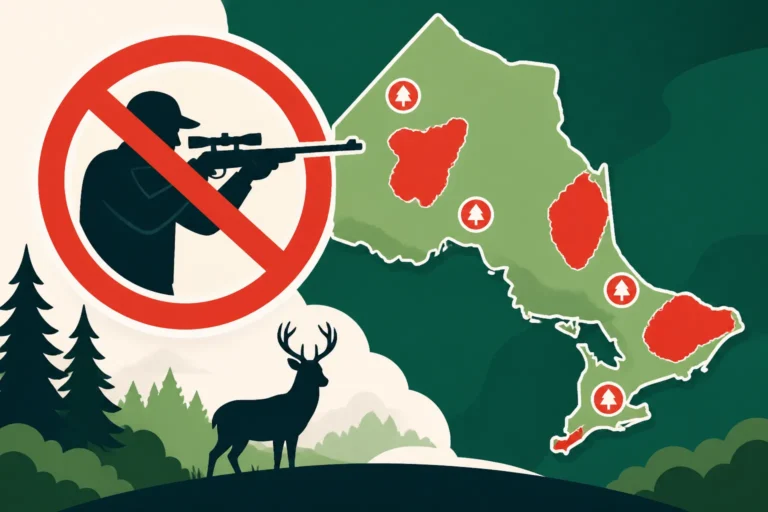
The most common places where you'll find a complete prohibition on hunting, including for Spruce Grouse, are within designated protected areas. This includes National Parks, many Provincial Parks, and specific wildlife sanctuaries or refuges. For example, hunting is generally not permitted in Algonquin Provincial Park, or any of Canada's National Parks like Pukaskwa National Park along Lake Superior. These areas are established for conservation and recreational purposes that often exclude hunting, regardless of the species. It's not that Spruce Grouse have no season there specifically; it's that all hunting is off-limits.
Before you head out, it's absolutely vital to check if your chosen hunting grounds fall within such a protected zone. A quick look at a detailed map, perhaps using a mapping app like GoHunt, which overlays WMU boundaries with various land designations, can save you a lot of grief. You'd be surprised how many hunters inadvertently stray into these areas, thinking they're on regular Crown land, only to find out later they were in a no-hunting zone. Remember that even if a park allows some form of hunting, it might have specific rules for different species or seasons, so always verify the local details. For example, some provincial parks might allow hunting for certain species during specific times, but this is always clearly outlined in the park's management plan or the provincial hunting regulations.
Specific Wildlife Management Unit Restrictions
While less common for a widespread species like Spruce Grouse, there can be specific Wildlife Management Units (WMUs) or portions of WMUs that have unique restrictions or closures for various game species. These are usually implemented for very specific conservation reasons, such as local population recovery efforts, safety concerns near populated areas, or unique ecological considerations.
The good news is that for Spruce Grouse, such specific WMU-level closures are quite infrequent. Unlike, say, certain deer or moose zones which might have antlerless tag restrictions or even temporary closures due to population fluctuations, grouse seasons are generally quite consistent across the province. However, it’s always prudent to cross-reference the general regulations with the specific WMU information for your planned hunt. The province’s hunting summary will list any WMU-specific exceptions clearly. A tool like GoHunt can be invaluable here, allowing you to easily look up specific WMU rules and overlays on a map. This granular level of detail is critical. For a comprehensive overview, you might want to review the general rules on Ontario's Wildlife Management Units or how to actually Finding an Ontario WMU Map to ensure you have the best information at hand.
Municipal Bylaws and Private Land
Another often-overlooked area of restriction comes from municipal bylaws and private land. Many townships or municipalities have their own bylaws regarding firearm discharge or hunting within their boundaries, especially closer to urban or suburban developments. These bylaws can, in effect, create areas where hunting is prohibited, regardless of provincial seasons. Similarly, if you are hunting on private land, you absolutely need explicit permission from the landowner, and they might have their own rules regarding what can or cannot be hunted on their property. This isn't a "no season" per se, but it's a "no hunting" situation which amounts to the same thing for a hunter. Always confirm permission and local bylaws.
Why the Confusion About Spruce Grouse Persists
The idea that Spruce Grouse might not have an open season in certain areas of Ontario is a persistent one, and it’s not entirely unfounded in historical context or general hunting lore. However, today, much of the confusion stems from a few key factors that are worth exploring.
Misconceptions About Species Vulnerability
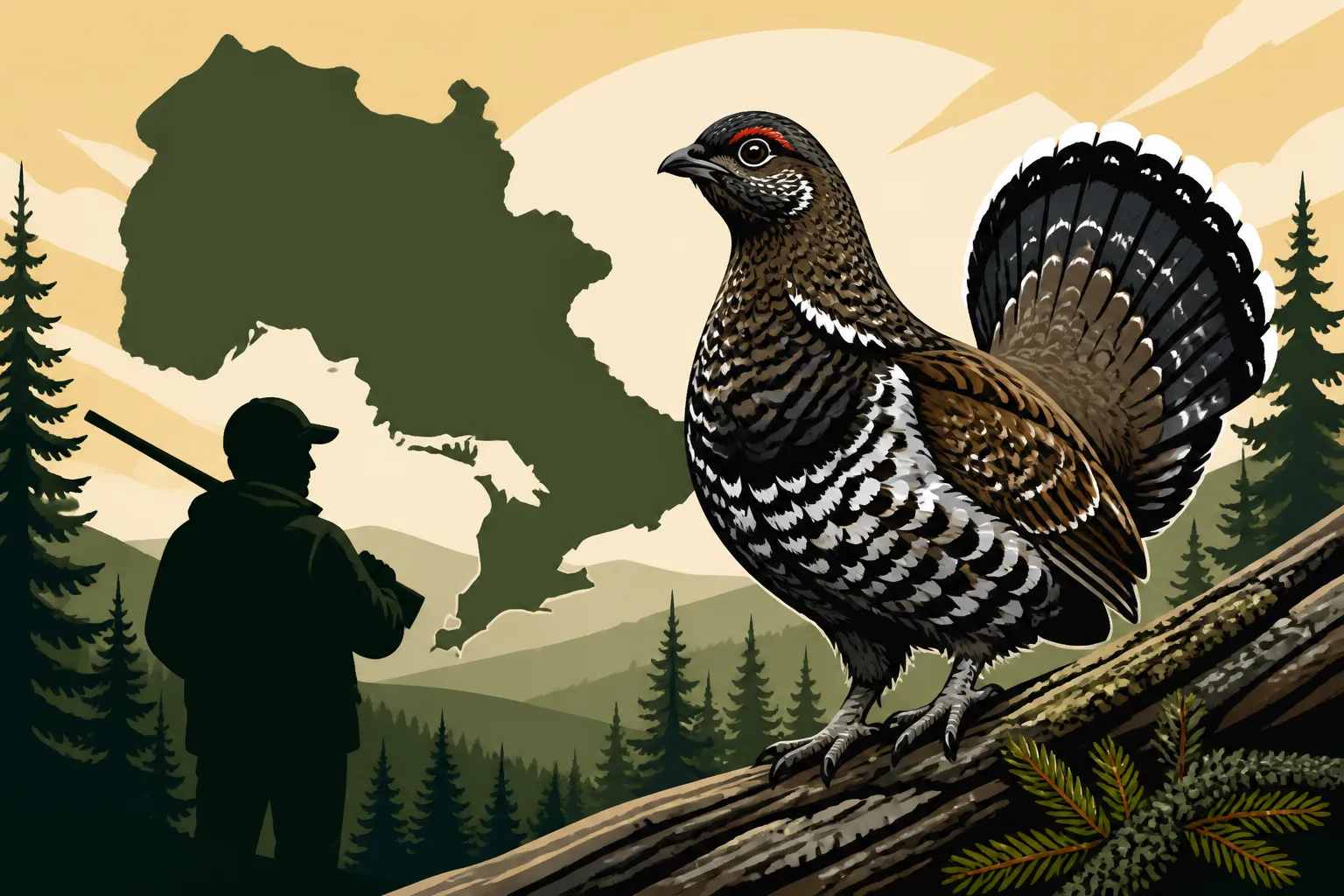
In some regions outside of Ontario, or historically, Spruce Grouse have been considered more vulnerable than their Ruffed Grouse cousins due to their relatively tame nature (earning them the nickname "fool hen") and their specific habitat requirements. This has led some hunters to believe that perhaps Ontario, too, imposes stricter regulations or outright closures to protect them. However, in Ontario, Spruce Grouse populations are generally stable and widespread throughout their boreal forest habitat. They thrive in coniferous and mixed-wood forests, often utilizing mature stands of spruce and pine, especially those with dense canopies that provide cover from predators. Their populations aren't seen as under threat to the point of requiring widespread season closures.
It's true that their trusting nature can make them easier to hunt, especially compared to the explosive flush of a Ruffed Grouse, but this doesn't mean they are overharvested to the point of needing protection in most of their range. Rather, their habitat is often more remote and less pressured by hunters than the deciduous and mixed forests where Ruffed Grouse are abundant. Understanding the nuances of their habitat can even help you find them, so learning about Hunting Spruce Grouse in Black Spruce can be very beneficial.
Regional Differences and Regulation Complexity
Ontario is a truly massive province, spanning vastly different ecological zones, from the agricultural lands of the south to the vast boreal forests of the north. What applies in one region might not apply in another. The provincial hunting regulations try to cover all of this complexity, but sometimes, the sheer volume of information can be overwhelming. While the general grouse season is largely consistent, the feeling that "there must be some exception" is a natural response to such a complex regulatory environment.
Hunters often encounter specific localized restrictions for other species – like controlled deer hunts or specific moose tag allocations – and then, quite reasonably, assume similar granular restrictions might apply to upland birds like Spruce Grouse. It's a testament to the detailed, WMU-specific management that goes into game populations, but it can make parsing the overall rules a bit of a challenge. When in doubt, always consult the official Ontario Hunting Regulations Summary available online through the provincial government website. It’s your most reliable source for the exact dates and limits for all species in every WMU.
Historical Changes in Regulations
Hunting regulations are not static; they evolve based on population data, research, and changing conservation goals. It's possible that in the distant past, there might have been more localized closures or different rules for Spruce Grouse. Veterans of the woods might recall older regulations that no longer apply, and this knowledge can be passed down, inadvertently contributing to current misunderstandings.
Today, the approach for upland birds generally favors broader, consistent seasons where populations are robust. This simplifies enforcement and compliance while still protecting the resource. Keeping up with "Where Ontario Rules Changed This Year" is always a good practice to ensure your information is current.
How to Ensure You’re Hunting Legally
Navigating Ontario’s hunting regulations can feel like a maze, but ensuring you're compliant is paramount for sustainable hunting and avoiding legal trouble. For Spruce Grouse, the steps are straightforward once you know where to look.
Step-by-Step Verification
- Obtain Your Outdoors Card and Licence: Before you even think about hunting, ensure your Ontario's Outdoors Card Explained is valid and you have the appropriate small game licence. This is your fundamental right to hunt.
- Consult the Official Regulations Summary: The most current and authoritative source is always the annual Ontario Hunting Regulations Summary. It's available online as a PDF or in print at most licence issuers. Don't rely solely on word-of-mouth or old printouts. Look specifically under the "Upland Game Birds" section.
- Identify Your Wildlife Management Unit (WMU): Know exactly which WMU you plan to hunt in. You can't just generalize "Northern Ontario"; you need the specific WMU number. Tools like GoHunt are excellent for this, as they provide interactive maps.
- Check WMU-Specific Exceptions: Once you have your WMU, scan the regulations summary for any exceptions or special conditions listed for that WMU concerning grouse. While rare for Spruce Grouse, this is where you'd find any "no season" areas or different bag limits.
- Verify Land Type: Confirm whether the land you'll be on is Crown land (public) or private land. If private, ensure you have written permission. If public, check if it's a protected area (e.g., Provincial Park, Conservation Reserve) where hunting might be restricted or prohibited. Again, GoHunt’s mapping layers can be invaluable for identifying land ownership and protected areas. Understanding Public Hunting Land in Ontario and Ontario's Crown Land Access Rules is essential.
Key Season Dates and Limits for Grouse
To give you a general idea, here’s a typical snapshot of what you might find for the common grouse species in most of Ontario. Always confirm with the current year's regulations.
| Species | General Open Season (Most of Ontario) | Daily Bag Limit | Possession Limit |
|---|---|---|---|
| Ruffed Grouse | Sept 15 – Dec 15 | 5 | 15 |
| Spruce Grouse | Sept 15 – Dec 15 | 5 | 15 |
| Sharp-tailed Grouse | Sept 15 – Dec 15 | 5 | 15 |
Note: These dates and limits are illustrative. Always check the current Ontario Hunting Regulations Summary for your specific WMU before heading out.
When you're out in the field, proper identification is also critical. While regulations group them, telling a Ruffed Grouse from a Spruce Grouse is important for appreciating the wildlife you encounter. You can learn more about this in Telling a Ruffed Grouse From a Spruce Grouse.
Finding Productive Spruce Grouse Habitat
Since the vast majority of Ontario offers an open season for Spruce Grouse, your focus should be less on where there's no season and more on where you can actually find these unique birds. Spruce Grouse are creatures of coniferous forests, and understanding their preferred habitat is key to a successful hunt.
Targeting Coniferous and Mixed Forests
Spruce Grouse are almost exclusively found in boreal and mixedwood forests dominated by coniferous trees like black spruce, white spruce, jack pine, and balsam fir. They rarely venture far from this cover. Unlike Ruffed Grouse, which prefer aspen stands, regenerating clearcuts, and brushy edges, Spruce Grouse are more at home in the thicker, darker confines of mature and semi-mature evergreen stands. You'll often find them along the edges of muskegs, near beaver ponds, or within dense pine plantations.
When scouting, look for areas with a thick overhead canopy, often with a somewhat sparse understory, although they do use dense regeneration for cover too. They feed heavily on conifer needles, buds, and twigs, especially in winter, so where you find their food source, you’ll find them. A mapping application like GoHunt can help you identify these specific forest types and locate promising habitat within your chosen WMU. Pay attention to areas marked as "black spruce" or "jack pine" on forest inventory maps. These are prime zones.
Hunting Techniques for Spruce Grouse
Spruce Grouse are famously docile, often holding incredibly tight, or simply walking away rather than flushing wildly. This makes them a unique and often enjoyable quarry for the upland hunter.
- Walk Slowly and Methodically: Unlike Ruffed Grouse hunting, where you might cover ground quickly to flush birds, a slower, more deliberate approach is better for Spruce Grouse. They are less likely to flush, so you might walk right past them without knowing. Keep your eyes peeled on branches and the forest floor.
- Listen for Movement: While not as vocal as Ruffed Grouse, sometimes you can hear their quiet clucking or rustling in the dense undergrowth.
- Use a Dog (Optional): A pointing dog can be incredibly effective for Spruce Grouse, as they will often hold point perfectly, allowing you to walk in for the shot. Even flushing dogs can be used, but you might need to be quicker on the draw.
- Target Road and Trail Edges: Just like Ruffed Grouse, Spruce Grouse will sometimes venture to the edges of old logging roads, ATV trails, or walking paths to dust or pick gravel. These can be productive spots, particularly in the morning or late afternoon. You might also find other small game in these areas, so consider checking out Ruffed Grouse Hunting Ontario's Bush Roads for more tips.
- Be Mindful of Other Hunters: While Spruce Grouse habitat can be remote, always be aware of other hunters, especially during the peak fall seasons when multiple species are in season. Safety is paramount.
Hunting Spruce Grouse offers a truly unique experience in Ontario’s vast northern forests. With a clear understanding of the regulations and a good eye for habitat, you’ll find that the "no season" myth quickly dissipates, replaced by the exciting reality of pursuing these fascinating birds.
Disclaimer
The information provided in this guide is for general informational purposes only and is not intended as legal advice. Hunting regulations in Ontario can change annually, and specific rules may vary depending on the Wildlife Management Unit (WMU), type of land, and other factors. It is the responsibility of every hunter to consult the most current official Ontario Hunting Regulations Summary published by the Ontario Ministry of Natural Resources and Forestry (MNRF) before participating in any hunting activity. Always confirm season dates, bag limits, and specific WMU restrictions to ensure compliance with all applicable laws.