Ontario Wolf and Coyote Tag Rules
The world of hunting regulations in Ontario can sometimes feel like trying to track a ghost in fresh snow, especially when it comes to species that look similar and have varying rules based on where you are. Many hunters feel a real sense of frustration trying to decipher the nuances between wolf and coyote rules, particularly around when and where a specific tag is needed. This guide is here to untangle those complexities, walking you through everything you need to know about Ontario's wolf and coyote tag rules, seasons, and critical considerations to ensure your hunt is both successful and compliant.
Decoding Ontario's Canid Regulations: Wolves vs. Coyotes
Before you even think about heading out into the bush, it's absolutely crucial to understand the foundational differences in how Ontario manages its wolf and coyote populations. It's not just about what they look like; it's about their distribution, their numbers, and their protected status in certain areas. This distinction is the very first hurdle many hunters face, and getting it wrong can lead to serious consequences.
The Elusive Distinction: Physical and Behavioural Differences
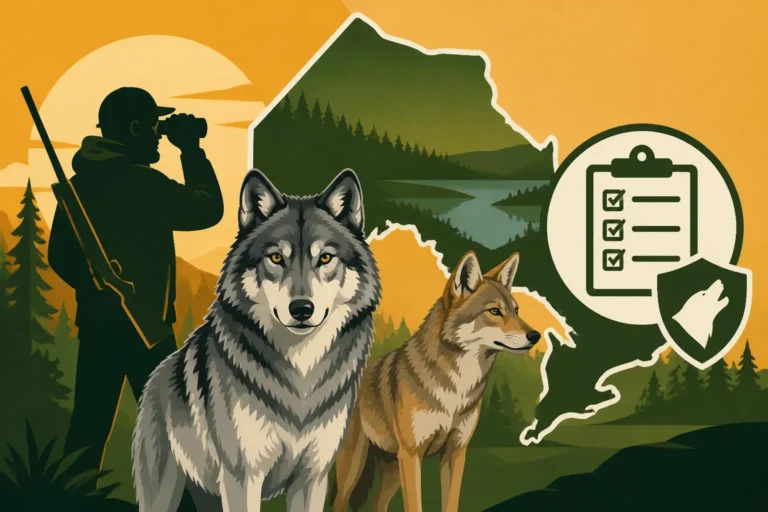
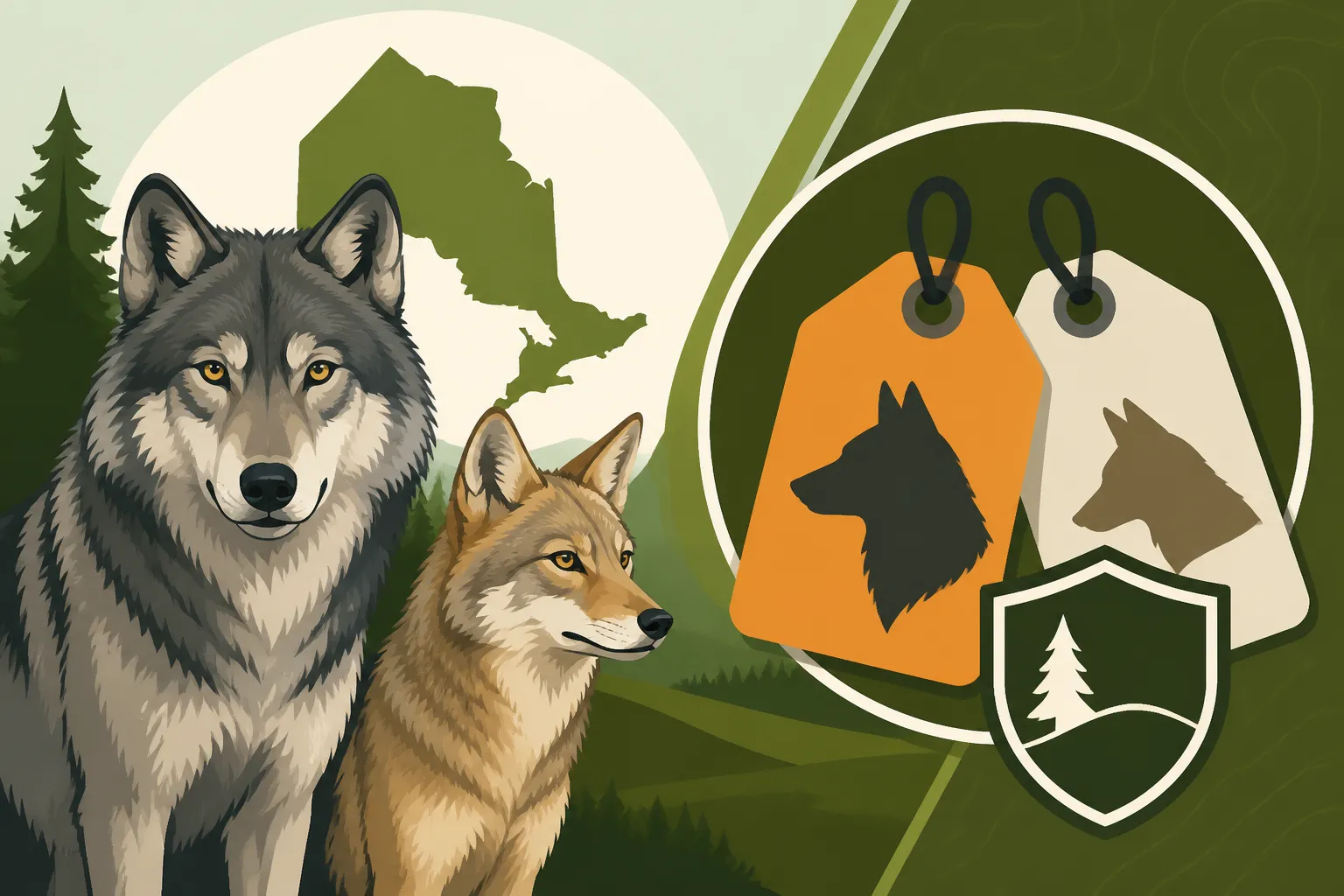
While to the untrained eye, a wolf and a coyote might seem interchangeable, especially in areas where their ranges overlap, they are distinctly different animals with varying legal statuses in Ontario. Wolves, particularly the Eastern Wolf and the Grey Wolf, are generally larger, with broader heads, shorter, rounder ears, and more robust bodies. They tend to travel in packs, often displaying complex social structures. Their coats can vary greatly, from grey to black to tawny. Coyotes, on the other hand, are typically smaller, more slender, with narrower muzzles, longer, pointed ears, and a bushier tail often tipped with black. They're more solitary or travel in smaller family units. In Ontario, especially in the central and southern regions, what many call a "coyote" might actually be a coywolf – a hybrid animal resulting from interbreeding between coyotes and Eastern Wolves, which often exhibit characteristics of both. This genetic mixing further blurs the lines, making positive identification in the field challenging but critical.
Geographical Distribution and Overlap
The distribution of wolves and coyotes (including coywolves) across Ontario is a major factor in the hunting regulations. Generally, purebred Grey Wolves are found in the more remote northern regions of the province, deep in the boreal forest. Eastern Wolves, often smaller and more elusive, historically occupied the central forested regions, with strong populations in areas like Algonquin Provincial Park and surrounding areas. Coyotes and coywolves have a much wider distribution, thriving across southern, central, and even into parts of northern Ontario, adapting incredibly well to fragmented landscapes, agricultural areas, and even urban fringes. This overlap is precisely why understanding the specific rules for your Wildlife Management Unit (WMU) is so important, as what might be an open season for coyotes in one area could require a specific tag or even be completely prohibited for wolves in another. When you're Reading an Ontario WMU Map Before You Go, pay close attention to the designated species rules.
Understanding Their Ecological Role
Both wolves and coyotes play vital roles as apex predators in their respective ecosystems, helping to keep deer, moose, and small game populations healthy and in check. However, public perception and management strategies can differ significantly. Wolves are often viewed as symbols of wilderness and are a keystone species, particularly in large, intact forest ecosystems. Their populations are carefully monitored, and in certain areas, like within and adjacent to Algonquin Provincial Park, Eastern Wolves and coywolves receive enhanced protection. Coyotes, particularly in agricultural and settled areas, are sometimes seen as nuisance animals due to predation on livestock or domestic pets, leading to different management approaches that often encourage hunting to manage their numbers. This dichotomy in ecological perception and real-world impact directly influences the provincial regulations and why distinctions in tags and seasons exist.
General Hunting Regulations for Ontario's Canids
Once you've wrapped your head around the differences, it's time to dive into the general rules that apply to hunting these intelligent predators. It's not just about having a gun or a bow; it's about proper licensing, knowing your legal tools, and understanding the nuances of when and how you can actually pursue them.
Who Can Hunt: Licence Requirements and Hunter Safety
To hunt wolves or coyotes in Ontario, you absolutely must possess a valid Outdoors Card and the appropriate hunting licence. For residents, this typically means a Resident Small Game Licence, which covers coyotes in most areas. However, for wolves, the situation becomes more specific. In certain WMUs, a separate validation for wolves is required on top of your small game licence. This is where many hunters get tripped up – assuming their small game licence covers everything. Always check the current Ontario Hunting Regulations Summary for your specific WMU to confirm. If you're new to hunting in Ontario or haven't taken a course in a while, refreshing your knowledge on Ontario Hunter Education Requirements is always a good idea. Even non-residents have options, but their licensing structure can be a bit more complex.
Permitted Hunting Methods and Equipment
Ontario has clear guidelines on what you can and cannot use to hunt canids. For both wolves and coyotes, common methods include still-hunting, calling (using distress calls, howls, or pup distress calls), and stand hunting. It's important to remember that baiting for wolves is generally prohibited, and while baiting for coyotes might not be explicitly forbidden in all areas, it's often frowned upon and requires careful consideration of local regulations and ethical practices. When it comes to firearms, Legal Firearms and Bows for Big Game generally apply to wolves, but for coyotes, many smaller calibers that are suitable for small game are also permitted. Always ensure your chosen firearm is legal for the species you are pursuing and that you are using appropriate ammunition. Bows and crossbows are also legal methods, provided they meet minimum draw weight and other specifications.
Night Hunting Considerations for Predators
One area that often sparks confusion and generates many questions is night hunting. In Ontario, the rules around Night Hunting Rules for Ontario Predators are very strict and limited. Generally, the hunting of wolves and coyotes is restricted to one half-hour before sunrise to one half-hour after sunset. There are very specific, limited exceptions for farmers protecting livestock, or certain controlled hunts, but for the average sport hunter, night hunting these animals is not permitted. It's imperative to consult the regulations summary for any potential changes or very specific WMU allowances, as violating these rules can lead to severe fines and penalties. Always err on the side of caution and hunt during legal daylight hours.
Specific Tagging, Limits, and Season Structures
This is where the rubber meets the road, outlining the critical details about when and where you need a wolf tag versus when a coyote falls under general small game rules. Getting these details right is paramount to a legal hunt.
When a Wolf Tag is Required and Where
The requirement for a specific wolf tag is perhaps the most critical distinction. In many WMUs across Ontario, particularly in the northern and central parts, if you intend to harvest a wolf, you must have a specific wolf hunting tag, often obtained as an additional validation to your small game license. These tags are generally valid for a single wolf. There are even certain WMUs where wolf hunting is completely prohibited, or specific restrictions apply to protect vulnerable populations, such as the Eastern Wolf in and around Algonquin Provincial Park. It’s not a one-size-fits-all rule, which can be frustrating, but it’s designed to manage localized populations effectively. Always verify the regulations for your specific hunting area using resources like the official Ontario Hunting Regulations Summary or reliable apps like GoHunt which can provide WMU-specific details on your mobile device.
Coyote Hunting: Open Season, No Specific Tag Needed (Mostly)
For coyotes, the rules are generally much more lenient. In most WMUs across Ontario, you do not need a specific "coyote tag." Your regular Resident Small Game Licence permits you to hunt coyotes during their open season, provided you adhere to all other general hunting regulations. This widespread open status reflects their adaptable nature and healthy populations across much of the province. However, even with coyotes, exceptions can exist. Some WMUs might have specific closed seasons or areas where hunting is restricted. It’s also crucial to remember that while a specific tag might not be needed, all other rules about hunting hours, firearms, and land access still apply. This is where the term "mostly" comes in; always double-check the specifics for your area.
Bag Limits and Possession Limits
Understanding bag limits and possession limits is another key component of legal hunting. For coyotes, in most WMUs where hunting is permitted, there is often no daily bag limit or possession limit, meaning you can harvest multiple coyotes in a day or possess multiple coyotes without exceeding a set number. This reflects their status as a widely distributed and often abundant species. However, for wolves, the situation is different. When a specific wolf tag is required, that tag generally allows for the harvest of one wolf per hunter per year. Once you’ve filled that tag, you cannot harvest another wolf in that licensing year. It's crucial to consult the most current regulations summary, as these limits can be subject to change based on population assessments and management objectives within specific Ontario Wildlife Management Units. Ignoring these limits, whether for wolves or coyotes, is a serious offence.
Navigating Wildlife Management Units (WMUs)
Ontario is a vast province, and its diverse landscapes mean that wildlife populations, and thus hunting regulations, vary significantly from one region to another. The WMU system is the provincial government's way of organizing these regional differences, and understanding how to navigate it is critical for any hunter.
Understanding WMU-Specific Rules and Boundaries
Every square inch of huntable land in Ontario falls within a specific Wildlife Management Unit (WMU). These units are the cornerstone of hunting regulations, dictating everything from season dates and bag limits to species-specific rules for animals like wolves and coyotes. What's legal in WMU 10, deep in Northern Ontario's boreal forest, might be completely different from WMU 79, located in the farmlands of Southern Ontario. This means you can't just assume the rules you know for one area apply everywhere. The provincial government manages WMUs based on local wildlife populations, habitat conditions, and sometimes, social factors. This system can feel complex, but it's designed to provide targeted management that benefits wildlife and ensures sustainable hunting opportunities. Hunters often find themselves crossing WMU boundaries, so knowing precisely where you are is non-negotiable.
How to Find Your WMU's Specific Regulations
Finding the specific rules for your WMU isn't as hard as it might seem, but it requires diligent research. The primary source for all official regulations is the annual Ontario Hunting Regulations Summary, published by the Ministry of Natural Resources and Forestry (MNRF). This document is available online and at licence issuers. Within the summary, you'll find detailed tables outlining season dates, bag limits, and any special conditions for each WMU. For wolf and coyote hunting, you’ll look for sections specifically detailing predator or furbearer seasons, paying close attention to any notes regarding wolf tags or protected areas. Tools like GoHunt can also be incredibly helpful. Their interactive maps often overlay WMU boundaries and link directly to the relevant regulations, making it much easier to confirm rules for your chosen hunting spot right from your phone or tablet while you're Scouting With Satellite Imagery in Ontario.
The Impact of Location on Your Hunt
The WMU you choose dramatically impacts your wolf or coyote hunt. In northern WMUs, where Grey Wolf populations are more prevalent, you're more likely to encounter the need for a specific wolf tag, and the challenges of Hunting Wolves in Ontario's North are significant. These areas are vast, remote, and often require extensive travel and bush knowledge. Conversely, in southern WMUs, where coyotes and coywolves are abundant, you'll generally find open seasons without a specific tag requirement. Here, your hunt might involve Calling Coyotes in Ontario Farm Country, navigating smaller woodlots, and dealing with higher human population densities. Understanding these geographical distinctions and their associated regulations is not just about legality; it's about optimizing your hunting strategy for the species and environment you're in.
Here's a simplified table to illustrate the general differences, but always confirm with the official regulations for your specific WMU:
| Feature | Typical Coyote/Coywolf Rules (Most WMUs) | Typical Wolf Rules (Specific WMUs) |
|---|---|---|
| Licence Required | Outdoors Card + Resident Small Game Licence | Outdoors Card + Resident Small Game Licence |
| Specific Tag Needed? | No (Generally) | Yes (In designated WMUs) |
| Bag Limit | Often unlimited | One (If a specific tag is issued/used) |
| Open Season | Varies, often long or year-round | Varies significantly by WMU, often restricted |
| Night Hunting | Not permitted (Generally) | Not permitted (Generally) |
| Baiting | Check local rules; generally discouraged | Prohibited |
| Primary Range | Province-wide, especially agricultural/mixed forest | Northern/Central wilderness areas |
| WMU Variance | Less variance, but still check | High variance; must check specific WMU rules |
Ethical and Practical Considerations for the Hunter
Beyond the black-and-white rules of tags and seasons, hunting wolves and coyotes carries significant ethical and practical responsibilities. As hunters, our actions reflect on the entire community, and ensuring responsible conduct is paramount.
Importance of Positive Identification
This cannot be stressed enough: positive identification in the field is absolutely critical. As discussed, the physical similarities and the presence of coywolves make distinguishing between a coyote and a wolf challenging, especially in areas where both might exist. Mistaken identity can lead to severe consequences, particularly if you harvest a protected wolf or a wolf in an area where only coyotes can be taken without a specific tag. Before pulling the trigger, take extra time to observe the animal. Look for size, head shape, ear length, tail characteristics, and gait. If there's any doubt whatsoever, let the animal walk away. It’s always better to pass on an uncertain shot than to break the law and potentially harm a protected species. This discipline is a hallmark of an ethical hunter.
Landowner Permission and Trespass Laws
Whether you're hunting wolves or coyotes, the rules around land access are universal and uncompromising. In Ontario, hunting on private land always requires the express permission of the landowner. This isn't just a courtesy; it's a legal requirement under Ontario's Trespass to Property Act. Failing to obtain permission before hunting on private land can lead to charges, fines, and potentially loss of your hunting privileges. Even on Crown Land, while generally open for public hunting, it's wise to be aware of any restrictions, local by-laws, or adjacent private property lines. Always know where you are hunting and ensure you have the legal right to be there. This means respecting "No Trespassing" signs and always asking first. Read up on Ontario Trespass and Landowner Law to ensure you're always on the right side of the fence.
Mandatory Harvest Reporting and Its Significance
For many species in Ontario, reporting your harvest is mandatory, and this often applies to wolves, especially when a specific tag is utilized. Even for coyotes, while often not a mandatory report for individual harvests, participating in voluntary reporting or contributing to local surveys is beneficial. Harvest data is invaluable to wildlife managers as it helps them assess population health, track trends, and make informed decisions about future hunting regulations. When you fill a wolf tag, you're typically required to report the harvest within a specific timeframe and provide details such as the WMU, date, and sex of the animal. This data directly contributes to the sustainable management of Ontario's Predators and Furbearers. Failure to report a mandatory harvest can also result in fines. Make sure you understand the requirements for Reporting Your Ontario Harvest.
Planning Your Hunt and Staying Compliant
The excitement of planning a hunt is part of the experience, but meticulous preparation, especially regarding regulations, is key to a smooth and legal outing. Don't leave compliance to chance.
Essential Gear and Scouting Tips
Beyond your firearm or bow, your gear for a wolf or coyote hunt should include reliable optics – binoculars or a spotting scope are crucial for positive identification. Good quality calls, whether electronic or mouth-blown, are essential for attracting these wary predators. Dress in layers, practice scent control, and consider a comfortable blind or treestand if you plan to sit for extended periods. When scouting, look for tracks, scat, and other signs of activity, paying attention to areas where prey species are abundant, or natural travel corridors exist. Early morning and late evening are often prime times for activity. For navigating the vastness of Ontario's bush, a GPS device or a reliable mapping app is indispensable, helping you stay aware of WMU boundaries and private land.
Using Technology for Regulation Clarity
In this digital age, there's no excuse for being uninformed. The official Ontario Hunting Regulations Summary is readily available online, but apps like GoHunt have become invaluable tools for hunters. These platforms often provide interactive maps that display WMU boundaries, Crown Land, private property lines (with subscription), and overlay current regulations directly onto the map. This means you can pinpoint your location and instantly see the specific rules for wolf and coyote hunting in that exact WMU, rather than flipping through pages of a physical book. Using such technology proactively before and during your hunt can prevent accidental infringements and give you confidence in your legal standing. Just remember to always cross-reference with official government sources for the most up-to-date and authoritative information, as technology can sometimes lag behind immediate changes.
Transporting and Utilizing Your Harvest
Once you've successfully harvested a wolf or coyote, there are rules regarding its transportation and what you can do with it. For wolves taken with a tag, the tag must be immediately notched and attached to the animal as specified in the regulations. This evidence of legality must remain with the animal during transport. For both species, it's generally required to transport the animal in a manner that allows for identification and proof of sex, if applicable, until it reaches its final destination for processing. Many hunters will utilize the hide for tanning or taxidermy, while some may process the meat, although coyotes are less commonly consumed. If you plan to export parts of the animal out of province or country, ensure you understand the necessary permits, especially for non-residents. This includes obtaining the proper export documentation.
Disclaimer
Please remember that hunting regulations in Ontario are subject to change. This guide provides general information and insights. It is the individual hunter's responsibility to consult the most current official Ontario Hunting Regulations Summary, available from the Ontario Ministry of Natural Resources and Forestry (MNRF), prior to hunting. Always verify season dates, bag limits, and specific WMU rules before heading into the field.