Ontario Game Bird Seasons and Limits
For many of us who live for the thrill of the chase and the quiet moments in the Ontario bush, understanding the intricate web of game bird seasons and limits can feel like trying to decipher an ancient scroll. It's a common frustration, especially when you're just eager to get out there. Regulations change, species specific rules vary by region, and sometimes it feels like you need a law degree just to figure out when and where you can pursue your favourite feathered game. This comprehensive guide is here to untangle that complexity, providing clear, in-depth information on everything you need to know about hunting game birds in Ontario, from grouse in the hardwoods to ducks on the Great Lakes, ensuring you're compliant, successful, and ready for your next adventure.
Understanding Ontario's Diverse Game Bird Landscape
Ontario is a truly vast province, stretching from the temperate farmlands of the south to the immense boreal forests of the north, and this incredible diversity creates a home for a wide array of game bird species. As hunters, it's our privilege and responsibility to understand not just how to hunt them, but when and where we can ethically and legally pursue these magnificent creatures. Each species has its own ecological niche, and consequently, its own set of rules designed to ensure sustainable populations for generations to come.
The Appeal of Upland Birds in Ontario
Upland birds offer a unique and highly engaging hunting experience. There's something incredibly satisfying about walking through varied terrain, often with a good dog, anticipating the explosive flush of a grouse or the darting flight of a woodcock. These birds are resilient, beautiful, and provide fantastic table fare. The challenges they present in terms of habitat identification, tracking, and quick-reflex shooting make them a favourite for many seasoned hunters and an excellent starting point for newcomers.
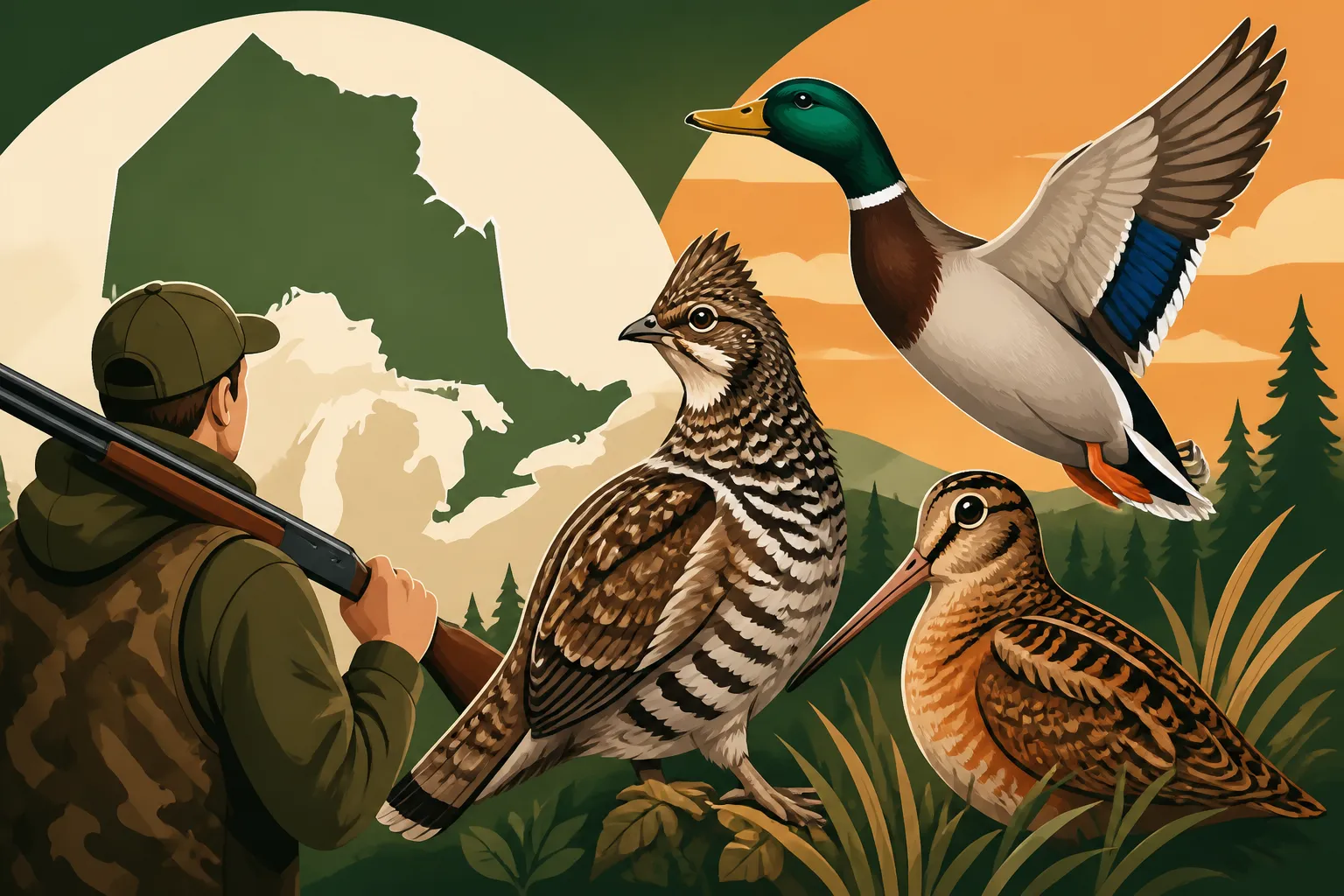
Ontario is primarily known for its Ruffed Grouse and Spruce Grouse, with opportunities for American Woodcock and Wilson's Snipe also present. Each species thrives in different environments, requiring hunters to adapt their scouting and hunting strategies. For instance, the drumming of a Ruffed Grouse on a crisp fall morning is a sound that epitomizes autumn hunting in the province, while the quiet stealth required for a Spruce Grouse hunt speaks to a different kind of bush wisdom. These birds offer a chance to connect deeply with the land, observing the subtle changes in the forest throughout the hunting season.
The Thrill of Migratory Waterfowl Hunting
Waterfowl hunting is a world unto itself, governed by a blend of provincial and federal regulations, given that these birds traverse international borders during their migrations. The spectacle of ducks cupping their wings into a decoy spread, or geese honking their way overhead on a frosty morning, is nothing short of breathtaking. It demands specialized gear, keen observation skills, and an intimate knowledge of bird behaviour and local wetlands.
Ontario sits squarely in the Mississippi Flyway, a major migratory route that sees millions of ducks and geese pass through our province each fall and spring. This strategic location offers incredible opportunities for hunters to pursue a wide variety of species, from dabblers like Mallards and Teals to divers like Bluebills and Canvasbacks. Canada Geese, too, are abundant, offering incredible field hunting opportunities. The dynamic nature of waterfowl hunting, dictated by weather patterns, migration timing, and local food sources, means no two hunts are ever quite the same, always keeping hunters on their toes and constantly learning.
Navigating Upland Bird Seasons and Limits
Hunting upland birds in Ontario is a cherished tradition for many, offering diverse experiences from the dense cover of northern bush to the mixed forests further south. The key to a successful and legal hunt lies in understanding the specific seasons, daily bag limits, and possession limits for each species. These regulations are designed to manage populations effectively, ensuring that these birds continue to thrive.
Ruffed Grouse and Spruce Grouse
Ruffed Grouse, often affectionately called partridge, are the quintessential upland bird of Ontario. You'll find them almost everywhere there's suitable forest cover, from the thick poplar stands of the north to the mixed hardwoods of southern Ontario. Spruce Grouse, on the other hand, are more specialized, typically found in the dense, coniferous forests of the boreal shield country.
The season for both Ruffed Grouse and Spruce Grouse generally opens in mid-September across most of the province, usually around September 15th, and extends through to mid-December. However, specific dates can vary slightly by Wildlife Management Unit (WMU), so always confirm the exact dates for your intended hunting area. For instance, northern WMUs might have slightly different start or end dates than those in central or southern regions. The daily bag limit for Ruffed and Spruce Grouse combined is often 5 birds per day, with a possession limit of 15. This means you can harvest up to five birds in a single day, but you can only have a total of fifteen birds in your possession at any one time, whether they are freshly harvested or stored at home. Hunting Ruffed Grouse on an Ontario Bush Road is a common tactic, as they often feed along edges and openings.
Finding Ruffed Grouse often means focusing on young, regenerating forests with a mix of aspen, birch, and conifers, especially areas with good ground cover for foraging and protection. They love edges – where different habitats meet, like a bush line next to an old field or a clear-cut growing back. Spruce Grouse, true to their name, prefer dense spruce and jack pine stands, often in more remote northern locales. They are less prone to flush explosively, sometimes allowing a closer approach, which can be both a blessing and a curse for hunters. Utilizing an app like GoHunt can be invaluable here, as it allows you to overlay satellite imagery with Crown Land maps, helping you identify prime habitat types and plan your routes in advance, even marking potential grouse drumming logs or feeding areas.
American Woodcock and Wilson's Snipe
These two species, while less frequently pursued by some, offer fantastic sporting opportunities and are true indicators of healthy wetland and moist forest ecosystems. American Woodcock are migratory birds, typically found in young, brushy cover near wet areas, such as alder thickets or willow bottoms. Wilson's Snipe, also migratory, are wading birds that prefer open, boggy wetlands, marshes, and wet meadows.
The season for American Woodcock usually aligns with the early to mid-fall, opening in September and running through October or early November, depending on the specific zone, as their migration patterns are highly weather-dependent. The season for Wilson's Snipe generally follows a similar timeframe, often extending a bit longer into the fall. Daily bag limits are typically 8 for woodcock and 8 for snipe, with possession limits of 16 for each. These birds provide fast, erratic flight patterns that test even the most experienced wing shooters. Hunters often find them by slowly walking through their preferred habitat, ready for a sudden flush.
Both woodcock and snipe are best hunted with a pointing or flushing dog, as their camouflage is exceptional, making them incredibly difficult to spot on the ground. For woodcock, look for areas with rich, moist soil where they can probe for earthworms, often near a creek or a beaver pond. For snipe, think open marshes, flooded fields, or the margins of ponds and lakes. While not as widespread as grouse, finding a good woodcock cover can lead to truly memorable hunts. Their unpredictable flight makes for challenging shooting, but the reward of a successful retrieve is sweet. Remember to carry your Ontario Migratory Bird Permits in addition to your provincial licence when hunting these species.
Diving into Migratory Bird Seasons and Limits
Hunting migratory game birds in Ontario is a unique experience, governed by a dual system of federal and provincial regulations. This means hunters must be aware of both sets of rules to ensure compliance. The federal government sets the overarching framework for migratory bird hunting, including species, open seasons, and maximum bag limits, while the provincial government then establishes specific dates and areas within those federal guidelines, often based on Wildlife Management Unit (WMU) or district.
Ducks and Geese
Ontario offers exceptional opportunities for hunting a wide variety of ducks and geese. The season dates and limits for these birds are incredibly dynamic, changing not only by species but also by geographical zone (Northern District, Central District, Southern District) and sometimes even by specific WMU.
For ducks, the season typically opens in early September in the Northern District, moving to late September or early October in the Central and Southern Districts. The season generally runs until late December or early January, with some species having specific closures earlier in the season. Common daily bag limits for ducks can be around 6 for species like Mallards, Black Ducks, or Pintails, and often higher for abundant species like Teal, with varying possession limits, often double the daily limit. However, there are also species-specific limits within the general duck bag, for example, only 2 Canvasbacks or 2 Redheads might be allowed per day. Hunting Ducks in an Ontario Cattail Marsh offers incredible action, especially at dawn or dusk.
Canada Geese seasons are also staggered by district, often starting even earlier than ducks in some areas, particularly in agricultural zones where they can cause crop damage. Early September openers are common in many southern agricultural regions, extending through the fall and sometimes offering a late-season hunt into December or January. Daily bag limits for Canada Geese can be quite generous, sometimes up to 5-8 birds depending on the zone and season segment, with possession limits often triple the daily. Snow Goose season dates and limits are often even more liberal due to their burgeoning populations, with some zones allowing bag limits of 20 or even 50 per day. When Scouting Fields for Ontario Waterfowl, remember to check current agricultural practices as geese often key in on specific crops.
Other Migratory Waterfowl: Brant, Coots, and Rails
While ducks and geese are the primary targets for most waterfowl hunters, Ontario also offers seasons for other migratory species such as Brant, American Coots, and several species of Rails (Virginia Rail, Sora Rail). These birds provide additional opportunities for hunters, though they are often less commonly pursued.
Brant, a smaller species of goose, are typically found along coastal areas and major waterways, often feeding on aquatic vegetation. Their season is usually quite short, often in the late fall, and bag limits are generally very conservative, perhaps 1-2 birds per day. Coots, often mistaken for ducks by new hunters, are actually more closely related to rails. They are abundant in many marshes and ponds and can be a fun addition to a duck hunter's bag. Their season often mirrors duck seasons, and daily bag limits can be quite high, sometimes up to 8-10 birds. Rails (Sora and Virginia) are secretive marsh birds, incredibly challenging to hunt due to their preference for dense cover. Their season often starts in early September and runs into November, with daily bag limits of around 8-10 birds. Hunters typically use dogs to flush them from thick vegetation.
It's critical for every waterfowl hunter to carry a valid Federal Migratory Game Bird Permit (often referred to as a "duck stamp") in addition to their Ontario hunting licence. This permit is mandatory for all migratory game bird hunting across Canada. Furthermore, remember that Non-Toxic Shot Requirements for Waterfowl are strictly enforced across Ontario and Canada. Lead shot is prohibited for all migratory bird hunting to protect birds and the environment. Always double-check the current federal and provincial regulations published annually by the Canadian Wildlife Service and the Ontario Ministry of Natural Resources and Forestry (MNRF) as dates and limits can change year to year. A reliable mapping tool like GoHunt can help you mark federal bird sanctuaries or areas where hunting is prohibited, ensuring you stay compliant and avoid protected zones.
| Game Bird Species | Typical Season Start | Typical Season End | Daily Bag Limit | Possession Limit | Notes |
|---|---|---|---|---|---|
| Ruffed Grouse | Sep 15 (North) | Dec 15 | 5 (combined) | 15 (combined) | Check WMU for exact dates; often combined with Spruce Grouse |
| Spruce Grouse | Sep 15 (North) | Dec 15 | 5 (combined) | 15 (combined) | Found in coniferous forests; check WMU for exact dates |
| American Woodcock | Sep 1 (South) | Nov 30 | 8 | 16 | Migratory, season varies by zone; moist, brushy cover |
| Wilson's Snipe | Sep 1 (South) | Dec 31 | 8 | 16 | Migratory, season varies by zone; open wetlands |
| Ducks (General) | Sep 1 (North) | Jan 15 | 6-8 (species-specific) | 12-24 (species-specific) | Federal & Provincial rules; Non-toxic shot required |
| Canada Geese | Sep 1 (Early Season) | Jan 15 | 5-8 (zone-specific) | 15-24 (zone-specific) | Early & late seasons exist; federal & provincial rules |
| Brant | Oct 1 (South) | Nov 15 | 1-2 | 3-6 | Short season, specific zones; federal & provincial rules |
| Coots | Sep 1 (North) | Jan 15 | 8 | 16 | Often aligns with duck seasons; federal & provincial rules |
| Rails (Sora, Virginia) | Sep 1 (North) | Nov 30 | 8 (combined) | 16 (combined) | Secretive marsh birds; federal & provincial rules |
Note: All dates and limits are generalized and can vary significantly by WMU, district, and year. Always consult the current Ontario Hunting Regulations Summary and Federal Migratory Game Bird Hunting Regulations before hunting.
Wild Turkey Seasons: Spring and Fall Opportunities
The resurgence of wild turkeys in Ontario is a true conservation success story, and it has created fantastic hunting opportunities for residents. Turkeys are intelligent, challenging game birds that demand patience, skill, and an understanding of their intricate behaviour. Ontario offers both spring and fall turkey seasons, each providing a distinct hunting experience with its own set of rules and challenges.
Spring Gobbler Season
The spring turkey season is arguably the most anticipated for many hunters. It’s a time of renewal in the woods, filled with the booming gobble of a lovesick tom echoing through the trees. This season focuses exclusively on male turkeys (gobblers or bearded hens, where legal) to protect nesting hens and ensure future populations.
The spring season typically opens on April 25th and runs until May 31st across most of the turkey range in southern and central Ontario. Hunters are usually permitted to harvest one wild turkey during this period, provided it is a gobbler or a bearded hen. In some specific WMUs, a second spring tag may be available. Calling a Gobbler Off an Ontario Roost at first light is a classic and thrilling technique, relying on mimicking hen vocalizations to lure a tom into range. The use of decoys is also very common, often a hen decoy or a jake decoy to challenge an dominant tom. This hunt requires extreme stealth, careful setup against a solid backdrop for safety, and knowing when to call and when to remain silent. Ontario Wild Turkey Licences and Tags are required, and specific rules about calling, decoying, and firearms apply.
The challenge in spring hunting comes from the turkeys' keen eyesight and hearing. They are constantly on high alert, making it crucial to minimize movement and remain perfectly still as they approach. Many hunters spend countless hours scouting before the season, identifying roosting sites, strut zones, and travel corridors. The satisfaction of calling in a wary gobbler and having him commit to your setup is an experience that keeps hunters coming back year after year. It's a game of chess, where the turkey often holds the advantage, making success all the more rewarding.
Fall Turkey Season
While the spring hunt focuses on gobblers and their breeding behaviour, the fall turkey season offers a different dynamic. In the fall, turkeys are typically found in larger flocks, often consisting of hens and their poults (young turkeys), or bachelor groups of gobblers. This season allows for the harvest of either sex of wild turkey, often making it a great opportunity to fill the freezer.
The fall season is shorter and geographically more restricted than the spring hunt. It typically runs for a few weeks in October, with specific dates varying by WMU. Many WMUs that have a spring season do not have a fall season, so checking the regulations for your specific area is absolutely crucial. Hunters are typically allowed to harvest one bird of either sex during the fall season. Hunting the Fall Turkey Season With a Bow is a popular choice for many, adding an extra layer of challenge. The strategy often involves locating feeding flocks, ambushing them, or "breaking up" a flock and then calling the scattered birds back together.
Fall turkey hunting is often more about stealth and finding food sources than aggressive calling. Turkeys in the fall are focused on foraging for acorns, berries, and other mast crops to put on weight for winter. Scouting for signs like droppings, scratch marks in leaf litter, and identifying their preferred feeding areas are key to success. Unlike the spring, where a single gobbler might come in, in the fall, you might encounter an entire flock. The challenge then shifts to singling out a bird and getting a clean shot without spooking the entire group. Understanding Ontario Fall Turkey Season Dates and the specific rules for your WMU is paramount to avoid disappointment and ensure a legal hunt.
Key Regulatory Details and Licensing for Bird Hunters
Hunting in Ontario, regardless of the species, comes with a set of fundamental regulatory requirements that all hunters must adhere to. These aren't just bureaucratic hurdles; they are in place to ensure safety, conservation, and proper management of our wildlife resources. For game bird hunters, understanding these core details is paramount before even stepping foot in the bush or marsh.
The Ontario Outdoors Card and Hunting Licences
The very first step for anyone wanting to hunt game birds in Ontario is obtaining an Ontario's Outdoors Card Explained. This card is your gateway to hunting and fishing in the province, serving as a general identification and tracking document for your licensing history. It's valid for three calendar years, and you'll need to renew it periodically. Without a valid Outdoors Card, you cannot purchase any hunting licences.
Once you have your Outdoors Card, you'll need to purchase the appropriate hunting licences for the game birds you intend to pursue. For upland birds like grouse, woodcock, and snipe, you'll typically need an Ontario Small Game Licence. This single licence covers most small game and upland bird species. For wild turkeys, you'll need a specific Wild Turkey Licence and corresponding tags for either spring or fall seasons. For migratory birds (ducks, geese, coots, rails, snipe, woodcock), in addition to your provincial Small Game Licence, you must also purchase a federal Migratory Game Bird Hunting Permit, commonly known as a "duck stamp." Each of these licences and permits will have a specific cost, which you can find detailed in guides like Ontario Hunting Licences and What They Cost. Always ensure your licences are current and you have them in your possession (either physically or digitally on your phone, if allowed) while hunting.
Understanding the specific licence requirements can be a bit confusing, especially for new hunters or those coming from out-of-province. The Ontario hunting portal, often accessible through the Ministry of Natural Resources and Forestry (MNRF) website, is the best place to purchase and manage your Outdoors Card and licences. It's designed to guide you through the process, but always double-check your selections to ensure you have the correct authorizations for the species and season you're targeting.
Non-Toxic Shot Requirements and Other Equipment Rules
For migratory game bird hunting, there's a critical regulation that every waterfowl hunter must know and follow: the requirement for non-toxic shot. This rule is a federal mandate, meaning it applies across all of Canada, including Ontario.
Specifically, when hunting ducks, geese, Brant, coots, and rails, you must use non-toxic shot. This means no lead shot is allowed for these species. Common alternatives include steel shot, bismuth, or tungsten-alloy shot, among others. The primary reason for this regulation is environmental conservation; waterfowl can ingest spent lead shot, mistaking it for grit, which then leads to lead poisoning. This has been a significant issue in wetland ecosystems, and the move to non-toxic shot has been a crucial step in protecting these birds and their habitats. Detailed information can be found in Non-Toxic Shot Requirements for Waterfowl. Always ensure you have the correct shot for your chosen gauge and choke, and that it complies with regulations.
Beyond shot type, there are other equipment rules to be aware of. For instance, there are regulations regarding magazine capacity for shotguns used in migratory bird hunting, typically limiting them to three shells (one in the chamber, two in the magazine). Specific firearm and bow draw weight rules also apply for turkey hunting. While not strictly equipment, blaze orange requirements are critical for safety during certain seasons, particularly during deer firearm seasons when many small game seasons overlap. However, for migratory bird hunting, particularly from a blind, blaze orange is typically not required, and often avoided for camouflage purposes. Always consult the current regulations summary for the full list of equipment rules that apply to your specific hunting scenario.
Where to Access Regulations and Key Information
Staying informed about Ontario's hunting regulations is an ongoing responsibility. Regulations can and do change from year to year, sometimes with significant adjustments to season dates, bag limits, or specific rules. Relying on outdated information, or what a buddy told you five years ago, is a recipe for trouble.
The primary source for all official hunting regulations in Ontario is the annual Ontario Hunting Regulations Summary, published by the Ministry of Natural Resources and Forestry (MNRF). This document is available free of charge online as a PDF download, and often in print at licence issuers and sporting goods stores. It is absolutely essential to review this summary every year before your hunt. It provides detailed tables of season dates and limits by WMU and district, specific rules for each species, and important safety information.
For migratory bird hunting, you also need to consult the Federal Migratory Game Bird Hunting Regulations, published by Environment and Climate Change Canada (Canadian Wildlife Service). This document outlines the federal framework that the provincial regulations operate within. Both summaries should be read in understood. Additionally, online tools and apps, such as GoHunt, can provide a convenient way to reference WMU boundaries, scout public land, and even help you remember key dates. While these apps are fantastic planning aids, they should always be used in conjunction with the official government regulation summaries, which are the final legal authority. Taking the time to thoroughly review these documents will not only keep you legal but also make you a more informed and responsible hunter.
Beyond the Basics: Ethical Considerations and Conservation
Hunting game birds in Ontario is more than just understanding seasons and limits; it's about embracing a broader responsibility towards wildlife, habitat, and the hunting community. Ethical considerations and a commitment to conservation are integral to being a responsible hunter and ensuring the future of our cherished traditions.
Ethical Hunting Practices
Ethical hunting begins with respect for the animal. This means striving for clean, quick kills to minimize suffering, and only taking shots when you are confident in your ability to make an ethical harvest. For game birds, this often means understanding effective shooting ranges for your shotgun and ammunition, and practicing regularly at the range. Avoiding "sky-busting" or taking shots at birds too far away, which often results in wounded birds that are not recovered, is a hallmark of an ethical wing shooter.
Another key aspect is responsible retrieve. Especially with waterfowl, it’s imperative to have a plan for retrieving downed birds, whether it’s a trained dog, a reliable boat, or knowledge of the terrain. A bird not recovered is a bird wasted. Similarly, adhering to bag and possession limits isn't just a legal requirement; it's an ethical one. It’s about taking only what you need and what the resource can sustainably provide. It shows respect for the game and for fellow hunters who also want opportunities. Furthermore, being a good steward of the land means leaving no trace, packing out all your trash, and respecting private property by always seeking permission before Knocking on Doors in Southern Ontario or elsewhere.
Respect for other hunters is also crucial. This includes maintaining safe distances, avoiding interference with another hunter's setup, and generally being courteous in the field. Hunting is a shared passion, and fostering a positive community experience benefits everyone. These practices elevate hunting beyond simply taking game, embedding it in a framework of respect, responsibility, and stewardship.
The Hunter's Role in Conservation
Hunters have historically been, and continue to be, the most significant force for wildlife conservation. The license fees, special stamps (like the federal migratory bird hunting permit), and excise taxes on hunting equipment directly fund wildlife research, habitat acquisition, and restoration projects. Every time you purchase an Ontario's Outdoors Card Explained or a migratory bird permit, you are directly contributing to the conservation efforts that protect the very animals and habitats you love to hunt.
Habitat conservation is particularly vital for game birds. Wetlands, forests, and grasslands are constantly under pressure from development, and hunters play a critical role in advocating for their protection. Organizations like Ducks Unlimited Canada, through initiatives like the Habitat Conservation Stamp Requirement, are powered by hunters' contributions and efforts to conserve, restore, and manage wetlands for waterfowl and other wildlife. For upland birds, sustainable forest management practices, including selective logging and regeneration, are essential to create the diverse habitats that grouse and woodcock thrive in. Understanding Why Wetland Loss Hurts Ontario Ducks underscores the importance of these conservation efforts.
By participating in harvest surveys, supporting conservation organizations, and following regulations, hunters directly contribute to informed wildlife management decisions. Our passion for hunting drives us to protect the very resource we pursue. It's a powerful and often misunderstood relationship, but one that is absolutely fundamental to the health of Ontario's game bird populations and the ecosystems they call home. When we hunt responsibly, we are not just enjoying a pastime; we are actively engaging in the long-term stewardship of our natural world.
Disclaimer
Please note that while this guide provides comprehensive information on Ontario game bird seasons and limits, hunting regulations are subject to change. It is your sole responsibility as a hunter to consult the most current official Ontario Hunting Regulations Summary and the Federal Migratory Game Bird Hunting Regulations before engaging in any hunting activities. These documents are the ultimate authority on all rules, dates, and limits. Failure to comply with regulations can result in significant penalties.