Rules for Non-Residents Hunting Ontario
Coming to Ontario to hunt as a non-resident can feel like navigating a dense, confusing forest of regulations and paperwork. You've heard amazing stories about our wild spaces, our moose, our bears, and our whitetails, but the thought of getting everything squared away before you even cross the border can be daunting. This guide is here to untangle that complexity, giving you a clear, empathetic roadmap to ensure your Ontario hunting adventure is legal, smooth, and unforgettable.
Navigating Ontario's Outdoors Card and Licensing System
One of the first hurdles non-residents encounter when planning a hunt in Ontario is understanding our unique licensing framework. It's not just a matter of buying a tag; there's a foundational card and several layers of specific licences depending on what you plan to pursue. Get this wrong, and your dream hunt can turn into a nightmare at the border or, worse, in the bush.
Understanding the Outdoors Card Requirement
Before you can even think about buying a specific hunting licence in Ontario, you absolutely need an Ontario Outdoors Card. Think of this card as your essential ID for participating in hunting and fishing activities in the province. It's valid for three calendar years and identifies you as an eligible hunter. For non-residents, this means proving your hunter accreditation from your home jurisdiction. If you're coming from the United States, for example, your state's hunting licence or hunter education certificate often suffices as proof of eligibility. You’ll need to provide this documentation when you apply for your Outdoors Card. This isn't just a bureaucratic step; it's how Ontario ensures that everyone participating in hunting has met basic safety and ethical standards. Without it, you simply cannot purchase any hunting licences here. It’s the very first domino that needs to fall in your favour. The process for obtaining this vital document is outlined thoroughly in Ontario's Outdoors Card Explained.
The frustration often stems from the fact that it's an extra step compared to some other jurisdictions where your hunting licence itself is sufficient. However, the Outdoors Card streamlines future purchases once you have it. You can apply for and purchase your Outdoors Card online through the Fish and Wildlife Licensing Service, or in person at a participating ServiceOntario centre or a licence issuer. When applying online, ensure you have clear digital copies of your hunter accreditation readily available to upload. It's a system designed to be efficient once you're in it, but that initial setup can feel a bit clunky, especially if you're not used to it. Just remember, it's a one-time setup for three years, and then it's a simple renewal process.
Purchasing Your Non-Resident Hunting Licences
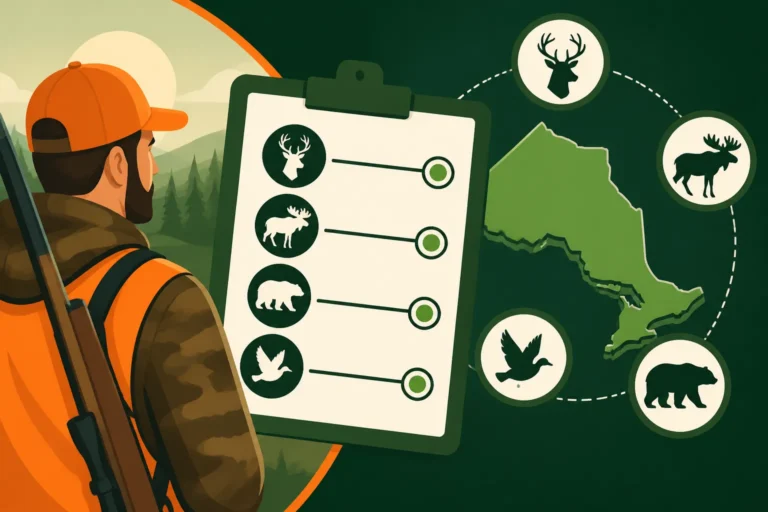
Once you've secured your Outdoors Card, you're cleared to purchase the specific hunting licences and tags for the game you intend to pursue. Non-resident hunting licences are species-specific, meaning you'll need one for deer, another for moose, another for bear, and so on. These are different from the resident licences, often reflecting different fees and regulations. For instance, a non-resident wanting to hunt white-tailed deer will purchase a Non-Resident Deer Licence. It's important to check the current regulations summary every year, as fees and specific requirements can change. For big game like moose, it's not just a licence; you often need a specific tag, which, for non-residents, is typically allocated through a licensed outfitter.
This is where planning truly comes into play. If you're coming for a do-it-yourself deer hunt, you'll generally purchase your licence and tags directly. But if you're eyeing a moose or bear, you'll almost certainly be booking through a licensed Ontario outfitter, as they often receive allocations of non-resident tags. This ensures that the harvest remains sustainable and that non-resident hunting is managed responsibly within the province's wildlife conservation goals. Many outfitters, like those you might find advertised on platforms like GoHunt, will guide you through the process of obtaining the necessary licences and tags once your hunt is booked with them, making this step much smoother. Don't assume your home state's general hunting licence covers anything here; Ontario has its own distinct categories and associated costs.
The Federal Migratory Game Bird Permit
For any non-resident hunter targeting ducks, geese, or other migratory game birds in Ontario, there's an additional, crucial piece of paper you'll need: the Canadian Federal Migratory Game Bird Hunting Permit. This permit is a federal requirement across Canada, not just Ontario, and it's separate from your provincial hunting licences. It's a small stamp that signifies your contribution to migratory bird conservation efforts. You can purchase this permit online through the Environment and Climate Change Canada website or at Canada Post outlets.
This federal permit is mandatory in addition to your Ontario Small Game Licence. Many new non-resident waterfowl hunters overlook this, thinking their provincial small game licence is enough. It's not. The permit comes with a Canadian Wildlife Habitat Conservation Stamp, and the funds generated from these sales go directly into habitat restoration and conservation projects across Canada. So, while it's another hoop to jump through, it's for a very good cause that directly benefits the birds you're hunting. Remember, without this permit, any migratory bird hunting you do is illegal, no matter how many provincial licences you possess. Don't forget to check the specific non-toxic shot requirements for waterfowl, which are strictly enforced across Canada, as detailed in Non-Toxic Shot Requirements for Waterfowl.
Essential Hunter Education and Safety Requirements
Safety is paramount in Ontario's hunting culture, and the province has stringent requirements to ensure everyone in the field is competent and responsible. As a non-resident, you're held to these same high standards, and understanding them before you arrive is critical to a hassle-free trip.
The Ontario Hunter Education Program
For non-residents, demonstrating proof of hunter education is often the most significant initial step after deciding to hunt in Ontario. While Canadian residents must complete the Ontario Hunter Education Program (OHEP), non-residents can typically satisfy this requirement by presenting valid hunter accreditation from their home jurisdiction. This generally means an active hunter education certificate or a past hunting licence from your state or province. It's Ontario's way of ensuring that hunters coming into the province have a foundational understanding of hunting ethics, wildlife management, and firearm safety.
The key here is proof. Make sure you have your documentation readily available when you apply for your Ontario Outdoors Card, as this is where your eligibility will be verified. Keep copies of your hunter education certificate or old hunting licenses in a safe, accessible place, both physical and digital. If, for some reason, your home jurisdiction's hunter education isn't recognized or you can't provide sufficient proof, you might be required to complete the OHEP. This is rare for hunters coming from well-regulated jurisdictions like most U.S. states, but it's a possibility you should be aware of. Detailed information on who needs to take the OHEP is available in Ontario Hunter Education Requirements.
Firearms Safety and Declaration for Non-Residents
Bringing a firearm into Canada, especially for hunting, requires adherence to strict Canadian firearms laws. This is probably the area where non-residents express the most anxiety, and for good reason—the rules are precise and penalties for non-compliance are severe. The main document you'll need is a Non-Resident Firearm Declaration, also known as RCMP 5589. This form serves as a temporary licence for your non-restricted firearms (like most common hunting rifles and shotguns) for the duration of your stay. You fill it out in triplicate, but do not sign it until you are in front of a Canadian Customs Officer at your port of entry.
When you declare your firearms, you'll present this form to the customs officer, who will then confirm the details and witness your signature. There is a fee associated with processing this declaration, payable at the border. It's absolutely crucial that any firearms you bring are permissible in Canada and meet our legal definitions. For instance, handguns are generally prohibited for non-residents, and certain semi-automatic rifles might also fall into prohibited or restricted categories that make them illegal for import. Always check the most up-to-date regulations from the Canadian Border Services Agency (CBSA) and the RCMP before you travel. You can find excellent guidance on this in The Non-Resident Firearm Declaration. Proper preparation here avoids significant delays and potential confiscation of your valuable hunting equipment.
Blaze Orange and Hunter Clothing Rules
Ontario has specific regulations regarding hunter clothing, primarily focusing on the use of blaze orange (or hunter orange) for visibility and safety. These rules are designed to prevent hunting accidents by making hunters highly visible to one another in the bush. For most big game hunting seasons, particularly during gun seasons, non-residents (and residents alike) are required to wear blaze orange. This usually means a minimum of 400 square inches of blaze orange material visible from all sides above the waist, often a vest and hat combination.
However, it's crucial to consult the Ontario Hunting Regulations Summary for the specific year you plan to hunt, as these requirements can vary slightly depending on the game species and season. For example, bowhunting during archery-only seasons often has different, or no, blaze orange requirements, as the objective is stealth. During firearm seasons, though, it's non-negotiable. Don't show up with just a camo jacket and expect to be legal; you'll need to invest in proper blaze orange gear. This isn't just a rule; it's a fundamental safety practice that helps keep everyone safe in Ontario's vast hunting landscapes. You'll find more details on this in How Much Blaze Orange Ontario Requires.
Understanding Ontario's Wildlife Management Units (WMUs)
Ontario is a huge province, and its diverse landscapes and wildlife populations necessitate a granular approach to hunting management. This is where Wildlife Management Units, or WMUs, come into play. For non-residents, understanding WMUs isn't just important; it's fundamental to knowing where and when you can hunt legally.
How WMUs Structure Hunting Seasons
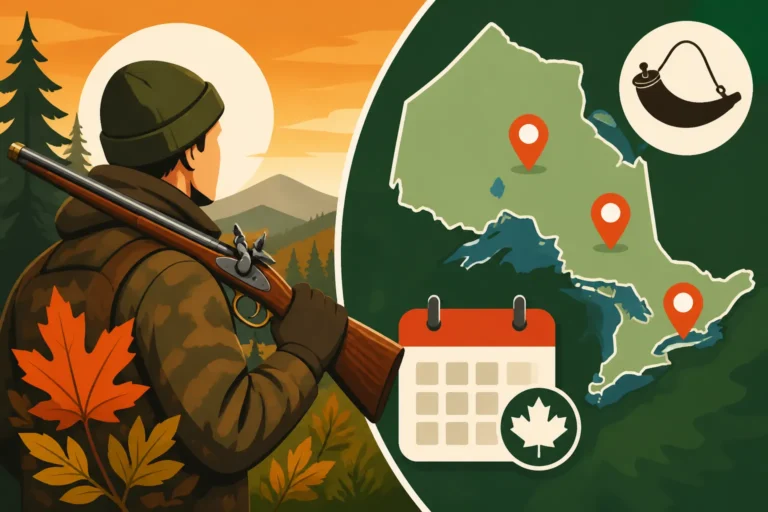
Ontario is divided into numerous WMUs, each with its own specific set of regulations, season dates, and bag limits for various game species. This system allows the Ministry of Natural Resources and Forestry (MNRF) to manage wildlife populations at a local level, adapting to habitat conditions, population densities, and harvest data unique to that area. What might be legal in WMU 10, deep in the boreal forest, could be entirely different in WMU 79, down in the agricultural belt of Southern Ontario. This localized management helps sustain healthy wildlife populations across the province.
For a non-resident, this means you can't just assume a general season date applies province-wide. You must know the specific WMU you intend to hunt in and verify its regulations. This becomes especially critical for deer, where archery, gun, and muzzleloader seasons can vary significantly from one WMU to another. It's a complex system, but it's designed to protect and enhance the hunting experience by ensuring sustainable practices. Therefore, your first step in planning a hunt, once you know your target species, should be to identify the WMU you'll be in. A good outfitter will always provide this information, but if you're going DIY, it's your responsibility. Ontario's Wildlife Management Units offers a deep dive into this topic.
Specific WMU Rules for Non-Residents
While the general WMU structure applies to all hunters, there can be specific nuances that impact non-residents. For instance, some WMUs might have special draws or controlled hunts where non-resident participation is limited, or where tags are only available through a specific allocation to licensed outfitters. This is particularly true for highly sought-after species like moose, where non-resident tags are almost exclusively tied to an outfitter. These restrictions are often put in place to manage hunting pressure and ensure local residents also have opportunities.
When booking with an outfitter, they will typically handle the WMU-specific tag allocation process on your behalf, which is a major benefit for non-residents navigating these complexities. However, if you're planning a self-guided trip, especially for deer or small game, you need to meticulously research the WMU you're targeting. Pay close attention to any notes in the regulations summary that specifically address non-resident rules for that WMU. This due diligence is critical; showing up to a WMU only to find out you're ineligible for a certain tag or season is a heartbreaking and costly mistake that can be easily avoided with proper research.
Tools for Locating WMU Boundaries
Given the importance of WMUs, knowing how to accurately locate their boundaries is essential. Gone are the days of relying solely on paper maps, though a good physical map is always a solid backup. Today, digital mapping tools are indispensable. Online WMU maps are available on the Ontario government's website, providing a general overview. However, for precise in-field navigation, apps like GoHunt or other GPS-enabled mapping platforms are invaluable. These tools allow you to overlay WMU boundaries directly onto satellite imagery or topographic maps on your smartphone or GPS device.
Using a reliable mapping app means you can literally see which WMU you are in, or where a boundary lies, as you move through the bush. This is especially important when WMUs are split by geographical features like rivers, roads, or even property lines. Before your hunt, spend time studying your target WMU on these platforms. Mark potential hunting spots, access points, and WMU boundaries. This preparation minimizes the risk of inadvertently crossing into an illegal area or a WMU with different regulations, giving you confidence and peace of mind while you're focused on the hunt. Reading an Ontario WMU Map Before You Go provides excellent guidance on leveraging these tools.
Non-Resident Rules for Specific Game Species
Ontario offers a fantastic array of hunting opportunities, from majestic moose and black bears to abundant white-tailed deer and a variety of small game and waterfowl. Each species, however, comes with its own set of non-resident rules that must be understood to ensure a legal and ethical hunt.
Big Game Hunting Moose, Bear, Deer
Big game hunting is often the primary draw for non-residents coming to Ontario, and rightly so – the opportunities can be incredible. However, the rules surrounding moose, bear, and deer for non-residents are among the most intricate. For moose, non-resident hunters typically must book their hunt through a licensed Ontario tourist outfitter. These outfitters receive specific moose tag allocations from the province, and only clients of these outfitters can utilize these non-resident tags. It's extremely rare, bordering on impossible, for a non-resident to obtain a moose tag independently. This system is designed to manage moose populations carefully and ensure economic benefits for remote northern communities that host outfitters.
Black bear hunting is a bit more flexible but still often involves an outfitter. While non-residents can technically obtain a bear licence and tag independently if they have an invitation from a landowner (and specific WMU restrictions allow), the vast majority book guided bear hunts. Outfitters often have established bait sites, local knowledge, and services like retrieval and hide preparation that make a guided bear hunt highly successful and convenient. For white-tailed deer, non-residents generally have more freedom. You can purchase a non-resident deer licence and tags (either sex or antlerless validations, depending on the WMU and season) directly. However, if you plan to hunt on private land, securing permission from the landowner beforehand is absolutely essential. Many non-residents also opt for guided deer hunts, especially in prime areas, to access private land or benefit from local expertise. Regardless of species, always carry your licence and tag with you, and understand Ontario Tag Notching and Attachment Rules for immediate post-harvest compliance.
Upland Birds and Small Game
If your interest lies in upland birds like ruffed grouse or spruce grouse, or in small game species such as snowshoe hare and cottontail rabbits, the rules for non-residents are generally more straightforward than for big game. You'll need your Ontario Outdoors Card and a Non-Resident Small Game Licence. This single licence typically covers all legal small game and upland bird species across the province, within their respective open seasons and bag limits for the WMU you're hunting. This makes for a much simpler planning process compared to big game, especially for those looking for a more independent, exploratory hunt.
The key considerations for small game and upland bird hunting for non-residents revolve around access and understanding local conditions. While much of northern Ontario offers vast tracts of Crown Land open to hunting (provided you follow Ontario's Crown Land Access Rules), southern Ontario's landscape is predominantly private property. This means you'll need to secure explicit permission from landowners before hunting. Scouting prior to your hunt, whether virtually using mapping tools or physically, is invaluable for finding productive areas. Species-specific regulations, such as daily and possession limits, are crucial to adhere to. For example, Ruffed Grouse Hunting Ontario's Bush Roads is a common and effective method, but knowing the specific WMU's season dates is still paramount.
Waterfowl Hunting Considerations
Waterfowl hunting in Ontario can be world-class, especially along the Great Lakes flyways and in agricultural regions that attract vast numbers of ducks and geese. For non-residents, pursuing migratory birds requires the Ontario Outdoors Card, a Non-Resident Small Game Licence, and crucially, the Canadian Federal Migratory Game Bird Hunting Permit, as previously mentioned. Each of these documents is non-negotiable. Beyond the permits, understanding regional nuances is vital. Ontario is a significant staging area for migrating waterfowl, and specific districts have varied season dates and bag limits, reflecting local population dynamics.
Many non-resident waterfowl hunters choose to book with a specialized waterfowl outfitter. These guides often have established relationships with landowners to access prime stubble fields for goose hunting or have specialized boats and blinds for diver duck hunting on big water. While self-guided waterfowl hunts are possible, they require extensive scouting, knowledge of local hotspots, and often securing private land access. Remember that steel shot (non-toxic shot) is mandatory for all waterfowl hunting in Canada. Additionally, be aware of decoy regulations, shooting hours, and other specific rules that govern waterfowl hunting in the province. Outfitters found via resources like GoHunt often specialize in waterfowl and can ensure you're fully compliant and have the best chance at success.
Crown Land Access and Regulations for Visitors
Ontario boasts an incredible amount of public land, known as Crown Land, which is generally open to hunting. This vast wilderness is a huge draw for non-resident hunters looking for a true northern experience. However, "open to hunting" doesn't mean "no rules," and understanding these regulations is crucial for a lawful and enjoyable trip.
Permitted Activities on Crown Land
For non-resident hunters, Ontario's Crown Land offers immense opportunities for pursuing various game species, particularly in the northern and central parts of the province. Generally, if an area is designated as Crown Land and isn't subject to specific closures (like provincial parks, conservation reserves, or active logging operations with safety restrictions), it's open for hunting during the appropriate seasons. You can scout, set up temporary camps (with proper permits, which we'll cover next), hang tree stands (though generally not permanently), and explore vast wilderness areas. This freedom to roam is a major appeal for many who come from areas with limited public access.
However, "permitted" doesn't imply unrestricted. You must adhere to all general hunting regulations, including seasons, bag limits, and legal methods of take. Motorized vehicle access on Crown Land has specific rules; while main logging roads are often accessible, many smaller trails or remote areas might be restricted to ATVs or foot traffic only. Respect for the environment is also paramount – practice Leave No Trace principles, pack out everything you pack in, and avoid damaging natural features. The allure of Crown Land is its wildness, and it’s up to every hunter to help keep it that way. For a comprehensive overview, check out Hunting Ontario's Crown Land.
Crown Land Camping Permits for Non-Residents
This is a critical point that often catches non-residents off guard: if you are not an Ontario resident, you require a Crown Land Camping Permit if you plan to camp on Crown Land in Northern Ontario (specifically in the areas north of the French and Mattawa rivers). This permit is separate from your hunting licences and Outdoors Card. It applies to any non-resident camping on Crown Land, whether for hunting, fishing, or general recreation. The permit helps manage use and contributes to the upkeep of these vast public spaces.
You can purchase these permits online or from various licence issuers. It's essential to have it in your possession while camping. Failure to have a valid permit can result in fines and disrupt your hunt. This requirement is a distinction between non-residents and residents, as Ontario residents generally do not need a permit to camp on Crown Land. So, if you're envisioning a remote moose hunt with a spike camp far from the roads, make sure you factor in the Crown Land Camping Permit. You can learn more about this specific requirement in The Non-Resident Crown Land Camping Permit.
Prohibited Areas and Respecting Private Property
While Crown Land offers extensive hunting opportunities, it's equally important for non-residents to be aware of areas where hunting is prohibited or restricted. This includes, but isn't limited to, provincial parks, national parks, some conservation areas, municipal lands, and within certain distances of dwellings or public roads. Even on Crown Land, there can be specific carve-outs or closures. Always consult the official Ontario Hunting Regulations Summary and detailed WMU maps before heading out.
Furthermore, a significant portion of Southern Ontario and agricultural regions is private property. Hunting on private land without explicit, prior permission from the landowner is illegal and considered trespass. This is a non-negotiable rule. Many non-resident deer and small game hunters underestimate the prevalence of private land in more populated areas. It's not enough to simply see no "No Trespassing" signs; the onus is on the hunter to know the property boundaries and obtain permission. Knocking on doors, well in advance of the season, can be a way to gain access, but it requires politeness, respect, and understanding that you might be turned down. Familiarize yourself with Ontario Trespass and Landowner Law to avoid legal issues and maintain positive hunter-landowner relations.
What to Do After a Successful Hunt
The moment you've been dreaming of, the successful harvest, is just the beginning of another crucial phase of your Ontario hunting trip. For non-residents, handling your game properly, ensuring all reporting is done, and navigating border crossing with meat and trophies requires careful planning and strict adherence to regulations.
Tagging and Reporting Your Harvest
Once you've successfully harvested an animal in Ontario, the immediate priority is to correctly tag it. Each big game tag (deer, moose, bear, elk) comes with specific instructions for notching and attaching it to the animal. This usually involves removing specific dates or sections from the tag to indicate the harvest date and attaching it to the animal immediately after the kill, before moving it. This tag must remain affixed to the animal until it is transported to its final destination or processed. This critical step provides clear evidence that the animal was legally taken under a valid tag.
Beyond tagging, mandatory harvest reporting is a requirement for most big game species in Ontario. This means you must report your harvest to the Ministry of Natural Resources and Forestry (MNRF) by a specified deadline, usually within days of the harvest or by the end of the season. This can often be done online through the Fish and Wildlife Licensing Service or by phone. Harvest reporting is crucial for wildlife management, as it provides the data needed to assess population health, track harvest rates, and inform future season setting. Failing to report a harvest, even unintentionally, can result in penalties. Always double-check the reporting requirements for the specific species you've harvested in the annual regulations summary.
Meat Care and Transporting Game Across the Border
Proper meat care begins the moment an animal hits the ground. Field dressing immediately, cooling the carcass, and keeping it clean are critical steps, especially in Ontario's early seasons when temperatures can be warm. For non-residents, transporting game meat back home presents its own set of challenges and regulations. Generally, properly cooled, wrapped, and packaged game meat can be transported across the border into the United States, but you must declare it to U.S. Customs and Border Protection.
The main concern typically revolves around disease prevention. For instance, specific rules might apply if there are concerns about Chronic Wasting Disease (CWD), although Ontario currently remains CWD-free. When crossing, ensure your meat is clearly identified as legal game meat, and it's always wise to have a copy of your Ontario hunting licence and tag information with you. Some non-residents choose to have their meat professionally processed at a local Ontario butcher, which often ensures it's properly handled and packaged for transport. For comprehensive guidance on this, review Transporting Game Meat in Ontario.
Exporting Trophies: Capes and Antlers
If you've been fortunate enough to harvest a trophy animal, understanding the rules for exporting capes, antlers, or skulls is just as important as for meat. For non-residents, an Export Permit is often required to take certain wildlife parts (especially large game trophies like moose or bear hides and skulls) out of Ontario and across the international border. This permit verifies that the animal was legally harvested. You typically apply for this permit through the MNRF or a designated licence issuer, and there might be a fee.
When taking trophies across the border, you must declare them to U.S. Customs and Border Protection. They will want to see your Canadian Export Permit and may have their own inspection processes. For items like bear hides, some U.S. states have specific import requirements, so it's always best to check your home state's regulations in advance. Many non-residents leave their trophies with an Ontario taxidermist for processing, who can then handle the shipping and necessary paperwork after the fact. This takes a lot of the headache out of crossing the border with fresh capes or antlers. A good resource for this is Getting a Non-Resident Export Permit.
Here's a quick summary table comparing some key aspects for non-resident vs. resident hunters in Ontario:
| Feature | Ontario Resident Hunter | Non-Resident Hunter |
|---|---|---|
| Outdoors Card | Required, proof of OHEP | Required, proof of OHEP or home jurisdiction equivalent |
| Hunting Licences | Purchased directly, often lower cost | Purchased directly (deer, small game) or via outfitter (moose, bear), higher cost |
| Moose Tags | Allocation through provincial draw system | Almost exclusively through licensed outfitters |
| Crown Land Camping | Generally no permit required in northern Ontario | Permit required in northern Ontario (north of French/Mattawa rivers) |
| Firearms Declaration | Not applicable (already licensed in Canada) | RCMP 5589 form required at border, declared and paid |
| Federal Migratory Bird | Required (for migratory bird hunting) | Required (for migratory bird hunting) |
| Export Permit | Not applicable (staying in province) | Often required for taking certain game parts across border |
| Private Land Access | Requires permission | Requires permission, often easier via outfitter |
Planning Your Ontario Hunting Trip: Key Considerations
Planning a successful non-resident hunt in Ontario involves more than just understanding the rules; it requires strategic thinking about logistics, finances, and travel. A well-planned trip ensures maximum enjoyment and minimizes unexpected issues.
Working with Ontario Outfitters
For many non-resident hunters, especially those pursuing big game like moose or bear, working with a licensed Ontario outfitter is not just convenient but often a necessity. Outfitters provide invaluable services: they have deep local knowledge of prime hunting areas, often possess allocations of non-resident tags, provide accommodation and meals (in American Plan camps), guide services, and assist with everything from field dressing to transportation of your harvest. For a non-resident unfamiliar with the vast Ontario wilderness or its intricate regulations, an outfitter acts as your trusted partner.
When choosing an outfitter, look for one that is licensed and has a solid reputation. Don't be shy about asking for references or checking reviews. Ensure you understand what's included in your package (e.g., tags, meals, guiding, processing assistance) and what's not (e.g., licences, gratuities, specific gear). Be clear about your hunting style, expectations, and physical capabilities. A good outfitter, like those you might find advertised on GoHunt or through the Northern Ontario Tourist Outfitters Association (NOTO), will ensure you're fully prepared and informed about the WMU you'll be hunting and any specific rules that apply. More information can be found in Hunting Guides and Outfitters in Ontario.
Financial Aspects: Costs and Currency
Hunting in Ontario, like any quality hunting trip, involves various costs that non-residents need to budget for. Beyond the actual hunt package (if using an outfitter), you'll need to account for your Outdoors Card, specific hunting licences and tags (which are typically more expensive for non-residents), the Federal Migratory Game Bird Permit (if applicable), and the RCMP Non-Resident Firearm Declaration fee at the border. Don't forget travel costs (fuel, flights), accommodation before/after your hunt, food, gear, and potentially gratuities for guides and camp staff.
It's important to remember that all prices in Ontario will be in Canadian dollars (CAD). While many businesses, especially those catering to tourists, may accept U.S. dollars, they will apply their own exchange rate, which might not always be the most favorable. It's generally best to use Canadian currency or a credit card that offers a good exchange rate. Be aware of Canada's Goods and Services Tax (GST) and potentially Provincial Sales Tax (PST) on services and goods. A clear understanding of the total financial picture, converted to your home currency, will prevent any unpleasant surprises and help you enjoy your trip without financial stress.
Border Crossing: Firearms and Ammunition
We've touched on the Non-Resident Firearm Declaration, but it bears repeating: border crossing with firearms and ammunition demands meticulous preparation. Ensure your firearms are unloaded and securely stored, preferably in a locked case, and ammunition is stored separately. Declare all firearms and ammunition to the Canadian Border Services Agency (CBSA) officer immediately upon arrival. Any undeclared firearms or ammunition can lead to confiscation, heavy fines, and even arrest. This is a federal offense, and CBSA takes it very seriously.
When it comes to ammunition, there are limits on how much you can bring, and restrictions on certain types of ammunition (e.g., incendiary or armour-piercing rounds are prohibited). Always carry your copies of the RCMP 5589 form, your hunting licences, and your Outdoors Card. Be prepared for potentially lengthy delays at the border, especially during peak travel times. Patience and full cooperation with border officials are essential. Similarly, on your return, be prepared to declare your firearms and any game meat or trophies to U.S. Customs and Border Protection. Checking the specific rules for Bringing Firearms Into Ontario before you even pack your bags is a smart move.
Disclaimer
Please note that hunting regulations, fees, and requirements can change. While every effort has been made to provide accurate and up-to-date information, this guide is intended for informational purposes only and should not be considered legal advice. It is the responsibility of every hunter to consult the most current Ontario Hunting Regulations Summary, available on the Ontario government's website, and to contact relevant authorities (such as the Ministry of Natural Resources and Forestry, Canadian Border Services Agency, or Royal Canadian Mounted Police) for the definitive and most current information before planning and embarking on a hunt.