Judging a Boar From a Sow With Cubs
One of the most profound responsibilities we carry as bear hunters in Ontario is the absolute necessity of positive identification before taking a shot. It's not just about filling a tag; it's about ethical hunting and respecting the future of the black bear population. Misidentifying a sow with cubs for a lone boar can lead to heartache, legal trouble, and a significant blow to conservation efforts. This guide aims to arm you with the knowledge and observation techniques needed to confidently distinguish between a boar and a sow, especially when cubs might be present, ensuring you make the right call in the field.
Why Positive Identification is Crucial for Bear Hunters
Hunting black bears in Ontario is an incredible experience, but it comes with a heavy dose of responsibility. Unlike some other big game species, misidentifying a bear has severe consequences, both ethically and legally. This isn't just a suggestion; it's a fundamental tenet of responsible bear hunting here in the province.
Ethical and Legal Imperatives
Ontario's hunting regulations are very clear: it is illegal to harvest a sow accompanied by cubs. This isn't a minor infraction; it carries significant penalties, including hefty fines, the potential loss of your hunting license for several years, and even seizure of your firearm and vehicle. Beyond the legal ramifications, there's a deep ethical responsibility. A sow is the linchpin of the local bear population. Taking her means not only ending her life but also condemning her dependent cubs to a very uncertain future, often starvation or predation. These young cubs rely entirely on their mother for survival, learning how to forage, find shelter, and navigate the wilderness. When we hunt, we commit to being stewards of the land and its wildlife, and that means doing everything in our power to ensure the continuation of healthy populations. Understanding these rules is a critical part of Black Bear Hunting in Ontario.
The Challenge of Field Identification
Now, I'll be the first to admit, it's not always easy. Bears can look deceptively similar, and field conditions rarely cooperate to give you a perfect, unobstructed view. You might be hunting in dense bush, at dawn or dusk when light is poor, or in a sudden, fleeting encounter. A bear might only offer you a quick glimpse before disappearing into the thick cover. Sizes can be misleading, especially when judging at a distance, or if you're not seeing the animal next to something for scale. Sometimes a smaller sow might appear quite large if she's the only bear you've seen, or a distant boar might seem smaller than he truly is. The angle of the bear, its posture, and even the type of terrain it's moving through can all play tricks on your eyes. That's why simply seeing "a bear" isn't enough; you need to train your eyes to look for those subtle, yet critical, differences.
Key Physical Characteristics to Observe
When a bear steps into view, it's natural for your heart to pound. But before you even think about raising your rifle or drawing your bow, you need to engage your "bear detective" mode. There are several physical traits that, when combined with careful observation, can help you make an educated decision.
Size and Build
Generally speaking, mature boars tend to be significantly larger and more heavily built than sows. Think about the difference between a male and female bodybuilder; while a female can be incredibly strong and muscular, a male typically has more overall mass. A mature boar often has a thicker, more muscular neck that appears to blend seamlessly into a broad, powerful shoulder hump. His overall body shape will often appear more "blocky" or "barrel-chested." Sows, even large ones, tend to have a more slender, often lanky appearance, particularly in the neck and shoulder area. Their bodies might seem a bit more proportionate, without that same thick, heavy-set look. When you're Hunting a Fall Bear Bait in September, you'll often see bears coming in regularly, giving you more time to study these details. Remember, there's always overlap, and a very old, large sow can certainly be mistaken for a smaller boar, but generally, look for that unmistakable bulk.
Head Shape and Ear Placement
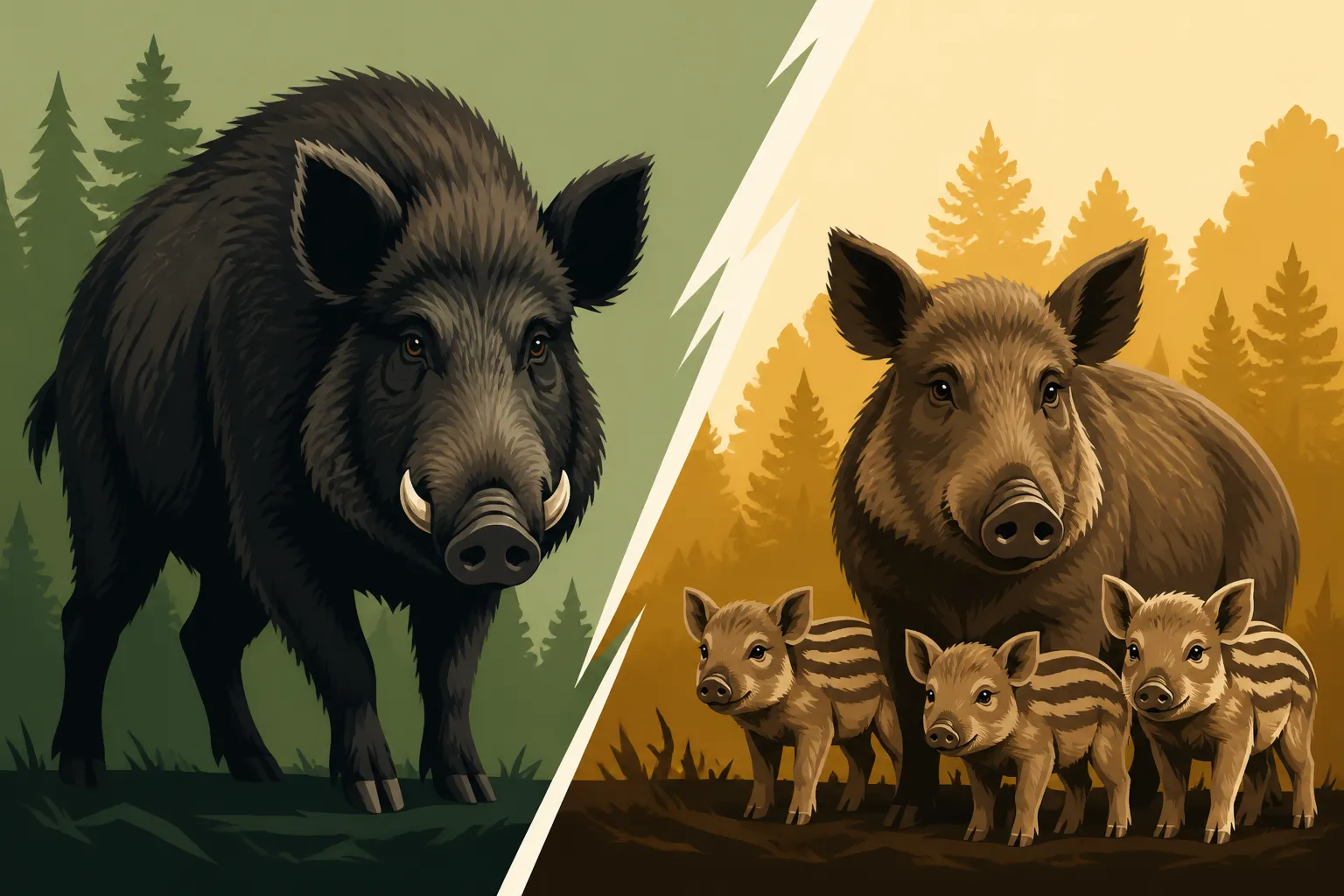
This is often one of the most reliable indicators, provided you get a good look. A mature boar typically possesses a broad, blocky, almost square-shaped head. His ears will often appear relatively small in proportion to the size of his head, sometimes looking almost like small nubs perched on the side. This is due to the heavy musculature around the jaw and neck. Sows, on the other hand, usually have a more triangular or pointed face, and their ears will often appear larger and more prominent relative to the size of their head. Imagine the difference between a Rottweiler's head (blocky) and a German Shepherd's head (more triangular) – it's a similar principle. This distinction can be a real game-changer when trying to make that tough call from a distance.
Behavioural Cues of a Sow with Cubs
While physical characteristics are important, the absolute best indicator of a sow is her behavior, specifically if she has cubs present. This is why patience is paramount. If you see a bear that seems to be pausing frequently, looking back over its shoulder, or exhibiting an almost anxious vigilance, these are major red flags. Cubs, typically born in winter, will stay with their mother for about 1.5 to 2.5 years. They can be anywhere from small, dark blobs trailing directly behind her to fair-sized yearlings that could be several hundred pounds themselves, looking like small adult bears.
A sow with cubs will almost always behave differently than a solitary bear. She might:
- Exhibit constant vigilance: frequently stopping, sniffing the air, and looking around, especially back the way she came.
- Move slowly and deliberately: allowing her cubs to keep up.
- Be followed closely by one, two, or even three cubs: these cubs might be playing, wrestling, or nursing.
- React defensively to noises or movement: often her first instinct is to try and herd her cubs to safety.
- Engage in nursing: if you observe a bear lying down and a smaller bear approaching its underside, this is an undeniable sign of a sow with cubs.
Even if you only see one small bear following a larger one, that's enough to call it a sow with cubs. Never assume a smaller bear is a 'small boar' until you've had time to observe thoroughly. If you even suspect cubs are nearby, hold your shot. The cubs might be hidden in dense cover or simply lagging behind. This is the main reason Why You Cannot Shoot a Sow With Cubs.
Distinguishing Boars from Solitary Sows
Sometimes you'll encounter a large, lone bear, and the question isn't about cubs, but simply whether it's a boar or a solitary sow. This can be tricky, as some sows can grow to impressive sizes, especially in areas with abundant food sources like the rich habitats you find when Hunting Deer in Southern Ontario Farmland.
Examining Body Proportions Closely
When you're dealing with a large bear that appears to be alone, focus on the overall shape and proportion. A mature boar will often have a very distinct, well-defined neck that blends into powerful shoulders, creating an almost "top-heavy" appearance. Imagine an NFL lineman – broad shoulders, thick neck. This heavy musculature gives them immense power for fighting other bears during the rut. Sows, even heavy ones, generally lack this extreme muscular development around the neck and shoulders. Their body might appear more streamlined from head to tail, even if they have a large belly. Look for that prominent "hump" or bulge between the shoulders and behind the head on a boar.
The "Pot Belly" Indicator
This isn't a foolproof method, but it can be a useful clue. Boars, particularly after a good feeding session on a rich food source like an abundance of berries in the fall or a well-maintained bait site (if Baiting Black Bear in Ontario is part of your strategy), will often have a very pronounced "pot belly." This is especially noticeable when they are standing or walking. Their gut will hang low, often appearing round and full. Sows can also have a large belly, particularly if they are pregnant or have recently nursed cubs and are regaining weight, but it often has a different look. A sow's belly might appear more pendulous or "saggy" rather than the firm, round "pot" you see on a well-fed boar. It's a subtle difference, but worth noting as part of your overall assessment.
Facial Features and Snout Length
Let's dive a little deeper into those facial features. Beyond the overall head shape, pay attention to the muzzle. A mature boar often has a shorter, blunter snout. Think of it as a wider, more compact nose and mouth area. A sow, on the other hand, typically has a slightly longer, more pointed muzzle, giving her face a more refined appearance. This can be one of those "last piece of the puzzle" details, especially when other indicators are ambiguous. Again, it's not always definitive, but when combined with head shape and ear placement, it can really help to solidify your judgment.
Here's a quick comparison table to help organize these visual cues:
| Characteristic | Typical Boar | Typical Sow |
|---|---|---|
| Overall Size & Build | Larger, blockier, heavier set, muscular | Smaller, more slender, proportionate, lankier |
| Neck & Shoulders | Thick, powerful neck, often blends into broad shoulders, prominent hump | Thinner neck, less pronounced shoulders, streamlined |
| Head Shape | Broad, blocky, often square | More triangular, often pointed |
| Ear Size | Appear smaller relative to head size | Appear larger relative to head size |
| Muzzle/Snout | Shorter, blunter, wider | Slightly longer, more pointed, refined |
| Belly | Often a pronounced, round "pot belly" after feeding | Can be large or pendulous, especially if pregnant/nursing |
| Behavior (solitary) | Confident, less vigilant unless disturbed | More cautious, more frequent scanning |
| Behavior (with cubs) | N/A (would be with a sow) | Highly vigilant, pauses frequently, cubs trailing or nearby, potentially nursing |
The Importance of Patience and Observation
When you're out in the woods, especially during the adrenaline-fueled moments of a bear encounter, patience is your greatest virtue. Rushing a shot is the number one cause of misidentification and regret.
Waiting for Clear Visual Confirmation
Never, ever let excitement override your judgment. If a bear appears and you only get a quick, obscured glance, resist the urge to immediately shoulder your firearm. Instead, take a deep breath, remain still, and observe. Wait for the bear to move into a clearer opening. Wait for it to turn, offering you different angles. And most critically, wait to see if any cubs emerge from the cover behind it. Often, cubs, especially smaller ones, will trail a little behind their mother or might be hidden by brush. Give the situation time to unfold. A few extra minutes of patient observation can save you from a lifetime of regret. This is particularly true during Spring Bear Hunting in Ontario when cubs are very young and less mobile.
Using Optics to Your Advantage
Your binoculars or spotting scope are your best friends in bear country. Don't just use them for scanning the landscape; use them intensely when you've spotted a bear. Zoom in and meticulously examine the features we've discussed: head shape, ear size, neck thickness, belly shape. GoHunt, a popular hunting app, also has features for marking observations and even logging animal movements, which can be useful for bait sites or known bear travel corridors, helping you understand patterns before an actual encounter. High-quality optics will allow you to pick up on those subtle differences that are impossible to discern with the naked eye, especially at longer distances or in challenging light conditions. Always keep your optics handy and use them as your primary tool for positive identification before considering a shot.
Situational Awareness and Hunter Education
Beyond direct observation, your overall situational awareness and prior education play a huge role. Knowing Where the Highest Bear Densities Are in Ontario can prime you to be extra cautious in those areas. If you're hunting in a region known for healthy bear populations and successful breeding, you should automatically be on higher alert for sows with cubs. Familiarize yourself with the typical seasonal behaviors of bears. For example, during the early part of the When Ontario's Spring Bear Season Runs, sows are emerging from dens with their newborn cubs, making positive identification even more critical. Later in the fall, during Ontario Fall Bear Season Dates, cubs might be much larger, making them harder to distinguish from adult bears. Understanding these cycles helps you anticipate what you might encounter. Your mandatory Ontario Hunter Education course covered these topics, but a refresher of the bear hunting sections of the annual hunting regulations summary is always a good idea.
What to Do If You're Unsure
The single most important rule in bear hunting is simple: if there's any doubt in your mind, do not shoot. It's a fundamental principle that guides all ethical hunting decisions.
When in Doubt, Don't Shoot
This isn't just advice; it's a moral imperative. Taking a bear is a privilege, and that privilege comes with the responsibility of making 100% certain of your target. If you've observed a bear for several minutes, scrutinizing its features, looking for cubs, and you still can't definitively say it's a lone boar, then you must pass on the shot. The potential legal penalties and the ethical weight of accidentally harvesting a sow with cubs far outweigh the desire to fill a tag. There will always be another bear, another opportunity. Walking away knowing you made the right, ethical decision is a far greater reward than any trophy. Remember, a bear's Ontario Bear Bag Limits are strictly enforced, and you don't want to lose your hunting privileges over a hasty decision.
Understanding Ontario's Rules on Sows with Cubs
Let's reiterate: Ontario's Ministry of Natural Resources and Forestry (MNRF) has very strict rules regarding the harvesting of sows with cubs. It's not a gray area. These rules are in place for a vital reason: to protect the breeding population and ensure the long-term health and sustainability of Ontario's black bear numbers. If you are found to have harvested a sow with cubs, even unintentionally, you will face serious repercussions. These can include significant fines (potentially thousands of dollars), forfeiture of your hunting license, and forfeiture of any equipment used in the commission of the offense, which can include your firearm, vehicle, and ATV. Furthermore, any bear harvested must be accompanied by The Black Bear Validation Certificate, which is part of the legal framework to track harvests. This isn't just about avoiding a ticket; it's about upholding the integrity of hunting in Ontario and respecting the wildlife we cherish. Take the time, make the right call, and enjoy the true spirit of an Ontario bear hunt.
Disclaimer
Please remember that hunting regulations can change. Always consult the most current Ontario Hunting Regulations Summary available from the Ontario Ministry of Natural Resources and Forestry (MNRF) before heading into the field to ensure you are fully compliant with all rules and requirements. This guide is for informational purposes only and should not replace official sources.