Setting a Bear Bait Site in Ontario
Setting up an effective bear bait site in Ontario can feel like a daunting task, especially with all the regulations and the sheer amount of wilderness out there. Many hunters get frustrated, putting in hours of work only to have their bait go untouched or, worse, attract only raccoons and squirrels. But don't despair! This comprehensive guide will walk you through the essential steps, from understanding the rules to selecting the perfect spot and maintaining your site, ensuring you maximize your chances of attracting a big bear in Ontario's vast bush country.
Understanding Ontario's Bear Baiting Regulations
Before you even think about hauling a barrel of treats into the woods, you need to understand the legal framework. Ontario has specific rules when it comes to baiting bears, and knowing them inside and out is crucial to avoid fines and ensure a legal, ethical hunt. These aren't suggestions; they're the law, and they can vary depending on where you're planning to hunt.
Legalities of Baiting in Your WMU
Ontario is divided into numerous Wildlife Management Units (WMUs), and while baiting is generally permitted for black bears in most areas, there are critical exceptions and specific stipulations you must adhere to. For instance, baiting is strictly prohibited within provincial parks, nature reserves, and often within designated controlled hunt areas. There are also rules about how close your bait site can be to public roads, dwellings, and other private property without explicit permission. It's not uncommon for hunters, especially those new to a specific area, to mistakenly set up a bait in a restricted zone. Always consult the current hunting regulations summary for your specific WMU, which you can find by looking up Ontario's Wildlife Management Units. Don't just assume what's legal in one part of the province is legal everywhere else; always double-check the local rules.
Beyond just where you can bait, there are rules about when. While you can start baiting before the official season opens, there are often specific dates by which baits must be removed after the season closes. This is particularly important for spring bear hunts where baiting commences weeks before the season. Failure to remove bait can result in enforcement action, and nobody wants that. It's about respecting the wildlife and ensuring responsible practices.
Required Documentation and Best Practices
To legally hunt black bears in Ontario, you'll need a valid Outdoors Card, a Black Bear Licence, and crucially, a Black Bear Validation Certificate for each bear you intend to harvest. This validation certificate is tied to your licence and confirms your eligibility. When it comes to the bait site itself, the regulations stipulate that you must clearly post signs at the bait site entrance stating "Bear Bait Site" and include your Outdoors Card number. This isn't just a formality; it's vital for identification by conservation officers and other hunters.
It’s also important to remember that you cannot hunt over bait that has not been properly established and maintained according to regulations. This means no last-minute dumps of donuts right before you climb into your stand. The spirit of the law is to allow bears to find and regularly visit the site, creating a pattern. Pay close attention to the details of The Black Bear Validation Certificate to ensure you meet all requirements. Responsible baiting also means choosing appropriate bait materials, which we'll discuss, and ensuring they don't spoil excessively or create unsanitary conditions that could harm wildlife or attract unwanted attention.
Choosing the Perfect Location for Your Bait Site
Once you’ve got the legalities sorted, the next big hurdle is finding the right spot. This isn't just about throwing some food into the nearest bush. A well-chosen location is perhaps the most critical factor in a successful bear baiting operation. It requires a keen eye for bear habitat and strategic thinking about how bears move through the landscape.
Scouting for Prime Bear Habitat
Bears are creatures of habit, driven by food, water, and cover. When scouting for a bait site, you’re looking for areas that naturally support a healthy bear population. This typically means dense, mature forests mixed with younger growth, swamps, and wetlands that provide both food sources and ample cover. Look for natural bear foods like berry patches (blueberries, raspberries, saskatoons), acorn or beech nut stands, and areas with lush vegetation. Water sources are also key; bears drink frequently, so proximity to creeks, ponds, or marshy areas is a huge advantage.
The real gold, though, is fresh bear sign. This includes tracks in soft mud or sand, scat (droppings) which can tell you a lot about their diet and recent activity, rub trees where bears scratch and rub their fur, and broken branches or turned-over rocks where they’ve been foraging. The more fresh sign you find, the higher your chances of success. I’ve often found great success by focusing on areas known for Black Bears Across Ontario's Bush Country, particularly those zones with a healthy mix of deciduous and coniferous growth. Remember, if you don't find consistent bear sign, it's likely not a prime spot, and you're better off moving on.
Strategic Placement for Safety and Success
Once you've identified a general area with good bear activity, you need to pinpoint the exact bait site. This is where strategy comes into play. You want a spot that offers bears easy access while simultaneously providing a safe and effective setup for you as the hunter. Consider prevailing wind directions; bears have an incredible sense of smell, and you want your scent to blow away from their approach routes. Placing your bait downwind of a dense travel corridor or known bedding area can draw them in without alerting them to your presence.
Think about access for yourself too. You’ll be visiting the site regularly, so an overly arduous trek can become a deterrent. However, don't place your bait too close to main logging roads or trails, as this increases the risk of disturbance from other hunters, hikers, or even curious ATV riders. Look for natural funnels – narrow strips of cover between open areas, saddlebacks on ridges, or thickets bordering swamps – that will naturally direct bears toward your bait. Tools like GoHunt can be incredibly useful here. Their satellite imagery and topographic maps allow you to analyze terrain, identify potential travel routes, water sources, and dense cover from the comfort of your home, saving you countless hours of boots-on-the-ground scouting. You can mark potential spots, measure distances, and even plan your access routes to minimize disturbance.
The Art of Building an Effective Bait Station
Now that you've got your spot, it's time to build the actual bait station. This isn't just about dumping food; it's about creating an inviting, consistently rewarding location that encourages bears to return again and again, establishing a pattern that you can eventually capitalize on.
Essential Bait Materials and Lures
Bears are omnivores, but they have a serious sweet tooth and are attracted to strong, easily digestible calories. Your bait strategy should focus on high-calorie, aromatic foods. Some of the most effective bait materials include:
- Sweets: Day-old bakery goods, donuts, cookies, candy (especially those with strong fruit or chocolate scents). These are packed with sugar and smell incredible to a bear.
- Grains/Pet Food: Dry dog or cat food mixed with molasses or grease. This provides consistent bulk and nutrition.
- Meat Scraps/Grease: Butcher trimmings, bacon grease, or cooking oil can be potent attractants, especially early in the season when bears are looking for protein and fat.
- Other Scents: Anise oil, vanilla extract, or commercial bear attractants can be hung in rags or sprayed around the bait site to extend its drawing power, carrying scent further on the wind.
The key is consistency and volume. You want to provide enough bait that a bear gets a good meal but doesn't clean out the site in one visit. This encourages them to return. A good rule of thumb is to start with a decent quantity (e.g., 50-100 lbs of mixed bait) and then replenish every few days, adjusting based on bear activity. Remember, early in the season, competition from smaller critters like raccoons, skunks, and even squirrels can be intense, so you might need to overbait slightly until the bears find it and establish dominance. This strategy is crucial for Baiting Black Bear in Ontario and ensuring they associate your site with an easy meal.
Setting Up Your Bait Container and Structure
The way you present your bait is as important as the bait itself. You don't want bears to just walk up, grab a mouthful, and leave. You want them to stick around, work at it, and ideally, turn their bodies in various directions, offering a clear shot opportunity if you're in a stand.
Common methods for bait presentation include:
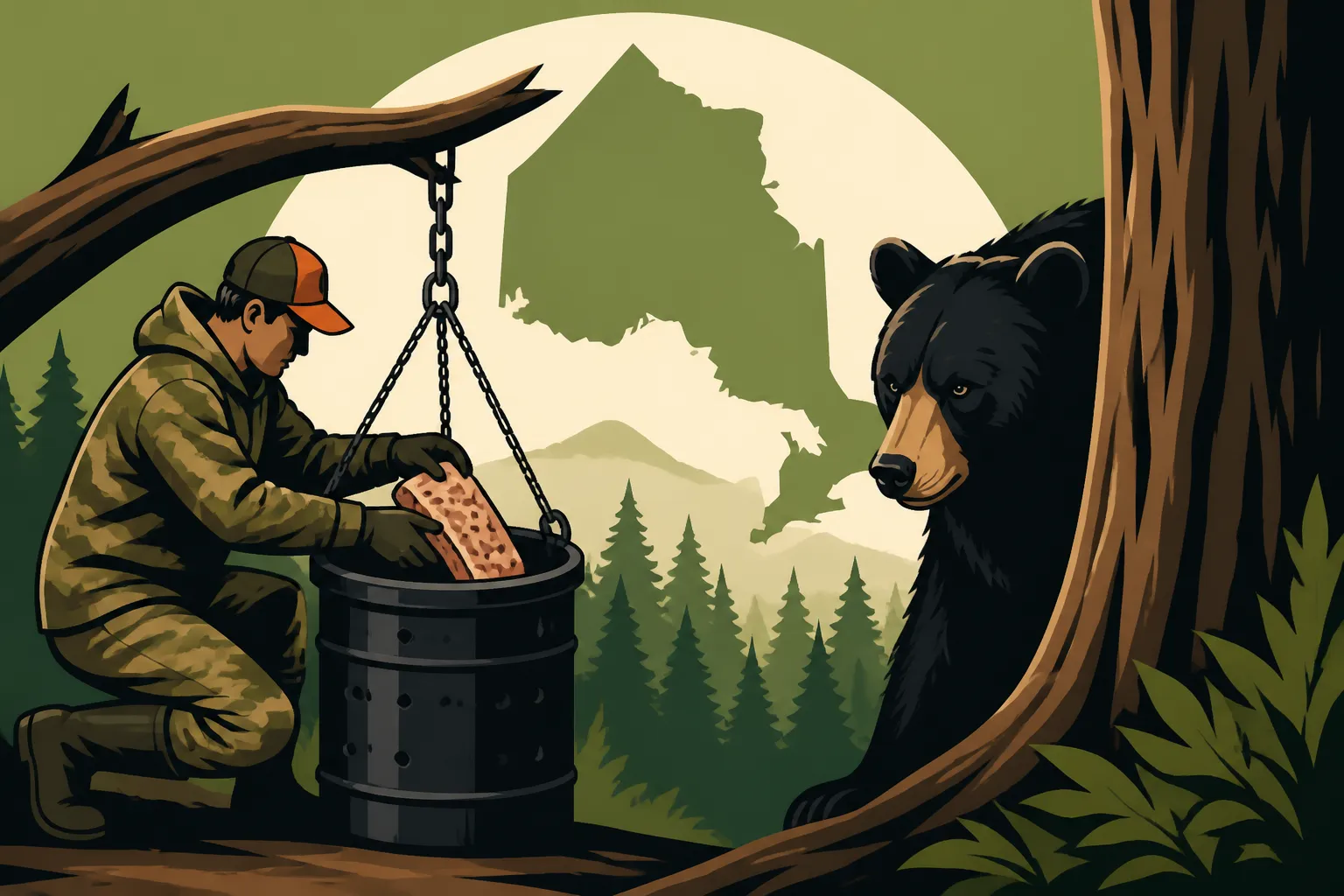
- Steel Drums: A standard 45-gallon steel drum, laid on its side, chained to a tree, and with a few small holes drilled in it, is a classic. Bears will roll and push the drum, trying to get at the contents, keeping them occupied.
- Log Cribs: Building a crib out of heavy logs and rocks around a central bait pile forces bears to work at moving the logs to get to the food. This natural-looking setup can be very effective and blends into the environment.
- Hanging Buckets/Bags: Large heavy-duty bags or five-gallon buckets filled with bait and hung just out of easy reach (requiring the bear to stand or stretch) can also make them work for it. Ensure they are strongly secured with rope or cable to prevent the bear from tearing them down easily.
Whichever method you choose, ensure your bait is securely fastened to a large, immovable object like a sturdy tree. This prevents bears from dragging the entire bait station away into thick cover, making it harder for you to monitor and harder for other bears to find. The goal is to make the bears spend time at the site, creating a comfortable feeding zone they associate with a reliable food source.
Maintaining Your Bait Site and Monitoring Activity
Setting up the bait is only half the battle. Consistent maintenance and diligent monitoring are what truly turn a hopeful endeavor into a successful bear hunt. Without these crucial steps, even the best-placed and most attractive bait can fall short.
Consistency is Key for Drawing Bears
Think of your bait site as a bear's favourite restaurant. If they show up and the kitchen's often closed or sparsely stocked, they'll quickly move on to a more reliable eatery. Bears have massive home ranges and will travel significant distances for food, but they need a reason to keep coming back to your spot. This means regular, consistent replenishment of bait.
Ideally, you want to check and replenish your bait every 2-3 days, especially in the initial stages. As bears start hitting it regularly, you might be able to stretch that to 3-4 days, depending on how much they're eating and the competition from other wildlife. Remember, early in the season, smaller animals like raccoons and skunks can deplete your bait quickly. You might need to use protective measures like smaller openings on your barrels or more heavily secured cribs to deter these "bait thieves" and save the good stuff for the bears. Monitoring your bait consistently also helps you understand their feeding patterns. Are they hitting it at night? In the early morning? This information is invaluable for planning your actual hunt.
Using Trail Cameras and Reading Sign
Trail cameras are an absolute game-changer for bear baiting. They provide irrefutable evidence of bear activity, allowing you to monitor visits without disturbing the site with your own presence. Place cameras discreetly, roughly 10-15 yards from the bait, and angle them to capture clear images of the bears approaching and feeding. Pay attention to the date and time stamps on the photos – this will help you determine peak feeding times and whether a bear is a consistent daytime or nighttime visitor. Furthermore, cameras can help you identify individual bears by size, markings, and even ear tags if they're part of a research program.
Beyond the cameras, continue to practice your old-school woodsman skills. Every visit to your bait site is an opportunity to read the sign left behind. Look for fresh tracks in the mud or disturbed leaves around the bait. Are they large paw prints, indicating a mature bear? Check for fresh scat; this tells you a bear has recently been active and what it's been eating. Look for rub trees nearby or broken branches from a bear's passage. Paying attention to Reading Sign After a Fresh Snow can be especially revealing, showing clear travel paths and how bears are navigating the area around your bait. Just be mindful of leaving too much human scent during your checks; wear clean clothes, rubber boots, and try to approach from downwind. Utilizing an app like GoHunt can help here too, allowing you to log camera locations, plot bear sightings, and track activity patterns over time, creating a digital diary of your bait site's success.
| Bait Material Type | Pros | Cons | Tips for Use |
|---|---|---|---|
| Sweets | High calorie, strong aroma, highly attractive | Can attract other animals (raccoons), expensive | Use day-old bakery goods, mix with molasses. Secure to prevent quick removal. |
| Grains/Pellets | Consistent bulk, cheaper, good base | Less aromatic on its own, can become soggy | Mix with grease or molasses to boost appeal. Good for filling drums. |
| Meat Scraps | High protein/fat, very attractive (early season) | Can spoil quickly, strong odour (good and bad), regulations | Use fresh scraps, mix with dry bait, use sparingly if warm. Check local rules. |
| Grease/Oil | Long-lasting aroma, coats other baits | Can be messy, attracts insects | Pour over other baits or soak rags. Good for scent trails. |
| Commercial Lures | Designed for strong appeal, easy to use | Can be expensive, less bulk | Use as an enhancer. Hang scent wicks upwind of the bait site. |
Disclaimer
Hunting is an activity with inherent risks. This guide provides general information for educational purposes only. Always consult the official Ontario hunting regulations, available from the Ministry of Natural Resources and Forestry (MNRF), for the most current and specific rules and laws. Ensure you have all necessary licenses, permits, and validations, and adhere to all safety protocols. The author and publisher are not responsible for any accidents, injuries, or legal infractions that may occur. Hunt safely and ethically.